
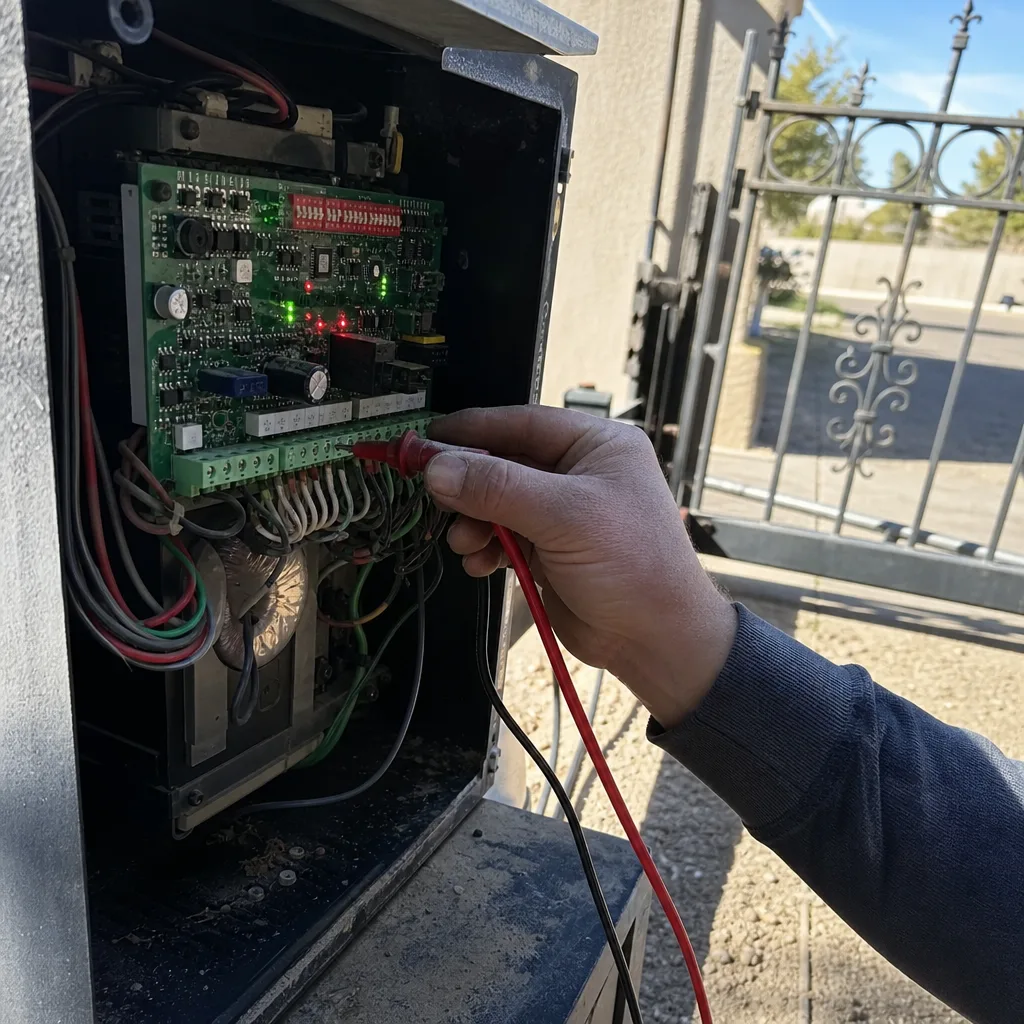
Last updated November 18, 2026
 Wrought iron
 Wood & steel frame
 Farm & ranch
 Sliding driveway gates
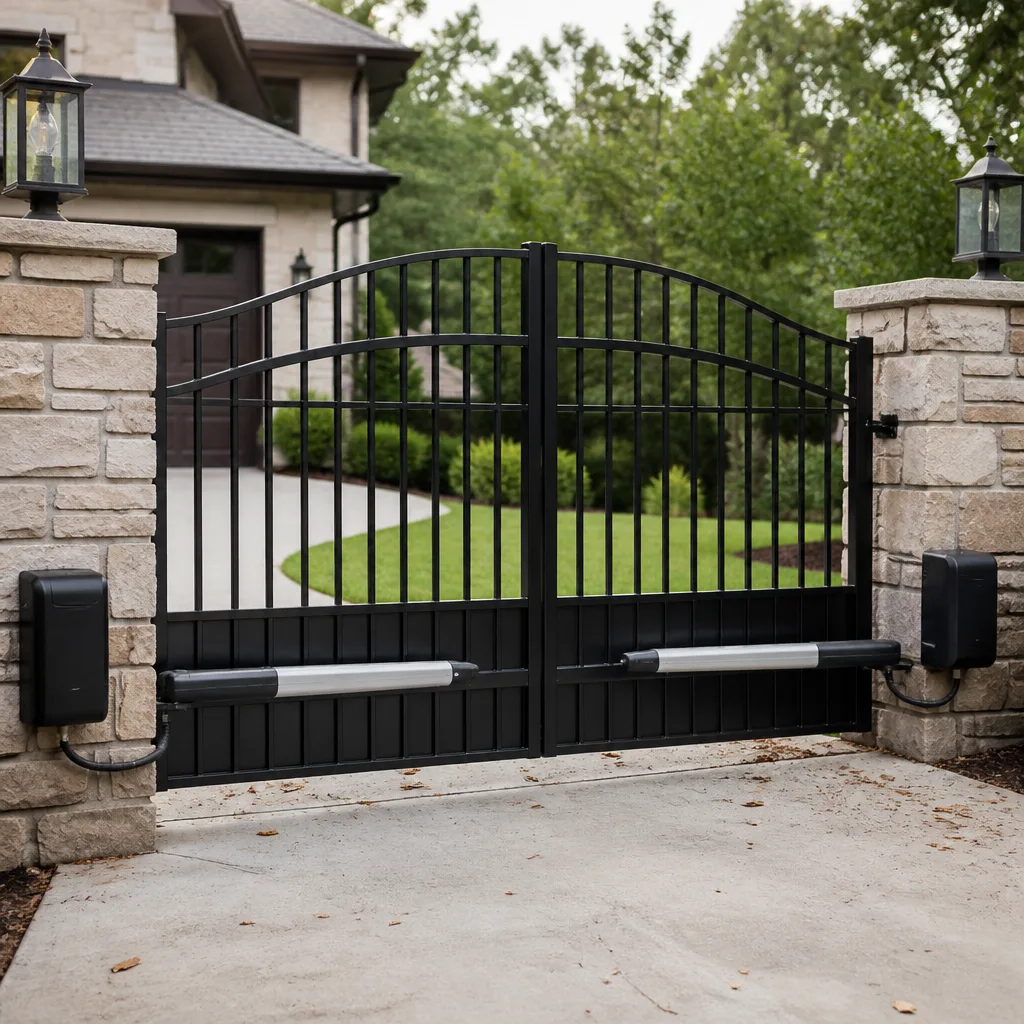 LiftMaster operators
Free on-site gate assessment - hinges, posts, and your LiftMaster or Nice gate operator checked before anything is quoted
The assessment is free and the quote is the invoice.
Get your free estimateDIY vs Professional Gate Repair: What’s Safe to Do Yourself
There’s a YouTube video for everything, including gate repairs that have no business being DIY’d. We’ve pulled into driveways in Paradise after folks followed those videos step by step, and what we find is sometimes dangerous and always more expensive to fix than if the gate had been left alone. A gate looks like simple hardware until you understand what’s actually holding tension behind it. This guide draws the line honestly: the repairs you can genuinely handle yourself (and we’ll walk you through them on the phone for free), the ones that have put people in the hospital, and how to spot a previous DIY job that made things worse. We’d rather tell you the truth than sell you a service call you don’t need.
Quick Answer
You can safely handle hinge bolt tightening, basic lubrication, photo eye cleaning and alignment, and remote battery replacement yourself. Anything involving spring tension, weld repairs, operator mounting adjustments, or the electrical connection to the operator should go to a trained professional, because those carry real injury risk. When in doubt, call a gate specialist and describe the problem; a good one will tell you honestly whether it’s a five-minute fix you can do or a job that needs hands on it.
Styles & brands we work with
- Wrought iron
- Wood & steel frame
- Farm & ranch
- Sliding driveway gates
- LiftMaster operators
Table of Contents
- The genuinely DIY-safe list
- The hard no list, and why
- How to tell a previous repair was a DIY job that made it worse
- When calling a pro saves money versus costs it
- What to have ready before you call a gate tech
- Why Paradise gates fail differently
- Common mistakes to avoid
The genuinely DIY-safe list
These are real repairs, and we mean it when we say you can do them. If you’re not sure how, call us and we’ll talk you through it at no charge. A gate that’s maintained properly lasts longer, and that’s better for everyone.
- Hinge bolt tightening. A gate sags at the hinge post, not in the middle. If your gate drags or scrapes, check the hinge bolts first. A socket wrench and ten minutes often solves it. Snug them, don’t over-crank them; stripped threads turn a free fix into a paid one.
- Basic lubrication. Hinges, latches, and the track or rollers take lubrication a couple times a year. In Paradise’s dry, dusty climate, grit works into joints faster than you’d expect, so we’d lean toward a dry or silicone-based lubricant rather than a wet one that collects dust.
- Photo eye cleaning and alignment. If your automatic gate won’t close, look at the two small lenses near the ground on either side. Wipe them clean, then check they’re pointed at each other. A leaf or a cobweb across one lens stops the whole operator. This solves a surprising share of “my gate is broken” calls.
- Remote battery replacement. Before you assume the operator failed, swap the battery in the remote. On LiftMaster and Linear remotes this takes under a minute and costs a few dollars.
Notice what’s on this list: nothing that stores force, nothing that welds, nothing that connects to power. Those are where the danger lives.
The hard no list, and why
We’re not being cautious for liability’s sake. These are the jobs that have genuinely injured people, and the reasons are plain physics.
- Spring tension systems. A torsion or extension spring holds hundreds of pounds of stored force. When it releases unexpectedly, it releases fast and hard. There is no safe way to work on a loaded spring without the right tools and training, and a slipped wrench here can break a hand or worse. Leave it to someone who does it every week.
- Weld repairs. A gate that has cracked at a joint needs to be welded with the right penetration and the load taken off the frame first. Welding a joint under tension, or welding over rust, produces a repair that looks fine and fails later, sometimes with the gate coming down. We weld on-site with the gate in the driveway, which is the honest way to do it.
- Operator mounting adjustments. The operator is bolted to structure and set to specific clearances and limits. Moving it a fraction of an inch off can bind the gate, strip the drive, or defeat the safety reverse. On FAAC and BFT operators especially, the limit and force settings are set for a reason.
- Anything at the electrical connection. Line voltage to the operator, the control box wiring, and the low-voltage safety edges all sit on the same circuit. Working live is how people get hurt. This is a trained-professional job.
If you’re looking at any of the four above, put the tools down. Call for a free second opinion on a written estimate if you have one from someone else.
How to tell a previous repair was a DIY job that made it worse
We’ve seen a lot of gates in Paradise, and a bad DIY repair usually leaves a signature. Here’s what we look for.
- Mismatched or wrong-grade bolts. A hinge held with one shiny new bolt among three rusted originals usually means someone lost a part and grabbed what was in the coffee can. The load is uneven and the hinge wears fast.
- Welds that sit on top of rust or paint. A proper weld fuses clean metal. A DIY weld often bridges over the surface and looks lumpy. It’ll hold a while, then crack at the edge.
- A gate that closes on its own. Show us a gate closing by itself and we’ll show you where it’s failing. That’s usually a bent hinge or a post out of plumb that got “fixed” by shimming instead of repairing.
- Force settings turned all the way up. If a previous tech or homeowner cranked the operator’s force adjustment to overcome a dragging gate, they’ve defeated the safety reverse. We see this on Linear and LiftMaster operators more than any other brand.
- Safety edges bypassed or taped back. If the photo eyes or safety edges are disconnected, someone took the easy path. That’s a safety defect.
If you spot any of these, get it looked at. A cheap fix that fails can take the gate with it.
When calling a pro actually saves money versus costs it
We’ll be straight with you: sometimes the DIY route is right, and calling us would be a waste of your money. But sometimes it goes the other direction fast. Here’s the math we’ve watched play out.
A $40 DIY attempt is your time and a part. Fine, if it works. But a lot of those attempts don’t, and they turn a $150 repair into a $600 one. Say a dragging gate needs a hinge re-pinned and a post checked. That’s a modest repair. If you attack it by tightening every bolt you can reach and end up cracking the hinge plate, now you’re replacing hardware and re-hanging the gate. If you adjust the operator force instead of fixing the drag, you wear the gearbox and then you’re buying an operator.
Where the pro saves money:
- The repair is structural (post, hinge, weld): done right the first time, one visit.
- The symptom points to a failing safety component: cheap to correct, expensive to ignore if the gate hurts someone.
- You’ve already had two DIY tries: the third is where the real damage shows up.
Where DIY is the right call: lubrication, batteries, photo eyes, a loose bolt that just needs snugging. Those are yours. Anything you can’t confidently name and diagnose is worth a free conversation.
What to have ready before you call a gate tech
Diagnostic time is paid time, and you shouldn’t pay for information you already have. Gather these before the call and you’ll likely save the cost of a visit. The person who shows up will appreciate it too.
- The gate brand and operator brand. Check the operator housing for a label. Ours service everything from Mighty Mule to DoorKing, so knowing the make saves a trip to identify it.
- What the gate is doing, plainly described. “Won’t close” is different from “closes then reverses” is different from “closes halfway and stops.” Say it in plain words.
- A photo or short video. A ten-second clip of the gate operating tells us more than a paragraph.
- When it started. After a storm? After someone bumped it? After you did a DIY fix? That last one matters.
- Any written estimate you’ve already been given. We’ll give a free second opinion on it.
- Access and gate width. Roughly how wide the opening is and whether we can get a truck close.
Have those in hand and the call is quick and productive. It’s the difference between a phone call that solves it and a service call you didn’t need.
Why Paradise gates fail differently
We’re writing from Paradise, and the local conditions shape what breaks and how. The desert climate is hard on gates in ways coastal guides never mention. Dry air and wide temperature swings work on wood frames and welds; dust and grit turn a hinge that should last into one that grinds. The summer heat is unkind to operator housing and to the seals that keep grit out of the drive.
Wind is its own issue. When a gust catches a gate that’s already loose at the hinge, it can twist the panel and crack the weld. That’s a repair that shows up weeks later as a sag at one corner. We see this across Paradise neighborhoods, and it’s the reason we look at the hinge post first on any sagging gate.
We also see gates that were installed to a generic spec and never adjusted for the local soil, which in parts of Paradise moves enough to pull a post slightly out of plumb over a few seasons. A gate that hangs true on day one can drag in a year. That’s not a DIY problem; it’s a post that needs honest attention.
When to call a professional
Call a professional the moment the symptom points at spring tension, a weld, the operator mounting, or the electrical side. Also call if the gate has already injured someone, if the safety edges or photo eyes aren’t working, or if a DIY attempt has stalled out. And call for a free second opinion if you’ve been handed a written estimate and you’re not sure the diagnosis holds up. We’ll look at it without charge and tell you the truth, even if the truth is “you already have a fair price.” Gatewood Fence & Gate Paradise offers free estimates in Paradise – call (888) 292-7536. A live person answers the phone day or night, and you’ll never get a machine.
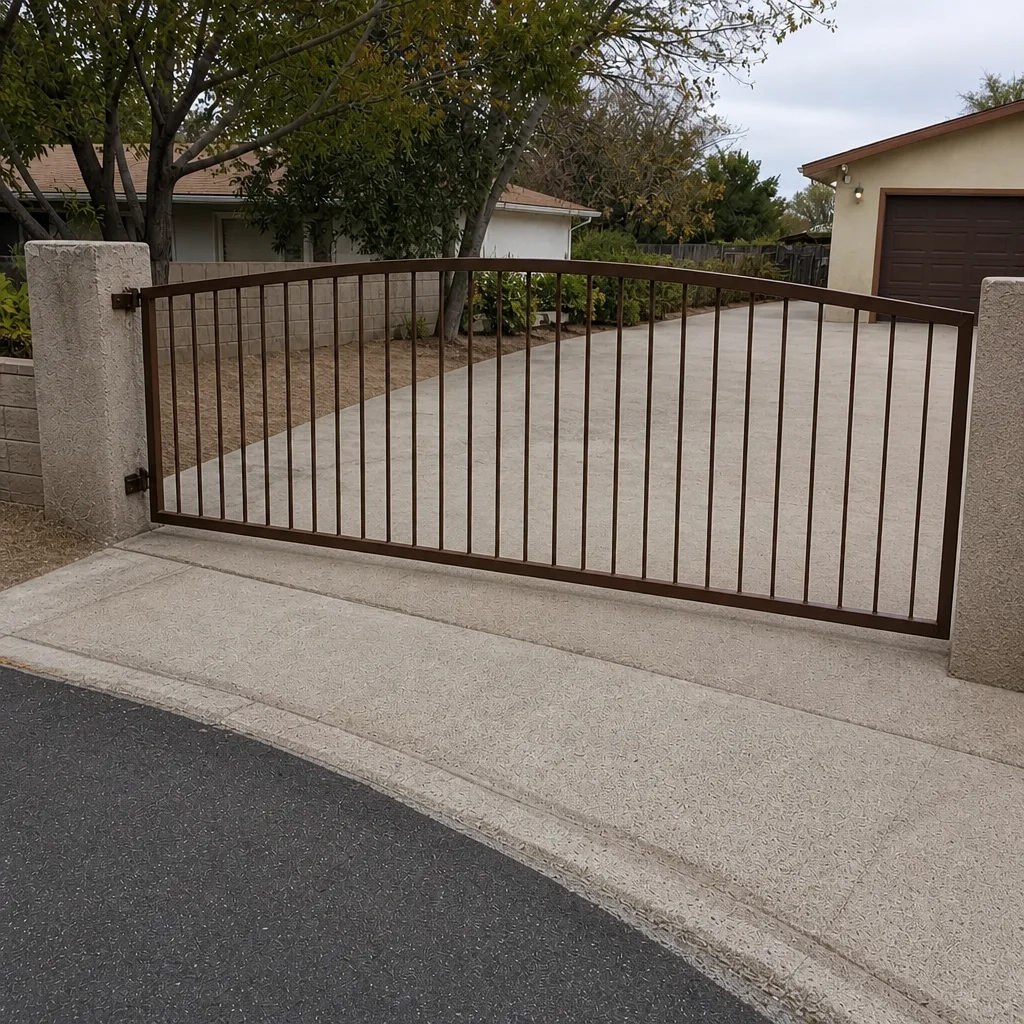
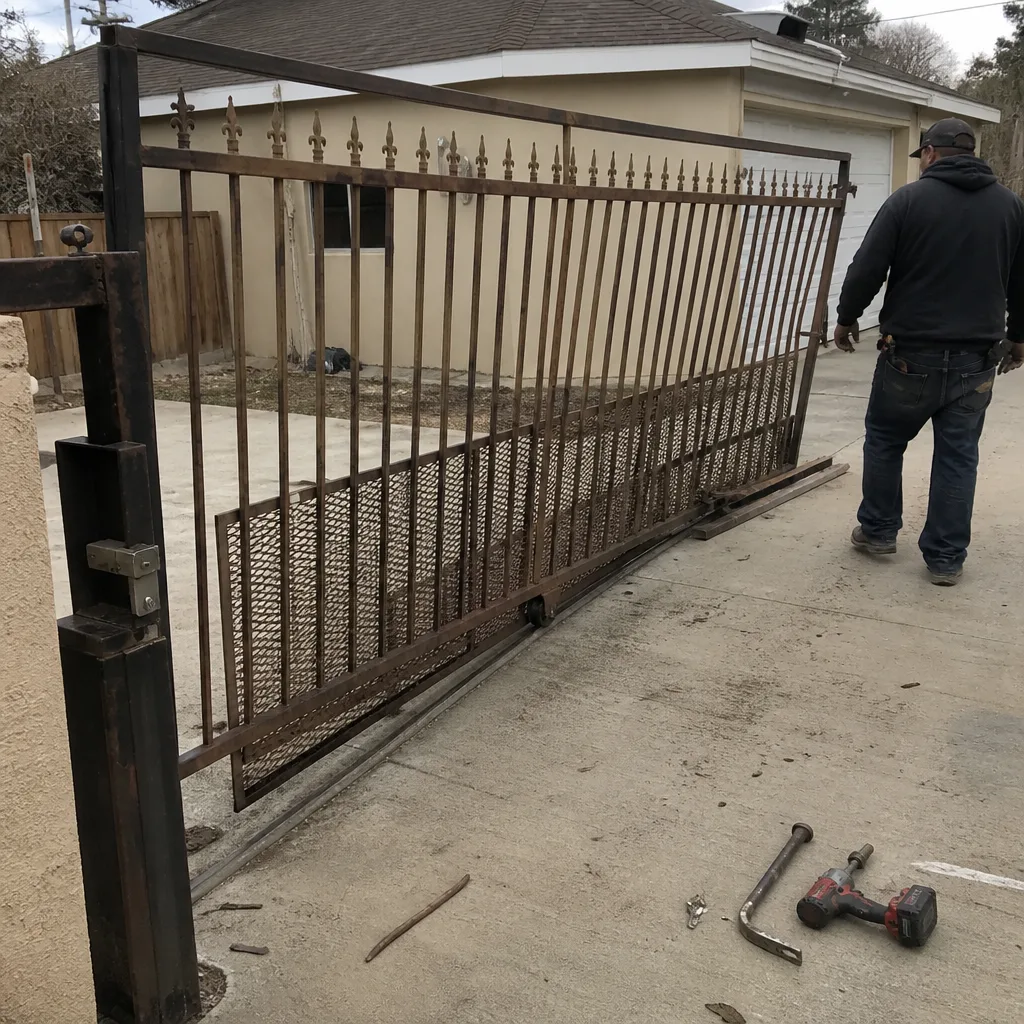
See the difference
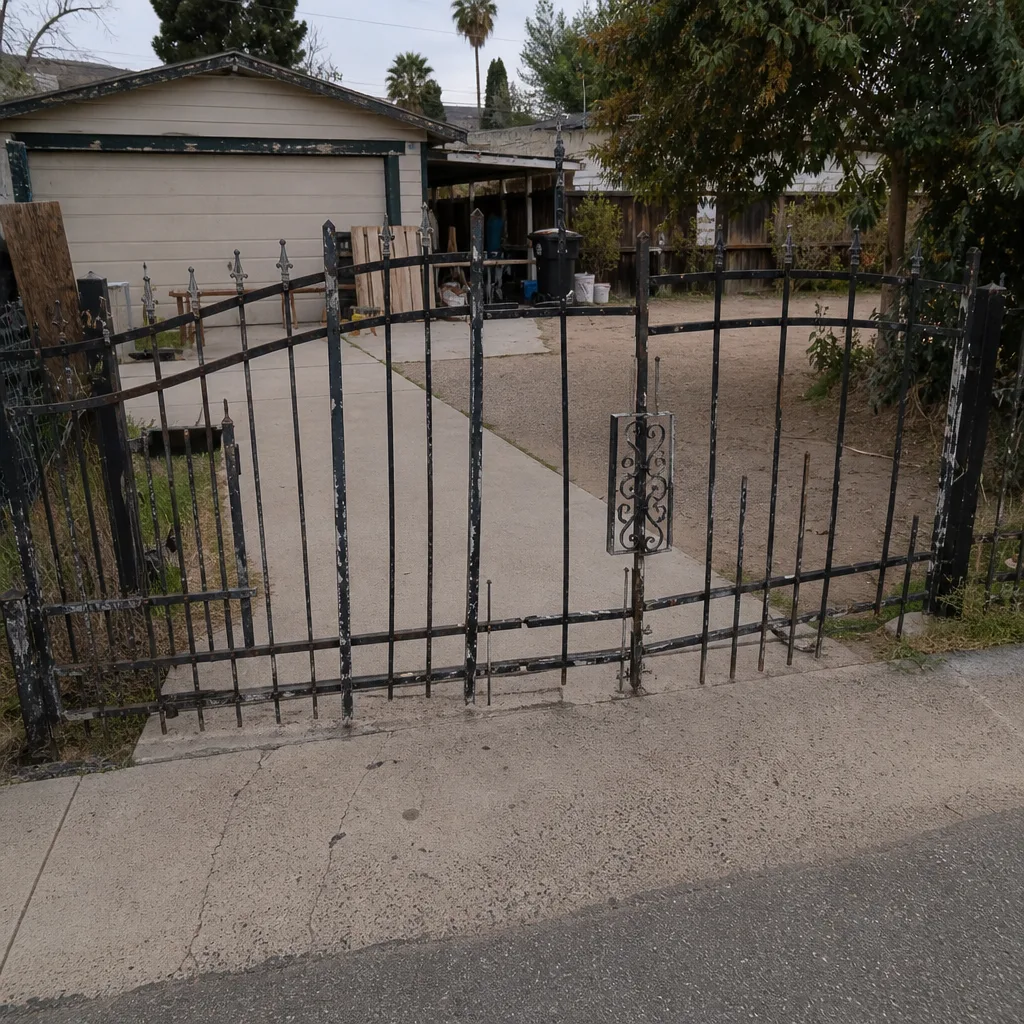 Before
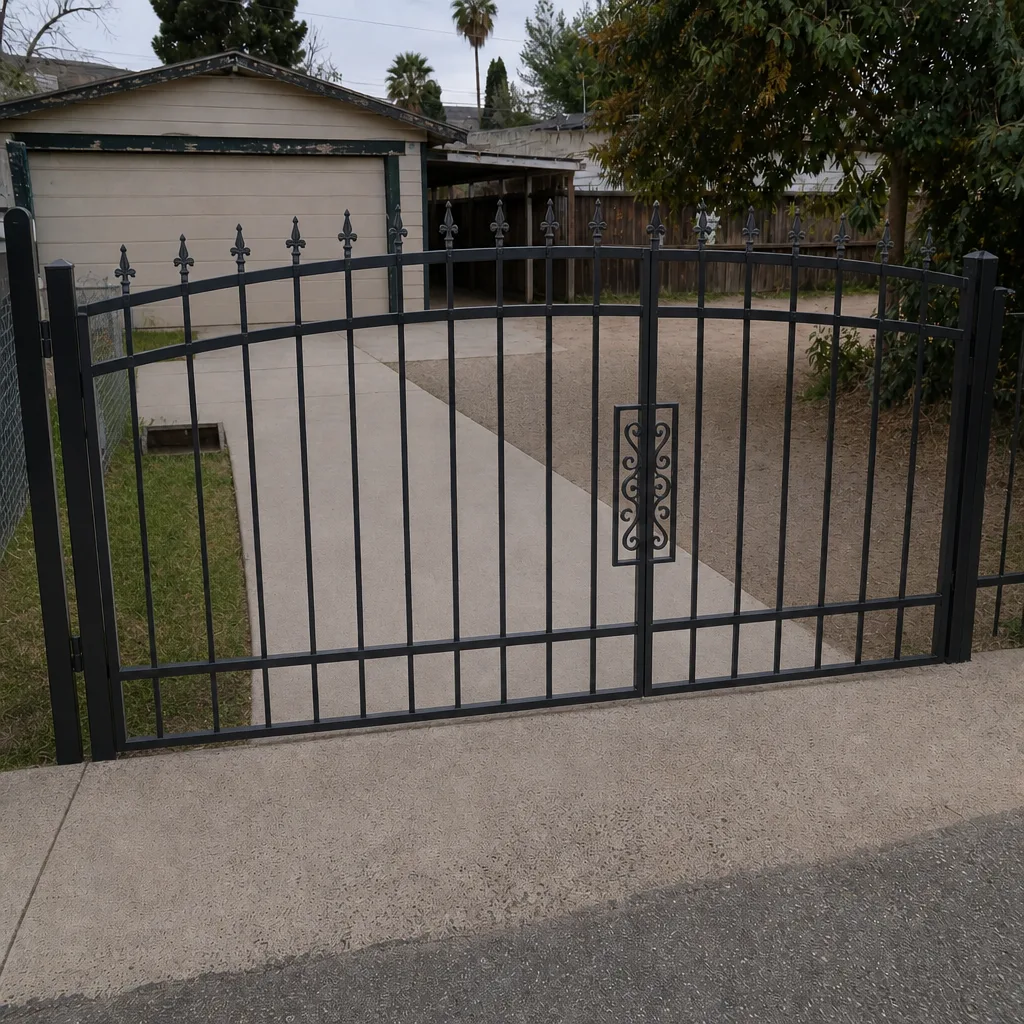 After
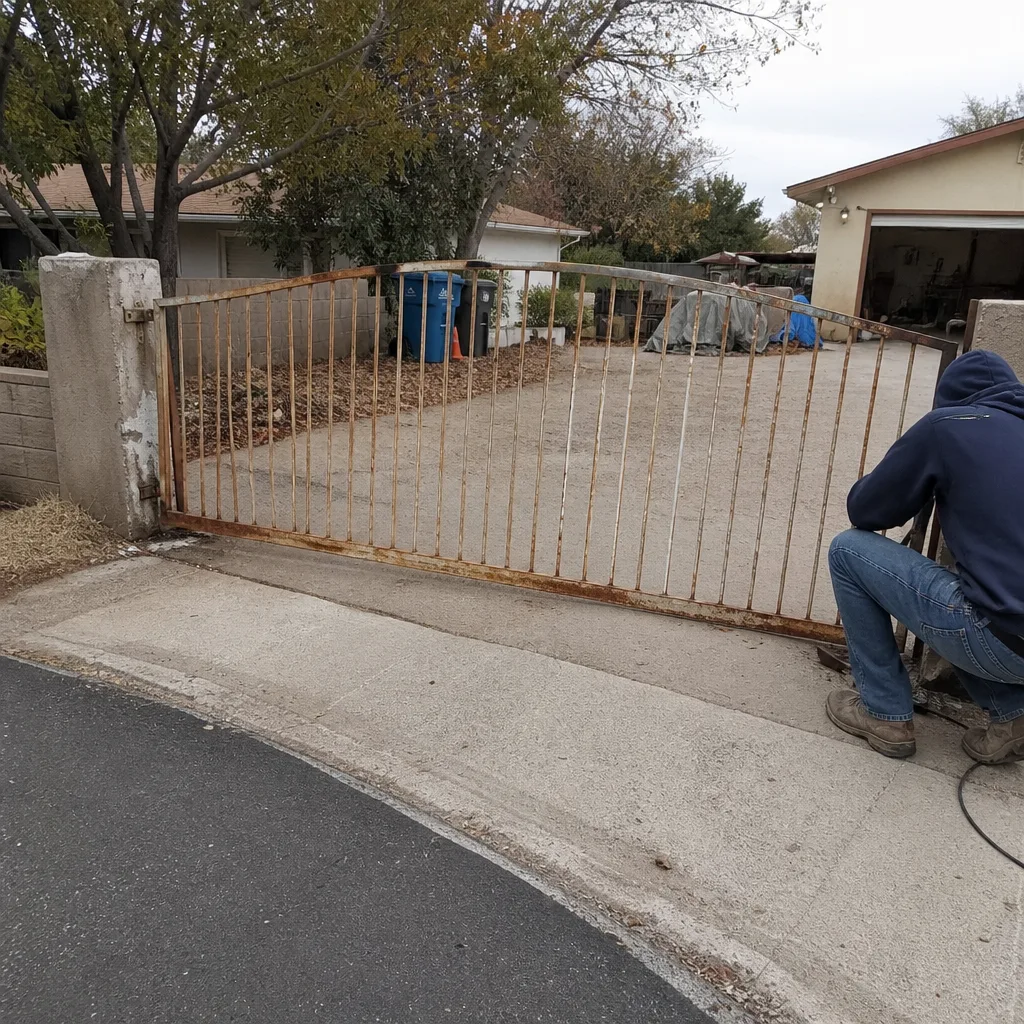 Before
 After
 Before
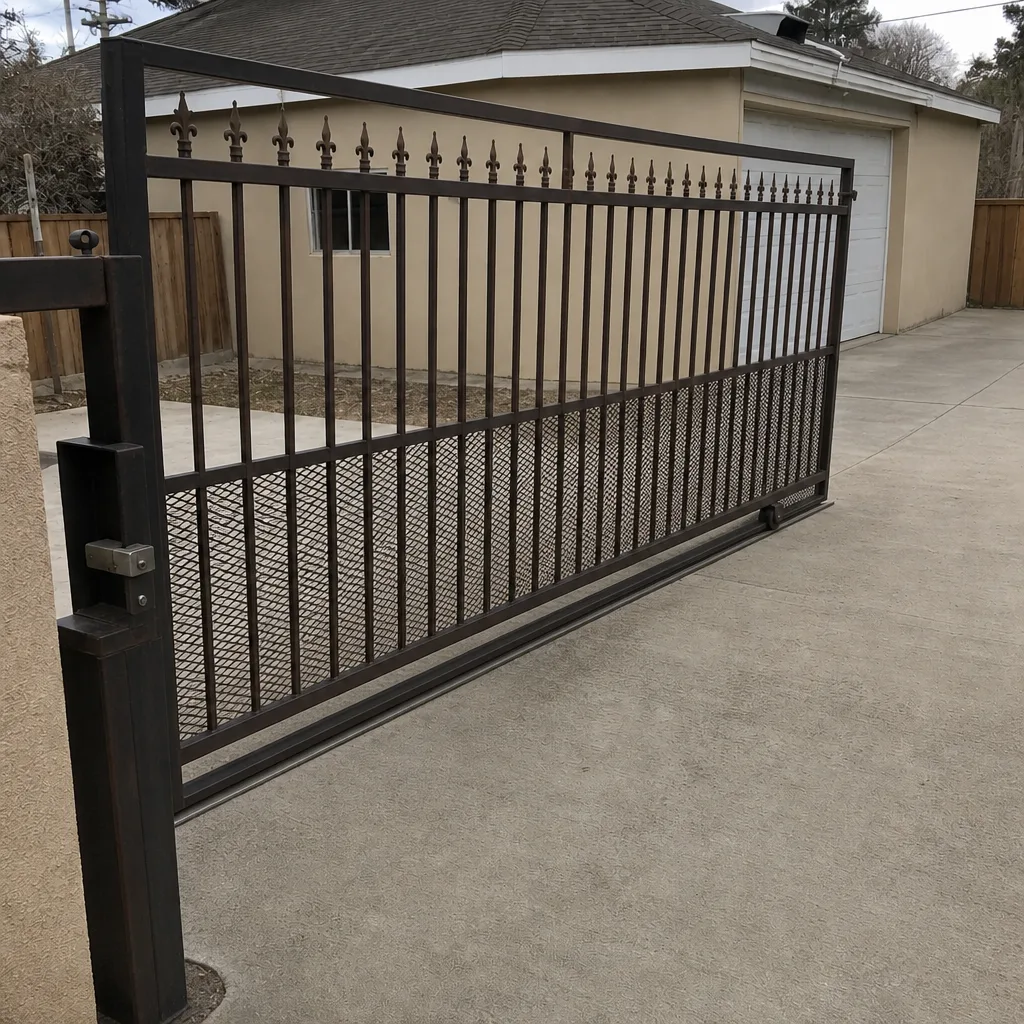 After
Common Mistakes to Avoid
- Cranking the operator force setting instead of fixing the drag. It makes the gate move but defeats the safety reverse. That’s a safety defect on a system built to protect people.
- Working a spring to “see if it’s still good.” The most dangerous time to test a spring is when you don’t know its condition. A loaded spring releases without warning.
- Welding a joint while the gate is still loaded. The weld looks fine, then cracks because the load was never taken off the frame.
- Assuming a battery is dead before checking the photo eyes. A leaf across one lens mimics a dead operator. Clean and align first.
- Buying a replacement operator before the gate itself is diagnosed. If the post is out of plumb or the hinge is worn, a new operator will bind on the same bad gate. Fix the gate first.
- Trusting a quote given over the phone from a national outfit. We’ve seen more than one of those change at the door, and that’s exactly the kind of thing this guide wants to spare you.
- Ignoring a gate that closes on its own. That’s not “personality”; it’s a sign of a hinge or post problem that gets worse under full load.
Frequently Asked Questions
No, and this is the one we mean most firmly. A loaded spring stores hundreds of pounds of force and can release without warning, so spring repair belongs with a trained professional. Call us for a free second opinion if someone has quoted you a spring replacement.
Hinge bolt tightening, lubrication, photo eye cleaning and alignment, and remote battery replacement are all safe and worth doing yourself. On those, we’ll walk you through the steps over the phone for free.
Only if you’re experienced and you take the load off the frame and clean the metal first. A weld over rust or paint looks fine and fails later, and a joint welded under tension can crack and bring the gate down. This is a job for a trained hand.
Look for mismatched bolts, lumpy welds sitting on top of paint, force settings cranked to maximum, or safety edges taped back. If you spot any of those, get the gate looked at before it fails under load.
Lubrication, batteries, and loose bolts are cheaper to do yourself, and we’ll tell you so. Structural repairs done twice cost more than done once; a $40 DIY try that cracks a hinge plate can turn a $150 repair into $600. Upfront pricing means the number we agree on before work starts is the number you pay.
Have the gate and operator brand, a plain description of what the gate is doing, a short video if you can, when the problem started, and any written estimate you’ve already been given. That’s enough to make the call productive and often to skip a service visit altogether.
No trip charge inside the county, and your estimate is free. Every job also carries the 90-Day Done Right Promise in writing, so if something isn’t right, one call brings us back. Call (888) 292-7536 for an exact quote.
The Bottom Line
Some gate repairs are yours to do, and we’ll gladly tell you which: hinge bolts, lubrication, photo eyes, remote batteries. Those are real fixes you can handle. The spring, the weld, the operator mounting, and the electrical side are the jobs that hurt people, and no video makes them safe. If you’re not sure which side of the line you’re on, describe it to us and we’ll be honest about it. The name is on the shop and the shop is down the road, which is the oldest accountability there is. For gate repair in Paradise, free estimates, and straight answers, call (888) 292-7536 today. For more on what we do, visit our Gatewood Fence & Gate Paradise home, or read about gate repair in Paradise, gate installation in Paradise, and gate motor & opener service in Paradise.
Written by the team at Gatewood Fence & Gate Paradise.