
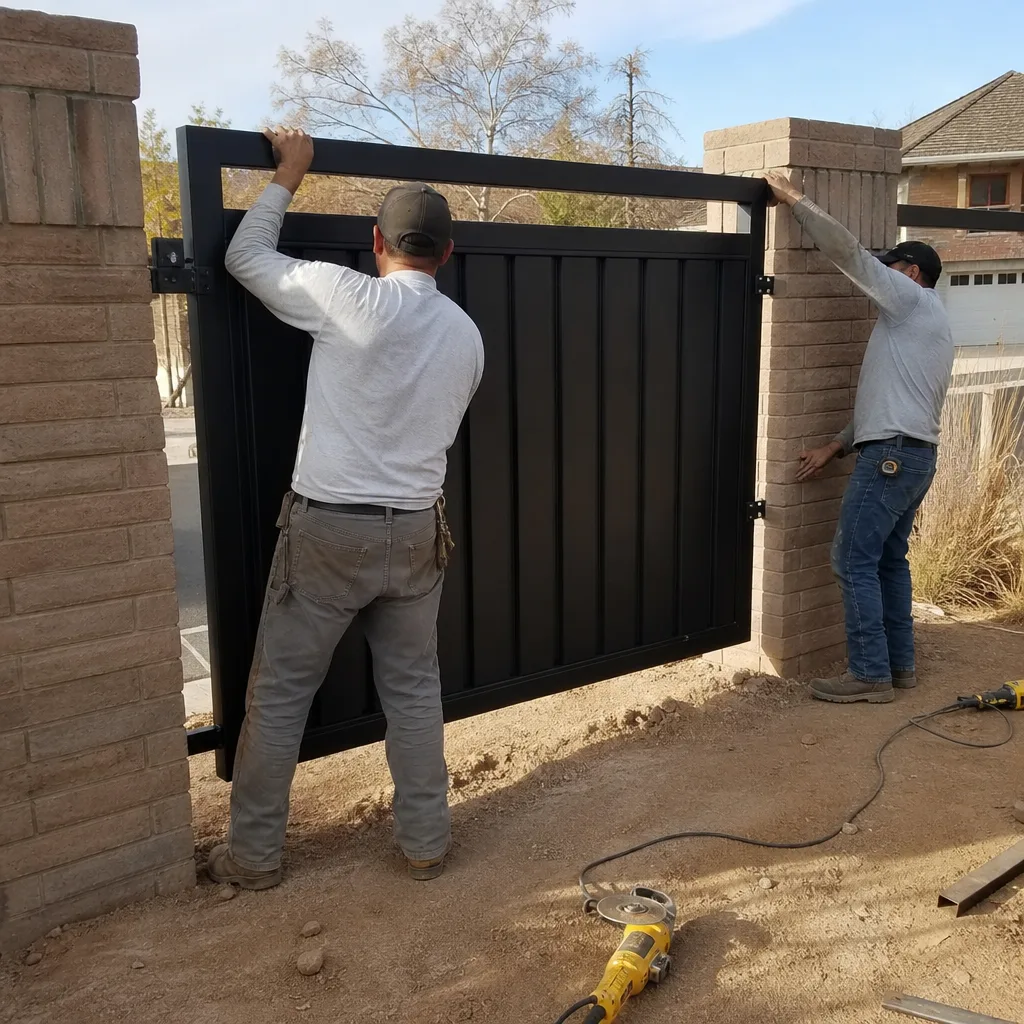
Last updated November 18, 2026
 Wrought iron
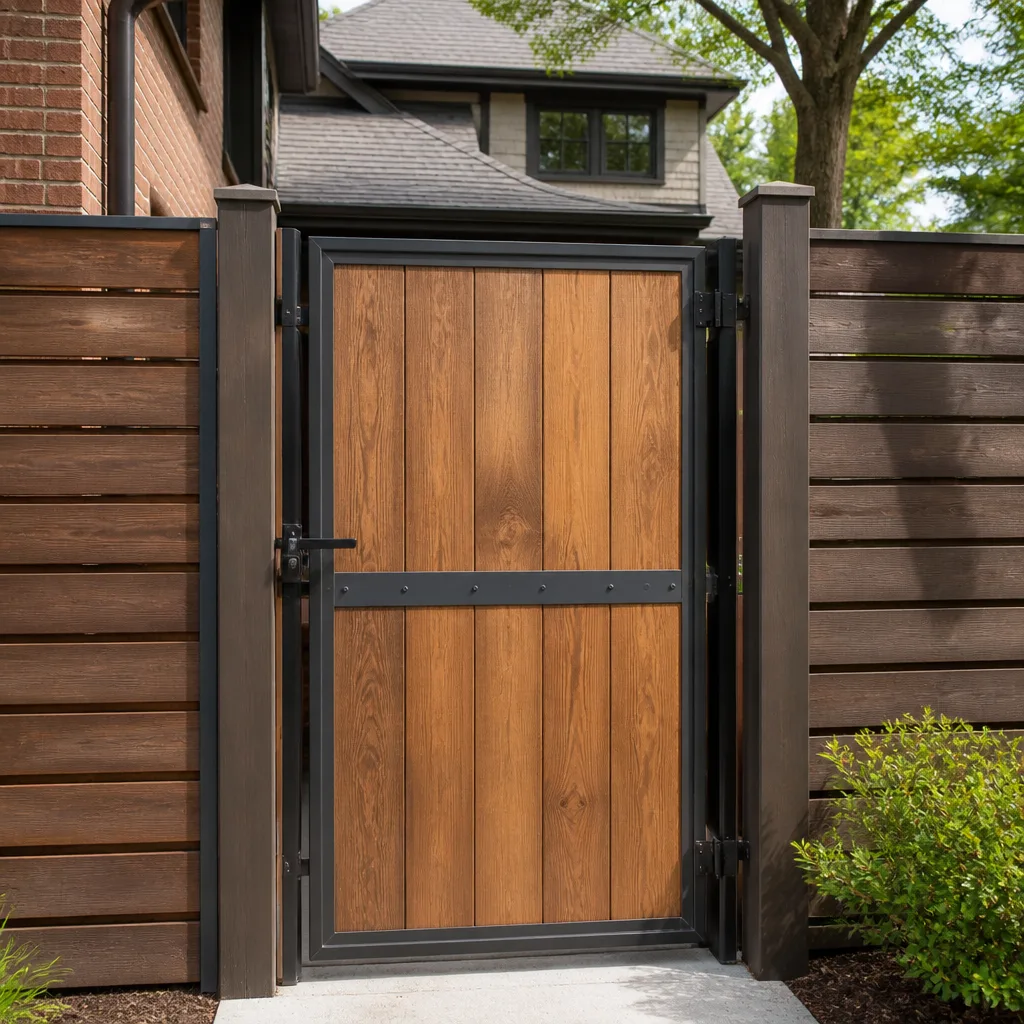 Wood & steel frame
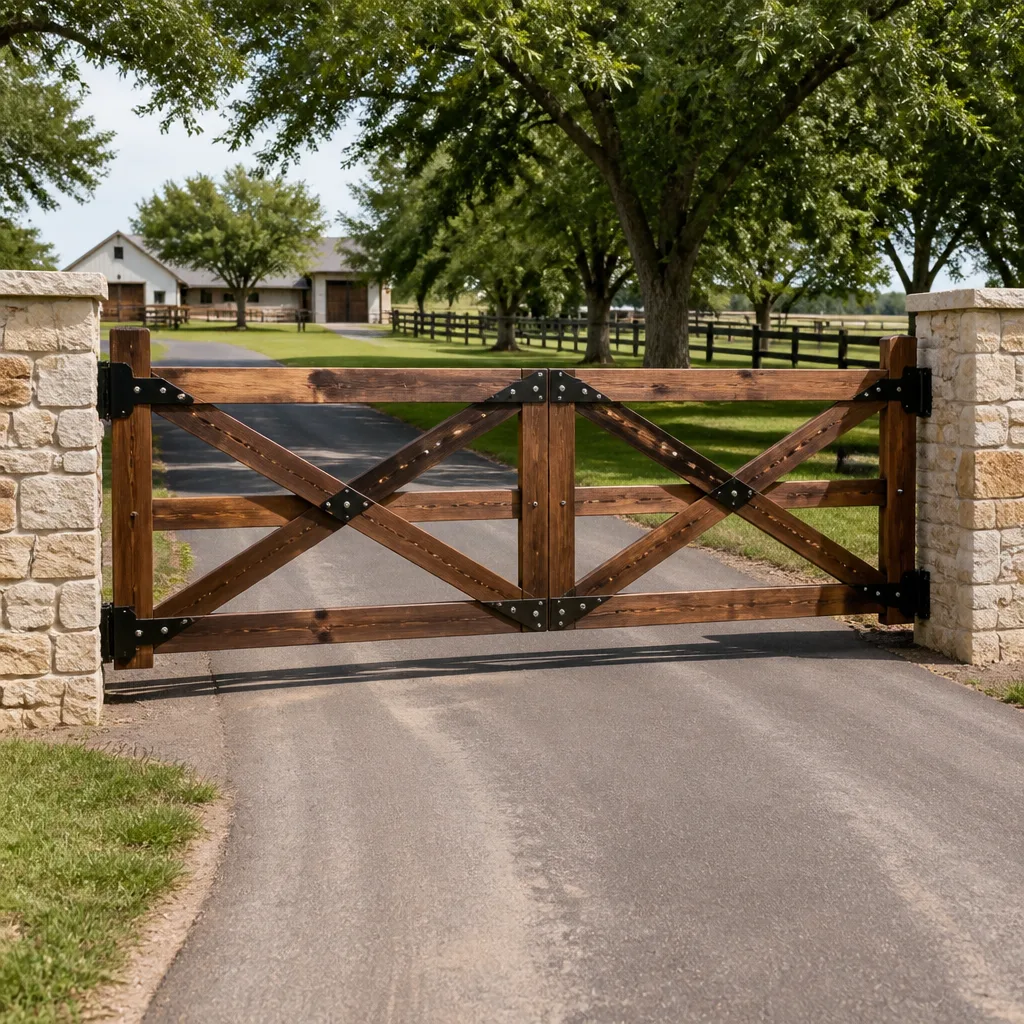 Farm & ranch
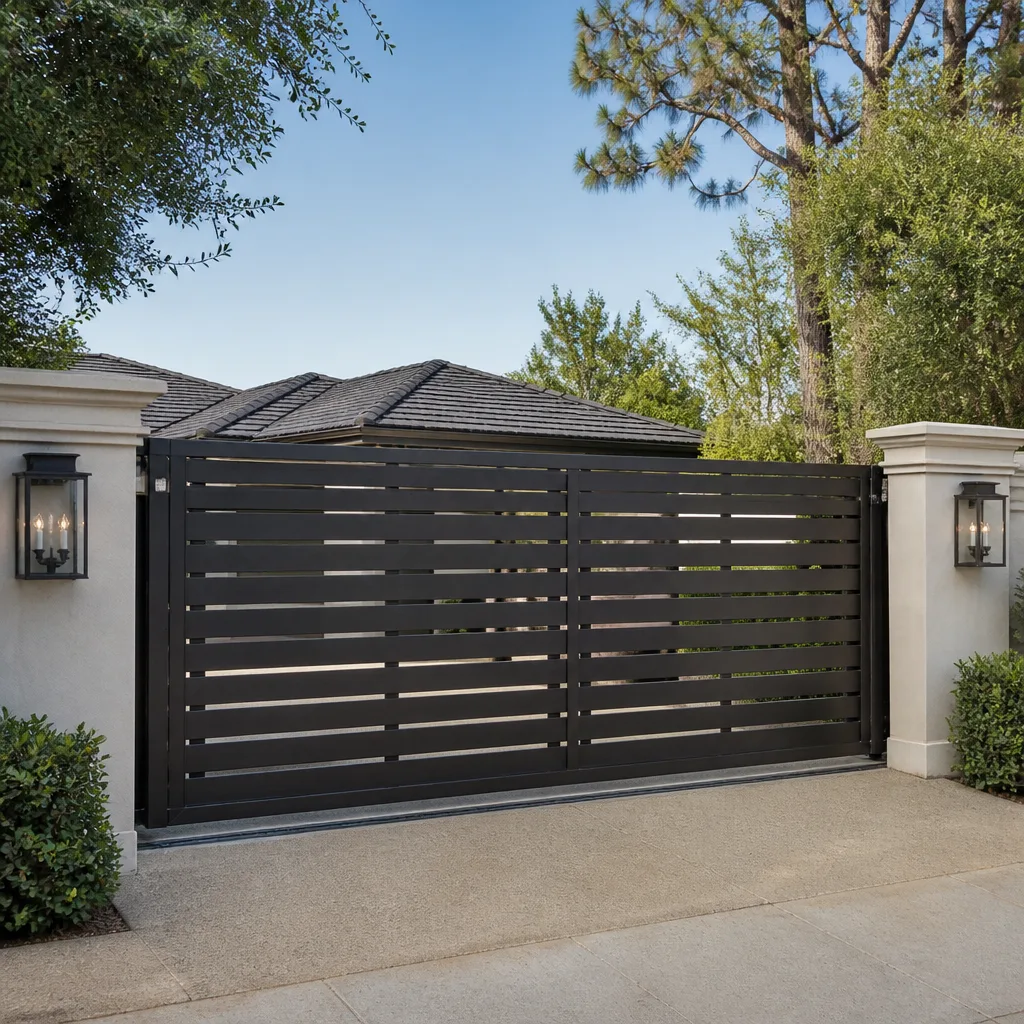 Sliding driveway gates
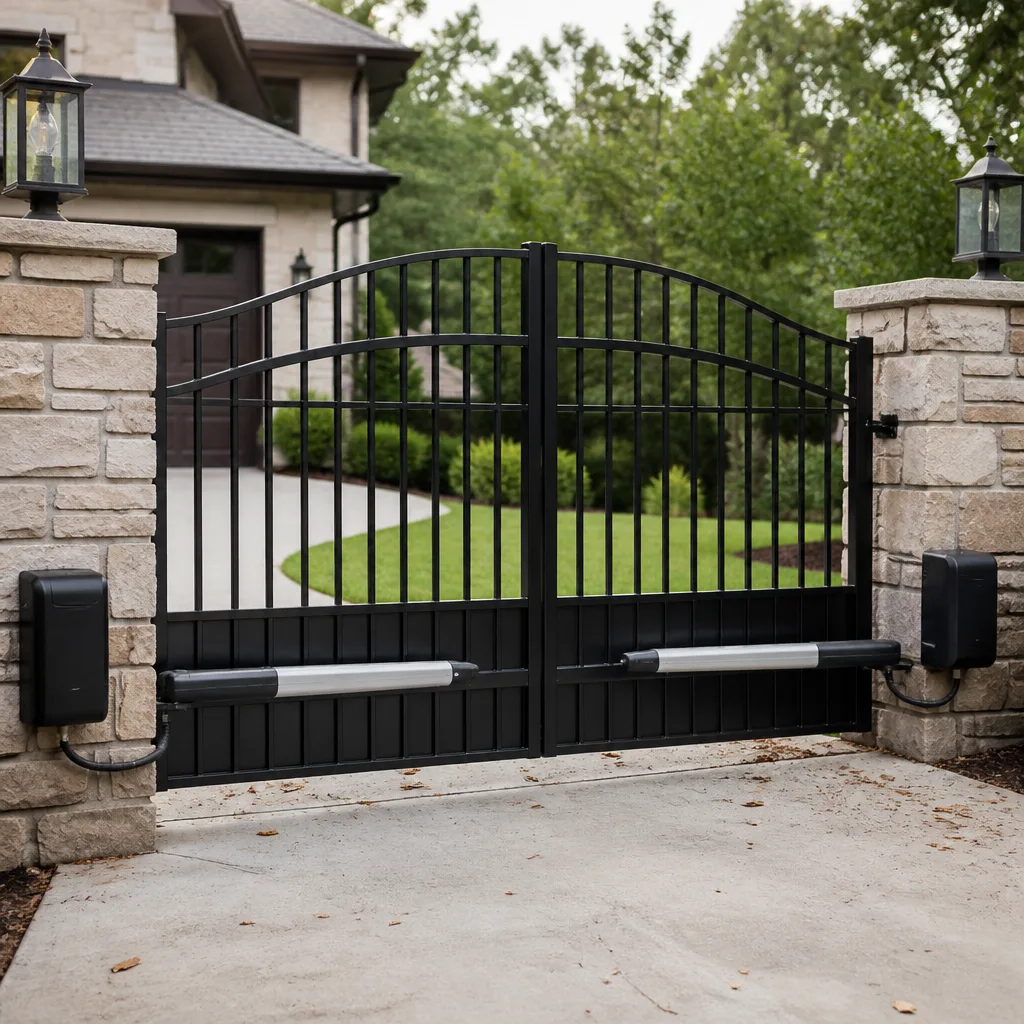 LiftMaster operators
Free on-site gate assessment - hinges, posts, and your LiftMaster or Nice gate operator checked before anything is quoted
The assessment is free and the quote is the invoice.
Get your free estimateDIY vs Professional Gate Repair: The Paradise Homeowner’s Decision Guide
Replacing a gate remote or reprogramming a keypad is a legitimate DIY job that takes 15 minutes and a YouTube video. Resetting that same gate’s limit switches after a power surge looks just as simple but requires recalibrating travel force settings that, done wrong, will shred the operator’s drive gear within a week. That gap is the whole story. Some gate work you can absolutely do yourself, and paying anyone for it is a waste of money. Other gate work will cost you significantly more to fix after a failed attempt than it would have cost to do right the first time. This guide draws that line clearly for Paradise homeowners, using what we’ve learned fixing gates around here for a long time.
Quick Answer
Most minor gate repairs are DIY-friendly: battery and remote swaps, keypad reprogramming, lubricating a stiff hinge, clearing a sensor eye, or tightening exposed nuts on a sagging hinge. The jobs that aren’t DIY-safe are the ones involving high-tension springs, cables, motor travel-force calibration, control board wiring, and welding. In Paradise’s heat, those jobs fail faster and more expensively when done wrong, because metal expands, plastics go brittle, and a miscalibrated operator works harder in July than it would almost anywhere else.
Styles & brands we work with
- Wrought iron
- Wood & steel frame
- Farm & ranch
- Sliding driveway gates
- LiftMaster operators
Table of Contents
- What Makes Gate Repair Different From General Home DIY
- The DIY-Safe List: Jobs You Can Handle Yourself
- The Professional-Only List: Jobs That Get Worse When You Try
- How Paradise Heat Changes DIY Success Rates
- The Tools and Knowledge Gaps No YouTube Video Closes
- Budget DIY vs the Smarter Technical Choice
- Why Gate Brand Matters to Your DIY Decision
- A Step-by-Step Way to Decide
- Common Mistakes to Avoid
- When to Call a Professional
What Makes Gate Repair Different From General Home DIY
Homeowners who are handy with a drill and a level still get humbled by a gate, and there are concrete reasons why. A gate is a lever system carrying real weight and, if it’s automatic, a motorized drive that moves it thousands of times a year. Four things make gate work behave differently from hanging a shelf or patching drywall.
- Stored tension. A torsion spring on a swing or slide gate holds the same kind of dangerous energy as a garage door spring. Cables and chains under load can snap with serious force. This is not a guess; the injury statistics for this kind of work are documented and grim enough that we never coach a homeowner on a spring or cable repair, only on recognizing the failure.
- Force calibration. An automatic operator is tuned to the specific weight and resistance of your gate. “Make it push harder” sounds like a simple fix, but too much travel force masks the real fault and starts destroying bearings, hinges, and the gear inside the unit.
- Tolerances move. Metal expands in heat and contracts at night. Fasteners that felt tight in January loosen by July. A gate that’s misaligned by a quarter inch at the hinge post is off by a foot at the far end.
- Safety overlays. Modern openers include force-reversal limits, photo-eyes, and obstruction sensing. Bypass one to stop a nuisance trip and you’ve removed a safeguard that stops a gate on a child or a car.
None of this means don’t touch your gate. It means know which category the job falls into before you pick up a wrench. That’s the whole decision.
The DIY-Safe List: Jobs You Can Handle Yourself
There is a real list of jobs that any capable homeowner can do in an afternoon, and we’ll tell you to save your money on all of them. If your gate problem is on this list, do it yourself and call us if it doesn’t fix things.
- Replacing a remote or keypad battery. Open the battery compartment, match the model number, swap it, re-sync the remote with the learn button on the operator housing. Ten minutes.
- Reprogramming a keypad PIN. Every brand has a documented sequence. Pull the manual for your model and follow it exactly; there’s no reason to pay for this.
- Clearing and cleaning a photo-eye or sensor. Spider webs, dust, and blown-in debris trip these constantly around Paradise. Wipe the lens, clear the beam, test it.
- Lubricating hinges and pivot points. A dry white lithium or silicone spray on the hinges and track, every six months, prevents most noise and reduces wear. Don’t use WD-40 on the actual hinge pin; it collects dust.
- Tightening an obviously loose hinge bolt or horizontal member. If a nut has backed off, snug it. If the gate still sags after that, the problem is underneath it.
- Clearing the track on a sliding gate. Gravel, leaves, and palm debris in the track slow the motor and cause jam codes. Sweep the channel and test the limit cycle.
- Adjusting a manual gate’s gate-stop. If the gate swings past its intended rest position, the physical stop is off. Reposition, re-bolt, done.
- Visually inspecting for the big problems. Look at the hinge plate for tears, look at the spring for gaps or kinks, look at the operator housing for rust. You don’t have to fix those, but knowing they’re there helps when you do call.
One rule on the DIY-safe list: if the fix requires working inside the operator housing or the gate comes off its hinges, stop. Those are on the professional list.
The Professional-Only List: Jobs That Get Worse When You Try
These are the jobs where the fix, done wrong, creates a bigger bill than the original problem. We’ve seen every one of these go sideways in Paradise, and the downstream cost is real.
- Any torsion spring or cable repair. These store enough kinetic energy to hurt you badly. There is no safe homeowner route here.
- Motor travel-force calibration and limit-switch resetting. After a power surge or a bumped sensor, the operator loses its reference position. Re-tuning it wrong overdrives the gear train. A LiftMaster or FAAC operator’s drive gear can fail within a week under misconfigured force settings, and the gear replacement is a parts-and-labor job that can run into the hundreds.
- Control board diagnosis and wiring. A board that won’t respond can be a failed capacitor, a shorted sensor lead, a stuck relay, or a bad transformer. Guessing by swapping parts is the most expensive way to diagnose one.
- Welding a hinge plate or post repair. A torn hinge plate or a rusted end welded at the wrong angle warps the gate frame. The whole gate then drags and eats the operator.
- A hinge post that’s pulling out of the ground. Fix the panel without the post and you’ll fix it twice. If the post is gone, the panel isn’t the problem.
- Access control and intercom integration. Phone-app modules, telephone entry systems like DoorKing, and multi-user keypads require channel-level programming that a manual never quite explains.
If your gate problem is on this list, save yourself the second repair bill and get a written estimate from someone who welds on site and can do the work in your driveway.
How Paradise Heat Changes DIY Success Rates
Every guide to gate repair on the internet was written for a temperate climate. Paradise isn’t one. Summer temperatures regularly top 105°F, and gate hardware sitting in direct sun swings between 60°F at dawn and a surface temperature of 150°F on a black steel gate by midafternoon. Four specific things happen to gates in that environment that change the DIY calculus.
- Thermal expansion adds 1/8 inch per 10 feet to a steel frame between dawn and midafternoon. A gate that was perfectly aligned and calibrated in the cool morning drags and trips its force-reversal limit by 2 p.m. The homeowner who then cranks up the force to “fix” it is on the fast track to a burned-out operator.
- UV degrades plastic and rubber. Photo-eye covers, wire jackets, weatherstripping, and remote housings go brittle in 2-3 years instead of 8-10. A “clearly” failed sensor is sometimes just a cracked lens letting in sun. Worth knowing before you spend on a replacement sensor you don’t need.
- Heat degrades battery capacity. Gate openers use sealed lead-acid backup batteries. Ambient heat in a closed housing shortens their useful life. The 3-5 year warranty on a replacement battery is optimistic in Paradise; two to three years is realistic.
- Metal fatigue and paint failure hit faster. Hinge welds that would last 15 years in a mild climate can show stress in 8-10 here. That’s why on-site welding matters in Paradise: hauling the gate away for a fix that a properly equipped welder can do in your driveway is wasted effort and a heavier bill.
You’ll see heat-related gate failures peak in late May and again after the first cool-off in October, when the gate has been sitting at one temperature for months and suddenly isn’t. Locals know this. Any gate-repair guide worth its salt should mention it, and most don’t.
The Tools and Knowledge Gaps No YouTube Video Closes
Every gate repair video assumes the gate is the one in the video, the operator is the one in the video, and the problem is the clean, textbook version. Real gates aren’t. Here are the four gaps that bite even experienced DIYers.
- Force gauge and multimeter. An operator’s maximum allowed travel force is a specification, not a “feels about right” setting. Calibrating it requires measuring against that spec. Skip the tool and you skip the tuning.
- On-site welding capability. A torn hinge strap, a wall bracket that’s pulled away from masonry, a broken gate-frame member: all of these need welding, in place, or the gate comes off its hinges and goes to a shop. If you don’t own a portable welder and know how to set it for 14-gauge steel, that’s not a DIY job.
- Brand-specific service manuals and diagnostic codes. LiftMaster, FAAC, BFT, Linear, Viking, Ghost Controls, DoorKing, Elite, Mighty Mule: each has its own error-code tree and its own channel assignments. A generic video won’t tell you what code 4 blinks means on your specific unit.
- The 15 minutes of troubleshooting that takes 15 years to learn. When a gate stops closing, a skilled hand runs through power, sensors, limits, force, and mechanical interference in about the time it takes to open a toolbox. That pattern is not on any forum. That’s what experienced techs are paid for.
Budget DIY vs the Smarter Technical Choice
There’s a version of this decision that’s about money, and there’s a version that’s technical, and they don’t always agree. Being honest about which one you’re making saves you a bigger bill later.
Budget DIY is when you genuinely can’t justify paying for something you’re capable of doing. That’s fine and we support it: the DIY-safe list is exactly for you. A $6 white lithium spray and one afternoon of lubrication every six months keeps most residential gates running years longer than neglected ones. A $12 battery for the keypad beats a $60 service visit every day.
Technical DIY is the trap. It’s when the job is safe and technically possible, but doing it perfectly takes more time and equipment investment than you’d ever recoup. Welding a header crack is the classic example: yes, you can buy a welder and learn on this job, and yes, you’ll want a professional when the weld on the second crack fails. Diagnosing a control board is similar. So is tuning a Limit or travel-force setting precisely enough to protect a $400-800 operator. Those are cases where DIY is technically possible but objectively the more expensive path to the same result.
The honest math: for every task on the DIY-safe list, do it yourself. For every task on the professional list, the second repair is where the money goes. If your gate failure is one of those, the choice isn’t DIY vs a professional. It’s a professional now vs a professional plus the damage later.
Why Gate Brand Matters to Your DIY Decision
Which operator you’re looking at changes what’s smart to DIY. Some brands are genuinely homeowner-friendly for basic tasks. Others are not.
LiftMaster residential and light-commercial openers are designed for user-level setup on remote pairing, keypad programming, and force adjustment; if the manual is on hand, three or four of the DIY-safe tasks get easier. Linear and BFT operators tend to have well-documented diagnostic blink codes and accessible learn buttons, which makes a sensor-clearing or keypad reset something a homeowner can do without much trouble. FAAC and DoorKing sit more on the commercial-leaning side, with channel-level programming that’s less forgiving of mistakes, and more likely to need a trained eye for anything past the basics. Mighty Mule and Ghost Controls are aimed at the homeowner market, but their force and limit tuning still gets dangerous fast when a gate hangs in the summer heat.
Our crew is certified across nine major gate brands, and we can tell you which category your unit falls into before you decide. That doesn’t mean every call turns into a repair ticket; often it turns into a five-minute phone answer and a customer who fixes it themselves. That’s fine with us.
A Step-by-Step Way to Decide
When you’re standing in front of a broken gate and you’re not sure which list it’s on, this sequence will sort it out in about three minutes.
- Identify the symptom precisely. Won’t open at all? Opens partway and reverses? Opens but the gate sags? Each symptom narrows the category.
- Check the simple stuff. Power at the outlet, breaker inside the house, photo-eyes clear, manual release lever not engaged. Half the calls we get end at this step.
- Match the failure to the DIY-safe list. Battery, keypad, lube, sensor, loose nut, track clearing. If it’s on the list, do it yourself.
- Match to the professional-only list. Springs, cables, welding, travel-force calibration, control board, hinge post. If it’s on that list, stop.
- Look for Paradise-heat signs. Cracked sensor lenses, sagging gate in the afternoon but tight in the morning, paint failure near welds. These often push a job onto the professional list even when the symptom looked simple.
- Get a written estimate before anything else. A proper estimate is free and itemized. If a tech quotes you a number on the phone and then a bigger number at the gate, that estimate isn’t one.
- Get a second opinion if the number feels high. A free second opinion on any written estimate is standard. Take advantage of it.
Common Mistakes to Avoid
- Cranking up travel force to stop a limit trip. The gate tripping its limit is telling you something is wrong. Turning up the force hides the symptom and starts eating the operator’s gear set.
- Welding a hinge plate without measuring the angle first. A weld at the wrong angle warps the frame, and suddenly the gate drags the operator on every cycle. Fix the hinge without checking the gate’s rest angle and you’ll fix it twice.
- Using WD-40 as a lubricant on hinge pins. It’s a solvent, not a lube. It cleans out whatever grease was protecting the pin and then attracts dust. A dry white lithium spray is what you want.
- Bypassing a photo-eye because it keeps tripping. Bypassing a safety sensor removes a safeguard that stops the gate on a child or a pet. On a Paradise trailer-park entry or a driveway gate, that safeguard is the whole point.
- Hauling an automatic gate to a shop for welding. A properly equipped crew can weld the frame in your driveway. The gate coming off is a risk, a cost, and often a longer wait. It doesn’t need to happen.
- Replacing the panel when the hinge post is failing. A gate sags in the hinge post, not in the middle. Fix the panel and leave the post alone and the sag comes right back in a matter of weeks.
- Clearing a power-surge limit fault by hitting the reset button repeatedly. The limit positions were scrambled by the surge. Resetting without reactivating the calibration sequence leaves you with an unreferenced operator that “works” for a day and then behaves worse than before.
When to Call a Professional
Call a professional when the job involves a torsion spring, cable, or anything stored under load. Call when the operator is misbehaving after a power surge, when a motor runs hot or smells burnt, when the drive gear is grinding, when a hinge plate is torn off the frame, or when the gate is dragging through a bad track and the fix isn’t a sweep. Call if you’ve tried the DIY fix once and the problem came back, because the second repair is always more expensive than the first would have been. And call if you’ve gotten a written estimate and something about it doesn’t look right; a second opinion is free and you’re not obligated to anything.
If you’re in Paradise, our number is answered by a live person around the clock, and the estimate is upfront and in writing. Free estimates in Paradise, a 90-Day Done Right Promise in writing on every job, and no trip charge inside the county. When a repair is on the professional-only list, you can call (888) 292-7536 and we’ll tell you honestly whether it’s a today thing, a scheduled thing, or a “you can do this yourself” thing. Some of what we do is gate repair in Paradise; some of it is gate motor and opener service; all of it is written down before we start.
Frequently Asked Questions
Only if you have the service manual for your specific brand and a way to measure travel force against the spec. The limit switch itself is easy to access; the calibration sequence it triggers is not, and getting it wrong overdrives the drive gear and wears the operator out within a week or two. For a LiftMaster, FAAC, BFT, Linear, or any of the brands we service, a tech can reset it correctly in about twenty minutes. Call (888) 292-7536 and we’ll tell you if it’s a same-day thing or something to schedule.
Turning up the travel force adjustment to stop a nuisance trip. The gate’s force-reversal limit is doing its job by tripping; the fix is figuring out what changed (heat expansion, a dry hinge, a low battery, a misaligned track), not turning up the force. We see operators fail within a month of a homeowner cranking the force, and the repair is always more expensive than the original diagnosis would have been.
Usually yes, especially if the frame is sound and the operator is under ten years old. Heat does accelerate wear on hinges, paint, and batteries, but a well-built gate frame can be re-hinged and re-welded two or three times before replacement makes sense. The right call depends on the hinge post condition and the frame’s rest angle, not on the paint. We’re a repair-first shop and we’ll tell you if replacement is actually the smarter number.
Common repairs run from $180 to $450 for a hinge, sensor, or minor operator fault, and $350 to $800 for motor or control board work. Spring, cable, and welding jobs depend on the gate’s weight and access. The number is quoted upfront, in writing, before any work starts, and it doesn’t change at the door. Call (888) 292-7536 for an exact quote; estimates are free and there’s a free second opinion on any written estimate you already have.
The heat is the big one. Limit and travel-force settings calibrated in cool morning temperatures will trip in afternoon heat, so any adjustment has to account for the gate’s expansion over the course of the day. Photo-eye covers and wire jackets also go brittle in two to three years here instead of eight to ten, so a “clearly” failed sensor is sometimes just a cracked lens. Check the lens before you buy a replacement part.
For repair calls in Paradise and the surrounding county, often yes. Our line is answered by a live person 24 hours a day, so when you call at 7 a.m. you’re not leaving a voicemail. Installation and new-operator work is measured and scheduled rather than same-day; that kind of work gets a written price and a scheduled window, not a dispatch promise. Either way, call (888) 292-7536 and we’ll tell you straight.
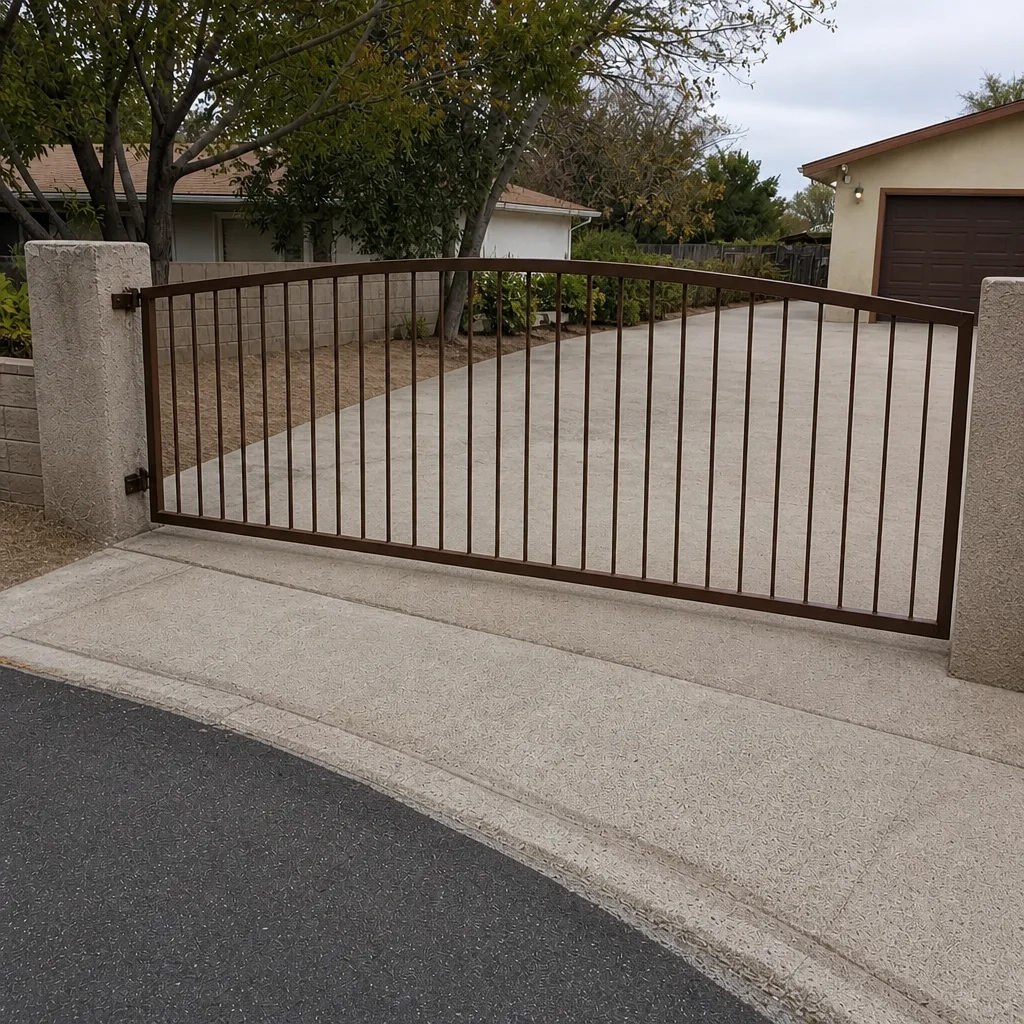
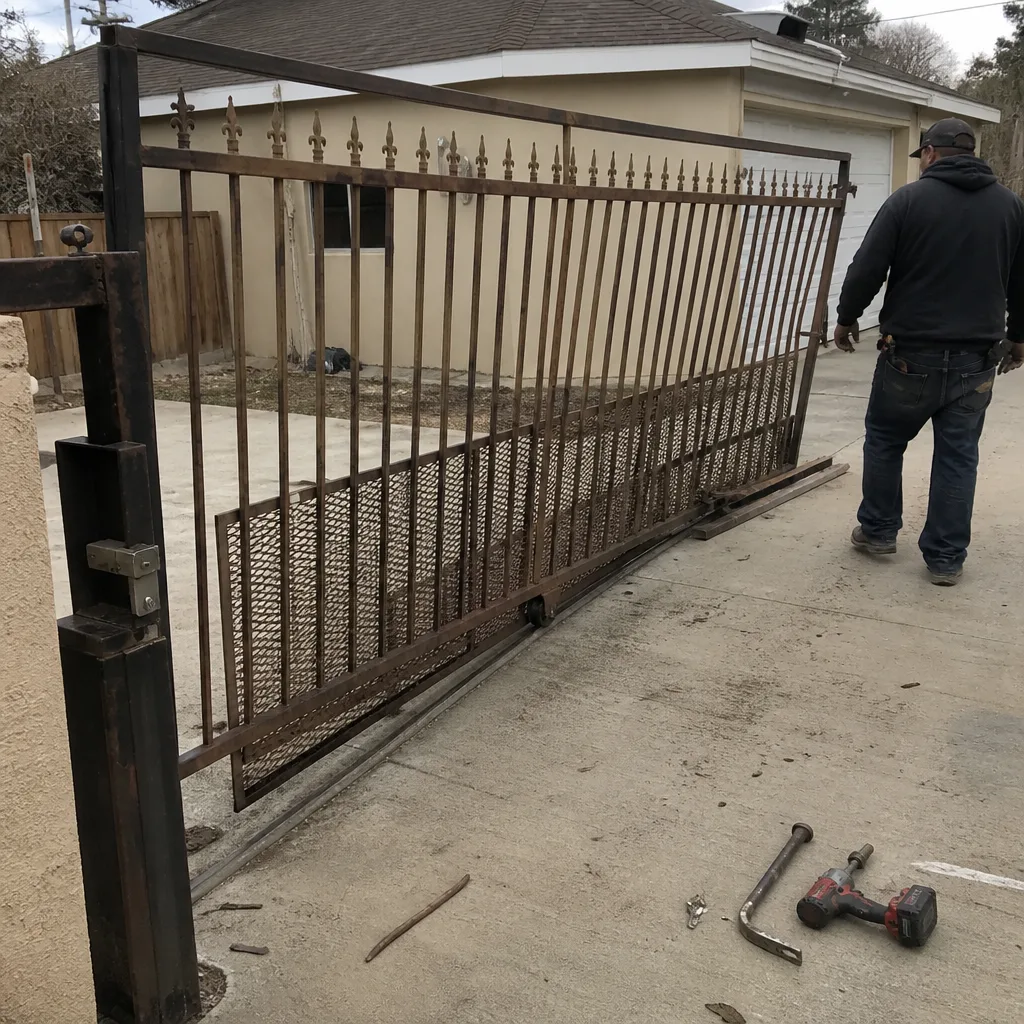
See the difference
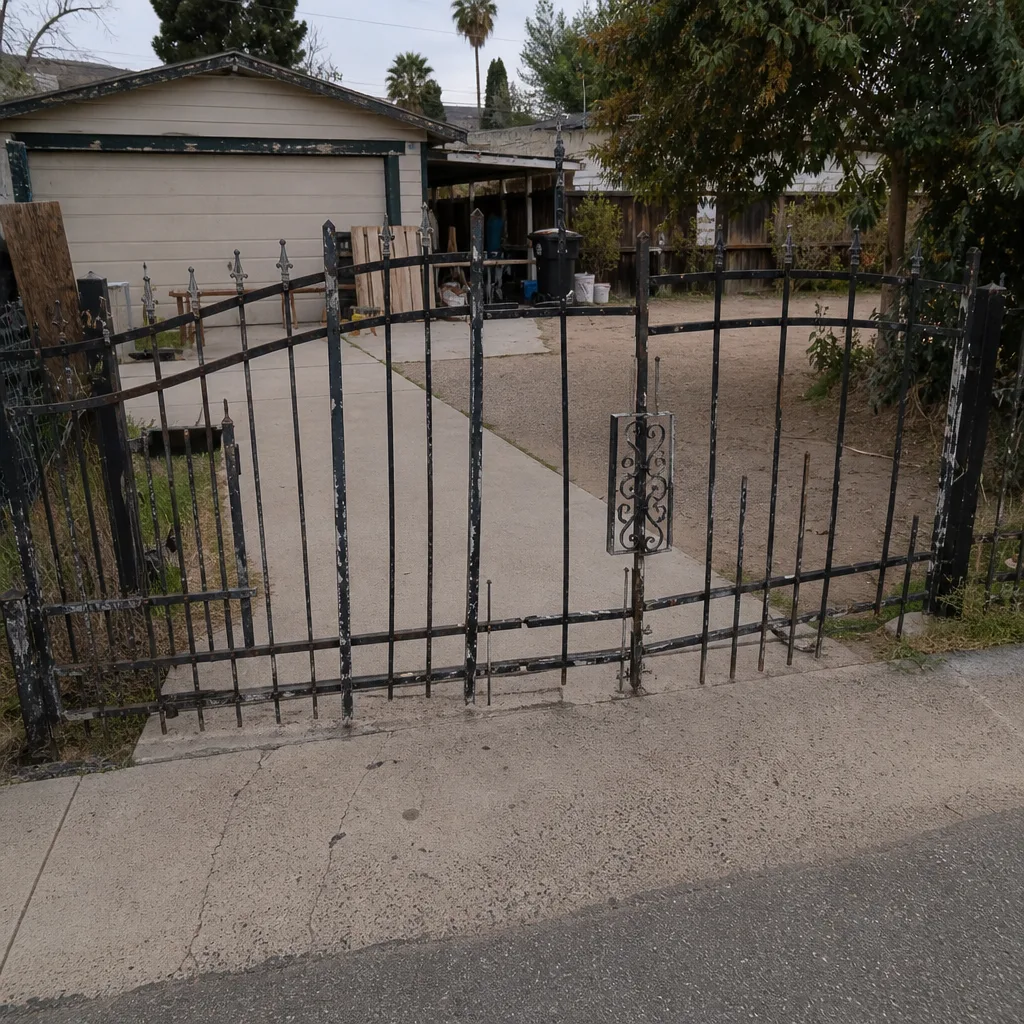 Before
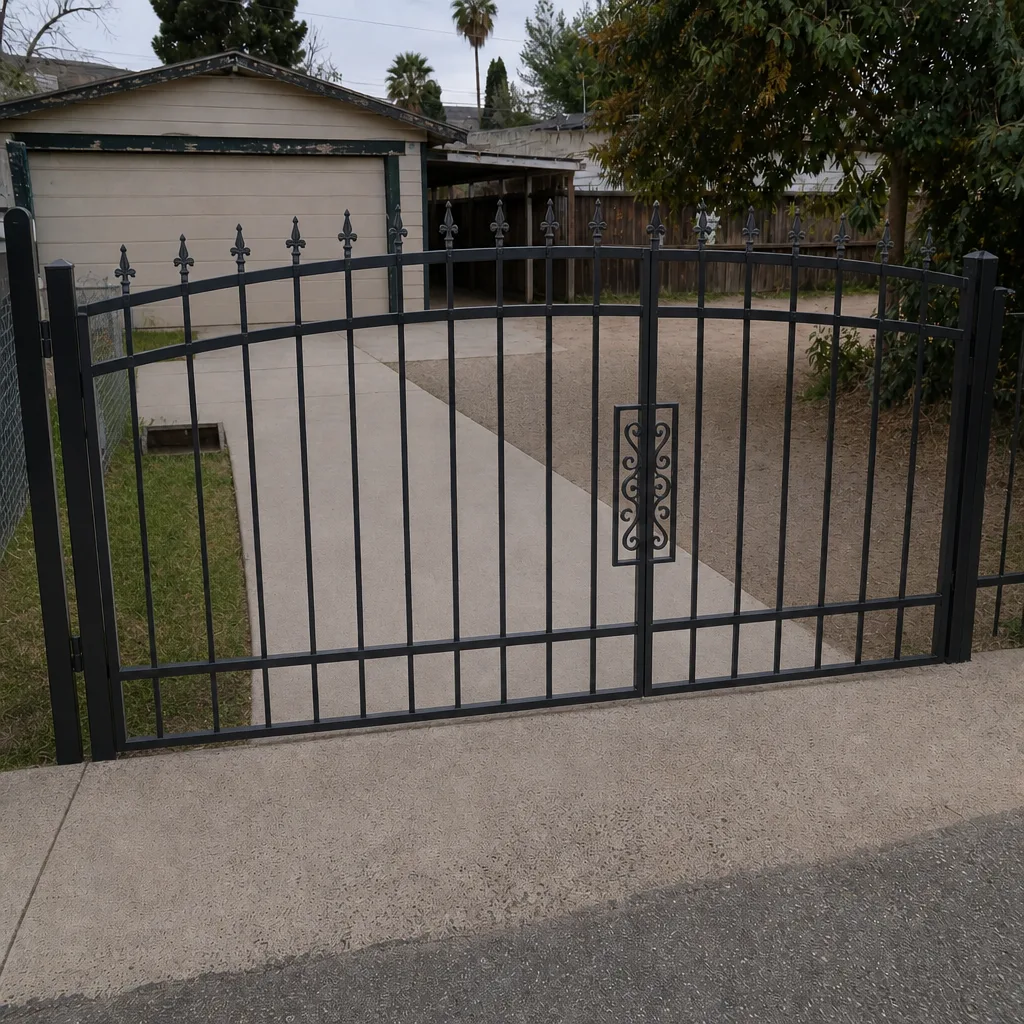 After
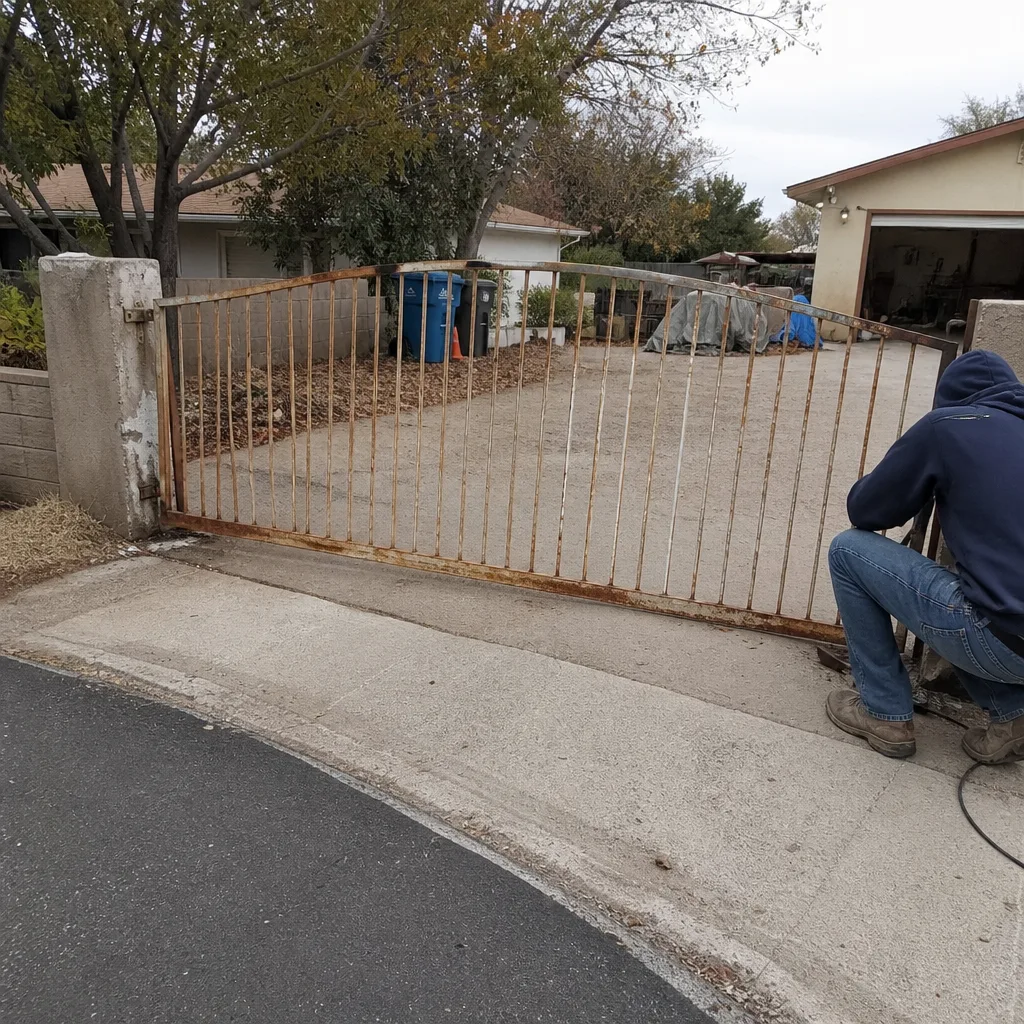 Before
 After
 Before
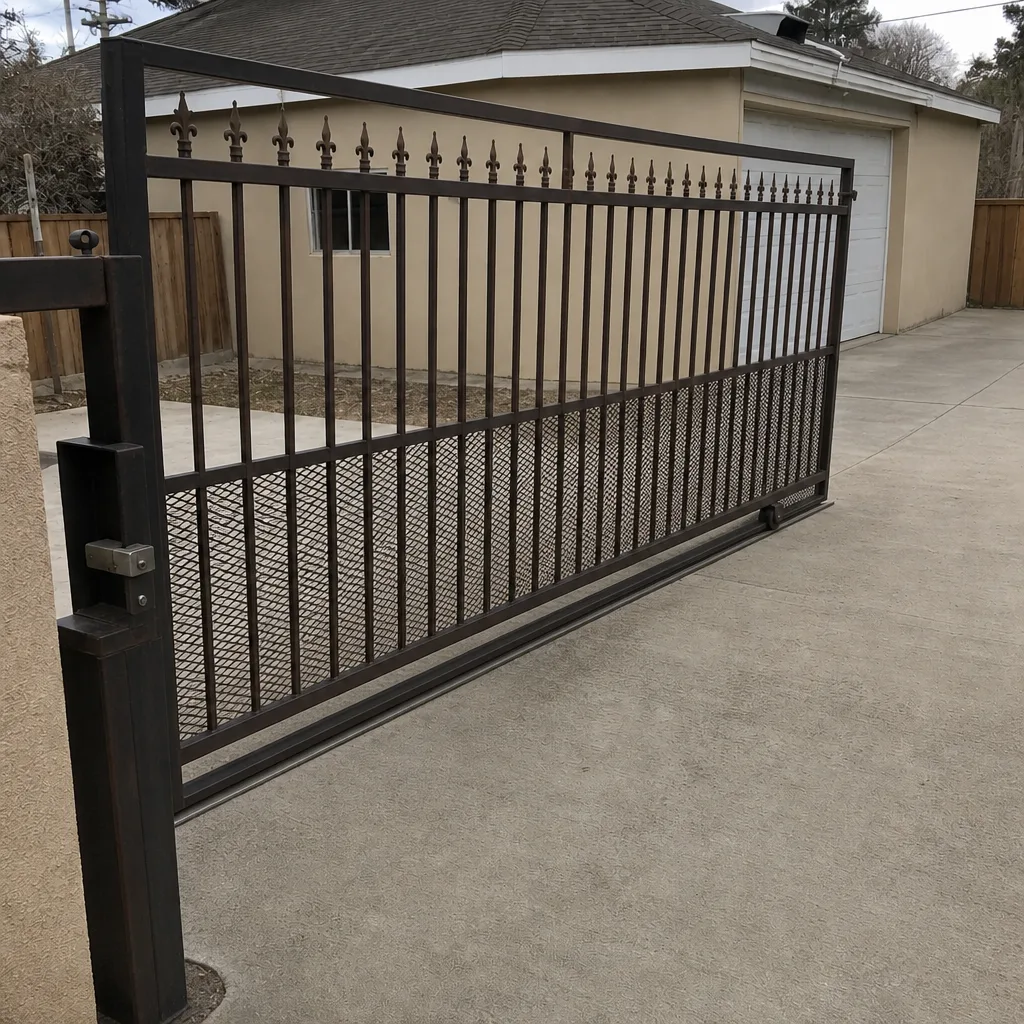 After
The Bottom Line
Most of what goes wrong with a residential gate in Paradise is on the DIY-safe list: batteries, keypads, lubricant, sensors, loose bolts, track clearing. Do those yourself and save the money. The repairs that involve springs, cables, welding, travel-force calibration, or a control board are where DIY stops being smart and starts being expensive. The line between the two lists isn’t arbitrary; it maps to safety and to the cost of the second repair. When you’re not sure which list you’re on, call. We answer 24 hours a day, and we’ll tell you whether to fix it yourself.
Contact
Whether the job belongs on the DIY list or the professional one, we’re happy to answer the question. Call (888) 292-7536 for a free estimate. Our line is answered by a live person around the clock, the price is quoted and agreed before any work starts, and every job carries the 90-Day Done Right Promise in writing. If you have a written estimate from another shop, we’ll give you a free second opinion on it. You can also start at the Gatewood Fence & Gate Paradise home, look at gate installation in Paradise if the gate is at the end of its life, or drive down and look us in the eye at the shop. The name is on the shop, and the shop is down the road; that’s the oldest accountability there is.
Written by the team at Gatewood Fence & Gate Paradise.