
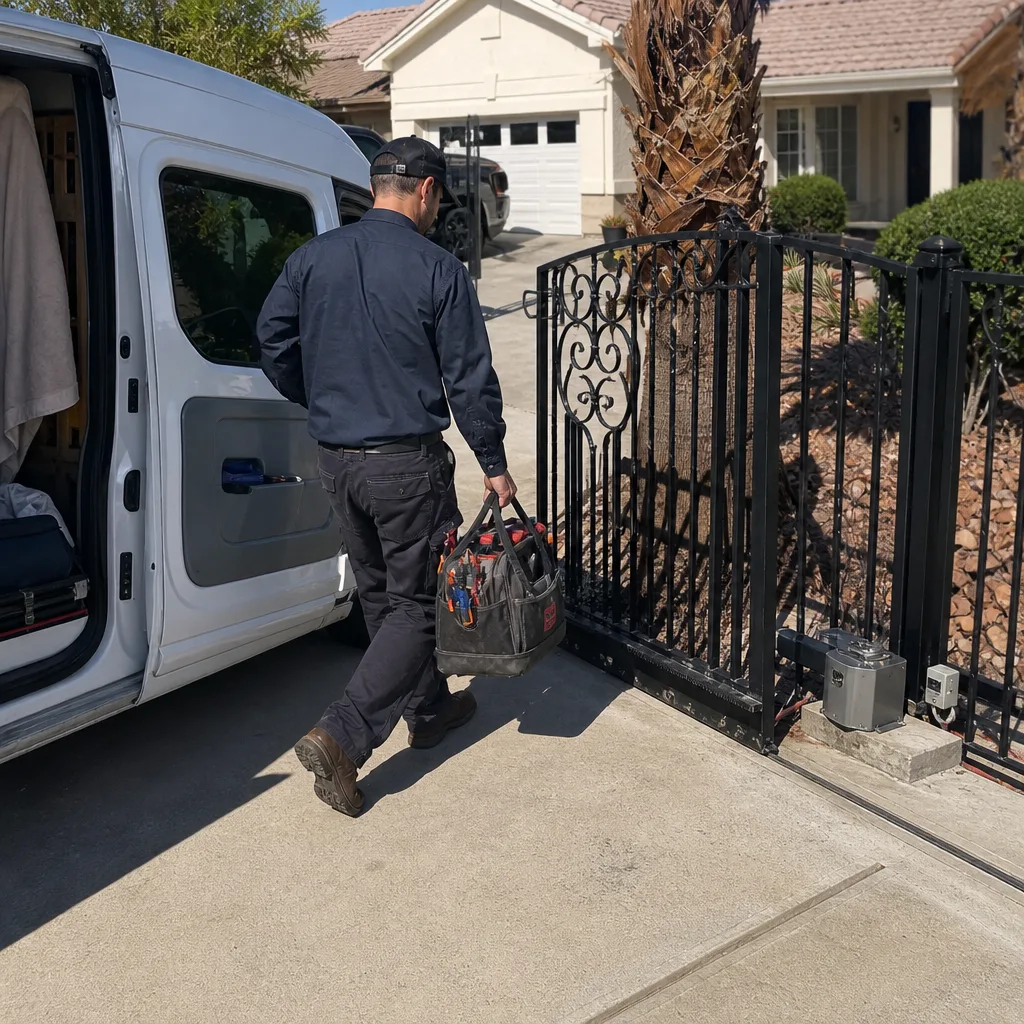
Last updated November 18, 2026
 Wrought iron
 Wood & steel frame
 Farm & ranch
 Sliding driveway gates
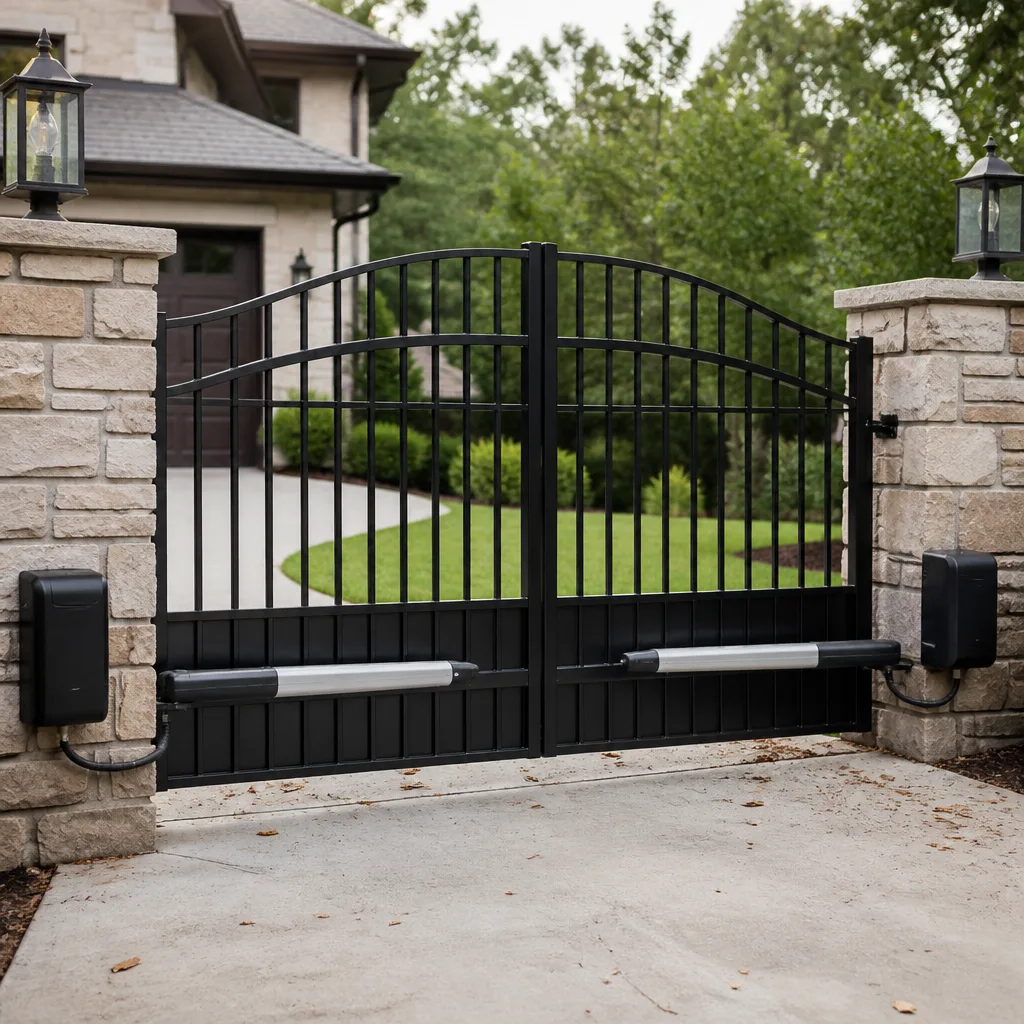 LiftMaster operators
Free on-site gate assessment - hinges, posts, and your LiftMaster or Nice gate operator checked before anything is quoted
The assessment is free and the quote is the invoice.
Get your free estimateGate Access Control Warning Signs Every Homeowner Should Know
A gate that hesitates for two seconds before responding to a keypad code isn’t being slow. It’s telling you the control board is already struggling, and that pause gets longer until the day it doesn’t respond at all. We’ve watched this play out in Paradise more times than we can count: a homeowner calls at 10pm locked out of their own property, and when we open the control box there’s corrosion on the terminal block that’s been building for a year. This guide covers the behavioral changes that separate a dying board from a dying motor, why a gate that fails one time in ten is more dangerous than one that’s already dead, and the signs that mean stop using it today.
Quick Answer
The main warning signs of failing gate access control are delayed response to keypad or remote input, intermittent operation that comes and goes, a keypad that lights up but won’t accept codes, corrosion or green crust on the wiring terminals, and any gate that reverses or stops mid-travel without command. A gate that works nine times out of ten is closer to total failure than one that’s already dead, because intermittent faults are the last stage before a full stop.
Styles & brands we work with
- Wrought iron
- Wood & steel frame
- Farm & ranch
- Sliding driveway gates
- LiftMaster operators
Table of Contents
- Control Board Failure vs. Motor Failure: They Look Alike
- The Two-Second Hesitation and What It Means
- Why Intermittent Problems Are More Urgent Than Consistent Ones
- Terminal Block Corrosion: The Sign Everybody Walks Past
- Is the Keypad Failing or the Wiring Run?
- Safety-Critical Signs: Stop Using the Gate Today
- Brand-by-Brand Quirks Worth Knowing
- Desert Heat and Winter Cold: What Paradise Does to Access Control
Control Board Failure vs. Motor Failure: They Look Alike
A gate that won’t open can mean a dead motor or a dead control board, and the two failures look almost identical from the driveway. They need completely different fixes, and confusing them is the most expensive mistake we see. A motor failure usually announces itself with sound: grinding, whining, a hum without movement, or a gate that moves in one direction only. Pull the manual release and push the gate by hand. If a healthy motor gate rolls freely, the motor is suspect. If it’s stiff, the motor isn’t the problem.
Control board failure is quieter. The gate might click and do nothing. The keypad might accept a code and then nothing happens. The safety edges might test fine but the board won’t acknowledge them. That’s electronics failing, not mechanics. On a FAAC or BFT unit, the board holds the logic for the entire cycle: soft start, soft stop, reverse-on-obstruction, and the timer that closes the gate after you drive through. When the board degrades, each of those functions starts to slip one at a time.
Here’s the sequence we run through before touching a single part:
- Pull the manual release and hand-cycle the gate. Any binding or grinding points to mechanics or motor.
- Check incoming voltage at the board. Low voltage from an aging transformer mimics a dead board.
- Test the motor directly, bypassing the board, to see if the motor spins under its own command.
- Inspect the terminals and the wire connections at the board for corrosion or looseness.
- Test each safety device separately to rule out a false obstruction signal.
We do this on every diagnostic in Paradise because a board swap costs a few hundred dollars and a motor swap costs more, and nobody wants to pay for the wrong one. If you’re not comfortable opening a live control box, that’s the right instinct. Call a trained hand.
The Two-Second Hesitation and What It Means
A gate that pauses before it moves is processing. That pause is the control board working through its logic slower than it should, and it’s the first sign most homeowners miss because it doesn’t interfere with anything yet. On a healthy system, the response to a keypad code is nearly instant. On a degrading one, you’ll hear a click, then a delay, then movement. Over weeks that delay stretches until the gate just sits there.
Understand what’s happening under that delay. The board receives the code, checks the safety edges, verifies the limits of travel, then commands the motor. Every one of those steps runs through the same electronics. When capacitors age or solder joints develop hairline cracks, each step takes fractionally longer. The sum is that two-second pause.
In our experience at Gatewood Fence & Gate Paradise, hesitating gates fall into three buckets:
- Power supply sag. The transformer can’t deliver full voltage under load. Cheap fix, easy to test.
- Board degradation. The logic is fine but slow. Reseat the connectors first, then test again.
- Failing limit switches. The gate doesn’t know where “fully open” is, so it stalls while it searches.
What you don’t want to do is wait. A two-second hesitation in March becomes a ten-second one by summer. If you’ve noticed the delay in Paradise, call us before the gate stops responding. That’s the difference between a board repair and a board replacement.
Why Intermittent Problems Are More Urgent Than Consistent Ones
Here’s the counterintuitive part: a gate that fails once a week is closer to full failure than a gate that’s already broken. A dead gate has already failed, so you call. An intermittent gate frustrates the diagnosis and tricks the homeowner into thinking everything’s fine, and it usually dies at the worst possible moment, often with somebody’s car inside the sweep.
The reason is thermal. Control boards expand and contract with temperature. Small cracks in a solder joint or a marginal component can behave one way at 65 degrees and another way at 105. Paradise heat does this to electronics every summer. So does the cold snap in February, when a board that worked all year suddenly won’t accept codes. An intermittent fault usually means one specific connection or component is right on the edge. What it needs is a careful look with a meter, not a wait-and-see.
We ask homeowners to keep a simple three-line log before they call:
- When it happened (date and rough time).
- What the gate was doing right before (open, closing, sitting idle).
- Whether the keypad, the remote, or both failed to work.
That log is often worth thirty minutes of diagnostic time. A pattern of failures only at midday points at heat and the power supply. Failures only after a wind event point at a loose wire from tree movement. If the log tells you a story, the fix gets faster. In Paradise, gates near open lots with blowing dust are especially prone to this, because grit works its way into the wiring chase and slowly wears the insulation.
If your gate is intermittent, treat it as urgent. Gate Repair in Paradise covers the diagnosis side in more depth, but the rule is simple: an intermittent gate is not a functioning gate, it’s a gate that hasn’t failed all the way yet.
Terminal Block Corrosion: The Sign Everybody Walks Past
Open a control box that’s been in the elements for a few years and the first thing you should look at is the terminal block. On a healthy board, the terminals are clean brass or silver. On a failing one, they’re dull and green. Sometimes there’s white crust. That’s corrosion, and it’s the warning sign most homeowners walk past for months because it doesn’t cause a problem until it does.
What you’re looking at is oxidation forming between the wire and the screw terminal. Every wire in that box is a signal line: the keypad, the safety edges, the loop detector, the release button, the photo-eye. Each of those signals relies on a clean connection. As corrosion builds, resistance climbs. For a while the electronics compensate. Eventually the connection is bad enough that the signal drops, and the gate stops responding to the keypad even though the keypad works fine.
Where corrosion shows up fastest in Paradise:
- Control boxes mounted low on a wall where splash from irrigation or a hose reaches them.
- Terminals nearest the wire entry point, where wind-driven dust settles first.
- Any terminal in a box without a weather gasket in good condition.
- Terminals on units installed under a tree canopy where humidity holds longer after rain.
What we look for: a green tint on the screw heads, dull wire ends, or a light chalky film at the wire bend. If you find any of that, don’t loosen the screws to “clean it up” unless you’re comfortable with the power off and know where every wire came from. Corroded terminals often break during a repair attempt. That’s when a $40 terminal service becomes a full wire chase replacement. If you see the green stuff, that’s a reason to call. Gatewood Fence & Gate Paradise does this on every service call because it’s the cheapest place to stop a future failure.
Is the Keypad Failing or the Wiring Run?
When a keypad stops working, the fix depends entirely on whether the keypad itself died or the wire run from the keypad to the control box has an issue. The cost difference is significant. A keypad swap runs $90 – $200 installed. A full wire run replacement can run $300 – $900 depending on distance and whether the wire is buried under concrete or landscaping. Getting to the right diagnosis saves money.
The test is straightforward with a meter. At the keypad, check for supply voltage. If you’ve got 12V or 24V arriving at the keypad, the keypad itself is suspect. If you don’t, the wiring run is suspect. Nine times out of ten in Paradise we find the wire intact but the connection at either end compromised, which is a much cheaper fix.
Here’s how to tell from the driveway without a meter:
- Does the keypad backlight come on when you press a button? If yes, power is reaching it and the keypad is likely alive but can’t communicate.
- Does the keypad accept the code and beep, but nothing happens at the gate? That’s a signal problem, not a keypad problem.
- Does the keypad do nothing at all? Power isn’t reaching it, or the keypad itself is dead.
- Is the keypad on a post that’s leaning or was recently bumped by a vehicle or mower? A wiring break at the post is common.
- Has anything in the yard been dug up or trenched since the keypad last worked? A nicked run is worth checking first.
One more option: older Linear and Viking keypads often have failing face plates long before the electronics do. The buttons stop making solid contact. That’s a $60 part, not a $600 problem. A live person at Gatewood answers the phone 24 hours a day, so if you’re unsure, describe what you see and we’ll tell you what to check next.
Safety-Critical Signs: Stop Using the Gate Today
Some warnings are worth watching. Some mean stop. This is the second list, and it’s where we get firm, because a gate that moves when it shouldn’t can crush a hand, a car door, a pet, or a child. If you see any of these, stop using the automatic function and put the gate in manual until somebody qualified looks at it.
- The gate continues to close after an obstruction. The photo-eye or reversing edge isn’t stopping it.
- The gate reverses direction randomly mid-travel with nothing in its path.
- You hear clicking, buzzing, or a hum from the box but the gate doesn’t move, and you feel heat coming off the operator housing.
- Visible arcing, burning smell, or scorched wires at the control box.
- The safety edge has a physical cut, blister, or tear in the rubber.
- A child or pet can fit between the gate and the post during travel.
- The manual release won’t engage, which means you can’t disengage the gate in an emergency.
Heat coming off the operator is the one most people ignore. That’s the motor working against a stalled load, and the thermal cutout is the only thing keeping it from a fire. Turn the power off at the breaker and call. This is where safety edges, photo-eyes, and thermal cutoffs matter more than anything else. They’re low-cost parts, but they’re the ones doing the actual life-safety job. Gatewood Fence & Gate Paradise treats any safety-edge failure as an emergency repair.
Brand-by-Brand Quirks Worth Knowing
Each access control brand has its own personality, and knowing the quirks speeds up diagnosis. We service nine major brands, and the ones we see most often around Paradise each have a familiar failure pattern. If you’re standing at the control box, this list might save you a call.
- FAAC. The 740 and 844 series run hot in summer and start throwing phantom limit faults. The board is usually fine, the limits need cleaning.
- BFT. The Deimos line is tough, but the board humidity-switches in the desert after monsoons. A sealed box and a fresh gasket clear up half the calls.
- Linear. The keypad face plate wears out before the electronics do. If the code needs to be entered twice, it’s usually the buttons.
- Viking. Older units have a battery backup that quietly dies and leaves the gate to fail on the first power flicker.
We also service LiftMaster, DoorKing, Elite, Ghost Controls, and Mighty Mule, and each has its own failure profile. Brand-specific diagnostics matter because a fix that works on one board can wreck another. If your gate is a brand not on this list, say so on the call and we’ll tell you honestly whether we’re the right shop for it. Gatewood Fence & Gate Paradise doesn’t pretend every gate is the same, and we won’t sell you a part that won’t fit.
Desert Heat and Winter Cold: What Paradise Does to Access Control
Access control in Paradise lives in a harsher climate than most gate hardware is rated for. Summer days routinely hit 105 and hotter, which bakes a control box that’s in the sun. Winter brings cold nights that contract the metal and every solder joint with it. The result is a failure pattern that’s uniquely local: boards that fail in July and August when heat degrades capacitors, and limit switches that act up in January when the metal tightens.
Wind is the other factor. Paradise gets dust events that push grit into wiring chases, weatherstripping, and photo-eye lenses. After a decent wind, we see a spike in false-obstruction calls: the photo-eye thinks something’s in the sweep, and the gate won’t close. Nine times out of ten that’s a lens full of dust, which is a two-minute clean, not a repair. Shade also matters. A control box in full afternoon sun hits internal temperatures 20 to 30 degrees hotter than one in shade. That extra heat is what kills the electrolytic capacitors first.
What this means for Paradise homeowners, practically:
- Check your photo-eye lenses after every significant wind event. Wipe them clean.
- Inspect the control box gasket every fall before the cold arrives.
- Ask for a shade cover on any new install with an afternoon-sun exposure.
- Expect a board diagnostic in August and September if the gate is more than about eight years old.
We’ve seen this pattern over and over in Paradise. A homeowner pays for a whole new operator when the actual fix was a $30 capacitor and a clean terminal. That’s why we diagnose first and replace second, and why every job is covered by the 90-Day Done Right Promise in writing. If it’s not done right, we come back. Gate Motor & Opener in Paradise covers the repair side in more depth if you want to know what a proper diagnostic looks like.
Common Mistakes to Avoid
- Assuming a dead gate needs a whole new operator. Control board failures are more common than motor failures, and a board costs a fraction of a new unit. On a ten-year-old gate in Paradise, the motor is usually fine.
- Spraying the control box with a hose to clean it. Water in a control box is corrosion’s best friend. Wipe the outside only, and never with the power on.
- Ignoring a keypad that needs codes entered twice. That’s the face plate or the contacts wearing out, and it only gets worse. It’s a cheap fix now, a stranded gate later.
- Running a new wire without a chase or conduit. In Paradise, exposed wire takes UV damage and fails within a couple of years. Bury it in conduit or don’t run it.
- Disconnecting the safety edges to “get it working.” That makes the gate move, and also makes it dangerous. Safety edges are what protect hands, pets, and car panels.
- Replacing the keypad before testing the wire run. In our experience most “dead keypad” calls turn out to be a loose or corroded connection somewhere along the run. Diagnose first, replace second.
- Letting a battery backup die quietly. A dead battery turns one power flicker into a gate that’s stuck closed or open. Test it once a year.
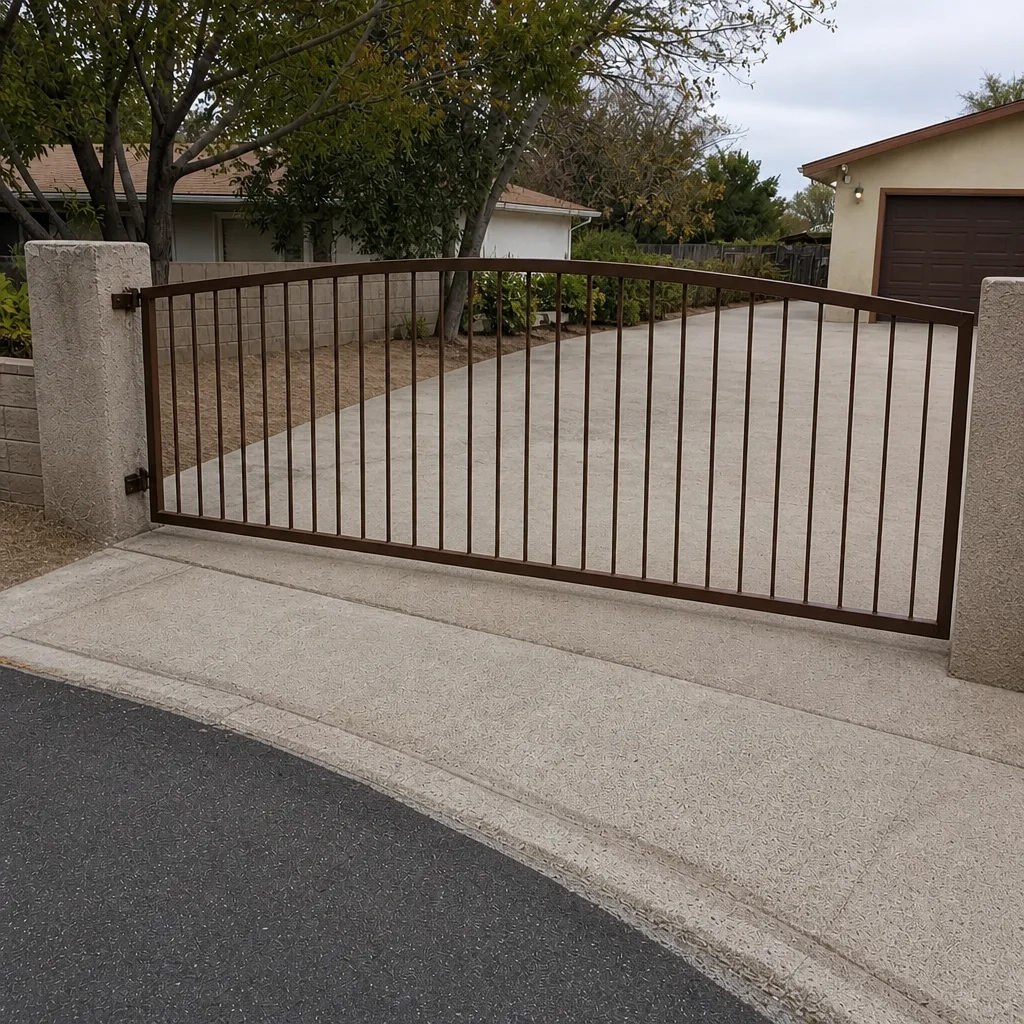
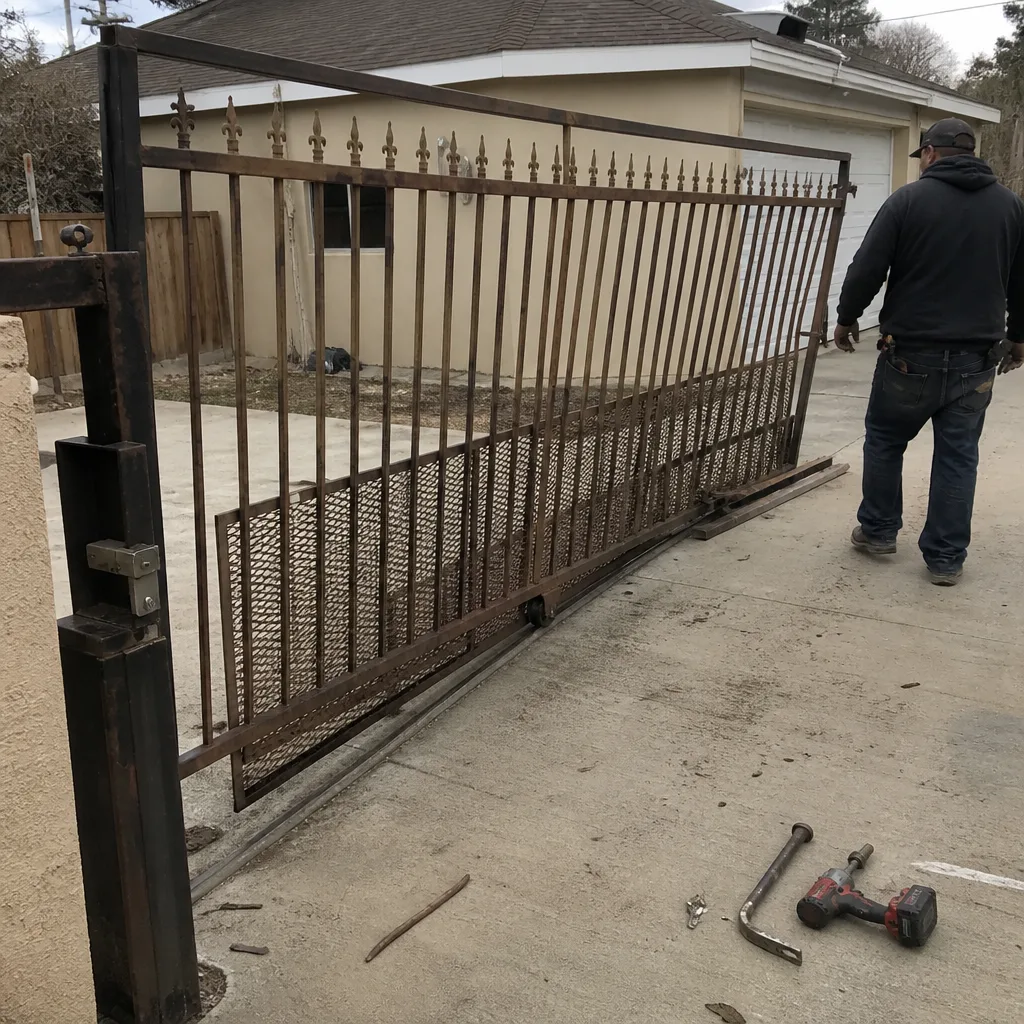
See the difference
 Before
 After
 Before
 After
 Before
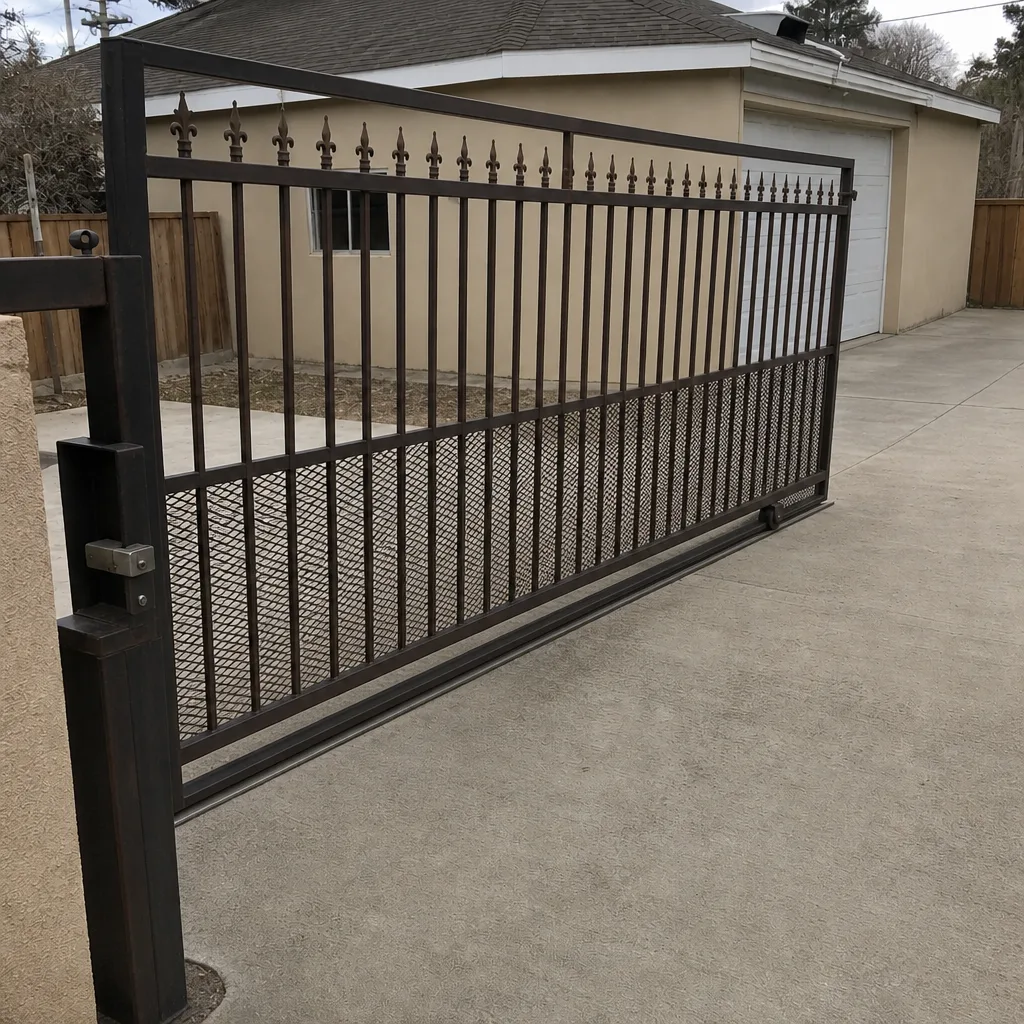 After
When to Call a Professional
Call us when the delay before the gate moves has started stretching, when the gate works most of the time but not all of it, when you find green crust on a terminal, or when the keypad and the wiring are both in question and you don’t want to guess. Call right away if a safety device has failed, if the operator housing is hot to the touch, or if the manual release won’t engage, because those are stop-using signs, not wait-and-see signs. And call if you’re not comfortable opening a live control box, which is most people, and is the right instinct.
Gatewood Fence & Gate Paradise offers free estimates in Paradise – call (888) 292-7536. A live person answers, day or night, and we’ll tell you straight whether the fix is a $30 part or something bigger. There’s no trip charge inside the county and no sales pitch. If you want to know what a full install looks like for comparison, our Gate Installation in Paradise page spells out the parts and the safety features. For repairs, Gate Repair in Paradise covers what we check first. And if you want to see who we are before you call, the Gatewood Fence & Gate Paradise home page is where to start.
Frequently Asked Questions
Pull the manual release and push the gate by hand. If it rolls freely but won’t move under power, the motor is suspect. If it’s stiff and catches, the mechanics or motor are suspect. If the gate clicks, does nothing, or moves in one direction only while power is fine, the control board is the likely culprit. On-site welding and true repair-first diagnostics catch this before you pay for the wrong part. Call (888) 292-7536 for a free estimate.
Yes. An intermittent gate is closer to full failure than one that’s already broken, and it’s harder to diagnose because you can’t reproduce the fault on demand. The failure usually hits at a bad moment, like late at night or with a car in the sweep. If your gate fails even occasionally, treat it as urgent and stop relying on it for daily access until it’s checked. Call us for a diagnosis.
That’s corrosion, and it means the wire-to-terminal connection is degrading. It builds silently and eventually causes dropped signals, false limits, or a gate that won’t respond to the keypad. In Paradise, dust and heat speed it up. Don’t try to clean it yourself with the power on. It’s a quick service call for a trained hand. Call (888) 292-7536 for a free estimate.
Most likely the keypad is working but the signal isn’t reaching the control board, which means a wiring issue rather than a keypad failure. That’s usually a cheaper fix than a keypad replacement. A meter test at the keypad confirms it in minutes. Get it diagnosed before you buy a part you may not need. Estimates are free, so call.
A typical diagnostic and minor repair runs in the $90 to $250 range; a board replacement runs $250 to $500 depending on the model; a full wiring run can run $300 to $900 depending on length and whether the run is buried under concrete. Always confirm the price in writing before work starts. Gatewood Fence & Gate Paradise gives a written estimate first, plus $40 off any repair over $200 and a permanent 10% discount for seniors and veterans. Call (888) 292-7536 for an exact quote.
We service nine major brands: LiftMaster, FAAC, BFT, Linear, Viking, Ghost Controls, DoorKing, Elite, and Mighty Mule. If your gate is one of these, we can diagnose it. If it’s a brand we don’t service, say so on the call and we’ll tell you honestly. Call (888) 292-7536 with the make and model, and a free estimate is on the way.
The Bottom Line
Access control systems fail loud and slow. A two-second hesitation, a code that needs entering twice, a bit of green on a terminal, an intermittent failure once a week – each is a signal that something’s on the edge. A dead gate is a phone call. An intermittent one is a phone call you make too late. In Paradise, the heat and wind make every one of these failure modes faster than they’d be in a milder climate. Watch for the low-cost signs first: the keypad face plate, the clean terminals, the photo-eye lens, the battery backup. If any of those check out and you’re still seeing issues, the board or the wiring run is likely next. Stop using any gate where the safety device has failed. And when you’re ready to get it looked at, call a live person, not a queue. We’ve been at this since 2001, our name is on the shop, and our technicians have up to 25 years of experience. If you want a gate that just works every time you pull up to the keypad, Gate Motor & Opener in Paradise is where we do that work.
Gatewood Fence & Gate Paradise is here when you’re ready. Call (888) 292-7536 for a free estimate. A live person answers, day or night, and if you can see the shop from the road, you can look us in the eye.
Written by the team at Gatewood Fence & Gate Paradise.