
Last updated November 18, 2026
 Wrought iron
 Wood & steel frame
 Farm & ranch
 Sliding driveway gates
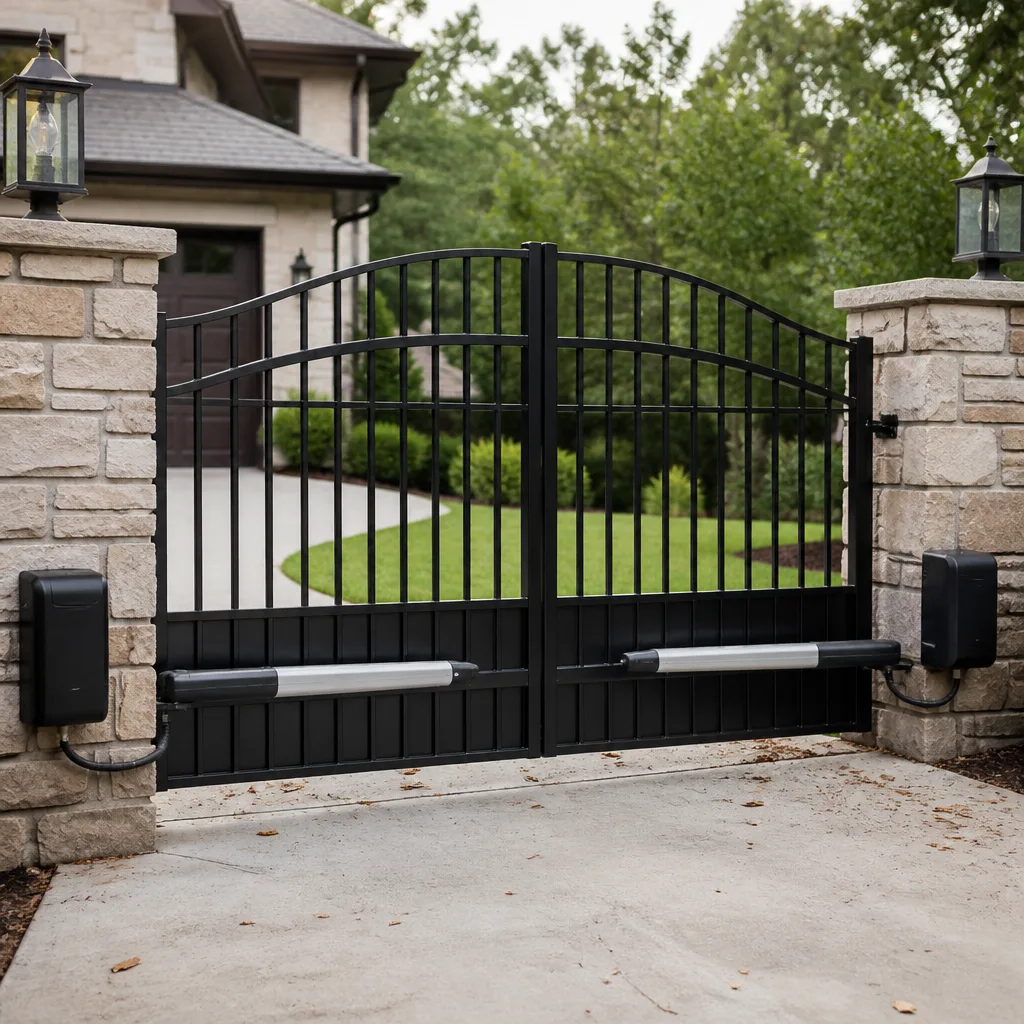 LiftMaster operators
Free on-site gate assessment - hinges, posts, and your LiftMaster or Nice gate operator checked before anything is quoted
The assessment is free and the quote is the invoice.
Get your free estimateGate Motor & Opener Warning Signs Every Homeowner Should Know
When a gate starts taking two button presses to open instead of one, most people assume the remote battery is low. Sometimes it is. Sometimes it’s the first sign that the motor’s capacitor is on its way out – and if you replace the remote battery and move on, you’ll be stranded in your own driveway inside of two months. A gate motor tells you it’s failing about six weeks before it actually dies. The problem is the warning signs are easy to explain away as weather or a fluke. This guide translates motor behavior into plain language so you know what you’re actually hearing at your curb in Paradise.
Quick Answer
The five warning signs of a failing gate motor are: intermittent response (needing two presses), slow travel speed, mid-cycle reversal, grinding or clicking sounds, and unexpected stops. Each points to a different mechanical cause – capacitor, drive gear, limit switch, or a thermal cutout. Catching them early turns a motor replacement into a repair. In Paradise, heat is often the hidden factor behind motors that work in the morning and fail by mid-afternoon.
Styles & brands we work with
- Wrought iron
- Wood & steel frame
- Farm & ranch
- Sliding driveway gates
- LiftMaster operators
Table of Contents
- Warning Sign 1: Intermittent Response
- Warning Sign 2: Slow Travel Speed
- Warning Sign 3: Mid-Cycle Reversal
- Warning Sign 4: Grinding or Clicking Sounds
- Warning Sign 5: Unexpected Stops
- Slow Motor vs. Slow Gate – How to Tell the Difference
- The Heat Warning Sign Specific to Paradise
- Electrical Warning Signs Worth Taking Seriously
- What to Document Before You Call
Warning Sign 1: Intermittent Response
You press the remote once, nothing happens. You press it again, and the gate opens like it heard you the second time. This is the most common early sign we see, and it’s also the sign most easily ignored. The remote battery genuinely could be low, so that is worth checking first. But if you swap the battery and the two-press habit continues, the motor’s logic board is struggling to see the signal.
In our experience repairing operators across Paradise, this symptom traces to one of three places:
- A failing capacitor in the motor start circuit. Capacitors age, especially when a motor cycles dozens of times a day in summer heat. When the cap weakens, the motor needs a second signal to build enough charge to start.
- A weak receiver or antenna connection at the operator housing. The remote is fine; the motor isn’t hearing it clearly.
- A loose safety edge or photo-eye that’s giving the controller a partial “obstruction” reading before it decides to run.
Check the remote battery first – it’s a dollar and five minutes. If the gate still needs two presses with a fresh battery in hand, the motor is telling you something. On LiftMaster and Elite units we service around Paradise, a capacitor replacement is a quick on-site fix if caught at this stage. Wait two months and you’re usually pricing a new board or a whole motor.
Warning Sign 2: Slow Travel Speed
A gate that used to open in twelve seconds now takes eighteen. Nothing has changed about the gate itself, you think. Nothing obvious, anyway. Slow travel that creeps up over weeks is a classic sign the motor is losing torque. It’s working harder to move the same load, and the controller’s internal ramp-up is doing what it can to compensate.
The catch is that a mechanical bind in the gate produces the exact same symptom. That’s the section below. But if the gate swings freely by hand and the motor is still sluggish, the motor is the problem. Specifically:
- Worn drive gears inside the operator. Gears grind away slowly, and the motor’s output at the gate falls with them.
- Motor windings running hot and losing efficiency. This usually comes with the heat symptom too – see the section on thermal cutout.
- A slipping drive belt or chain on slide and swing operators that use one.
One thing worth saying plainly: slow travel alone is never an emergency. It’s a warning. The time to address it is while it’s still just slow, because a motor that’s steadily losing torque will eventually stall mid-travel, and a gate stuck open in Paradise is a security problem and a dog problem on the same afternoon.
Warning Sign 3: Mid-Cycle Reversal
The gate starts opening, travels a few feet, then reverses and goes back to closed. Or it reverses for no reason at all when you aren’t pressing anything. This one feels dramatic but usually points to a small, well-understood cause.
Mid-cycle reversal is almost always the safety system reading an obstruction that isn’t there. In our repairs around Paradise, it comes down to a few suspects:
- Misaligned photo-eyes. The beam between the two sensors gets nudged by wind, irrigation, or a bumped post. The controller reads the interrupted beam as an object in the path.
- A failing safety edge or loop sensor. The rubber edge or in-ground loop is shorting or reading phantom signals.
- A failing limit switch. The motor thinks the gate has reached its end stop too early and reverses to safety.
DoorKing operators, common on gated driveways around Paradise, are especially sensitive to loop sensor issues. The fix is usually a five-minute alignment or a sensor swap, not a motor. But a reversal that happens repeatedly will eventually chew through the motor’s drive train from the constant start-stop cycling. Get it looked at early.
Warning Sign 4: Grinding or Clicking Sounds
You can hear a gate motor dying from the kitchen window before you ever see it fail. The sounds divide into two groups: clicking and grinding, and they mean different things.
Clicking that repeats in rhythm with the gate’s travel is usually electrical. It’s the relay or contactor engaging, or a limit switch clicking as it passes. A single click at start and stop is normal. Constant clicking during travel is not.
Grinding is mechanical, full stop. A grinding operator has gears eating themselves or a chain running dry and skipping teeth. On Mighty Mule and Linear units we service around Paradise, this is usually the drive gear or a worn chain after years of use. The bad news is grinding only gets worse. The good news is caught early, a gear replacement is a fraction of a new motor.
A grinding gate motor is a countdown timer, not a maybe. Every cycle you run it after you first hear the noise shortens the life of the whole operator.
If you hear grinding, stop cycling the gate and get it looked at. Running it is literally the thing that finishes the job off.
Warning Sign 5: Unexpected Stops
The gate stops halfway open and just sits there. Or it stops on the way back, then a few seconds later starts again on its own. Unpredictable stops are the operator’s built-in protections firing – and they’re firing because something is out of tolerance.
The usual causes we see in Paradise:
- Overcurrent protection tripping. The motor is drawing more current than it should, so the controller shuts it down to protect itself. Underlying cause: a bind, a worn bearing, or a failing motor.
- Thermal cutout. The motor is overheating and the safety shuts it off. This is the Paradise-specific symptom – see the next section.
- A loose battery or power connection. On battery-backed operators, a bad battery or a loose terminal produces intermittent stops that look mysterious.
Unexpected stops that come with a low-battery indicator are a load test and a battery replacement, usually. Unexpected stops with no battery indicator, at the same time of day, are almost always thermal. That distinction matters, because it decides whether you’re buying a battery or a bigger motor.
Slow Motor vs. Slow Gate – How to Tell the Difference
A gate that opens slowly because the motor is failing and a gate that opens slowly because the gate itself has a mechanical bind look identical from the outside. Both are slow. But they have completely different fixes, and treating the wrong one wastes your money. Here is how to tell them apart.
Step 1: Disconnect power to the motor. Some operators have a manual release; some don’t. Use the release per the manufacturer’s instructions – never force a gate against a live motor.
Step 2: Move the gate by hand. If the gate swings or slides smoothly with light pressure, the gate is fine, and the motor is the problem. If you’re pushing hard, or the gate binds at a specific point in its arc, the gate is the problem.
Step 3: Look at the hinge post and hinges. On a swing gate, grab the gate at the hinge end and try to lift it. Any play up-and-down means the hinges are shot. On a slide gate, check the track and rollers for a bind or a flat spot. Lubricate per the manufacturer’s guidance and retest.
Step 4: Re-power and watch the first cycle. If the gate ran freely by hand and the motor is still slow, the motor is tired. If the gate binds by hand and the motor is slow, the motor is doing what it can against a bad gate.
A gate that sags in the hinge post, not in the middle, is almost always a gate problem, not a motor problem – and that’s where we start every diagnostic in Paradise. Fix the panel without the post and you’ll fix it twice.
The Heat Warning Sign Specific to Paradise
Here’s the one nobody talks about. A gate motor that works perfectly at 7 a.m. and fails reliably at 3 p.m. is not a mystery – it’s a thermal cutout firing. Nevada summers put an operator in a metal housing in direct sun for hours at a stretch. Interior temps comfortably top 140°F on a 108°F day. The motor’s own thermal protection shuts it down before it cooks itself, which is exactly what it’s supposed to do.
When a Paradise homeowner calls and says “the gate only fails in the afternoon,” that’s the diagnosis 80% of the time. Two causes drive it:
- The motor is undersized for the gate. A high-cycle motor installed on a gate that’s taller, wider, or heavier than its rating is going to run hot. It works fine cool, then trips the thermal cutout when it’s cycling at temperature. The fix is the right motor for the gate, not a bigger breaker.
- The housing is blocked. Vents clogged with dust, spider webs, or debris. The operator cannot shed heat, so the interior climbs past the safety threshold. A vacuum and an air-hose pass fixes this one for free.
If your gate lives on the full-sun side of a stucco wall in Paradise, shade or a vent kit makes a real difference. It’s worth a look before you assume the motor is dead. If the gate works in the morning and fails every afternoon for a week, that’s the pattern to document – it points straight at thermal cutout.
Electrical Warning Signs Worth Taking Seriously
Some warning signs are mechanical. Some are electrical, and electrical ones are the ones you call on. A gate motor is wired into your home’s power, often at 120 volts, sometimes at 220. Do not open the controller housing or probe the wiring yourself. That work belongs to a trained professional, and it’s the reason a scope of repair on an operator includes a licensed electrician or a technician certified for that circuit.
The three electrical signs to watch for:
- A breaker that trips on the motor circuit. Not one time, not when a tree limb hits the gate – a breaker that trips twice on normal cycling is a fault. Stop running the gate and get it investigated.
- A controller display that resets unexpectedly. Display goes blank, comes back, gate loses its memory of open/close positions. That’s a power or board fault, not a mechanical one.
- A low-battery indicator that keeps returning after a fresh battery. On battery-backup operators, a fresh battery followed by the same low-battery light inside a week means the charging circuit isn’t charging, or the battery isn’t taking charge. A load test confirms which.
If you ever smell hot plastic or see scorching at the operator housing, kill the breaker at the panel and call it in. That’s not a “wait and see” sign. A gate motor is a small appliance, but it’s a real appliance, and electrical safety is not a place to save a few dollars.
What to Document Before You Call
Here’s the thing that makes a diagnosis faster and cheaper for both of us. When you call, you don’t need to have already figured out what’s wrong. You need to hand the technician the evidence and let them do their job. The homeowner who documents the behavior before calling usually gets a same-visit diagnosis. The one who says “it’s just being weird” usually gets a second visit.
Document these four things before you call:
- Record a video of the behavior. Twenty seconds of the gate doing the thing. Slow travel, a mid-cycle reversal, a grind, a stop – whatever it is. Video does more than a paragraph of description.
- Note the time of day it occurs. Morning-only failures, afternoon-only failures, and random failures are three different diagnoses. If it’s a Paradise afternoon thing, say so. That points at thermal, and the technician brings the right parts.
- Note the frequency. Every cycle? Every few days? Only after a long idle? Each pattern narrows the cause.
- Look up how long the gate has been in service. If you know the install date, or the approximate age of the motor, say so. A 12-year-old LiftMaster with slow travel and grinding has a different likely cause than a 2-year-old unit doing the same thing. If you’re not sure, that’s fine – we’ll check the operator’s build date when we’re there.
Those four things turn a “come look and see” call into a diagnosis with parts on hand. That saves you a second trip, and it saves you the second-trip labor charge. Calls are answered by a live person around the clock, so you can talk through the symptom the moment it happens – even if the gate quits at 10 p.m. on a Sunday.
Common Mistakes to Avoid
- Replacing the remote battery and stopping there. If two presses persists after a fresh battery, the motor is telling you something. Chasing the remote past that point delays the actual fix by weeks.
- Greasing everything. More lubricant is not a fix. In Paradise, dust and grease turn into a grinding paste that wears out hinges and tracks faster than dry hardware. Use what the manufacturer specifies, where they say to use it, and nowhere else.
- Bumping the breaker to reset a tripping circuit. Twice is a pattern. Stop and call. This is a wiring fault, and it’s the one warning sign that can actually be a hazard.
- Filing a “it only fails in the afternoon” complaint and moving on. That’s thermal cutout, and it’s the single most fixable cause of a Paradise motor failure. It’s often undersized motor or a blocked vent – catch it before the heat soak kills the windings.
- Forcing a reversing gate to stay open. Holding the gate past a reversal is how you strip drive gears. Fix the sensor, don’t override it.
- Calling a national chain that quotes over the phone. The quote you get by phone, from a company that has never seen your gate, is not a quote – it’s a guess. In Paradise we’ve all been on the other end of a price that doubled at the door. A written estimate from someone who has actually looked at the gate is the only number worth comparing.
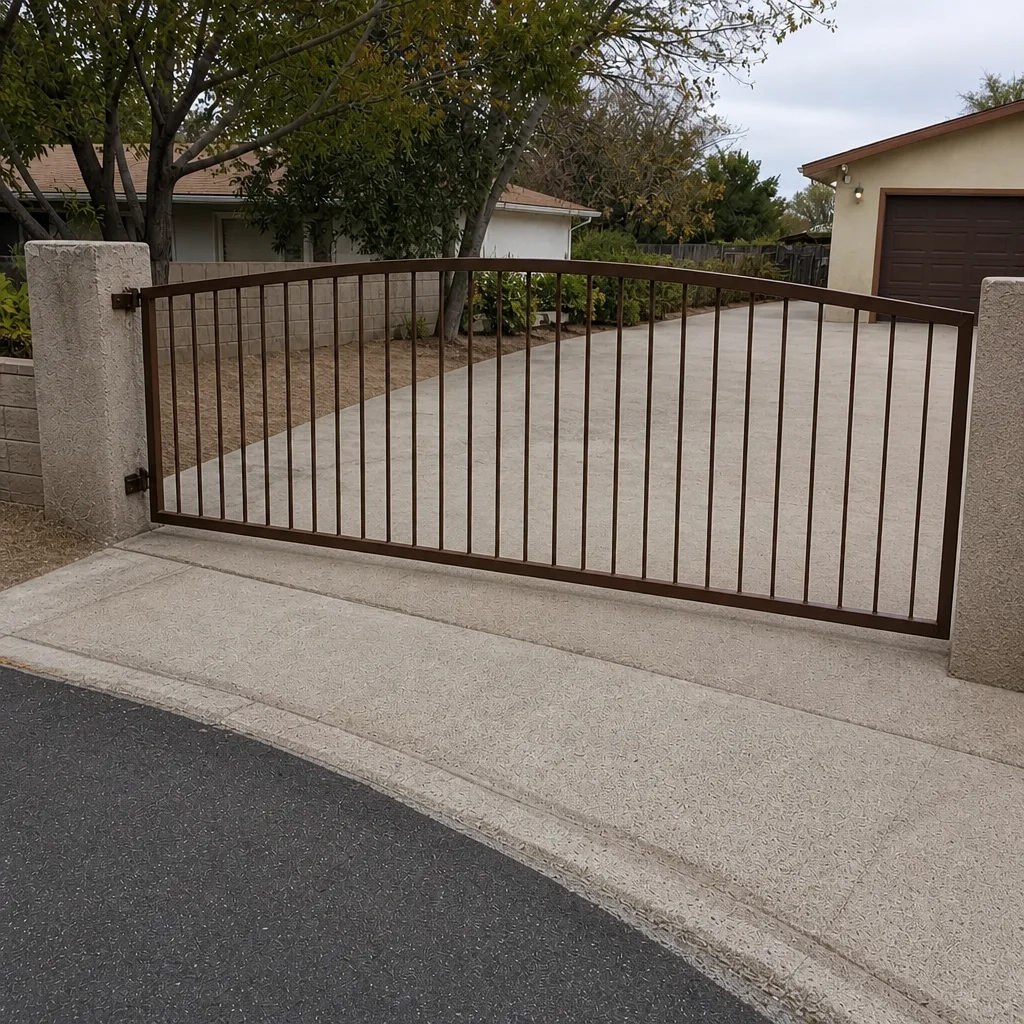
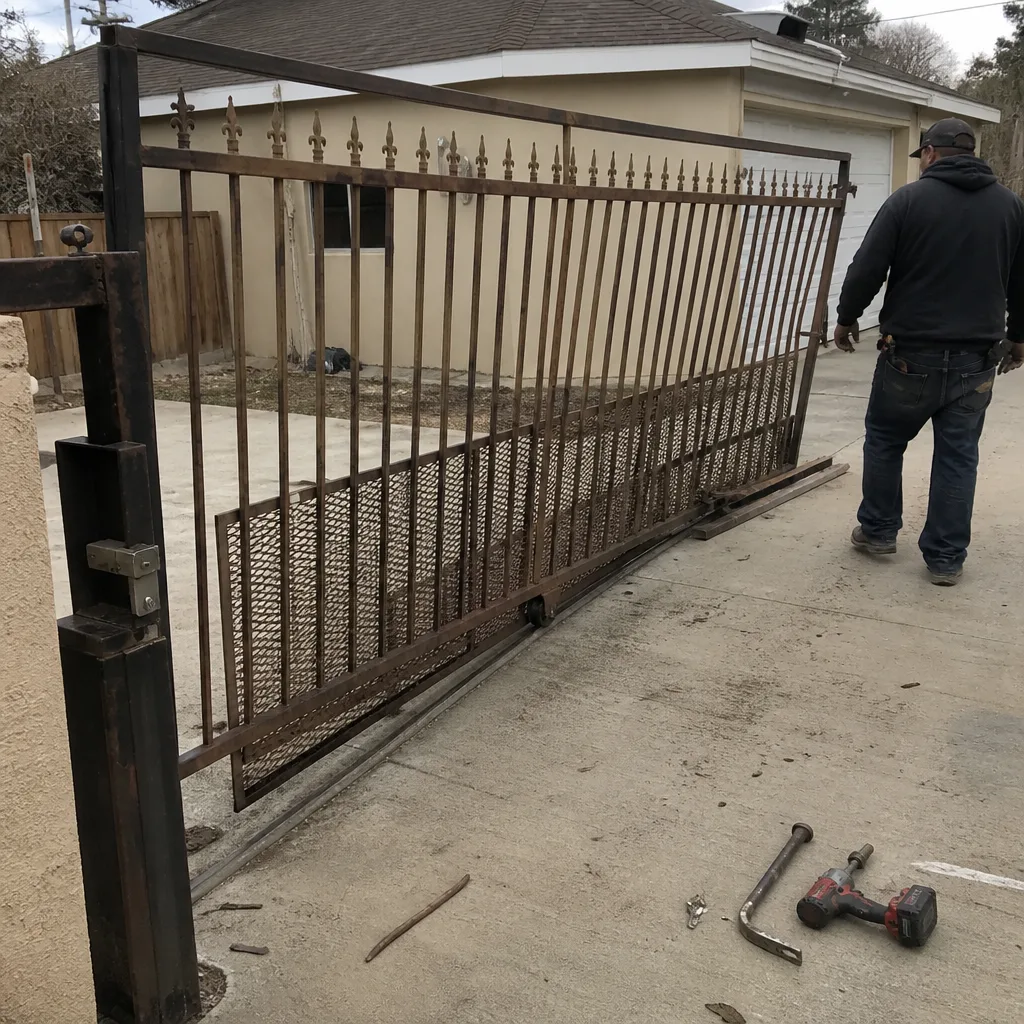
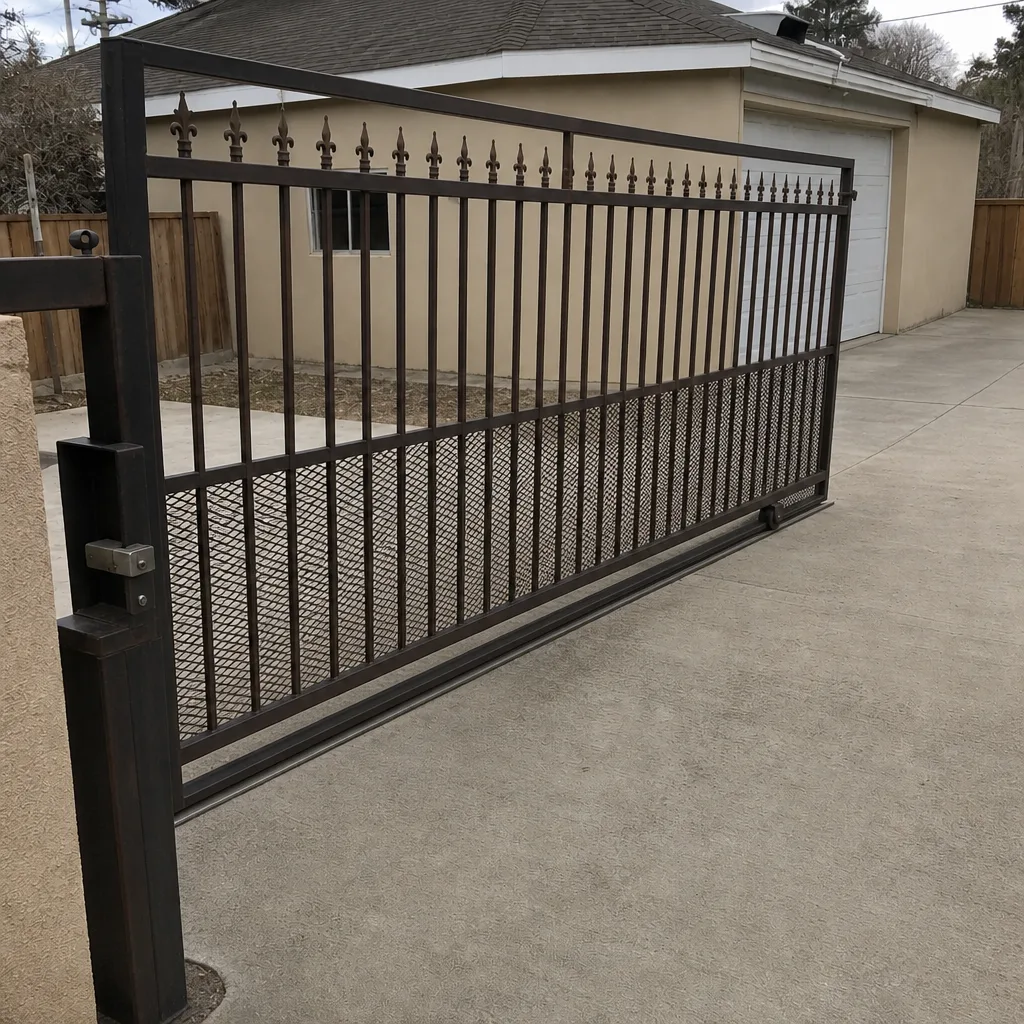
See the difference
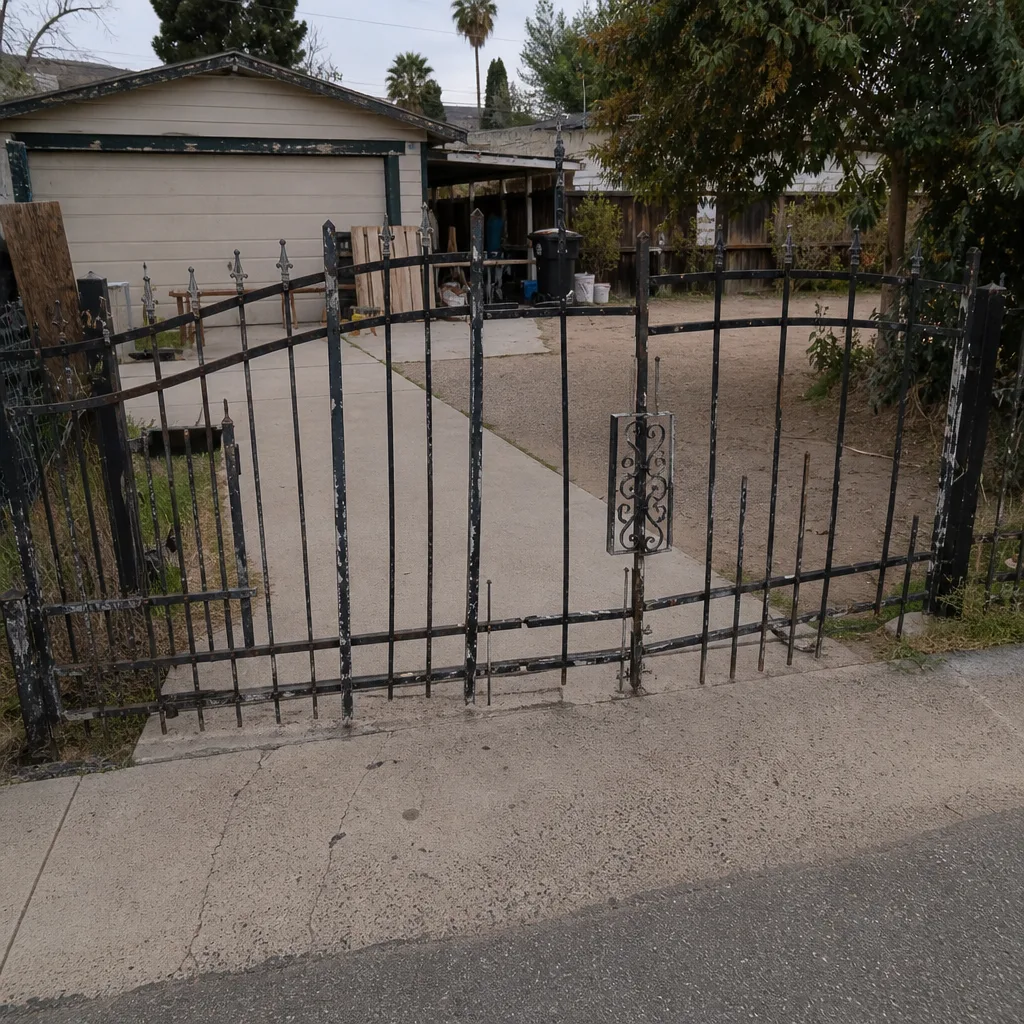 Before
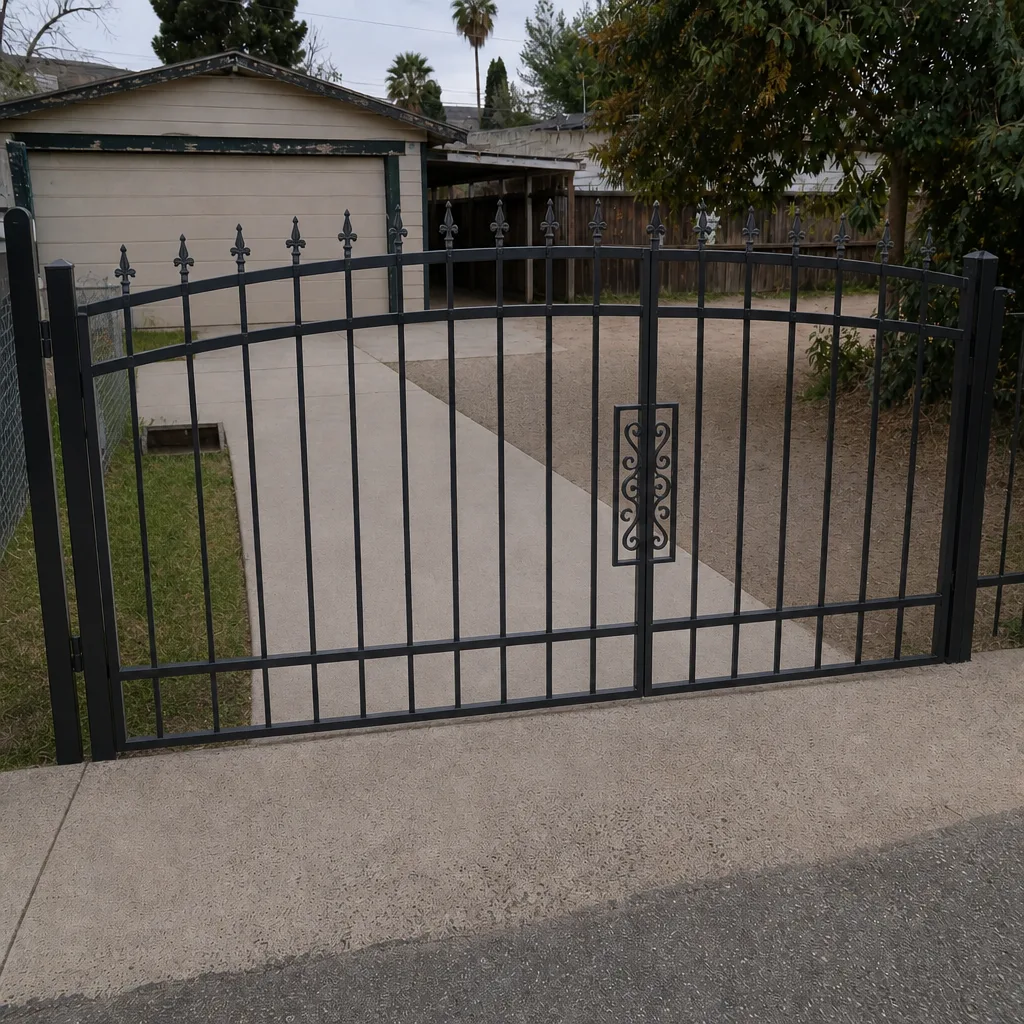 After
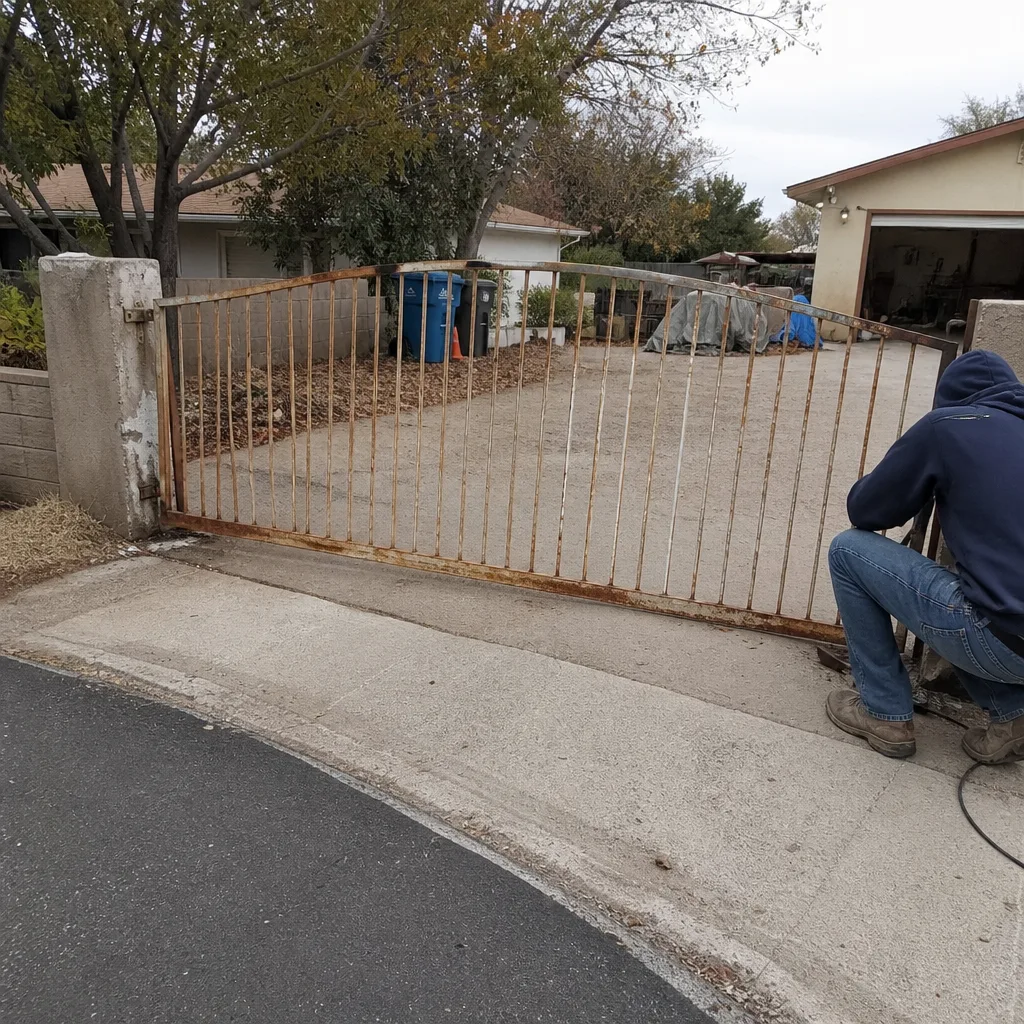 Before
 After
 Before
 After
When to Call a Professional
Call when the gate is doing any of the following: needing two button presses after a fresh remote battery; slow travel that’s getting slower; a grind or a clicking you can hear from the house; reversing mid-cycle; stopping unexpectedly – especially in an afternoon pattern; a breaker tripping on the motor circuit; or a low-battery indicator that returns after a fresh battery. Those are all diagnosable, and most are cheaper to fix the earlier you call. Do not open a controller housing, probe the motor wiring, or attempt to bypass a safety sensor. A gate operator is wired into your home’s power and holds enough energy to hurt you.
If the gate is stuck open in Paradise, or a warning sign has turned into a full failure, call us. Gatewood Fence & Gate Paradise offers free estimates in Paradise – call (888) 292-7536. A live person answers day or night, and the price is quoted and agreed before any work starts, stamped in writing on every job. We repair what other companies want to replace, and we weld on site so the gate stays in your driveway.
Frequently Asked Questions
A well-maintained residential gate motor typically lasts 10 to 15 years; high-cycle commercial-grade operators on a busy driveway can outlast that, and an undersized motor in full Paradise sun often goes in 7 to 10. The biggest drivers of early failure are an undersized motor running hot and a mechanical bind the operator has been fighting for years. Regular lubrication and vent cleaning add years.
If it’s a misaligned photo-eye, yes – the alignment is a visual adjustment, not a wiring job. If it’s a failing limit switch or a safety edge, that’s a technician job. The controller is low-voltage, but it’s wired into 120- or 220-volt power, and the settings that govern reversal are safety-critical. Never disable the reversing feature to “make it work.”
Sometimes. If the failure is a capacitor, a drive gear, or a limit switch, a repair can run a few hundred dollars and buy you years. If the motor windings are cooked from heat soak, or the board is failing, replacement is more economical. A free second opinion on any written estimate is the right move before you spend the money – call (888) 292-7536.
That’s thermal cutout. The motor’s protection shuts it down when the interior temperature crosses the safety threshold – usually because the operator is undersized for the gate, or the housing vents are blocked. It’s the single most Paradise-specific warning sign, because our summer temps push metal-housed operators hard. A vent cleaning or a properly sized motor fixes it. If you’re seeing this every afternoon, call (888) 292-7536 for an estimate.
It depends entirely on what’s actually wrong – capacitor and gear repairs usually land in the hundreds, while a board or full replacement runs more. That’s why we quote and agree the price before any work starts, and why the “document before you call” step matters. A written estimate after seeing the gate is the only number worth comparing. Call (888) 292-7536 – estimates are free.
We’re certified to service nine major gate brands – LiftMaster, FAAC, BFT, Linear, Viking, Ghost Controls, DoorKing, Elite, and Mighty Mule – plus a wide range of legacy operators. If you’re not sure what’s on your gate, we’ll check the build date and model label when we look at it. Paradise homeowners can get a free diagnosis call at (888) 292-7536.
The Bottom Line
A gate motor tells you it’s dying about six weeks before it dies. The signs are intermittent response, slow travel, mid-cycle reversal, grinding, and unexpected stops. Each one points to a specific cause – a capacitor, a drive gear, a sensor, or a thermal cutout – and each is cheaper to fix early. In Paradise, watch for the afternoon-only failure; that’s heat, and it’s the most fixable one of the bunch. Document the behavior, don’t panic, and don’t eat the cost of a full replacement because a warning sign got ignored in week one. We’ve been repairing gates across Paradise for decades, and we fix what others want to replace. If your gate is talking to you, listen. Call (888) 292-7536 for a free estimate in Paradise.
Explore Gatewood Fence & Gate Paradise home for everything we do, or jump to Gate Repair in Paradise, Gate Installation in Paradise, or Gate Motor & Opener in Paradise.
Written by the team at Gatewood Fence & Gate Paradise.