
Last updated November 18, 2026
 Wrought iron
 Wood & steel frame
 Farm & ranch
 Sliding driveway gates
 LiftMaster operators
Free on-site gate assessment - hinges, posts, and your LiftMaster or Nice gate operator checked before anything is quoted
The assessment is free and the quote is the invoice.
Get your free estimateGate Parts & Welding Troubleshooting: Common Problems and How to Fix Them
We’ve seen more than one perfectly good gate operator get replaced by another company when the real problem was a cracked hinge weld that made the gate sit two inches lower than it was designed to. The new motor failed for the same reason six months later. Most gate problems that look like operator or motor failures are actually structural problems. A gate that sags, binds, or won’t latch consistently is fighting its own frame, and no amount of motor adjustment will fix bad metal. This guide walks through the parts and welding issues we see most in Paradise, how to tell them apart, and which quick fixes buy time versus which ones make the eventual repair harder.
Quick Answer
Most gate problems that look like motor or operator failures are structural: sagging hinges, cracked welds, bent frames, or worn rollers that make the gate fight its own frame. No motor adjustment fixes bad metal. The fix starts with inspecting the hinge post, the weld points, and the track before touching the operator, and the correct repair is almost always welding or realignment on site rather than replacing the gate or the motor.
Styles & brands we work with
- Wrought iron
- Wood & steel frame
- Farm & ranch
- Sliding driveway gates
- LiftMaster operators
Table of Contents
- Is It an Alignment, Sagging, or Bent Frame Problem?
- The Five Weld Points That Fail First on a Swing Gate
- Why Your Gate Grinds on the Ground: Welding vs. Hinge
- Roller and Track Troubleshooting for Slide Gates
- Temporary Field Fixes: What Helps and What Hurts
- Parts That Wear Out and What to Replace
- When Welding Beats Replacing the Gate
- Why Paradise Conditions Speed Up Gate Wear
Is It an Alignment, Sagging, or Bent Frame Problem?
Three different problems produce three different symptoms, and the right fix depends on knowing which one you have. If you skip this step and guess, you’ll fix it twice.
An alignment problem shows up as a gate that misses the latch by a consistent half inch or so, or one that drags only in one part of its swing. The metal itself is straight, but the gate has shifted relative to the post. This often follows a ground settlement or a hinge that has started to pull. A small adjustment to the hinges or the operator arm usually closes the gap.
A sagging problem is different. The gate droops as it approaches the closed position, and you can see the gap between the gate and the post grow wider at the top and narrower at the bottom. A sagging gate is almost always a hinge-post problem, not a hinge-leaf problem. The wood or steel post has moved, rotted at the base, or the concrete footing has cracked. We’ve seen gates in Paradise neighborhoods where the post was set 20 years ago in soil that has since shifted, and the gate has been sagging a quarter inch a year since.
A bent frame problem is the most serious. The gate’s own frame rails are no longer parallel, usually after someone backed a vehicle into it, a heavy wind caught it while open, or a tree limb came down on it. You can check by laying a straight edge along the top rail and looking for daylight underneath. A bent frame can’t be fixed with hinge adjustment. It needs to be straightened and rewelded, and sometimes the frame has cracked at the weld seams too.
Walk to the gate now and check three things: whether the gate closes flat against the post, whether the top and bottom gaps are equal, and whether a straight edge laid along the frame shows a curve. Those answers tell you which of the three problems you’re actually looking at.
The Five Weld Points That Fail First on a Swing Gate
On a residential swing gate, five weld points carry the most stress. Those are the five that crack first, and they’re the five we check on every call. If you know where to look, you’ll catch a stress crack long before it becomes a full break.
- The hinge-to-frame weld. This is the single most common failure point. The weld where each hinge attaches to the gate frame takes the full weight of the gate every time it swings. Look for a small rust-colored line near the weld toe. That’s the beginning of a crack.
- The hinge-post weld or bolt plate. Where the hinge mounts to the post, especially on steel posts, the weld can crack from cyclical loading. On older gates we see the bolt plate stretched and the bolts bent, which means the hinge is working loose.
- The corner welds of the perimeter frame. Every gate has four corners. The two on the hinge side take more stress. Look for hairline cracks in the weld bead or paint that has cracked in a straight line, which usually follows the weld underneath.
- The diagonal brace connection. If your gate has a diagonal or cross brace, the weld where the brace meets the frame takes load whenever the gate is pushed. A failed brace weld lets the whole gate twist.
- The latch-side stile weld. The upright on the latch side gets bumped every time the gate meets the post. A small weld crack here makes the gate flap and click instead of latching cleanly.
What stress cracking looks like before it becomes a full break: a thin dark or rust-colored line, paint that has chipped in a straight run along the weld, or a hinge that feels loose when you push the gate upward. If you can slide a piece of paper into a crack, the weld is already open. That is the right moment to call for repair, before the gate drops and the operator arm bends.
Why Your Gate Grinds on the Ground: Welding vs. Hinge
A gate that grinds on the ground is a welding problem about 60% of the time and a hinge problem the other 40%. Here is how to tell them apart without a welder on site.
Test 1: Lift the gate. Stand at the latch side, grab the gate with both hands, and lift upward. If it lifts an inch or more easily and then drops back down, the hinges or the hinge post have failed. If it doesn’t lift at all and feels rigid, or if the grinding changes when you push the gate sideways, the frame or a weld has bent or cracked.
Test 2: Watch the hinge gap. Get a flashlight and look at the gap where each hinge meets the gate frame. If the gap is wider at one hinge than the other, or if the hinge plate is no longer flush against the frame, a weld has cracked and the gate is hanging lower than it was designed to.
Test 3: Check the sag line. Close the gate and look at the gap between the gate and the ground along its full width. If the gap tapers from high to low as you move toward the latch, the gate is sagging, which points to hinge failure. If the gap is low across the entire span, the frame has likely bent downward, which is a welding repair.
One more thing to look at: the ground itself. In Paradise, the gravel or pavers a swing gate passes over can heave with wet winters and dry summers. A gate that grinds only in February and March is often dragging on a mound, not a structural sag. Clean the debris strip under the gate before you blame the metal.
Roller and Track Troubleshooting for Slide Gates
Slide gates fail differently from swing gates. The parts that wear out are the rollers and the track, and the problems stack. A slightly worn roller lets the gate sit low, the low gate catches on a small rock, the rock knocks the track out of line, and pretty soon the whole gate is binding on every pass. Fix them in order.
- Clean the track first. Every time. Debris, gravel, and pine needles are the number one cause of a slide gate that binds. Sweep or blow out the track, then cycle the gate once.
- Check the rollers for flat spots. Roll the gate by hand slowly. If the gate rolls smoothly for a foot and then hesitates, the roller has a flat spot or a seized bearing. Shine a light on the roller and look for rust streaks or a wear pattern.
- Check roller alignment. With the gate open, look down the track from the end. If you see daylight under one side of the gate but not the other, the rollers or the track are out of alignment. Adjust the rollers first, then the track anchors.
- Check track anchoring. Tap the track anchors with a wrench. Loose anchors let the track bow. In Paradise, the sun and dry cycles can loosen concrete anchors over a few seasons.
- Check the operator gear rack. On an automated slide gate, the rack that the motor gear rides on wears too. If the gears are chewed or the rack is loose, the gate binds even when the rollers are fine.
Roller and track wear often hides a deeper issue: a bent support post or a cracked weld at the roller carriage. If the rollers are replaced and the gate still binds within a month, the problem is structural and it needs welding, not more parts. We’ve seen more than one FAAC or BFT slide operator blamed for a track problem that had nothing to do with the motor.
Temporary Field Fixes: What Helps and What Hurts
Sometimes you can’t get a repair call out today. That’s when knowing which field fixes help and which ones hurt matters.
Acceptable to buy time:
- Prop the gate or block the swing path. If the gate won’t latch, a rubber wedge or a concrete block under the low side prevents the gate from dragging further and keeps it from twisting while it sits.
- Loosen the operator arm and cycle the gate by hand. This keeps the operator from fighting the structural problem and burning out the gear.
- Lock the gate in the closed position. If the gate won’t stay shut, run a padlock through the latch and stop using the operator until the repair is scheduled.
- Sweep the track and re-tighten any loose track bolts with a wrench. A clean, snug track will let a tired slide gate run a few more weeks.
Fixes that make the eventual repair harder:
- Wrapping the weld with a hose clamp or pipe strap. It holds for a week and then rust starts underneath. We have had to cut off more field-clamped repairs than we care to count, and the surrounding metal is always worse for it.
- Piling washers under a hinge to raise the gate. This shifts stress to the top hinge and can crack the frame weld. Then you have two repairs instead of one.
- Cutting the weld out with a grinder and bolting on a bracket. Every drilled hole in the frame is a future stress crack. A proper weld is stronger, cheaper, and doesn’t leave holes.
- Spraying the hinge with WD-40 and calling it fixed. Lubes help a worn hinge cycle, but they don’t fix a cracked weld. The gate is still dropping a little every month.
- Loosening the operator’s force settings to make it push through a bind. That masks the problem and burns the motor out. If your Linear or Viking operator is straining, it’s telling you the gate is fighting its frame.
Parts That Wear Out and What to Replace
The metal doesn’t fatigue on its own. Wearing parts are what feed the structural problems, and replacing them on schedule prevents most of the weld and frame damage we fix. Here is the short list of what to check and roughly how long it lasts.
- Hinges and hinge pins: 5 to 10 years on a residential swing gate, less if the gate is heaviest on one side or the hinge is exposed to weather.
- Rollers and bearings on slide gates: 3 to 7 years depending on traffic and how often the track is cleaned.
- Roller track: 8 to 15 years if anchors are kept tightened.
- Latch hardware: 5 to 10 years; the latch spring or the receiver wears first.
- Operator gear rack: 5 to 12 years; check for chewed teeth on every service.
- Weld points: Forev
Weld points don’t wear. They crack from cyclical load, and they last indefinitely if the hinge rollers below them are kept in shape. That is why a 15-year-old gate with a maintained hinge set can outlast a 6-year-old gate that hasn’t been touched.
If a gate motor is failing on a gate that already has a loose hinge or a bent frame, the motor is not the part to replace. Pull the gate repair schedule first. We’ve lost count of the number of FAAC and BFT operators we’ve seen replaced on a gate that was dragging on a bent frame. The operator was doing its job; the metal underneath wasn’t.
When Welding Beats Replacing the Gate
Most gates we look at can be welded and repaired far cheaper than replaced, even when the damage looks serious. Welding on site keeps the gate in your driveway, on your schedule, and on its original hinge geometry.
The plain rule: if the frame is still straight, or can be straightened, welding is the answer. A cracked hinge weld, a broken diagonal brace, a bent top rail that can be pulled back, a latch stile that has spread – all of those are weld repairs. Steel gates can usually be brought back to within a quarter inch of their original geometry.
Replacement is the right answer when the frame is rusted through, when it has been bent more than a couple of inches in one hit, or when the hinge arrangement can’t hold the gate at rest even after welding. If you live in Paradise, we’ve probably seen a gate like yours before, and we’ll tell you straight which side of the line it’s on. No pressure. If welding is what’s needed, we weld.
Why Paradise Conditions Speed Up Gate Wear
Paradise conditions wear gates harder than a lot of places. Our summers crack and dry out the concrete footings that hold the hinge posts, our winters heave the gravel strips under swing gates, and the seasonal temperature swings work at weld seams every year. Add wind and dust and you get a mild but steady stress cycle that a gate in a wetter, cooler climate simply doesn’t see.
That’s why we check the weld points and the hinge post a little more often here than a general guideline would suggest. It’s also why the on-site welding side of what we do matters. Hauling a gate to a shop resets the geometry to the wrong spot. Welding it where it sits keeps the hinge alignment you already have. You can see how we handle the repair side on our Gate Repair in Paradise page, or catch up on the installation side at our Gate Installation in Paradise page. If your operator is what’s actually failing, that’s a different conversation and it lives at Gate Motor & Opener in Paradise. Start from Gatewood Fence & Gate Paradise home if you’re new to us.
Common Mistakes to Avoid
- Replacing the motor before checking the metal. If the gate drags, sags, or binds, the motor is doing extra work. Replacing it without fixing the weld or hinge just means the new one will fail too.
- Shimming hinges with washers instead of fixing the post. Washers shift load to the top hinge and crack the frame. Fix the post – that’s where the sag lives.
- Repainting over a stress crack. Paint hides the rust line that tells a welder where the crack is. Save the paint for after the repair.
- Bolting a brace on instead of welding it. Every drilled hole in a gate frame becomes a new stress point. Bold braces fail at the bolt holes, and they chew up the surrounding metal.
- Cranking the operator force up to push through a bind. That’s how a FAAC or Linear motor burns out in a year instead of a decade. If the operator is straining, the gate is binding. The bind is the problem.
- Ignoring a slide gate track for a full season. Debris and loose anchors bow the track quickly in Paradise. Once it’s out of line, it takes the rollers with it.
- Waiting for the gate to fall before calling. A weld that reads as a hairline crack today can be a hinge-post pullout in six months. The repair cost goes up as the damage escalates – it always does.
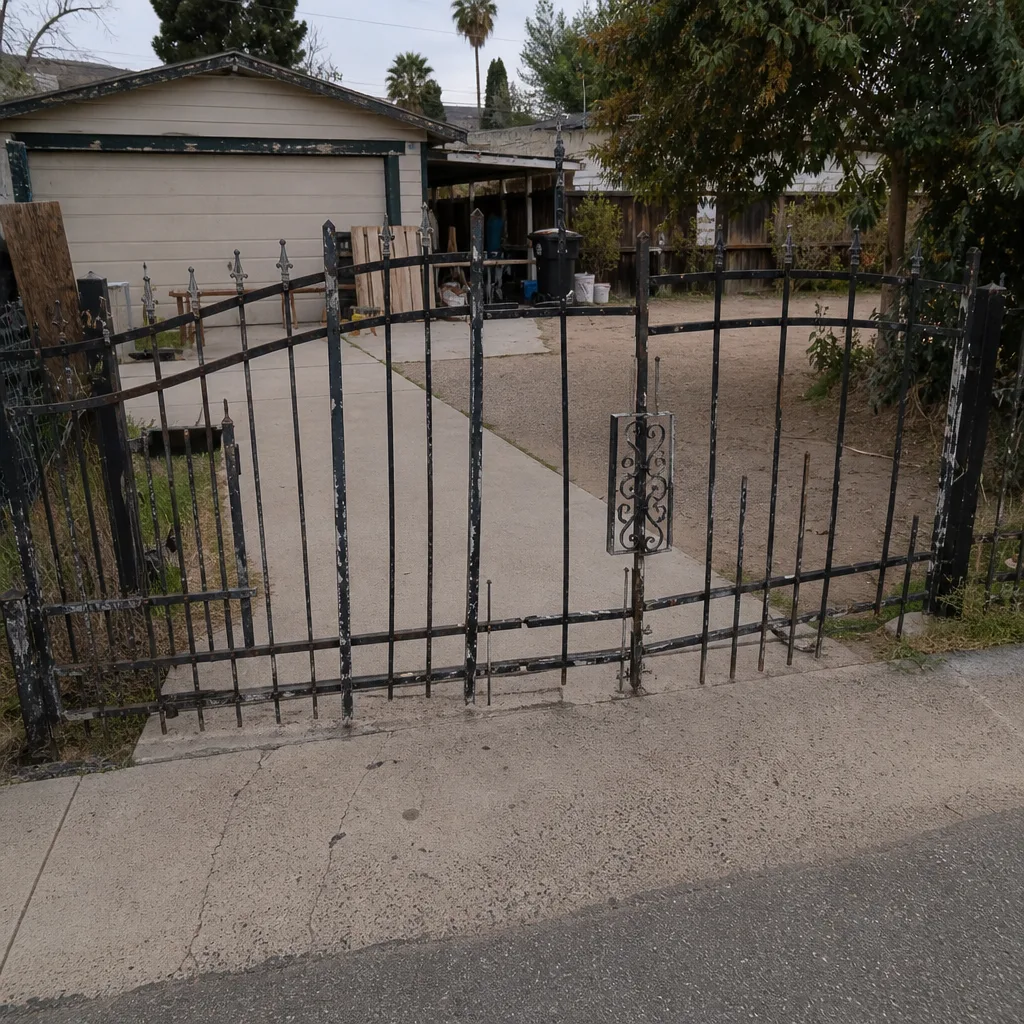
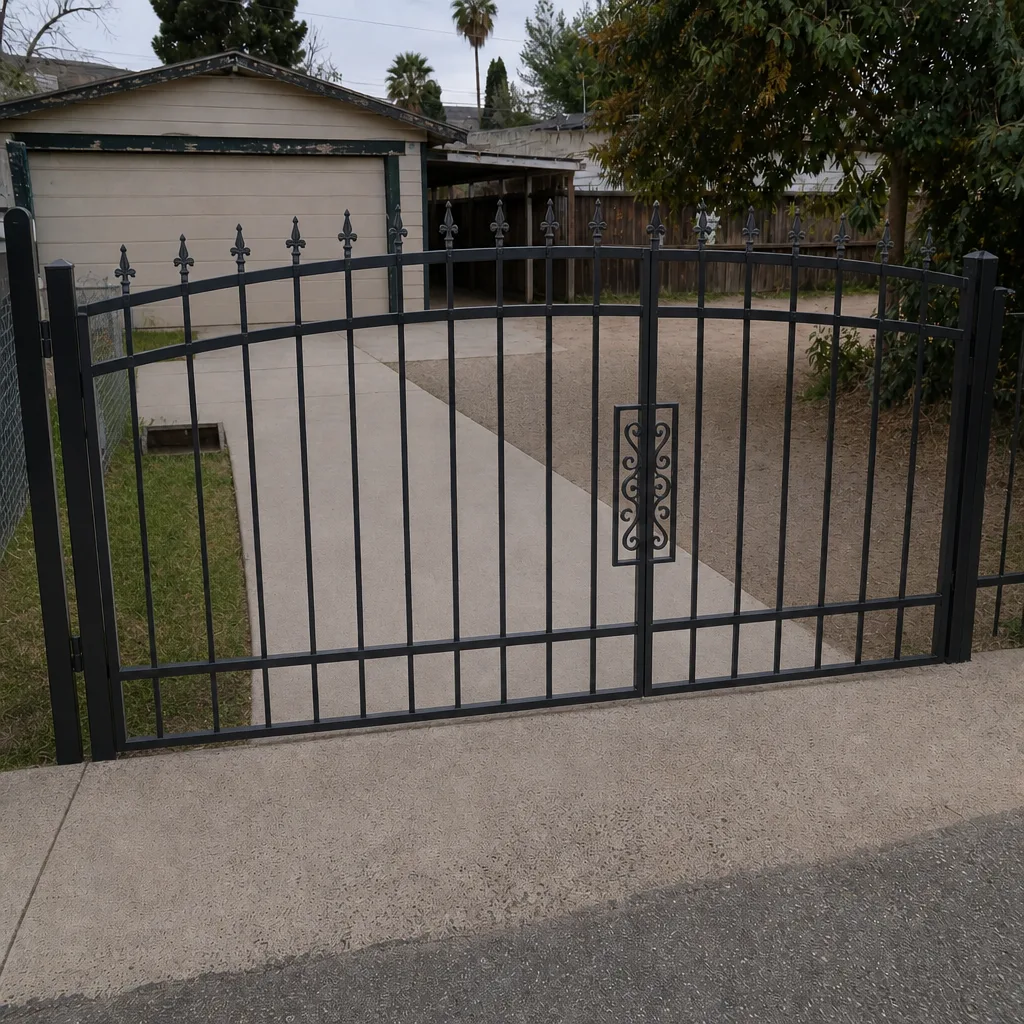
See the difference
 Before
 After
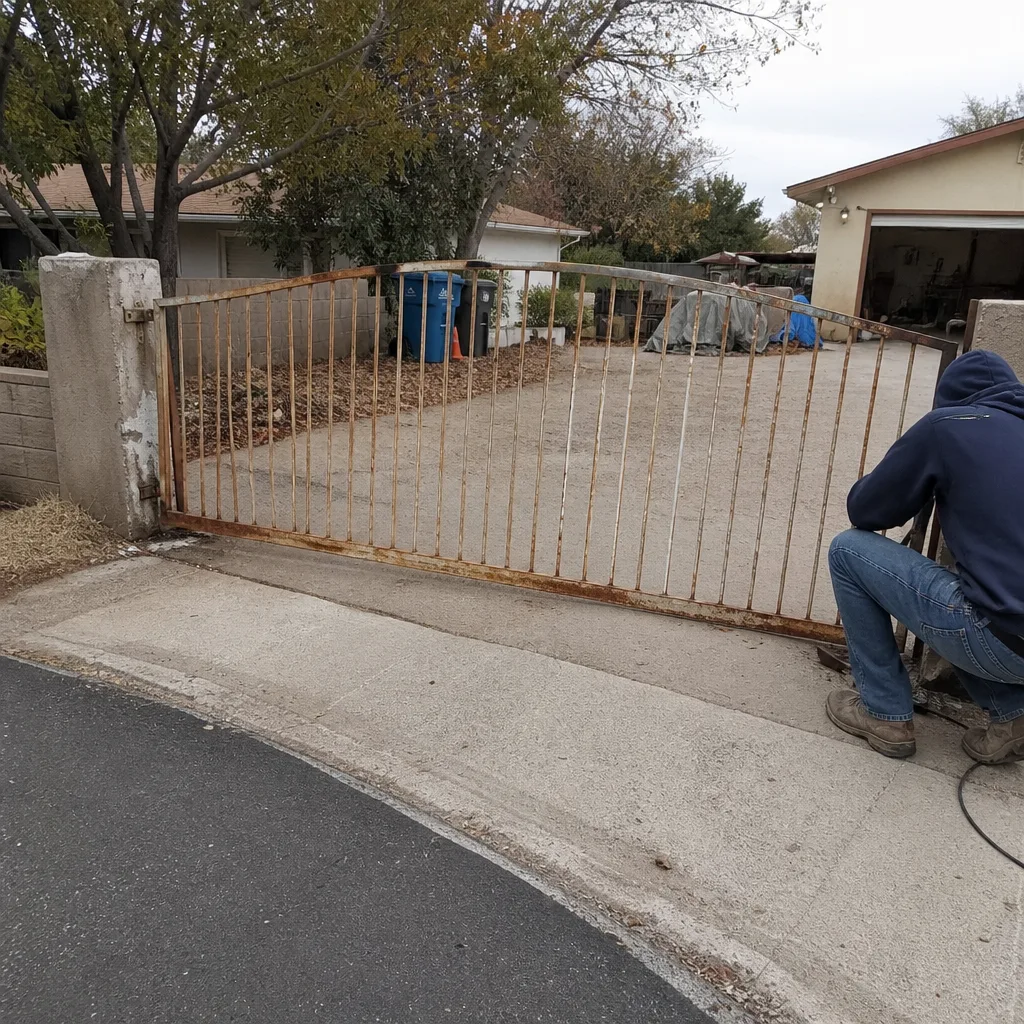 Before
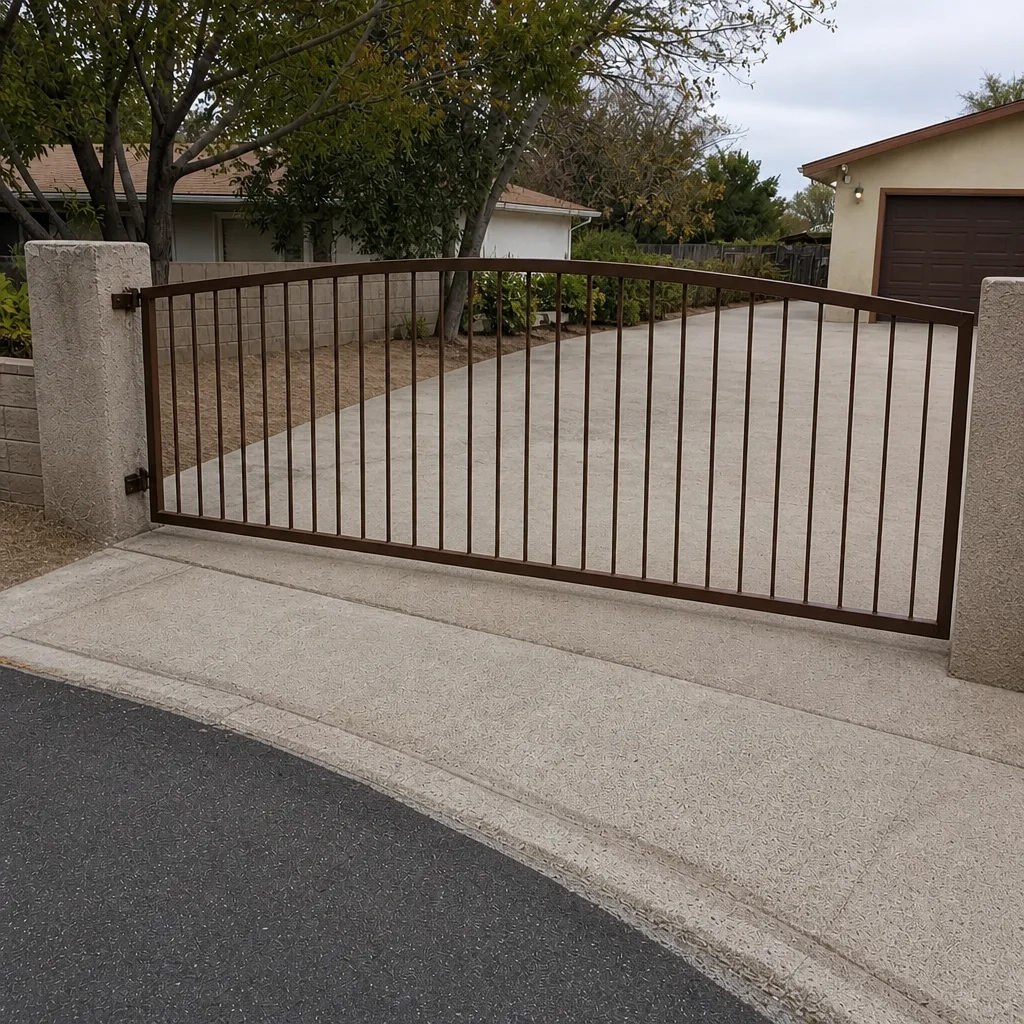 After
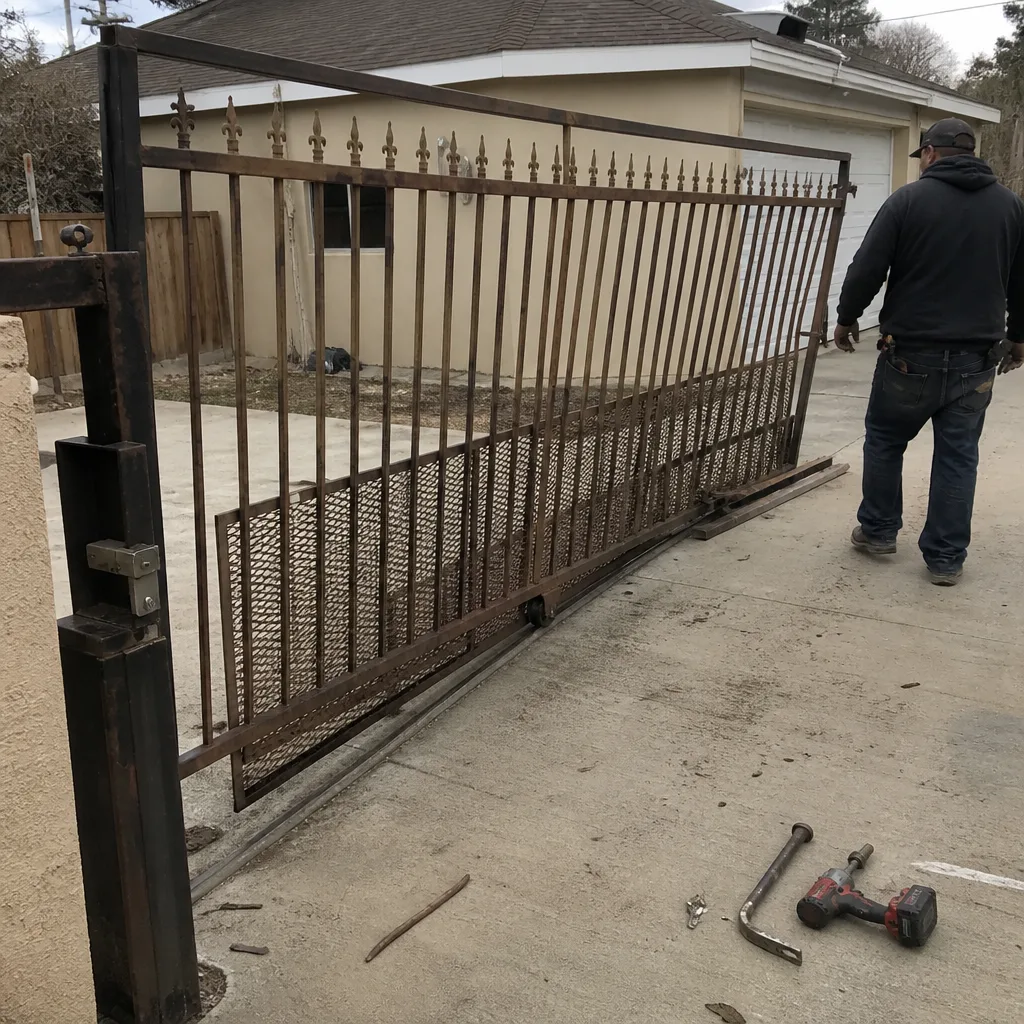 Before
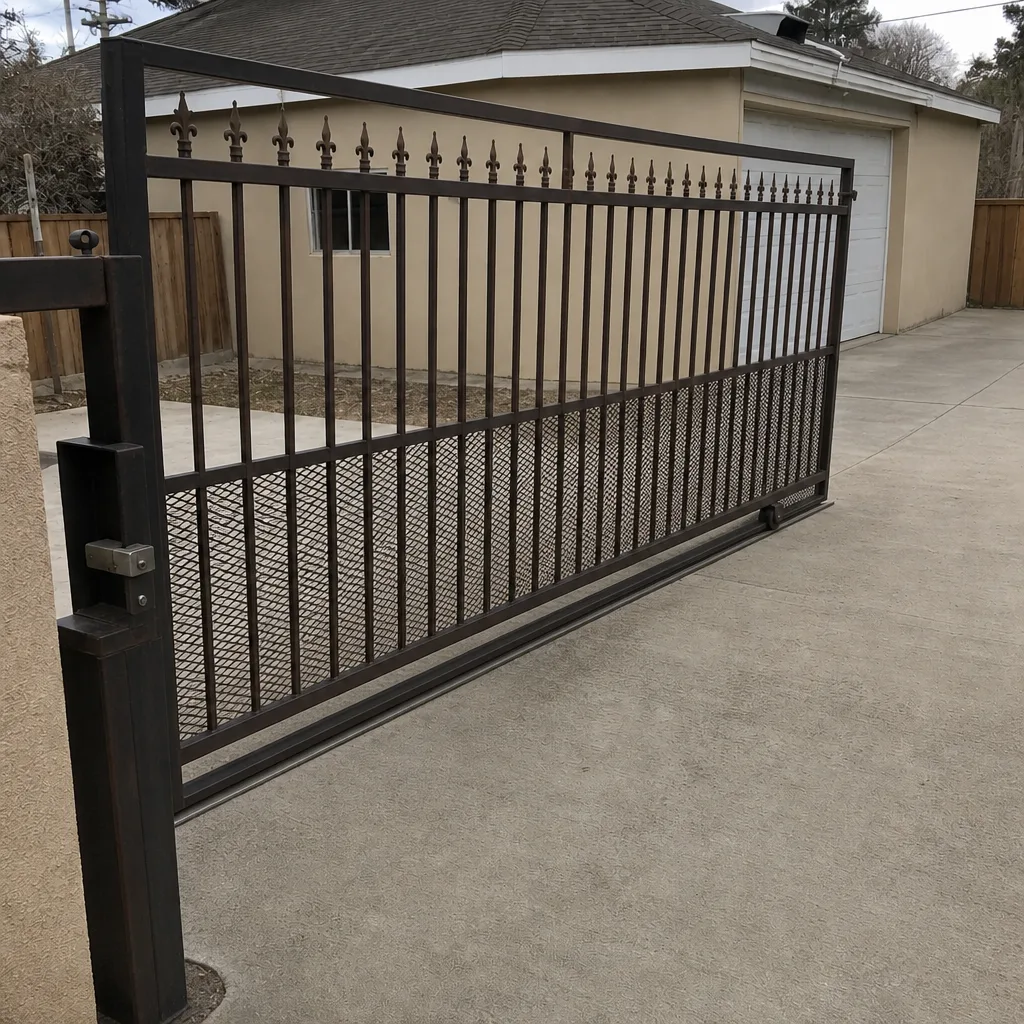 After
When to Call a Professional
Call a professional for anything involving structural welding, hinge post replacement, or an operator that keeps tripping its force limit. Weld repairs and frame straightening require on-site welding skill and a welder who knows the correct penetration and joint prep – a wire-feed kit from the hardware store won’t hold a gate hinge the way a proper repair weld will. The same is true of hinge post work: if the post needs replacing or resetting, that’s a footing job and not a homeowner project. If your gate has a cracked weld, a bent frame, a dragging hinge, or an operator that has been asked to push through a bind for months, call a gate specialist before the damage deepens. Gatewood Fence & Gate Paradise offers free estimates in Paradise – call (888) 292-7536. We’ll look at the gate, tell you straight which problem you have, and quote the repair before we start.
Frequently Asked Questions
A single weld repair on a residential gate typically runs $150 to $350 in the Paradise area depending on how many points need welding and whether the gate needs to be pulled back into shape first. Frame straightening plus two or three weld points usually lands between $350 and $600. Full hinge post replacement runs higher because it involves setting the footing. Call (888) 292-7536 for an exact quote – estimates are free.
Most weld and hinge repairs we can handle the same day or the next day when parts don’t need to be ordered. If the repair involves a replacement hinge post, a frame straightening with parts, or a new operator, we’ll schedule it for a day that works. Call us and we’ll give you a straight answer on timing.
Lift the gate at the latch side. If it lifts easily and drops back down, the hinge or hinge post is the problem. If it’s rigid and doesn’t lift, or if a straight edge laid on the frame shows a curve, a weld or the frame has failed. Either way, an on-site look is the only sure answer. Call (888) 292-7536 and we’ll come look.
Sometimes, with care. If the gate won’t latch, prop it shut or run a padlock through the receiver. If it’s a slide gate, sweep the track and cycle it by hand – not with the operator – until the repair. Don’t lower the operator force and keep using it; that masks the bind and burns out the motor.
Yes. Operator replacement is part of what we do, and that includes the wiring, safety edges, and access control. Call (888) 292-7536 for a free estimate on the full job – we quote the whole job before any work starts.
Yes. We service FAAC, BFT, Linear, Viking, LiftMaster, Ghost Controls, DoorKing, Elite, and Mighty Mule operators. If the operator is failing but the gate is also binding, the weld and hinge repair comes first. Call (888) 292-7536 and we’ll diagnose which one is actually the problem.
The Bottom Line
Most gate failures aren’t the motor’s fault. They’re structural – cracked welds, sagging hinge posts, bent frames, and worn rollers that force the operator to work harder than it should. Catch the problem at the crack stage and a weld repair costs a fraction of a new gate, new motor, or new operator. In Paradise, our seasonal temperature swings and heaving ground put more stress on gate metal than most homeowners realize, which is why the hinge post, the five key weld points, and the track deserve a look twice a year. If your gate is dragging, sagging, or straining the operator, call us and we’ll tell you straight what’s wrong and what it takes to fix it. Gatewood Fence & Gate Paradise is ready at (888) 292-7536 – free estimates, on-site welding, and the 90-Day Done Right Promise in writing.
Written by the team at Gatewood Fence & Gate Paradise.