
Last updated November 18, 2026
 Wrought iron
 Wood & steel frame
 Farm & ranch
 Sliding driveway gates
 LiftMaster operators
Free on-site gate assessment - hinges, posts, and your LiftMaster or Nice gate operator checked before anything is quoted
The assessment is free and the quote is the invoice.
Get your free estimateGate Repair Maintenance Schedule: What to Do and When
The standard “lubricate every six months” advice assumes a temperate climate. In Paradise, the six months from May through October put more stress on a gate than most climates deliver in two full years: heat that bakes grease into varnish, UV that eats through plastic bushings, monsoon dust that grinds into every roller, and thermal cycling that would embarrass a lesser piece of steel. A maintenance schedule that ignores our two-season reality is just a generic template with your city’s name dropped in. Here’s what actually beats gates up here, and when to act on it.
Quick Answer
In Paradise, service a residential gate every three months, not every six: a full inspection and lubrication in April before the heat hits, a post-monsoon inspection in October, and short monthly walk-arounds in between. Professional gate service once a year is the baseline for manual gates; motorized swing and slide gates want twice a year here because of summer heat and dust.
Styles & brands we work with
- Wrought iron
- Wood & steel frame
- Farm & ranch
- Sliding driveway gates
- LiftMaster operators
Table of Contents
- Why Paradise Is Harder on a Gate Than the Climate the Advice Was Written For
- The Five-Minute Monthly Walk-Around That Catches Most Problems Early
- April: Pre-Summer Prep That Prevents the Three Most Common Summer Failures
- October: The Post-Monsoon Inspection
- Lubrication by Component: Where the Wrong Product Does Real Damage
- What to Log and Why It Pays You Back
- Season-by-Season Schedule at a Glance
- Common Mistakes to Avoid
Why Paradise Is Harder on a Gate Than the Climate the Advice Was Written For
Most gate care guidance comes from parts of the country with mild summers and steady humidity. Paradise doesn’t play that game. We get five months of daytime highs near or above 105°F, weeks of low double-digit humidity, then a monsoon stretch where dust blows hard and the air suddenly fills with moisture. That swing is the part that quietly wrecks components. Steel expands in July and contracts by November; lubricant thins out in the afternoon and congeals overnight; rubber and plastic seals crack before they ever have a chance to fail from wear.
The practical effect is that gates here don’t fail gradually. They work fine right up until the day they don’t. In our experience, the failures that catch homeowners off guard in Paradise fall into a tight pattern: operator gearboxes that cooked their lubricant over the summer, safety edges and loop detectors that got sand in them after the first monsoon, and hinges that seized because the pin got dry and never got re-lubricated. None of those are sudden, even though they feel sudden.
There’s also the sun angle. On a west-facing gate in Paradise, the afternoon sun hits the operator housing and control box directly, and heat builds inside that box faster than the ambient air temp suggests. For gate motor and opener service in Paradise, shade, ventilation, and a housing that isn’t sitting in full afternoon sun matter as much as the motor brand itself. That’s a Paradise-specific thing that generic maintenance checklists never mention, and it’s the reason a schedule built for our climate is worth the paper it’s printed on.
The Five-Minute Monthly Walk-Around That Catches Most Problems Early
You don’t need tools for this. Once a month, walk your gate line, listen to it, and watch it move. Three checks, under five minutes total, and they catch the large majority of problems while the fix is still cheap. Do it the same weekend every month so you don’t forget.
- Walk the swing or slide path. Open the gate by hand and watch the bottom edge. If it drags anywhere, if it scrapes concrete, or if it stalls and needs a nudge, that’s a hinge, roller, or alignment issue. Catching a drag early saves the operator from fighting it and burning out.
- Listen to it close. Start the gate and listen for a grind, a squeal, a rattle, or an uneven rhythm. A gate that used to sound smooth and now sounds rough is telling you where it’s failing. Show me the gate closing on its own and I’ll show you where it’s failing.
- Look at the hardware. Check that hinges and pivots are tight, that the operator arm or chain track isn’t loose, and that nothing looks cracked or bent. Look at the housing seam, the control box, and any exposed wiring for sun damage or chew marks.
That’s the whole routine. Nothing on that list requires getting into the operator case or the control box. If you see something small, call it in; a five-minute check that turns into a $60 visit beats the same problem discovered in August when it becomes a full operator replacement.
April: Pre-Summer Prep That Prevents the Three Most Common Summer Failures
April is the single most valuable service window on the Paradise calendar. Do the checks now, while it’s still 85°F in the afternoon, and you avoid the three failures we see most once it’s 108°F and the gate is stuck open or stuck shut.
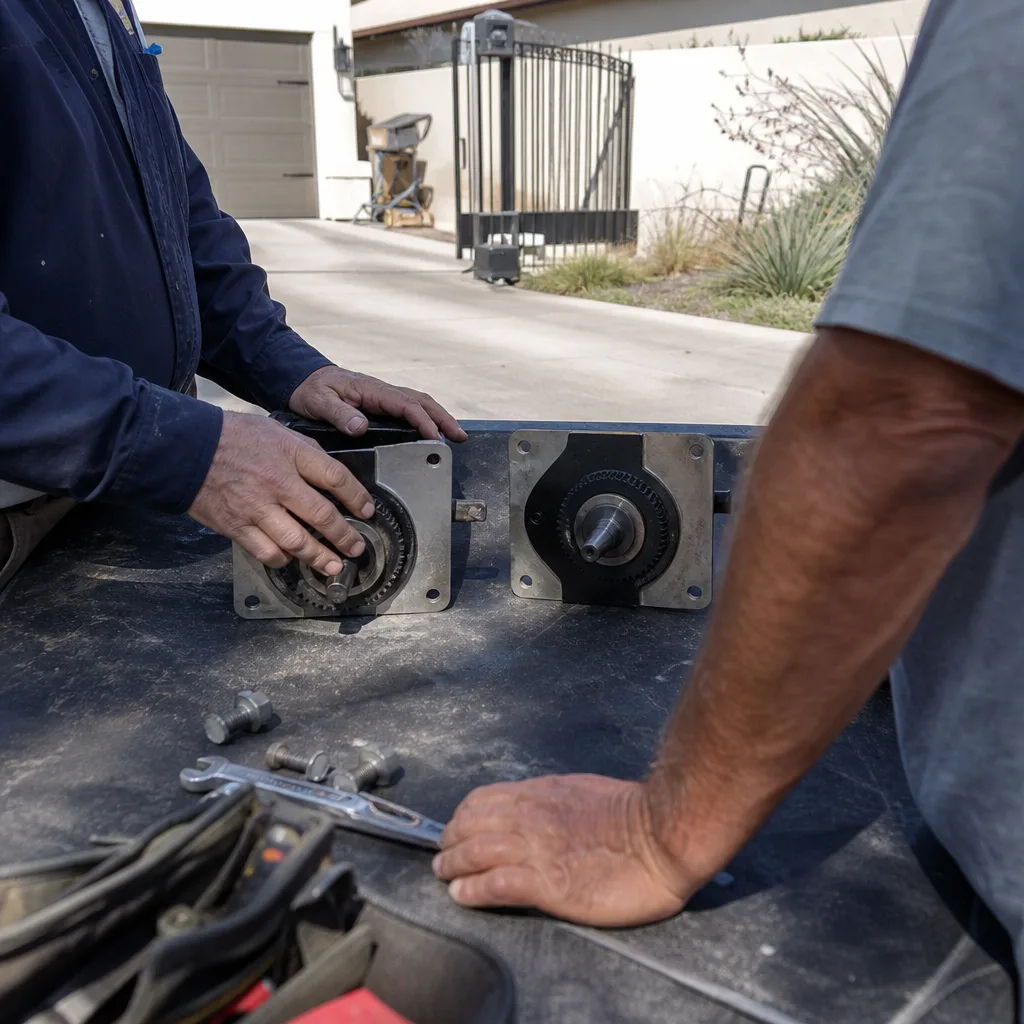
Failure one: the operator cooks its lubricant. Heat is the enemy of every gearbox oil and grease. By late July, a gate motor that hasn’t been serviced since winter can run hot, slow down, or trip its thermal protection. In April, have the operator serviced: old lubricant drained and replaced, the gearbox checked for wear, and the motor’s cooling path and housing breathing room confirmed. On a Linear or Viking operator, the right service interval and the right grease are what keep the unit healthy through the heat.
Failure two: alignment drift turns into a bind. The ground shifts and steel expands over a Paradise summer, and a gate that was perfectly aligned in March binds by September. Set the alignment, snug the hinges and pivots, and set the operator travel limits before the heat arrives so a slightly heavy gate doesn’t load the motor.
Failure three: exhausted safety devices. Safety edges and loop detectors are the parts nobody thinks about until they fail. Inspect the rubber safety edge for cracking, test that the gate reverses properly when it meets an obstruction, and check the loop detector and photo-eye function. A sun-dried safety edge that quits in July is a real safety problem, not a nuisance. Batteries in remote controls, keypads, and access control keypads are worth swapping in April, too; a dead battery in the heat is a classic reason a gate “won’t open.”
October: The Post-Monsoon Inspection
The monsoon season is the other half of the Paradise maintenance story. Blowing dust, then sudden humidity spikes, then dust again. The combination gets into places it has no business being, and the honest time to deal with it is October, once the season has passed.
Where to look first, in order:
- Operator internals and vents. Fine sand finds its way into gear cases, motor vents, and chain tracks. Grit in a chain drive is a wear accelerator; grit in a gearbox is worse. This is the first place to look.
- Control box and wiring. Damp air and heat cycles loosen connections and crack seals. Open the control box (with the power off) and look for dust, corrosion, moisture, or loose terminals.
- Safety edge and sensors. The same grit that gets into the operator drifts into the safety edge and photo-eye lens. Test and clean them.
- Hinges, pivots, and roller tracks. Clean out the accumulated grit, then re-lubricate with the right product. Never lubricate over grit; you just grind it in.
- Fasteners and welds. Thermal cycling over the summer can loosen bolts and stress welds. Look for looseness and for any cracks at the hinge post and gate frame corners.
This is also the right window to have the gate inspected by someone who does it for a living. On a DoorKing or Ghost Controls system in Paradise, some of the wear that matters is inside the unit and doesn’t announce itself. The October inspection is where you catch it before the next April. If your gate gets regular use, we’ve found that scheduling gate repair in Paradise in October is cheaper than an emergency call in June.
Lubrication by Component: Where the Wrong Product Does Real Damage
Putting the wrong lubricant on a chain-drive operator is worse than putting nothing on it. That mistake is everywhere, partly because the internet’s answer is “just use WD-40.” No. A light multi-purpose oil on a chain drive washes out the factory grease and collects grit. On a gate that runs a chain in a Paradise dust environment, doing this every month will wear the chain out faster than doing nothing.
Here’s the component-by-component guide we actually follow:
- Gate hinges and pivots: a heavier, weather-resistant lubricant that stays put in heat. Grease or a heavy lubricant, sparingly, and wipe off the excess so dust doesn’t stick to it.
- Roller tracks and slide rollers: a dry film or silicone-based lubricant. It doesn’t hold grit the way grease does, which matters more here than anywhere.
- Chain-drive operator: the lubricant specified for the operator, typically a chain-specific lubricant, not a general-purpose oil. Apply per the operator manufacturer, clean first.
- Screw-drive and belt-drive operators: follow the manufacturer’s specification exactly. Do not wing it; a belt wants nothing greasy on it.
- Hinges on swing gate arms, latch hardware, and padlock hasps: light oil or graphite, again sparingly.
- Rubber seals and safety edges: a rubber-safe protectant designed to slow UV cracking, not a petroleum product.
- Electrical components and the control box: nothing. Never lubricate anything inside the control box or anywhere near electrical wiring.
The rule of thumb that saves people trouble: ask what the component is made of and what it moves against, then match the lubricant to that. And when in doubt about an operator, the manufacturer’s own spec wins. A $300 operator can be ruined by the wrong $6 can of oil applied every month for a year in Paradise’s dust.
What to Log and Why It Pays You Back
Here’s a maintenance habit that costs you almost nothing and saves real money: keep a log. A simple notebook or a note on your phone, one line per service. When was the last lubrication? What did the operator do that was different last month? What was the temperature the day the gate first acted up? That last one is the tell.
Log these things, every time:
- Date, and what was done (lubrication, adjustment, part replaced)
- The operator brand and model number (LiftMaster, Linear, DoorKing, whatever’s on the label)
- Any symptom you noticed, even if it went away
- Who did the work
- The cost and what a warranty or promise covered
Why it pays: every future repair gets faster because the history is right there. Whoever fixes your gate next doesn’t have to guess whether a part was replaced four months ago or four years ago. It also protects you on a warranty claim, and it makes a second opinion genuinely useful. We’ve had customers hand us a notebook and save the diagnostic time it would have taken to figure out what the last shop did. That’s real money. Get the label off the operator and write it down now, while you’re thinking about it.
Season-by-Season Schedule at a Glance
Put this on the fridge. It’s the whole Paradise schedule in one place, and the three service visits are what actually hold the gate together through the year.
- January to March (cool season): the ideal window for major service. This is when you schedule a full inspection, a gate alignment, hinge and pivot adjustment, operator service, and any welding or structural fix. Cool weather means the work isn’t fighting the heat. If you’ve been putting off gate installation in Paradise, this is also the season to plan it, so a new gate is measured and set before summer.
- April (pre-summer prep): full inspection, operator lubricant service, alignment set, safety devices tested, batteries swapped, hinge and pivot tighten. This is the last call before the heat.
- May to September (summer): monthly walk-arounds only. Watch for drag, listen for grind, look at hardware. Don’t put a gate through major service in August.
- October (post-monsoon): the deeper inspection. Clean grit out of the operator and tracks, check the control box, test safety devices, check fasteners and welds, re-lubricate with the right product.
- November to December (cool season): catch-up service, and the time to plan the next January-to-March window. If the gate has been acting up all year, this is when you stop living with it.
Nowhere in that calendar is a gate that gets ignored all year and still holds up. The gates that last in Paradise get three planned touch points and eleven monthly walk-arounds. That’s the schedule.
Common Mistakes to Avoid
- Using “six months” as the whole schedule. That advice assumes a mild climate. In Paradise, six months of summer is the whole wear cycle.
- Spraying the chain or gearbox with general-purpose oil. The wrong lubricant washes out the factory grease and collects the very grit that grinds a chain down. Match the product to the component.
- Lubricating over dirt. If you grease hinges and pivots without cleaning the grit off first, you’re just packing the abrasive material in where it does the most damage.
- Ignoring small annual alignment drift. A gate that binds a quarter-inch in April can bind an inch by August with the heat. Alignment set in the cool season needs to be checked again before summer.
- Skipping the safety edge test. The gate reversing properly when it meets an obstruction is a genuine safety check, not a formality. Test it in April without fail.
- Waiting for failure instead of a schedule. The gates that fail in July in Paradise are usually the ones that got no April touch point. Maintenance before an emergency is cheaper than an emergency call.
- Not writing anything down. A gate with no service history costs more to fix, and no one can tell you what the last shop actually did.
When to Call a Professional
Most monthly walk-around fixes are yours to handle. Some gates shouldn’t be touched by a homeowner. Call a pro when the gate won’t reverse on obstruction (a safety issue), when you hear a metal-on-metal grind from inside the operator, when the operator housing is hot to the touch or the motor trips out repeatedly, when a hinge or post is loose, cracked, or visibly stressed, or when a weld has failed at the gate frame. Tensioned counterbalance springs on swing gates are genuinely dangerous to adjust by hand; that’s professional work. Electrical faults at the control box and any exposed, damaged wiring are the same. Gatewood Fence & Gate Paradise offers free estimates in Paradise, on-site welding to fix the gate in your driveway instead of hauling it off, and a 90-Day Done Right Promise in writing on every job. Call (888) 292-7536.
See the difference
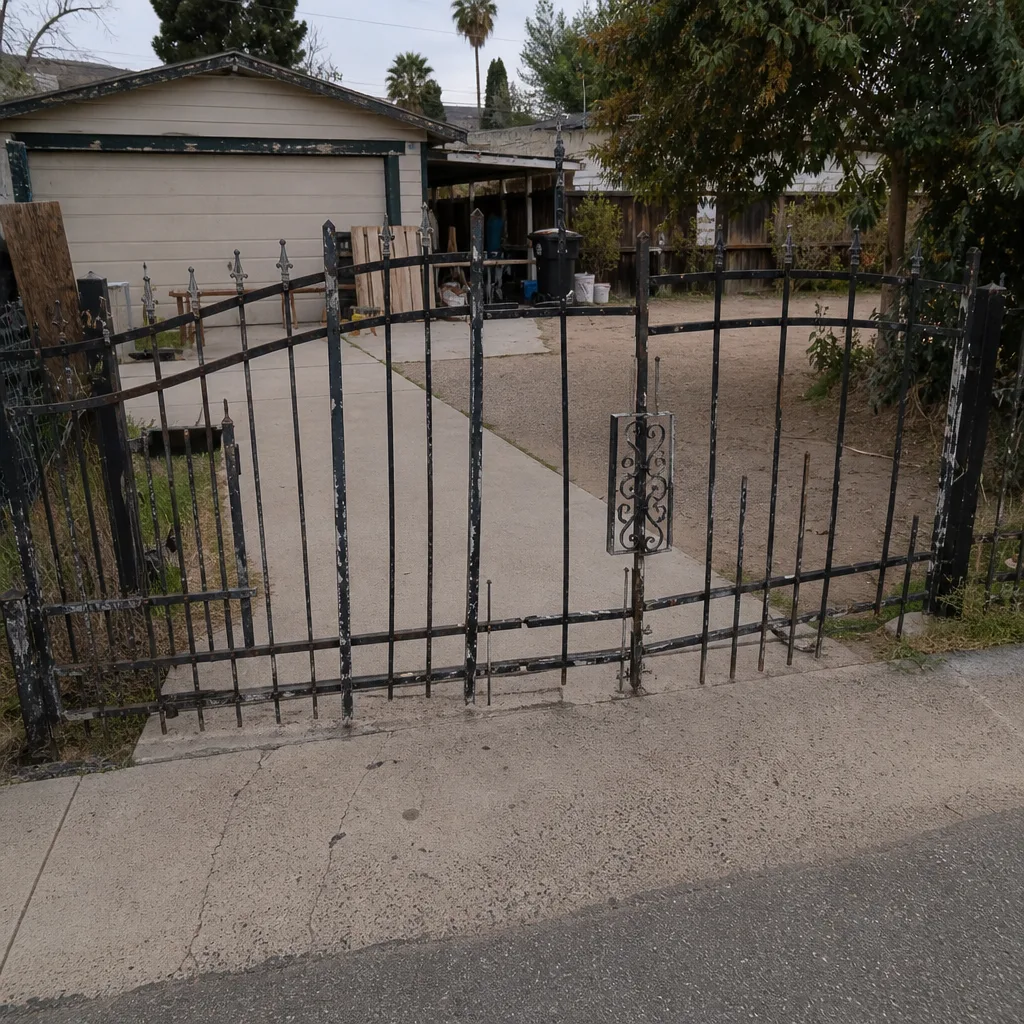 Before
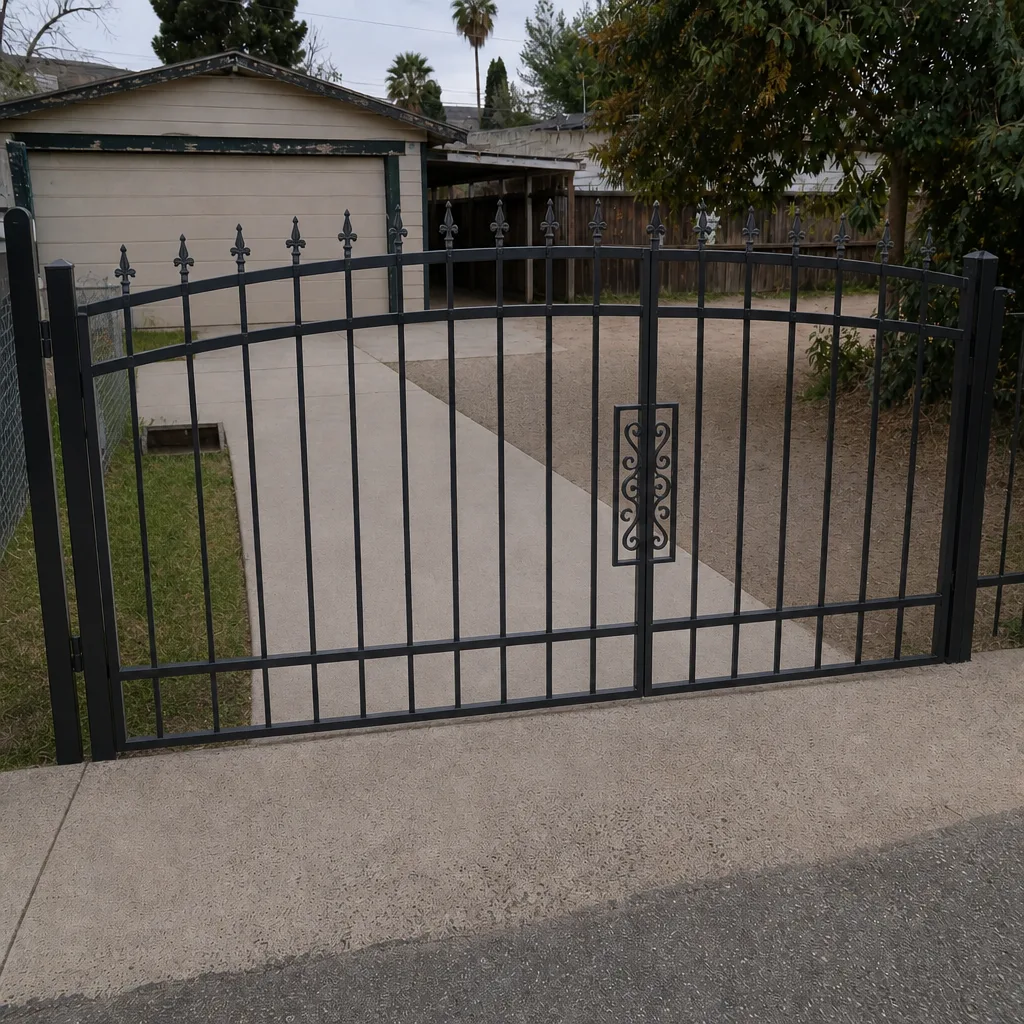 After
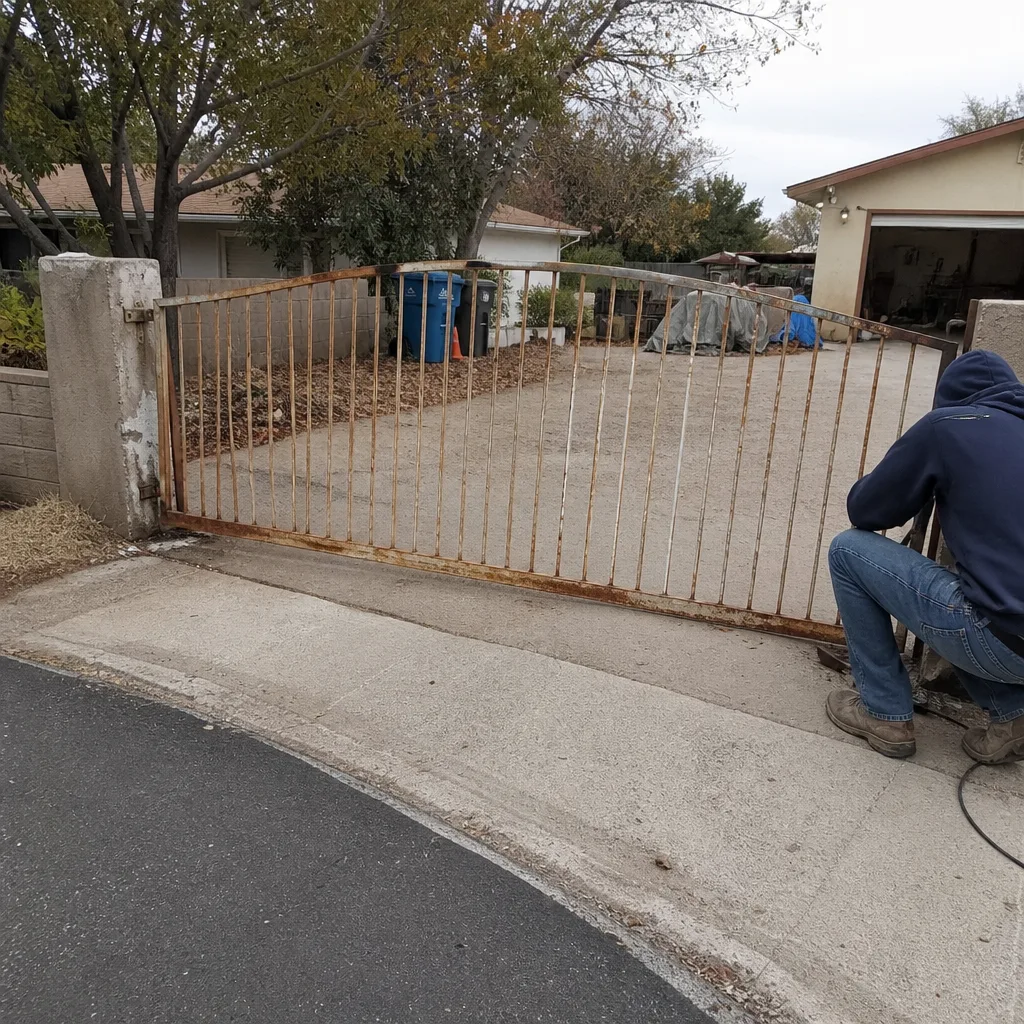 Before
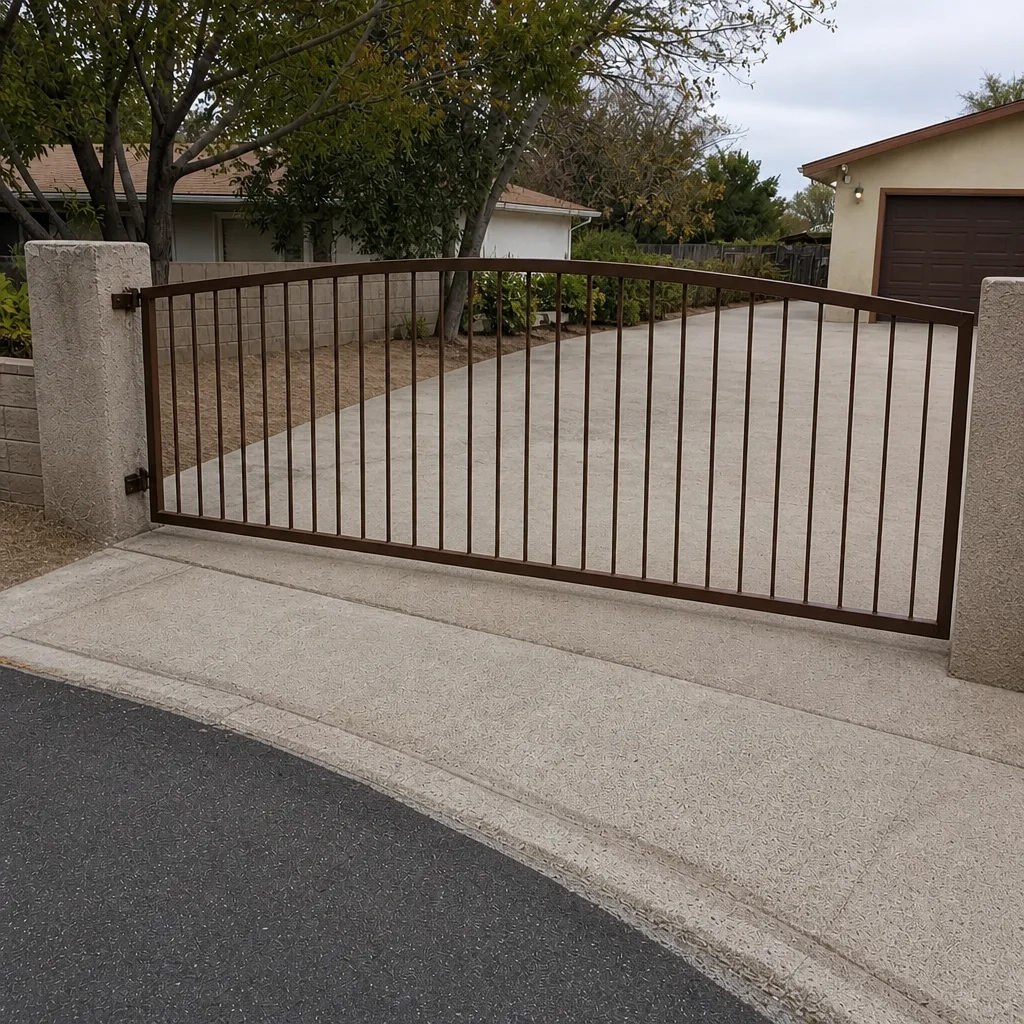 After
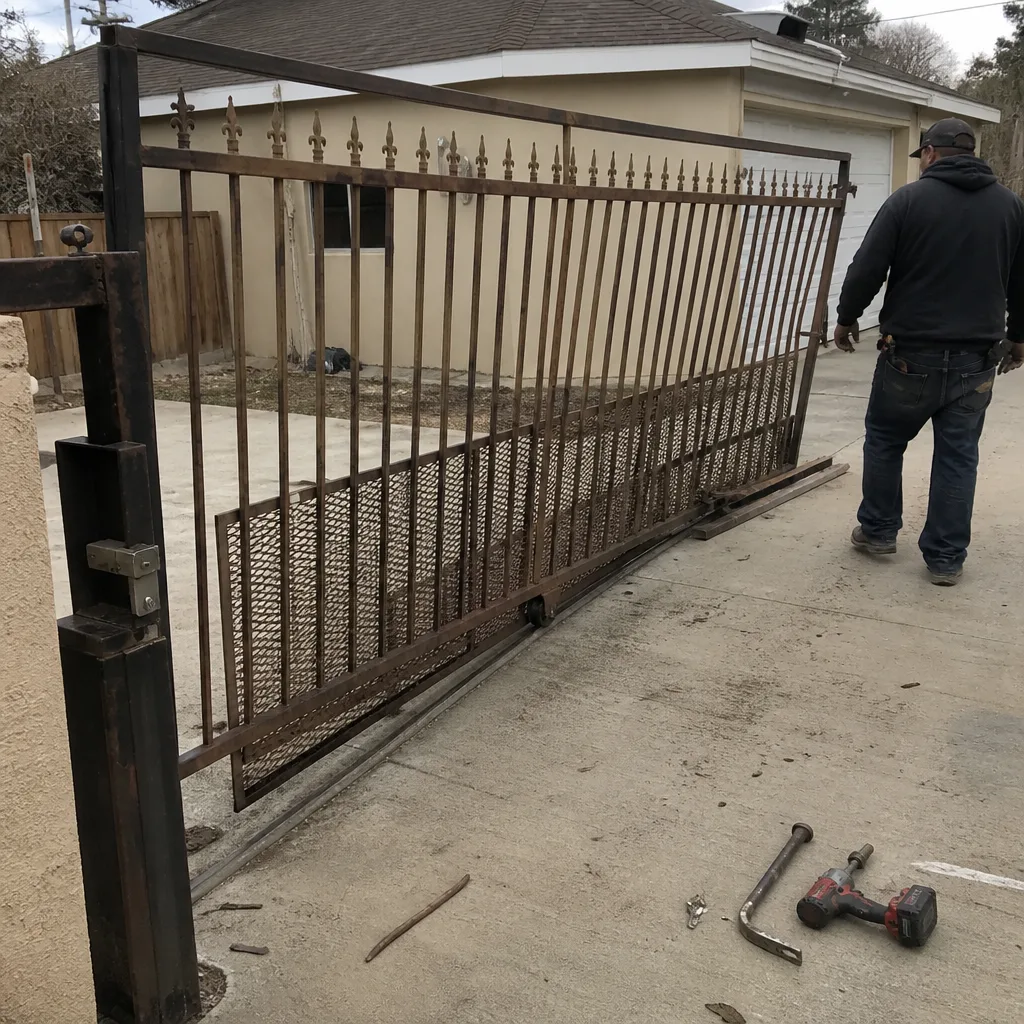 Before
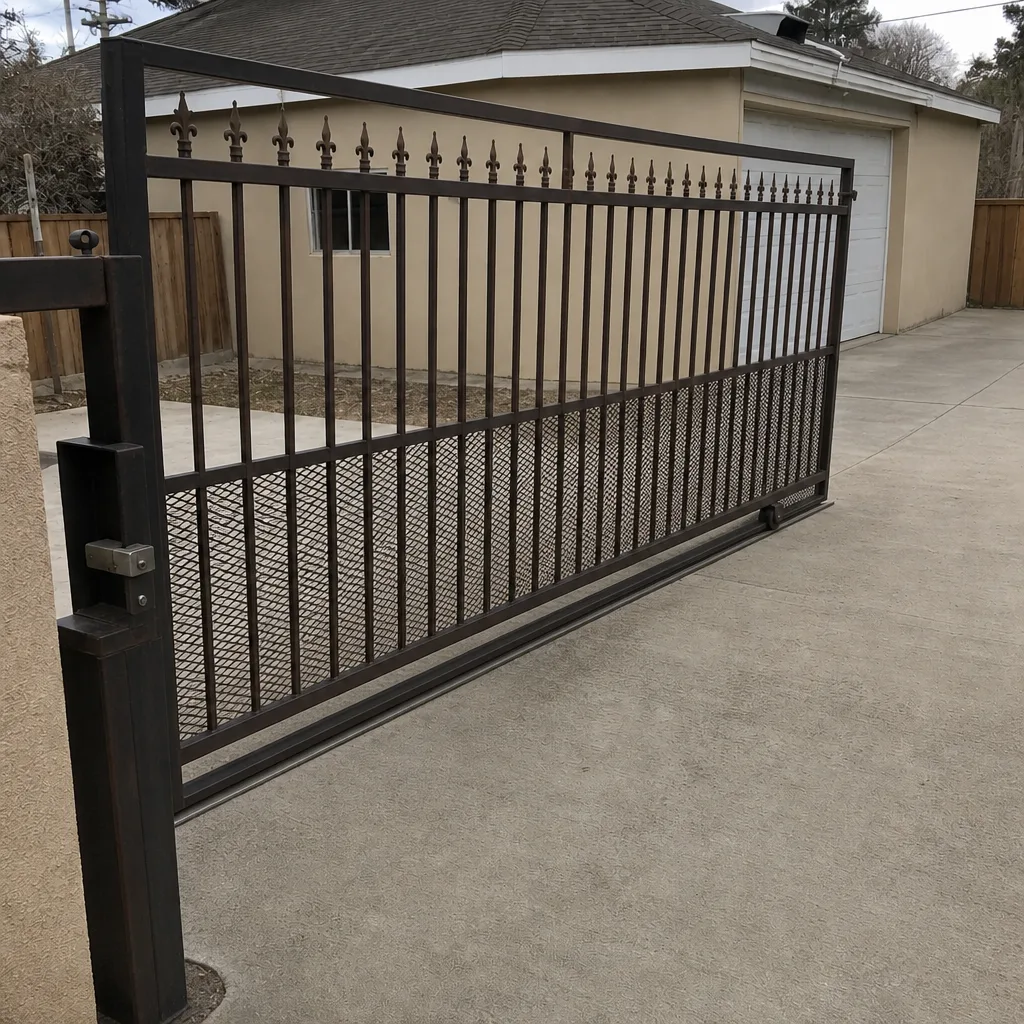 After
Frequently Asked Questions
Every three months for a full inspection-and-lubrication cycle, split into an April pre-summer visit and an October post-monsoon visit, with a five-minute walk-around monthly in between. Manual gates are fine on an annual full service; motorized gates want twice a year because of Paradise’s heat and dust.
Heat-damaged lubricant and dust in the internals are the two big ones. Summer heat degrades gearbox lubricant, and monsoon grit gets into chains and control boxes. That’s exactly why the April and October service windows matter so much in Paradise.
No. A general-purpose penetrating oil on a chain drive washes out the factory lubricant and collects grit, which wears the chain faster. Use the operator manufacturer’s specified chain lubricant, applied after cleaning, and follow their schedule.
Test the safety edge and photo-eye every time you service: point the gate at an obstruction and confirm it reverses. Check the loop detector function, look for cracked rubber on the safety edge, and never reach into the gate’s path while it’s powered.
Because it makes every future repair faster and cheaper. The next person to work on the gate knows what was replaced and when, whether a part is still under warranty, and what symptoms have been recurring. It also makes a second opinion genuinely useful.
We service Linear, Viking, DoorKing, Ghost Controls, LiftMaster, FAAC, BFT, Elite, and Mighty Mule. Whatever’s on your gate, the maintenance schedule above applies to it. Call (888) 292-7536 for a free estimate.
The Bottom Line
The right schedule for a gate in Paradise isn’t the one you’ll find in a generic template. It’s three planned touch points a year: a cool-season service window in January to March, an April pre-summer prep, and an October post-monsoon inspection, with five-minute walk-arounds the rest of the time. Lubricate by component, not by habit. Log every service so the history is right there. And when the gate does something important, call it in early, before a small fix in April turns into an emergency call in August. The name is on the job, and the job is done right the first time.
Contact
If you’d rather have someone who’s been at it since 2001 take a look, we’ll come out, show you what’s worn, and give you a straight price before any work starts. You can call us directly or start with the Gatewood Fence & Gate Paradise home page to see what else we do. Either way, call (888) 292-7536 for a free estimate, and a live person will answer, day or night. The name is on the shop, and the shop is down the road. That’s the oldest accountability there is. If your gate has been acting up and you’re not sure whether it’s a repair or a full replacement, our gate repair team will tell you the truth.
Written by the team at Gatewood Fence & Gate Paradise.