
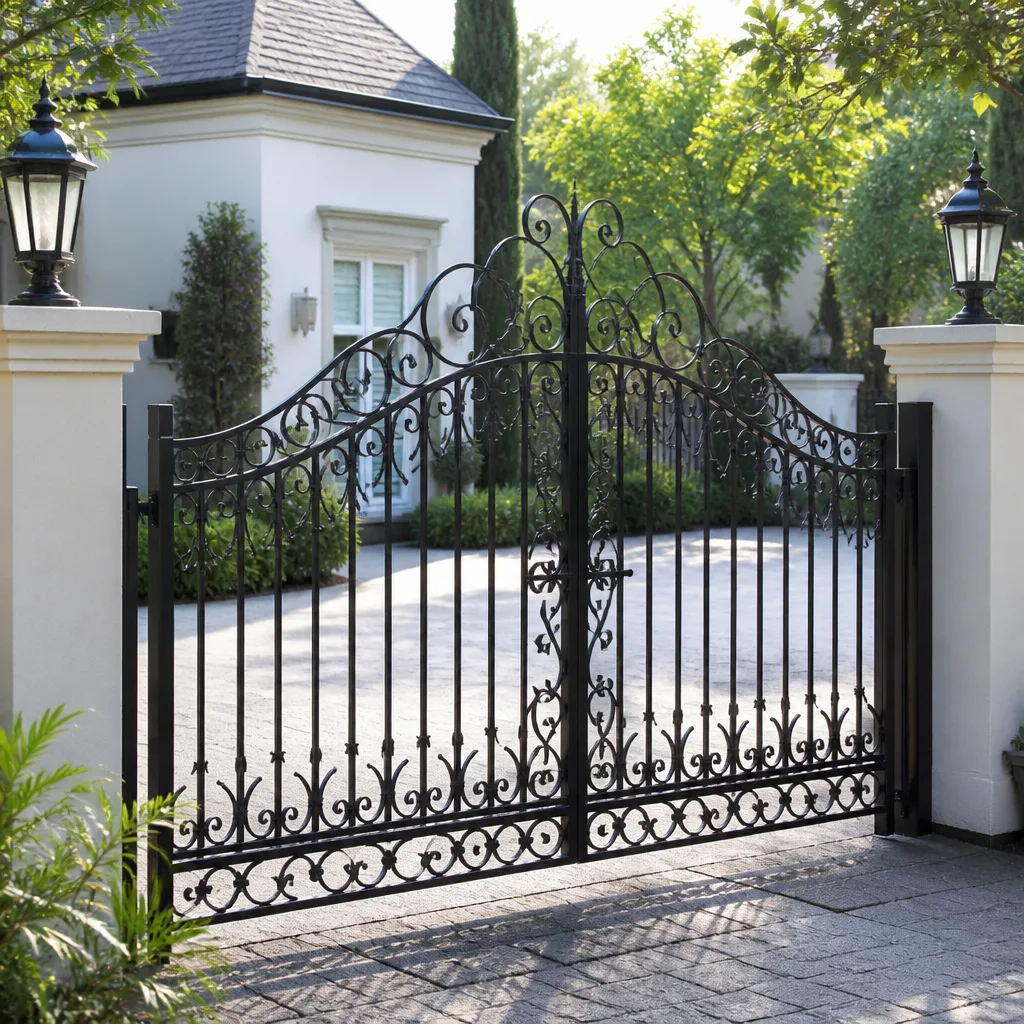
 Wrought iron
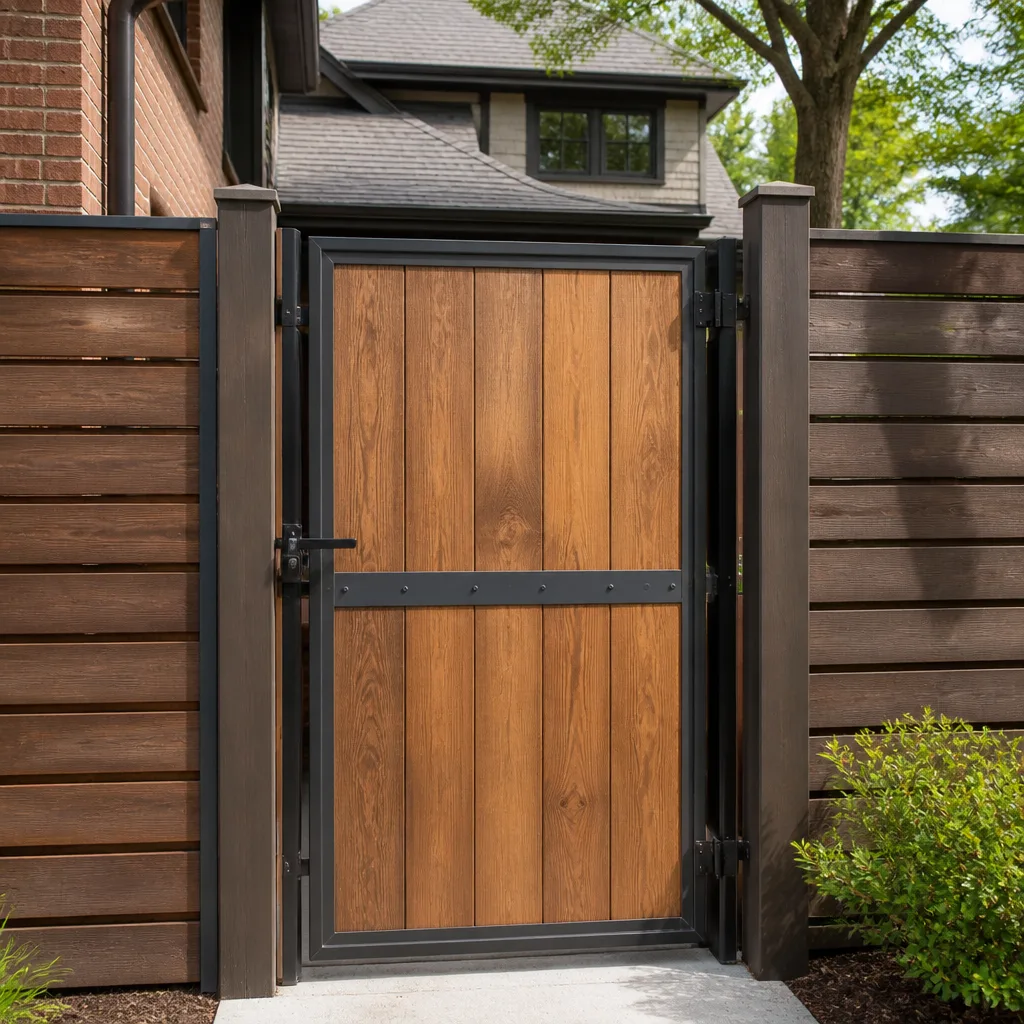 Wood & steel frame
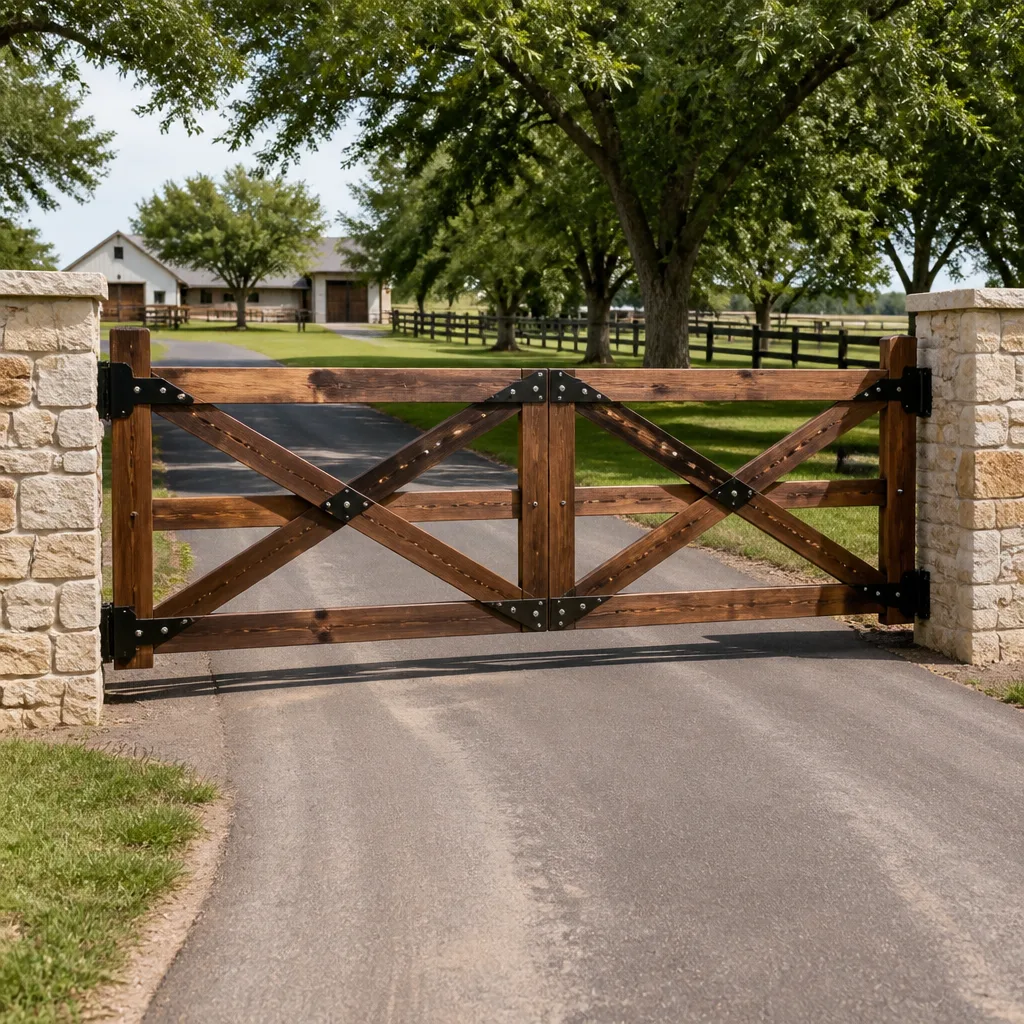 Farm & ranch
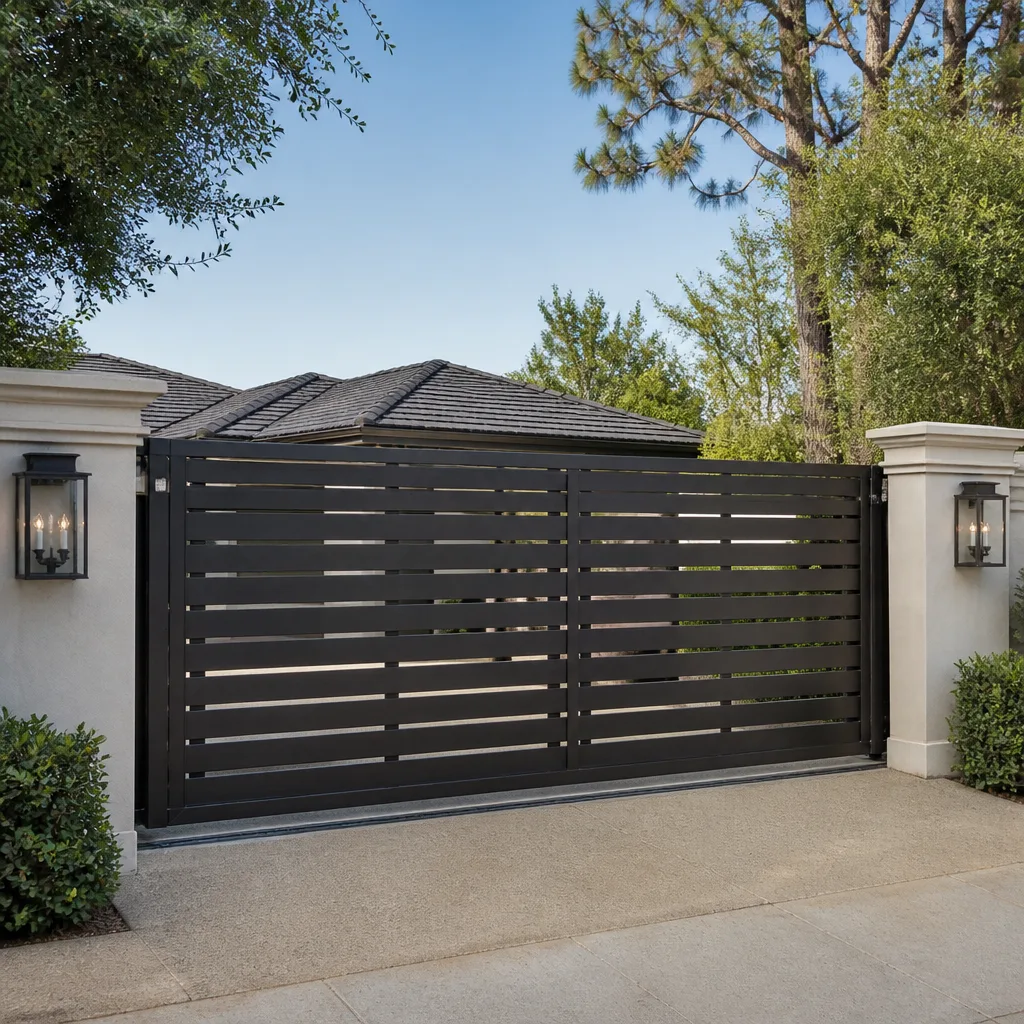 Sliding driveway gates
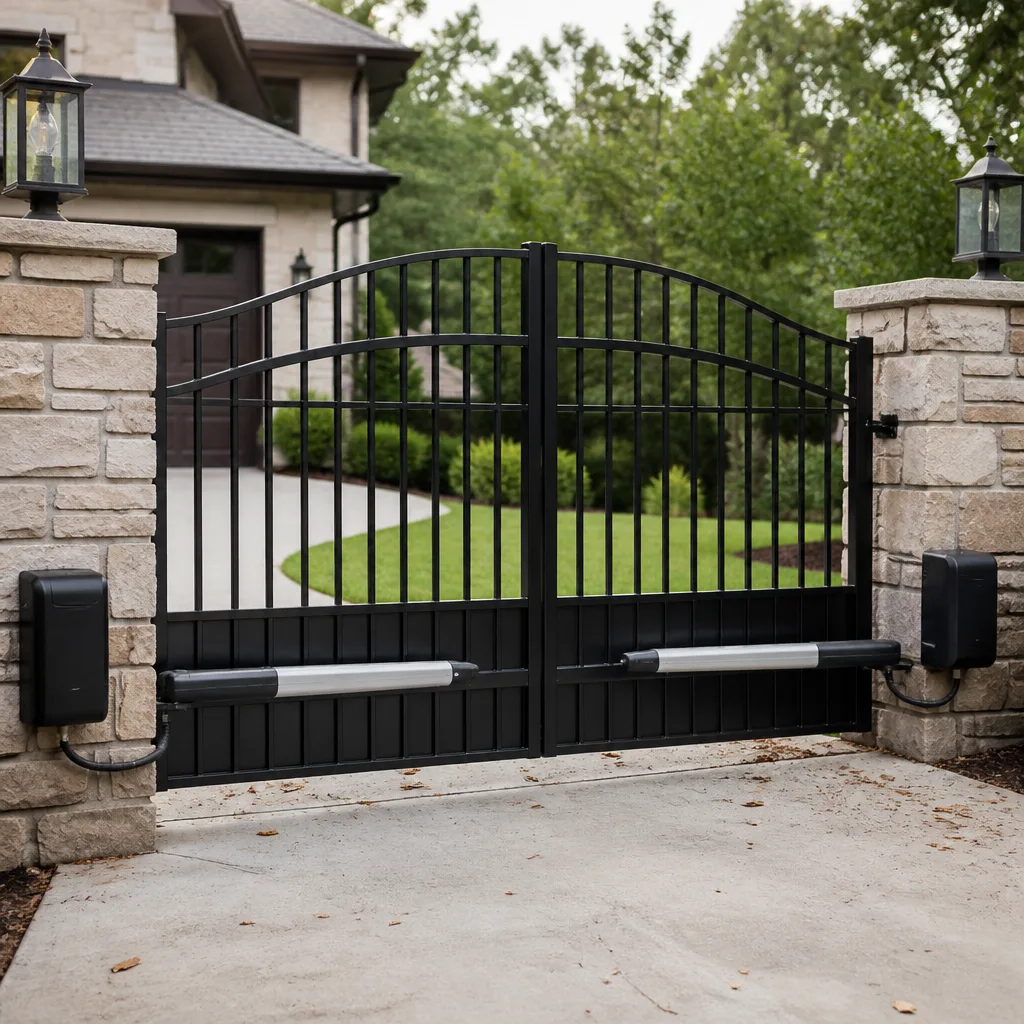 LiftMaster operators
Free on-site gate assessment - hinges, posts, and your LiftMaster or Nice gate operator checked before anything is quoted
The assessment is free and the quote is the invoice.
Get your free estimateStyles & brands we work with
- Wrought iron
- Wood & steel frame
- Farm & ranch
- Sliding driveway gates
- LiftMaster operators
See the difference
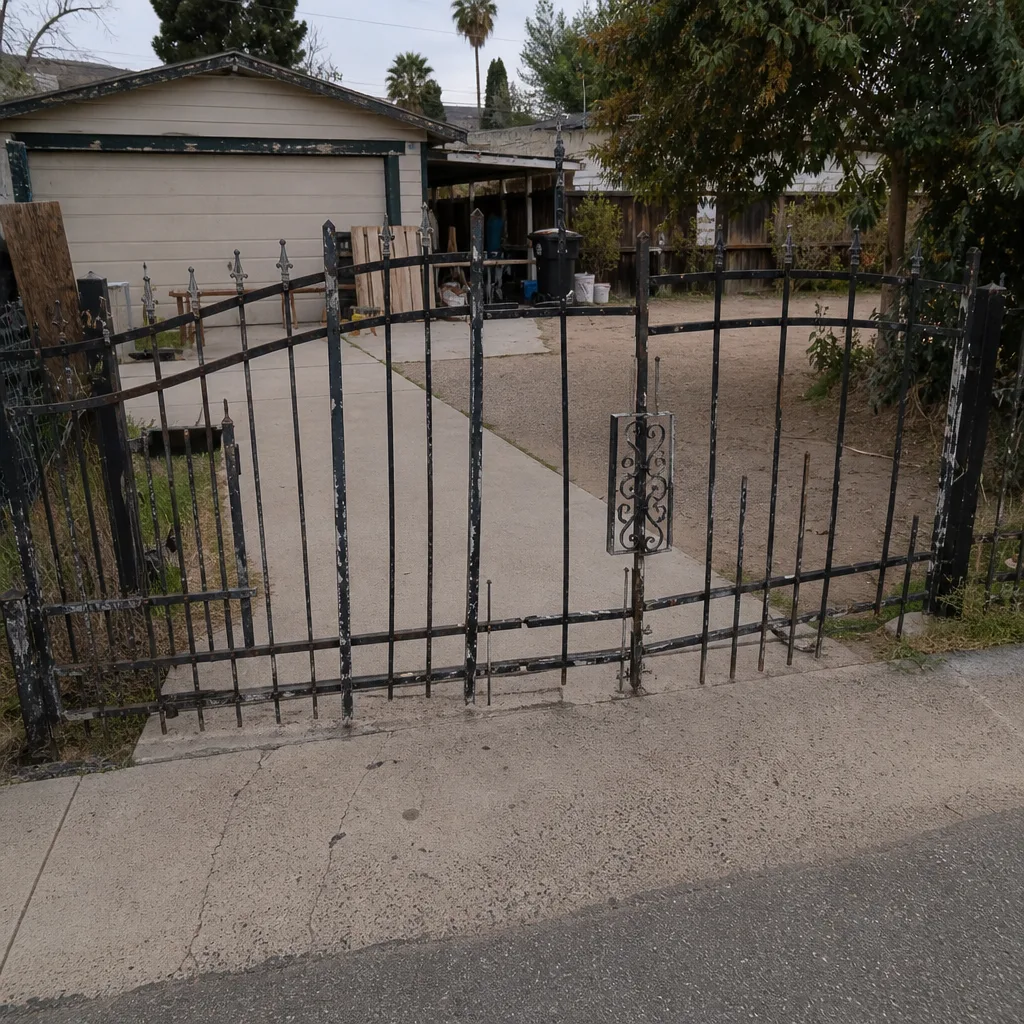 Before
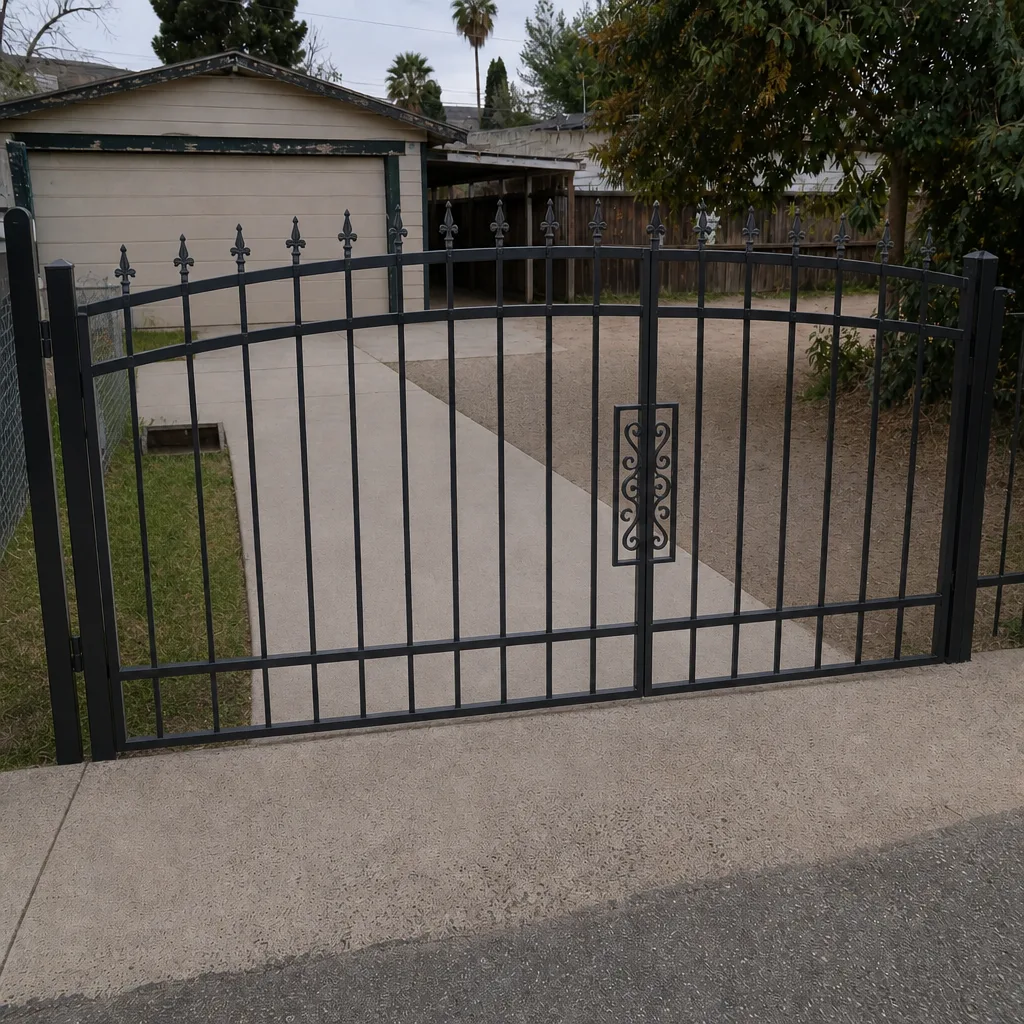 After
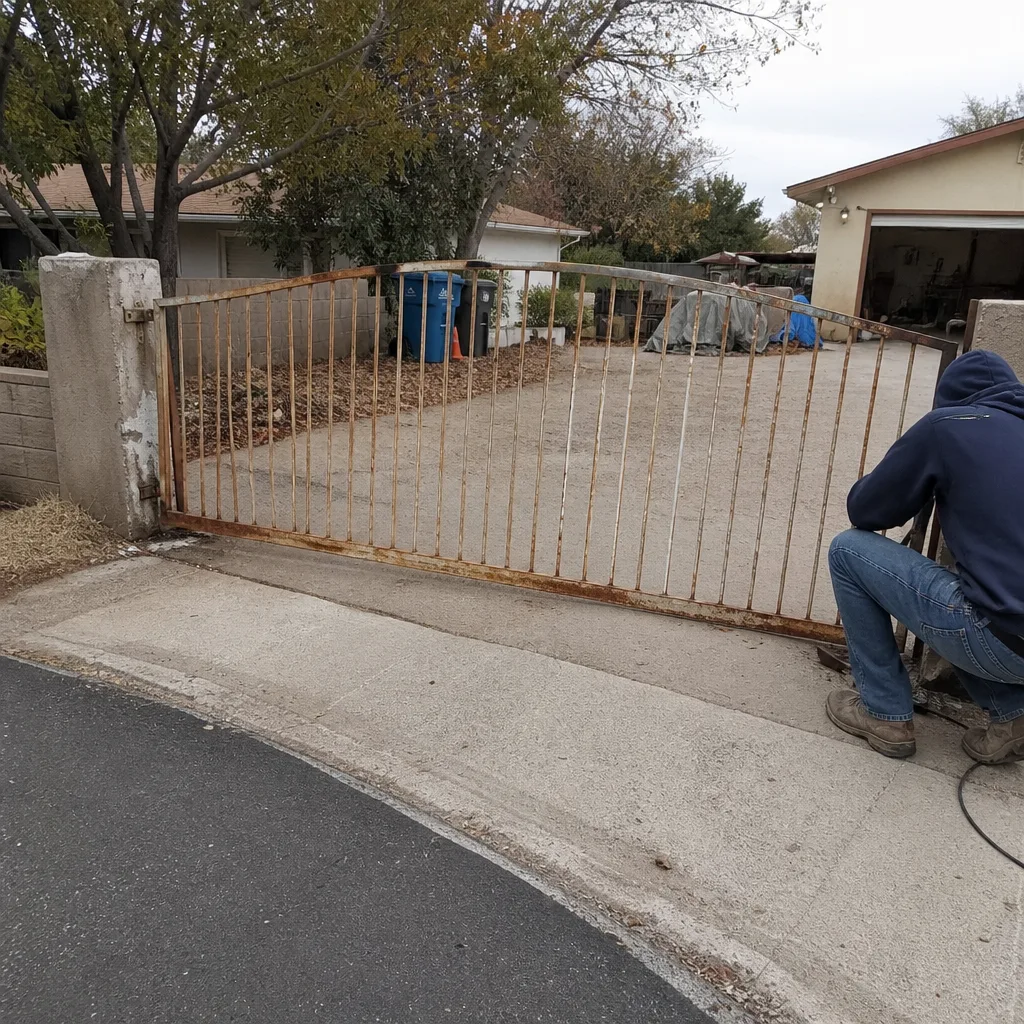 Before
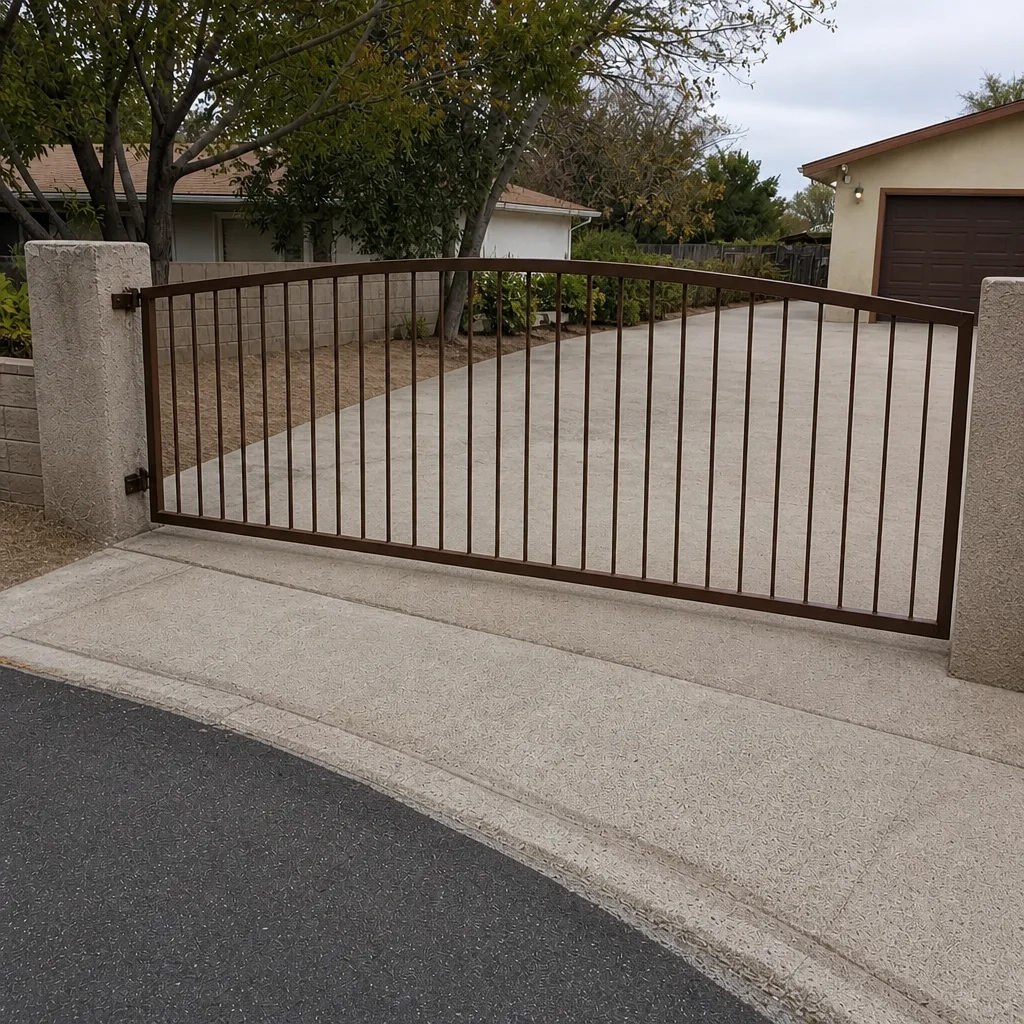 After
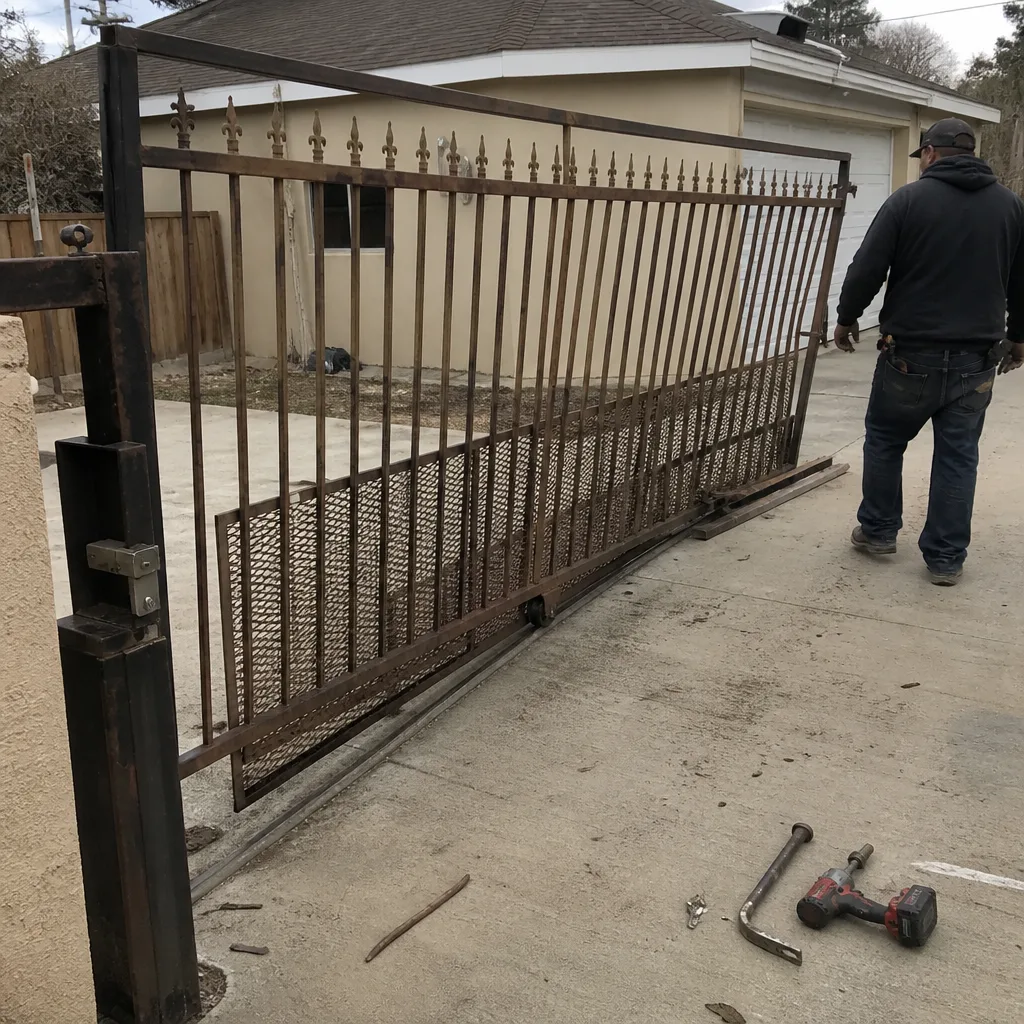 Before
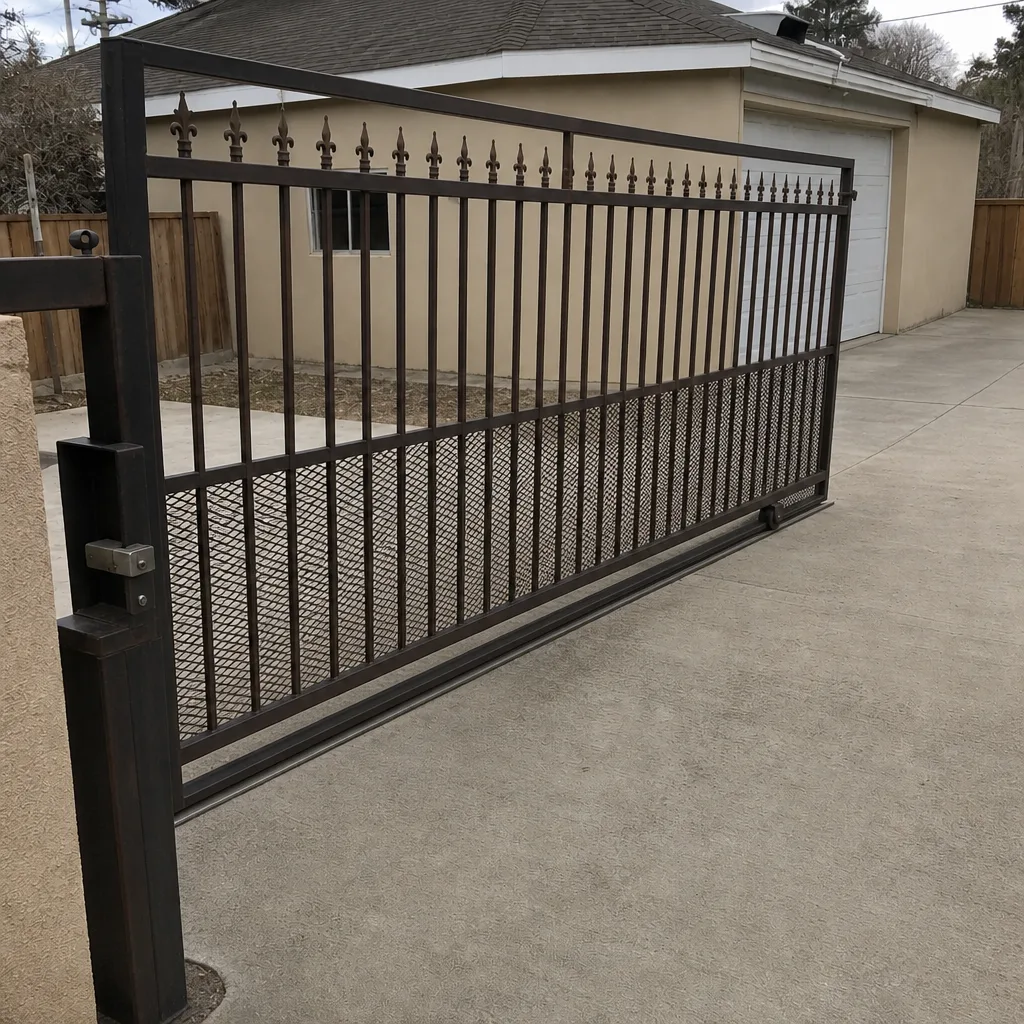 After
Wrought Iron vs Aluminum Gate in Paradise, NV: Which One Belongs on Your Property?
Choose wrought iron unless your gate is on a light-duty path with no pool nearby and you want the lowest upfront price. In Paradise, though, the smarter question is often whether you even need a new gate: a lot of the original wrought-iron pool and driveway gates on the residential blocks east of the Strip are beautiful and saveable. The welds have gone brittle from decades of desert sun, and the minute you re-hang a pool gate in Nevada, it has to meet current self-closing, self-latching code. That single requirement reshuffles the whole comparison. If you want a straight answer on your specific gate, call Gatewood Fence & Gate Paradise at (888) 292-7536 and we’ll tell you honestly what you’re looking at.
Key takeaways:
- Nevada’s child-safety code requires pool gates to self-close and self-latch, and repairing an old gate means bringing it up to that code.
- Wrought iron can carry heavy-duty spring hinges and is weldable on site. Thin aluminum extrusion has limited hinge load capacity.
- Heat-cycled iron fails by snapping, not bending. That’s a safety issue, not a cosmetic one.
- Aluminum doesn’t rust, but it bends in monsoon wind and usually can’t be straightened once it does.
The Code Dimension Nobody Talks About
Most comparisons treat wrought iron vs aluminum gate as a budget decision. Cheaper material, more expensive material. That misses what actually matters on a property in Paradise.
Nevada requires pool gates and pool safety barriers to self-close and self-latch. Plain terms: the gate has to swing shut on its own and click into its latch without anyone pushing it. That’s a child-safety rule, and the practical consequence is that the moment you re-hang or repair a pool gate, it has to satisfy that standard. You can’t put it back the way it was in 1974.
Here’s where material choice stops being aesthetic and becomes structural. Wrought iron has a thick enough section, and enough weldable mass at the hinge point, to accept the heavy-duty spring hinges and self-latching hardware that code demands. The gate keeps its weight and its swing. Aluminum extrusion has a thin wall. Hinges are usually surface-fastened through sheet rather than welded to a solid frame, and there’s a real limit to how much spring-hinge load that wall will take before the fasteners start to wallow out. On a pool opening, that’s the point of failure.
So the rule of thumb for a Paradise pool gate: wrought iron if it’s iron and can be saved. If you’re weighing a fresh install, read our Gate Installation page first, because the safety hardware spec should drive the material decision, not the other way around.
How Original Paradise Wrought Iron Actually Fails
Here’s a first-hand detail competitors gloss over. Iron that’s baked in desert sun for decades doesn’t just rust on the surface. UV exposure and constant heat cycling work on the micro-cracks in older welds. Oxidation creeps into those cracks and the weld goes from ductile – bends and flexes – to brittle. It snaps instead of bending.
That matters a lot when monsoon season rolls through. A dust storm followed by a gust front loads every gate on the block. A heat-fatigued iron gate with brittle welds fails by a hard snap at the hinge or the corner, not a gentle sag. A broken pool gate is a safety problem the minute the wind stops.
We see it constantly on the mid-century motel-era iron and the 1960s-1980s residential gates across Paradise, where a repaired latch post is often the difference between a gate that’s been quietly failing for years and one that works. If the gate is sagging, the fix starts at the hinge post, not the middle of the panel. A gate sags in the hinge post, not in the middle – and that is where we start.
Aluminum: Don’t Rust, but It Bends
Aluminum’s major selling point is honest: it doesn’t rust. That’s real. On a Paradise property, though, there’s a trade-off the brochures leave out.
Aluminum is lighter than iron. That weight savings is exactly what makes it more likely to bend in high-wind events the heavier gate would shrug off. And when thinner extrusion does bend, straightening it usually cracks the anodized finish. The bend is permanent and the coating is compromised at once. On a pool gate, a bent frame is a bent latch geometry – and a self-latching gate that no longer lines up with its strike isn’t meeting code.
Where aluminum earns its place: a gate on a residential walkway with no pool, no wind tunnel, and no other reason to carry a thick hinge. It’s a good material for the right job. It’s a hard sell over original iron on a safety application.
Wrought Iron vs Aluminum Gate: Side-by-Side
Quick comparison for a Paradise property. The numbers below are typical local ranges for repair and small replacement work in this market – quoted ranges, not a final price until someone looks at the gate.
| Factor | Wrought iron | Aluminum extrusion |
|---|---|---|
| Rust resistance | Rusts, but can be ground and welded | Doesn’t rust |
| Wind behavior | Heavy, resists bending | Lighter, bends in high wind |
| Repairability | Weldable on site; re-forms and re-squares | Usually fastening, not welding; bends can’t be straightened without cracking the finish |
| Code hardware – pool self-close/latch | Accepts heavy-duty spring hinges and self-latching hardware | Thin wall limits hinge load; surface fasteners are the weak point |
| Typical repair range (Paradise) | Commonly $180-$450 for a re-weld and re-hang with hardware reset | Commonly $150-$350 for hinge and latch repairs; replacement often needed if bent |
| Typical full replacement (Paradise driveway gate) | Often $1,800-$3,500+ depending on size and finish | Often $1,200-$2,800+ depending on size and finish |
Those ranges are here so you have a ballpark. They aren’t a bid. Every gate has to be looked at.
The Repair-First Case for Keeping the Iron
A heat-fatigued iron gate with brittle welds is not automatically a replacement job. It’s frequently a re-weld job – and a code job at the same time. The gate stays on the property’s driveway, the welder works on site, and the self-latching hardware gets re-set to the current standard at the same visit. Fixing the panel and walking away leaves the hinge post and the code problem untouched. We don’t do that.
Which is where the money conversation gets simple. A full wrought-iron replacement gate for a Paradise driveway typically runs two to three times the cost of re-welding and re-hanging the original. Repair keeps the original iron and the original look, and it usually comes with a working self-closing latch at the end. That’s a fraction of what a fresh install would cost.
For heavier work – a slide gate that needs new hardware and a motor – brand compatibility matters. We work with LiftMaster, Mighty Mule, FAAC, and BFT on a regular basis, and the repair-first approach applies there too. If you’re pricing a new opener or a new gate, our Gate Installation in Paradise page has the timeline and what to expect.
What to Check on Your Gate Before You Decide
None of this requires taking anything apart. Look at the gate, not at the brochure.
- Drop the gate half open on the latch side. If it swings itself closed, that tells you the hinge or the post has moved.
- Check the hinge post, not the panel. Push the gate at the top. If the post flexes, the weld repair needed is at the post, not the panel.
- Look for hairline cracks at the weld corners and the hinge tangs. A brittle weld cracks before it breaks. Cracking is the early warning.
- Test the latch with a light push. It should catch every time without a shove. If it needs a nudge, the latch geometry is off – a safety and code issue.
- On a pool gate, watch the self-close. It should close and latch on its own. If it drags or hangs, it needs to come off the fence line and go back on to code.
If any of those checks show a problem, get a look at it before committing to a replacement.
Why Gatewood Fence & Gate Paradise
Gatewood Fence & Gate Paradise fixes the gate in your driveway rather than hauling it off. On-site welding means a heat-fatigued iron gate stays on the property – we weld the failed section, re-square the panel, and re-set the safety hardware in the same visit. Background-checked gate technicians handle every job.
Every job carries the 90-Day Done Right Promise in writing. If the repaired gate moves out of square, we come back. No argument required.
Pricing is no-hassle and upfront: $40 off any repair over $200, no trip charge inside the county, and a free second opinion on any written estimate. If you’ve been quoted a replacement and you want a second look, we’ll tell you honestly whether the gate is worth saving. Call and you’ll get a live person, not a voicemail.
FAQs
Wrought iron is usually the right choice for a pool gate in Paradise because it can carry the heavy-duty spring hinges and self-latching hardware Nevada’s child-safety code requires. Thin aluminum extrusion has limited hinge load capacity, so the fasteners wear first. Call (888) 292-7536 for an exact quote – estimates are free.
Yes. When a pool gate is re-hung or repaired, it has to self-close and self-latch to the current safety standard. In practice, that means the repair includes re-setting the hinge and latch hardware to the code. If you’re unsure, we’ll check it. Call (888) 292-7536 for a free second opinion on any written estimate.
In most cases they can be re-welded on site. We work in your driveway – grind out the cracked weld, re-weld the joint, re-square the panel, and re-set the latch. Repair typically costs a fraction of the replacement, often a third to half of what a full wrought-iron replacement would run. Call (888) 292-7536 and we’ll give you a straight answer on your gate.
Aluminum is lighter, so high wind from monsoon and dust storms loads it harder per pound than wrought iron. And bent aluminum extrusion usually can’t be straightened without cracking the anodized finish. Wrought iron bends before it fails; aluminum often just bends permanently. Call (888) 292-7536 – no trip charge inside the county.
If you’d rather have it looked at, Gatewood Fence & Gate Paradise offers a no-pressure assessment in Paradise – call (888) 292-7536 for a free estimate.
Written by the team at Gatewood Fence & Gate Paradise, serving Paradise, NV.