
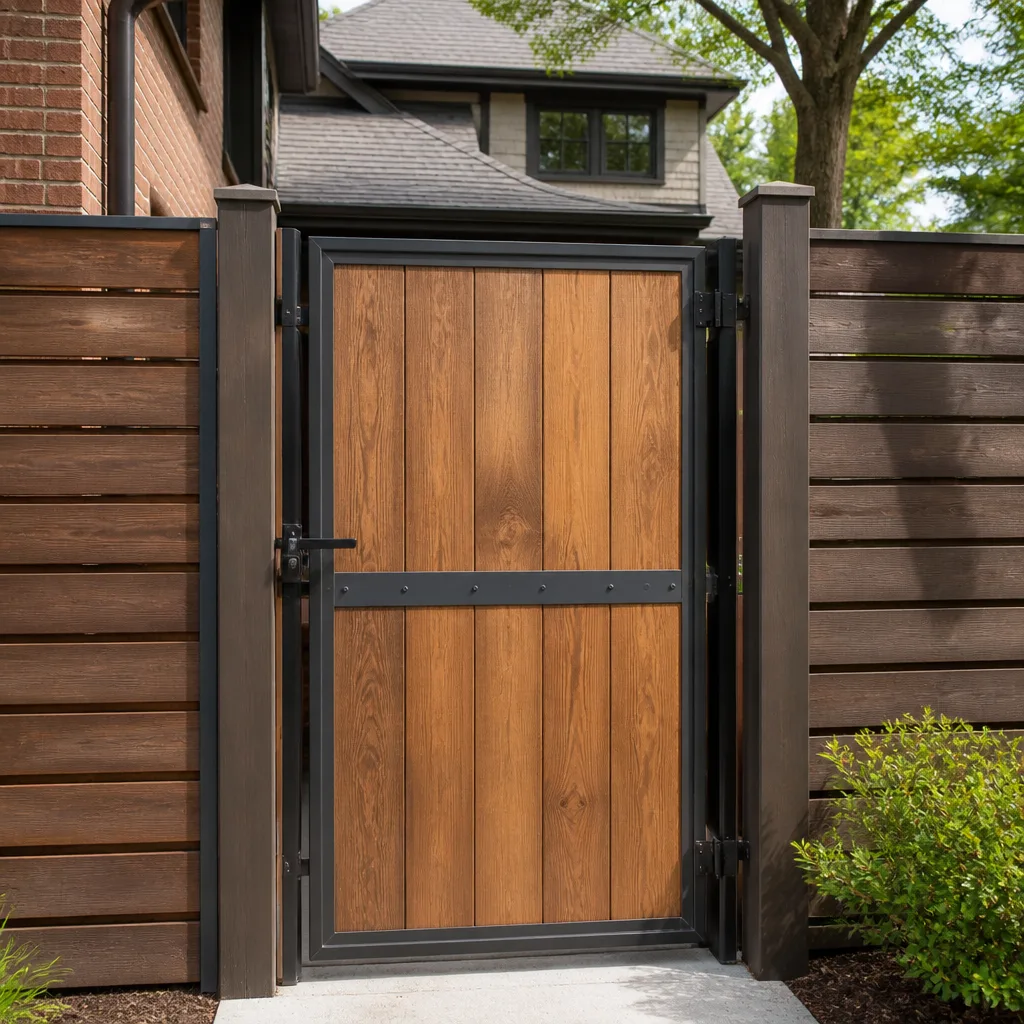
 Wood & steel frame
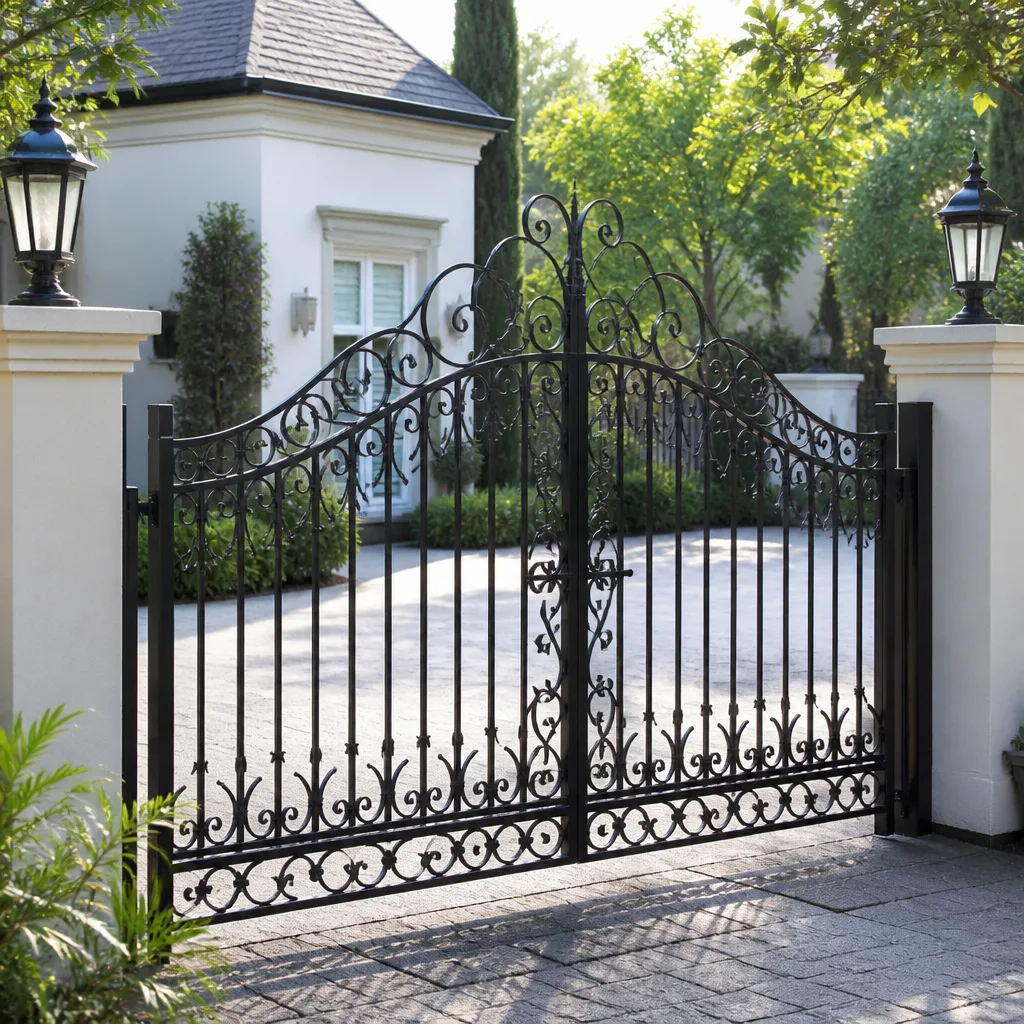 Wrought iron
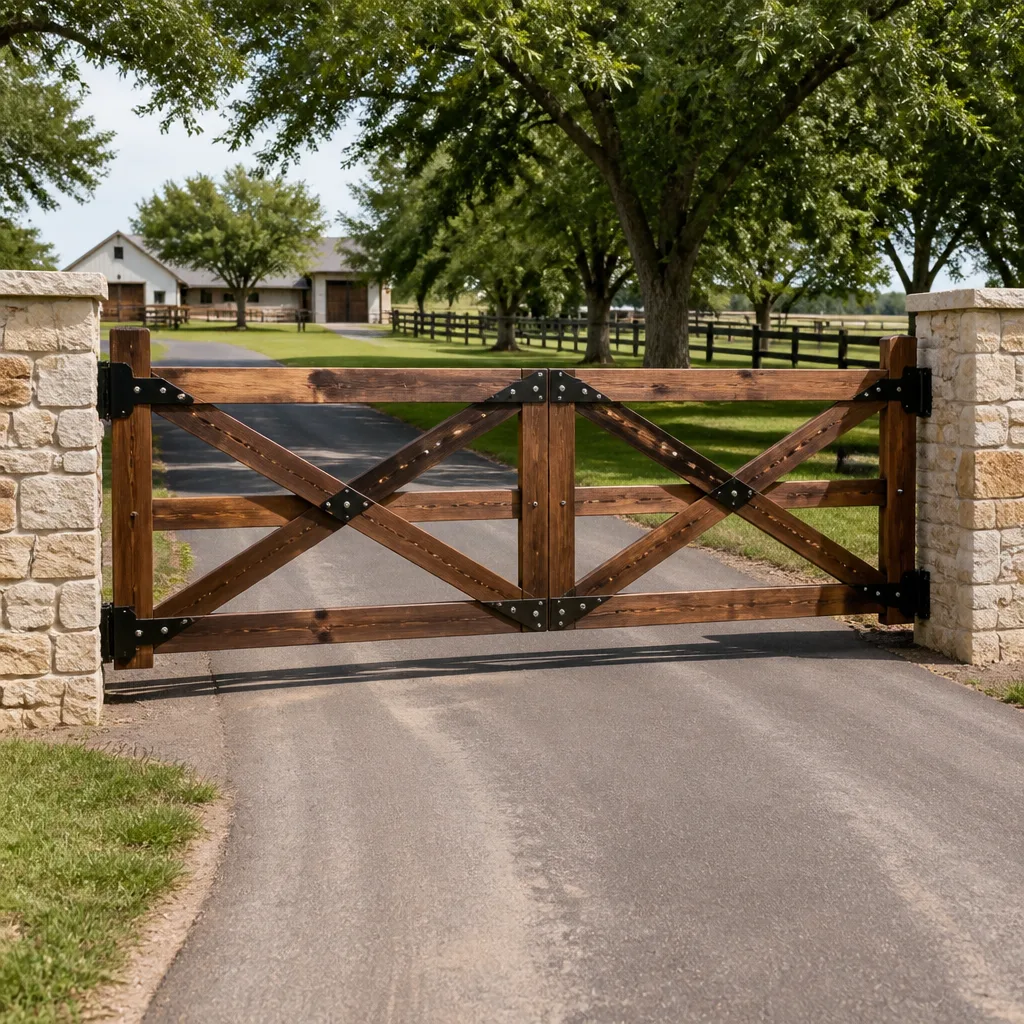 Farm & ranch
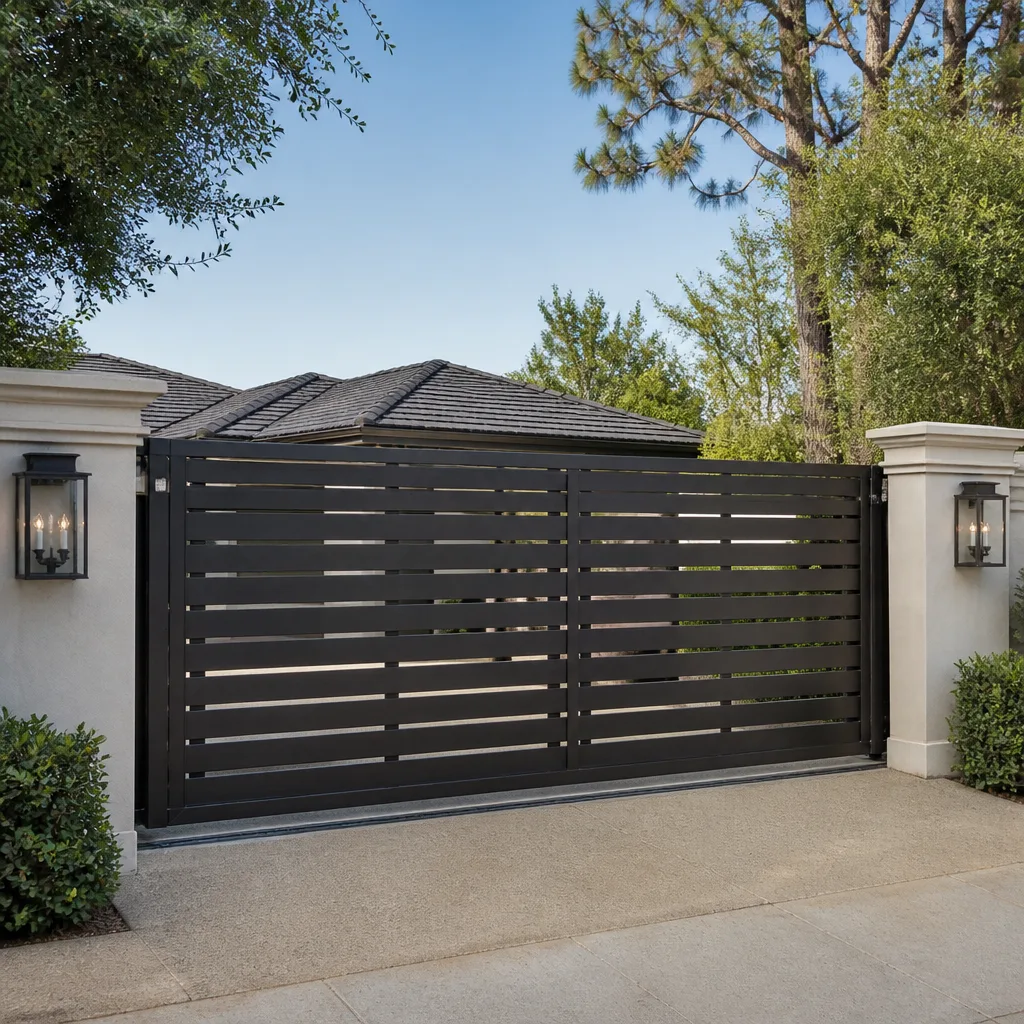 Sliding driveway gates
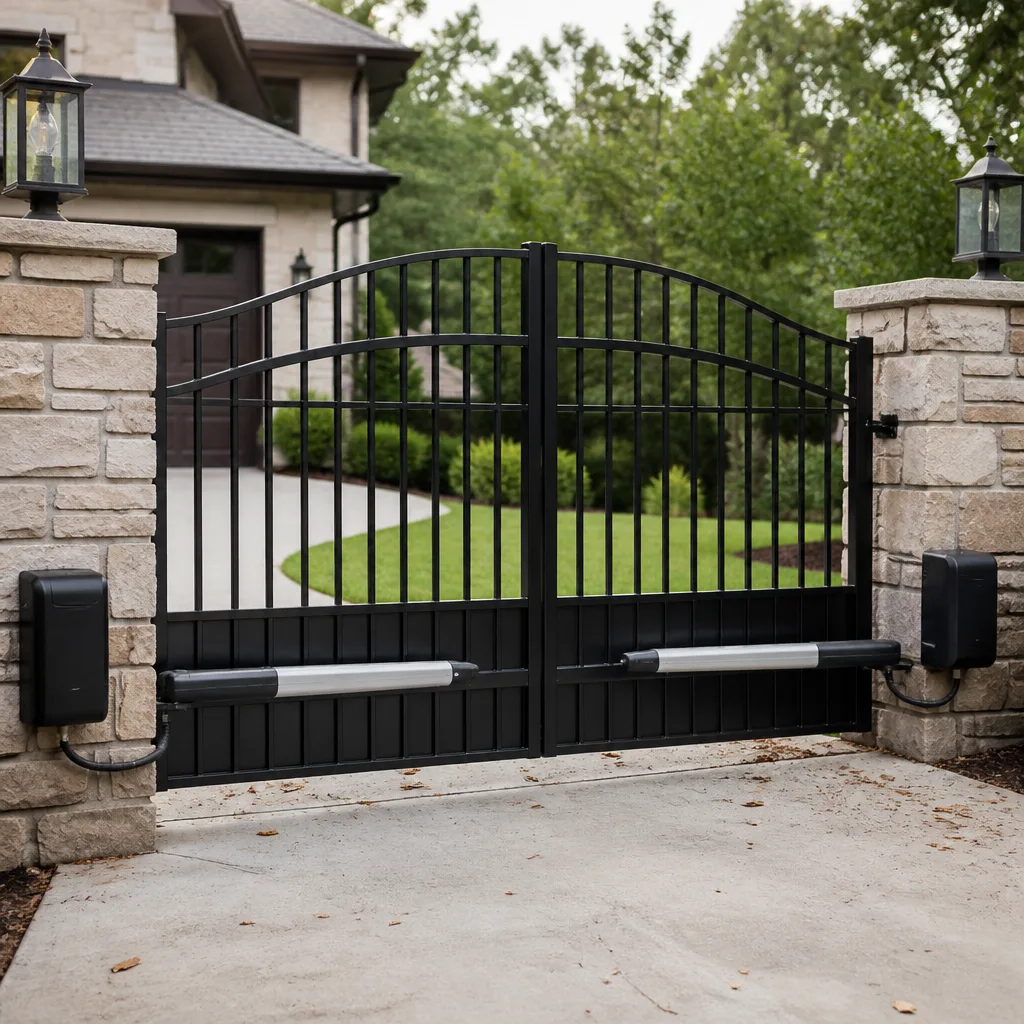 LiftMaster operators
Free on-site gate assessment - hinges, posts, and your LiftMaster or Nice gate operator checked before anything is quoted
The assessment is free and the quote is the invoice.
Get your free estimateStyles & brands we work with
- Wrought iron
- Wood & steel frame
- Farm & ranch
- Sliding driveway gates
- LiftMaster operators
See the difference
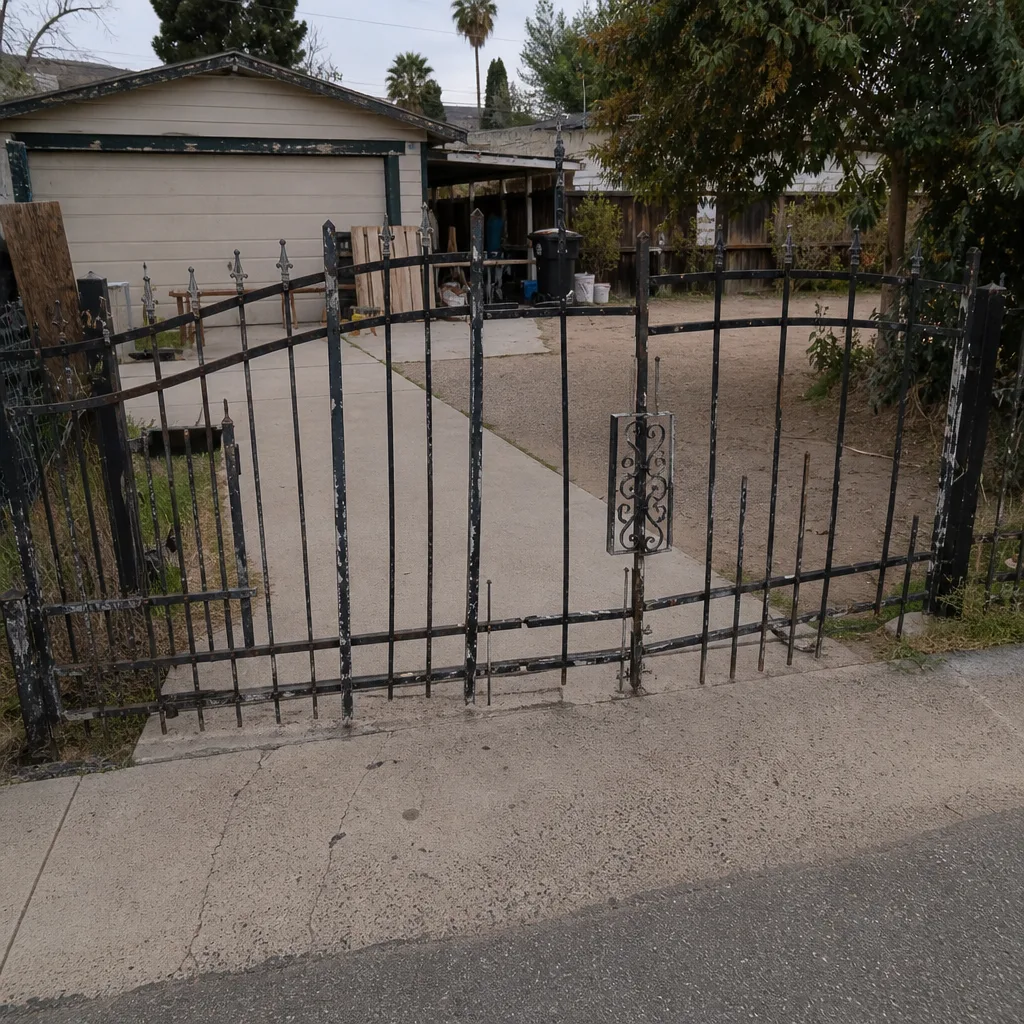 Before
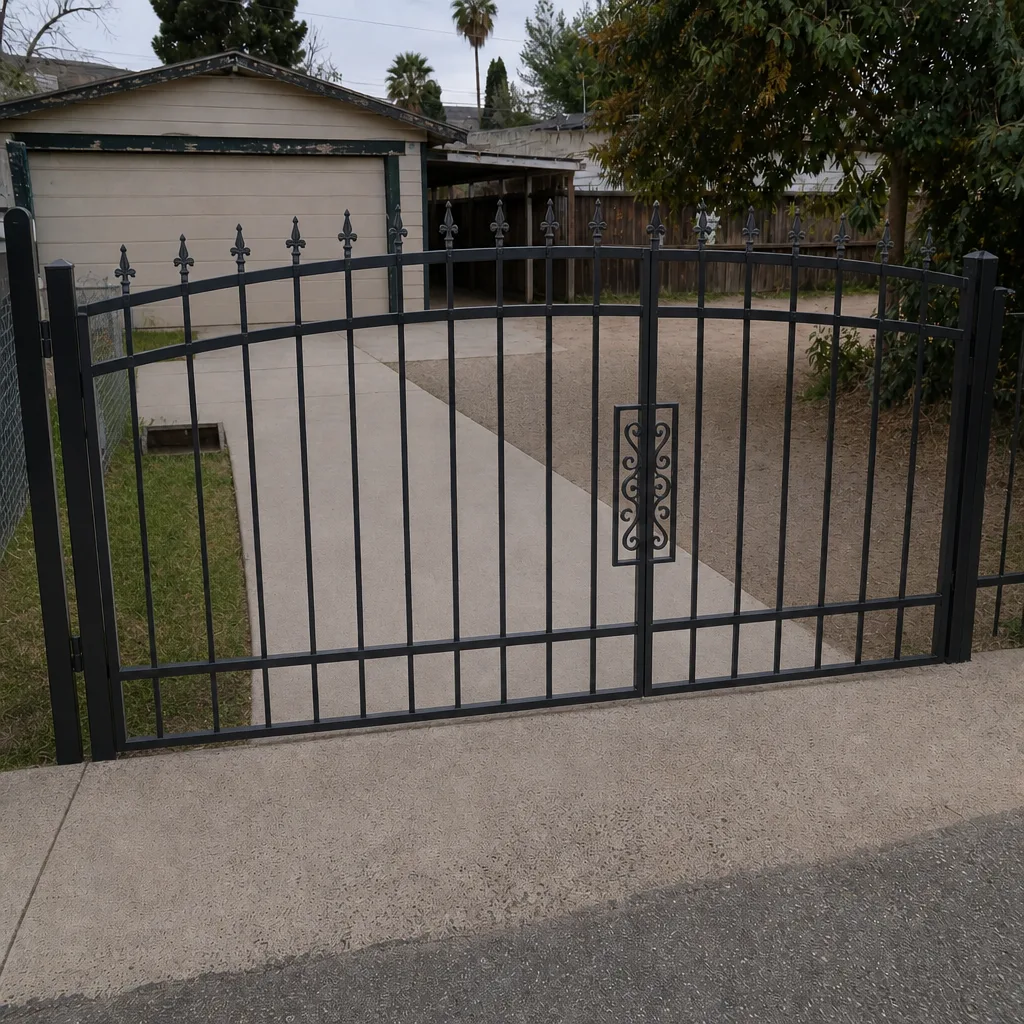 After
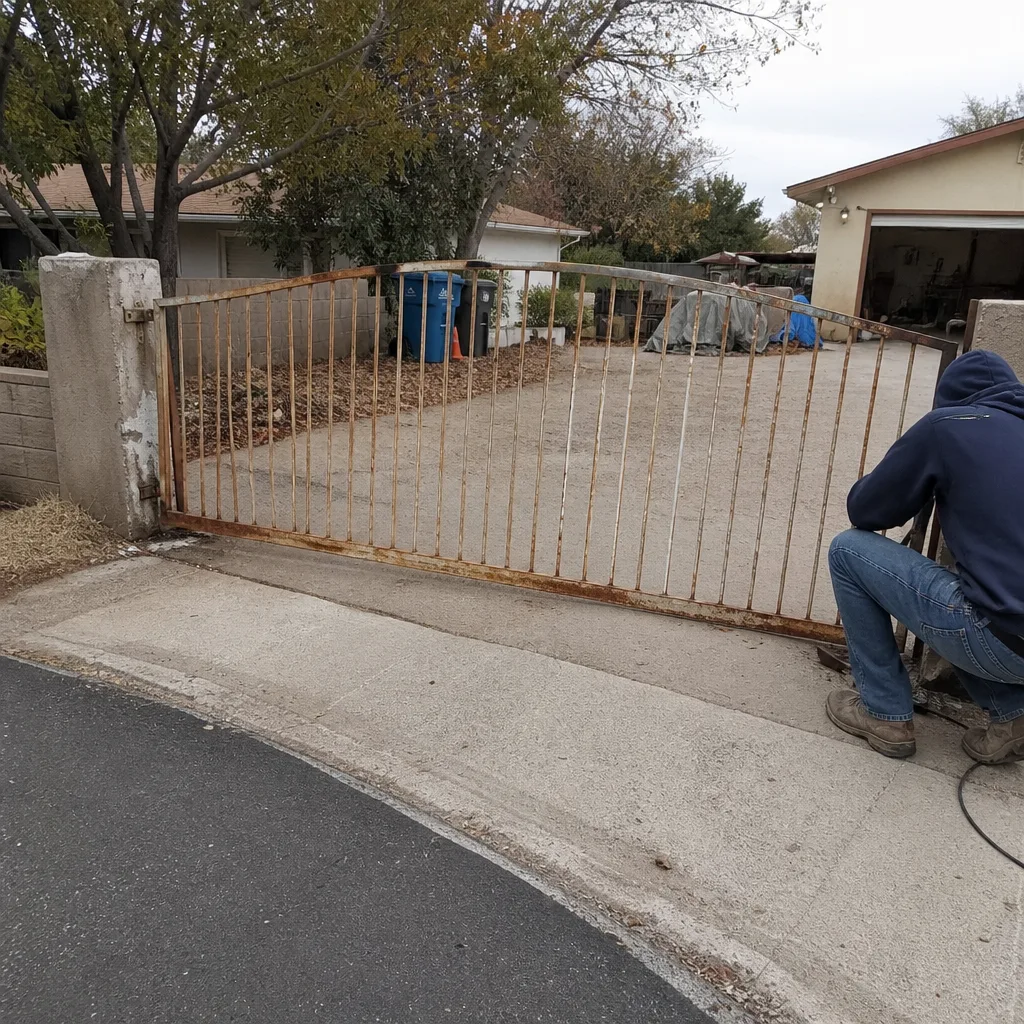 Before
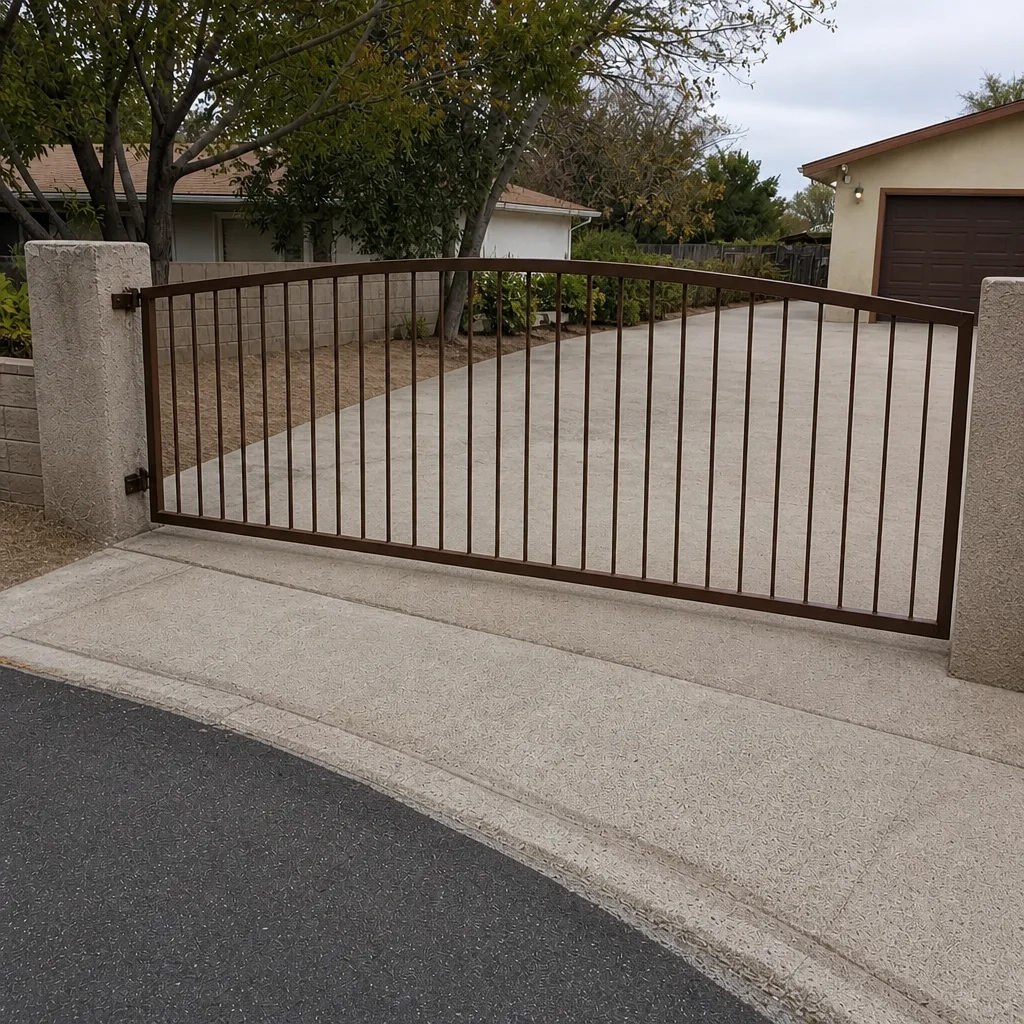 After
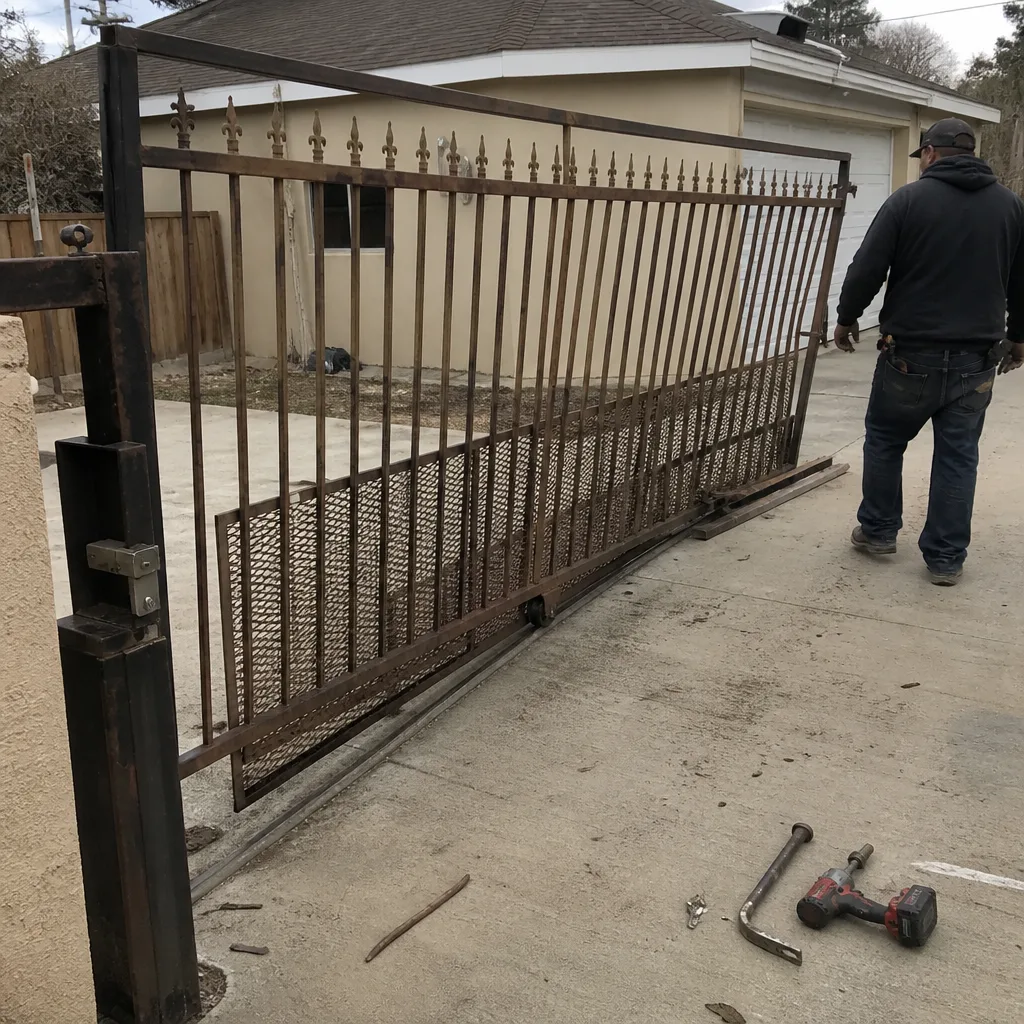 Before
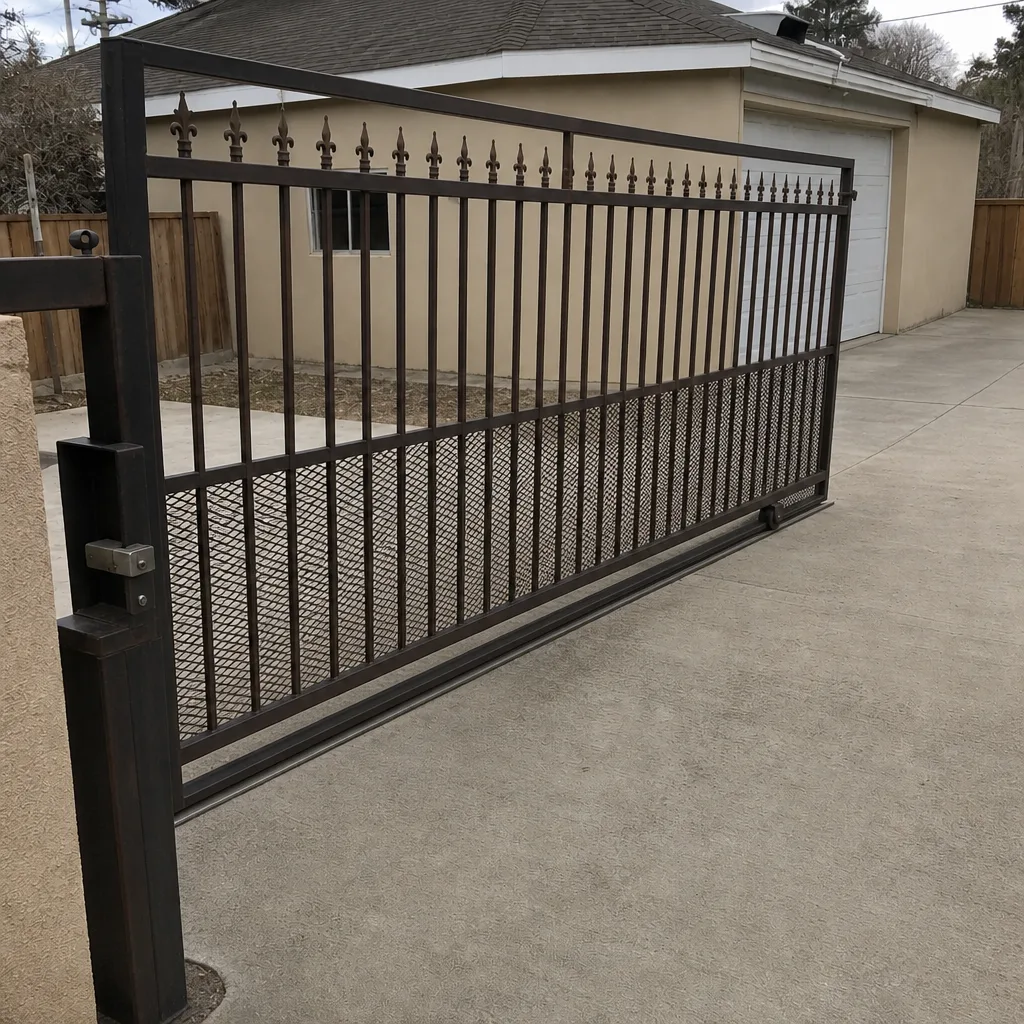 After
Swing Gate vs Sliding Gate in Paradise, NV: The Lot Geometry Decides
For most Paradise driveways, a sliding gate is the better call – unless your driveway is long, your yard is wide open on the swing side, and your gate slides open away from traffic. A swing gate needs three to four feet of clearance behind the pivot point to open fully. Walk a tape measure across the driveways on the residential blocks east of the Strip and a lot of them are twelve feet wide total. That’s why half the swing gates we repair out here were the wrong call from day one.
Gatewood Fence & Gate Paradise is locally owned and owner-operated, and Hal will tell you which type actually fits your driveway before quoting either. Call (888) 292-7536 and a live person picks up.
Why driveway width is the first question, not the last
Every comparison article out there starts with aesthetics and ends with a price list. Out here, the argument turns on measurements you can make with a tape in about two minutes. Two numbers matter: the total width of your driveway apron opening, and how much paved or open ground sits behind where the hinge would land.
A standard single-car swing gate that covers a twelve-foot opening needs a clear swing arc of roughly eleven to twelve feet of travel at the far edge, plus the post offset. On a twelve-foot-wide driveway with a public sidewalk three feet back, the gate cannot open a full ninety degrees. So it either stops at seventy degrees and stays cockeyed forever, or somebody hangs it so the panel overhangs the sidewalk when open. That second option is a code problem and a trip hazard, and we see it constantly on the older mid-century blocks between Flamingo and Tropicana.
A cantilever or V-track sliding gate solves this by moving sideways, not backward. It needs no rear clearance at all. The track carries the panel past the opening and stacks it along the fence line or the front of the house. On a tight Paradise lot, that’s the whole ballgame.
When a swing gate is actually the right answer
Swing wins when you have the room and you want the look. A wrought-iron swing gate on a deep lot with a wide apron reads better than the same gate sliding on a track, and it doesn’t need a track poured and leveled. Swing gates also handle slopes and odd grades with less fuss, because the hinges flex where a V-track will bind on a hump. And a swing gate satisfies self-closing hardware more easily – more on that below.
The heat-fatigue math nobody talks about
Here’s the operator detail that doesn’t show up in the glossy comparisons. A swing gate puts every open-and-close cycle through two hinges and one weld at the top of the hinge post. A sliding gate spreads that same cycle across a set of track wheel bearings and a couple of tracks. Different failure modes entirely.
In Paradise’s UV and 115°F summers, that weld point on a swing gate takes the worst of it. Sun-baked iron goes brittle – it snaps rather than bends, and it snaps right where the stress concentrates. The wheel bearings on a comparable sliding gate wear slowly and predictably; when one goes, you replace a bearing, not a weld and a post. On the older wrought-iron gates on the residential blocks just east of the Strip, re-welding heat-fatigued iron is a big share of what we do. That’s why our Gate Installation in Paradise work so often lands on a slider for driveways that have already had two or three hinge or weld repairs.
Traffic and the tourist-season delivery problem
Paradise is a built-up urban strip, and the traffic proves it. Along Las Vegas Blvd, Flamingo, and Tropicana, gate work happens on mixed commercial-residential frontage where the vehicles move fast and the aprons are narrow. A swing gate that opens into a parking lane or toward passing traffic is a liability, full stop. A cantilever or V-track slider keeps the panel moving parallel to the traffic and never swings into it. On a commercial strip, that difference is the whole reason we recommend sliding more often than not.
Common scenarios we see in Paradise – and which gate fits
- 1960s-1980s single-family lot, 12-foot driveway: Sliding. There’s no room for the swing arc, and forcing one means an overhang over the sidewalk.
- Deep lot with a wide, open apron: Swing is fine and often looks better. Measure first.
- Commercial frontage on Las Vegas Blvd or Tropicana: Sliding, V-track or cantilever. Keeps the gate out of the traffic lane.
- Pool enclosure behind an older home: Swing, more often than not. This is the exception to everything above – a code exception, covered next.
- A chain-link or wrought-iron gate that’s been baked and bent by desert sun: Either, but the swing gate has usually spent its weld budget by now.
The pool-gate code wrinkle that flips the recommendation
Nevada requires self-closing, self-latching gates on pool enclosures for child safety. Those requirements are standardized around swing pivots – the spring hinge and the latch hardware are made to order for a gate that swings. That means on a pool-adjacent gate, the geometry argument takes a back seat to the code argument, and a swing gate usually satisfies the requirement with less fuss. A sliding gate can be made to self-close and self-latch, but it takes more hardware and more finicky adjustment, and it is a headache to keep tuned in a house with curious kids. So on a pool gate, we lean swing even on a tight lot, and we explain why so you’re not guessing.
Straight about cost
We’ll tell you which gate fits your driveway before quoting a half-hour of work, not after. The free second-opinion offer exists precisely for the person who got a written estimate recommending the pricier option and wants an honest read on it. Bring it to us at the shop, and we’ll look it over.
Two other things worth knowing: we do on-site welding here so the gate stays in your driveway, and we service nine major gate brands, including Linear and DoorKing, so a motor you already have may carry over to whichever gate you choose. The free second opinion, the $40 off any repair over $200, and the permanent 10% discount for seniors and veterans all stand whether you buy a gate or just a repair.
How to narrow it down in five steps
- Measure the driveway opening width at the apron – that’s the number that starts everything.
- Measure how much clear ground sits behind the pivot point on the swing side. Three to four feet is the floor.
- Check what’s behind that ground – a sidewalk, parking lane, or neighbor’s fence changes the answer.
- Note the traffic. Is the apron on a fast road? A slider keeps the panel parallel to traffic.
- Ask whether a pool or a child-safety requirement is in play. That can override the geometry call.
FAQs
A sliding gate is better for a narrow driveway in Paradise, because a swing gate needs three to four feet of clearance behind the pivot and most of the 1960s-1980s lots east of the Strip don’t have it. A cantilever or V-track slider moves sideways and needs no rear clearance. Call (888) 292-7536 for a free estimate and we’ll measure it with you.
No – a swing gate should not open over a public sidewalk, and that’s a big reason we don’t recommend one on tight Paradise lots. The panel overhanging a sidewalk is a code issue and a trip hazard. A sliding gate avoids the problem entirely because the panel never swings out into the pedestrian space.
A switch to a sliding gate usually runs more than a repair, because it means new posts, a track or cantilever hardware, and sometimes new motors. We quote it upfront and won’t sell you a conversion you don’t need. Call (888) 292-7536 and we’ll give you a straight number.
Sliding gates can work for pool enclosures, but swing gates satisfy Nevada’s self-closing, self-latching child-safety requirement more easily because the spring hinge and latch hardware are built for swing pivots. On a pool gate, we lean swing even on a tight lot and explain the tradeoff before you decide.
If you’d rather have it looked at, Gatewood Fence & Gate Paradise offers a no-pressure assessment in Paradise – call (888) 292-7536 for a free estimate. Bring a written estimate from another gate company and we’ll give you our honest read, free.
Written by the team at Gatewood Fence & Gate Paradise, serving Paradise, NV.