
Last updated November 18, 2026
 Wrought iron
 Wood & steel frame
 Farm & ranch
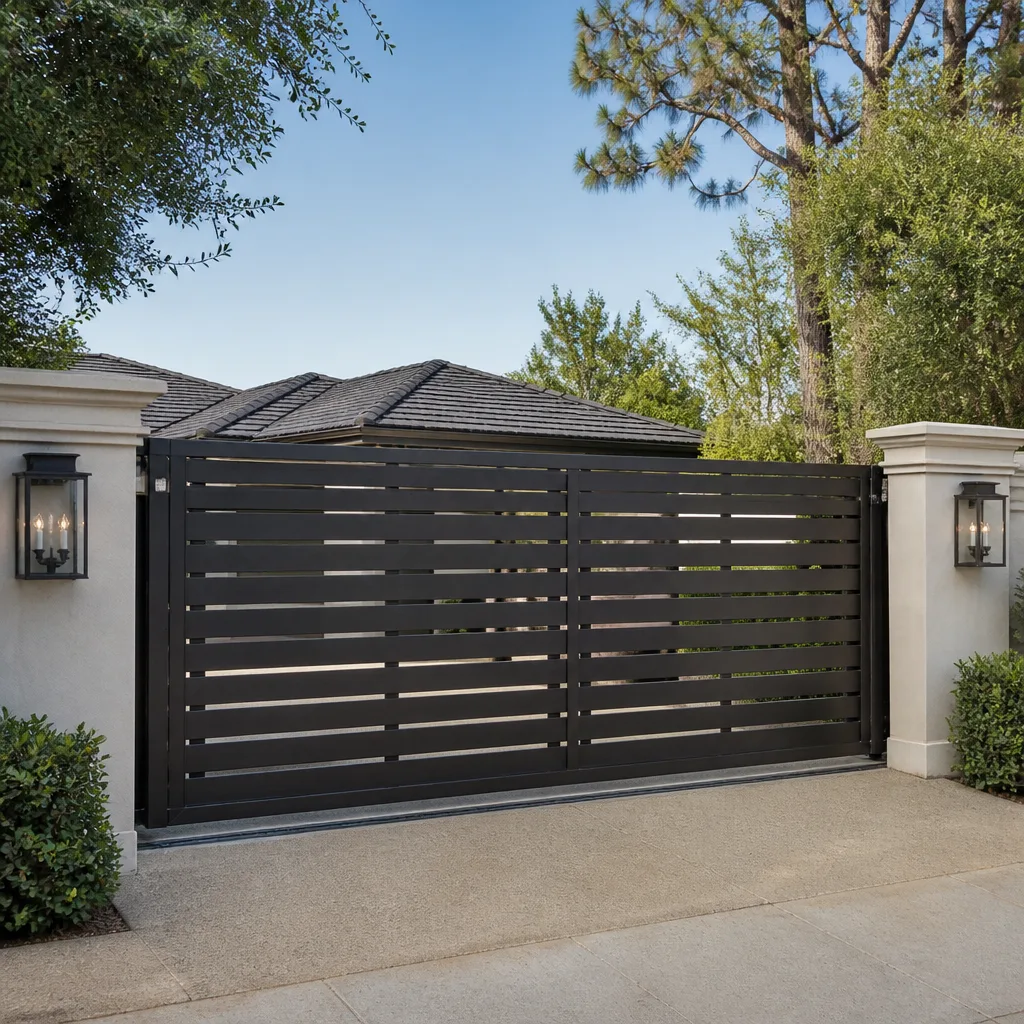 Sliding driveway gates
 LiftMaster operators
Free on-site gate assessment - hinges, posts, and your LiftMaster or Nice gate operator checked before anything is quoted
The assessment is free and the quote is the invoice.
Get your free estimateGate Motor & Opener Maintenance Schedule: What to Do and When
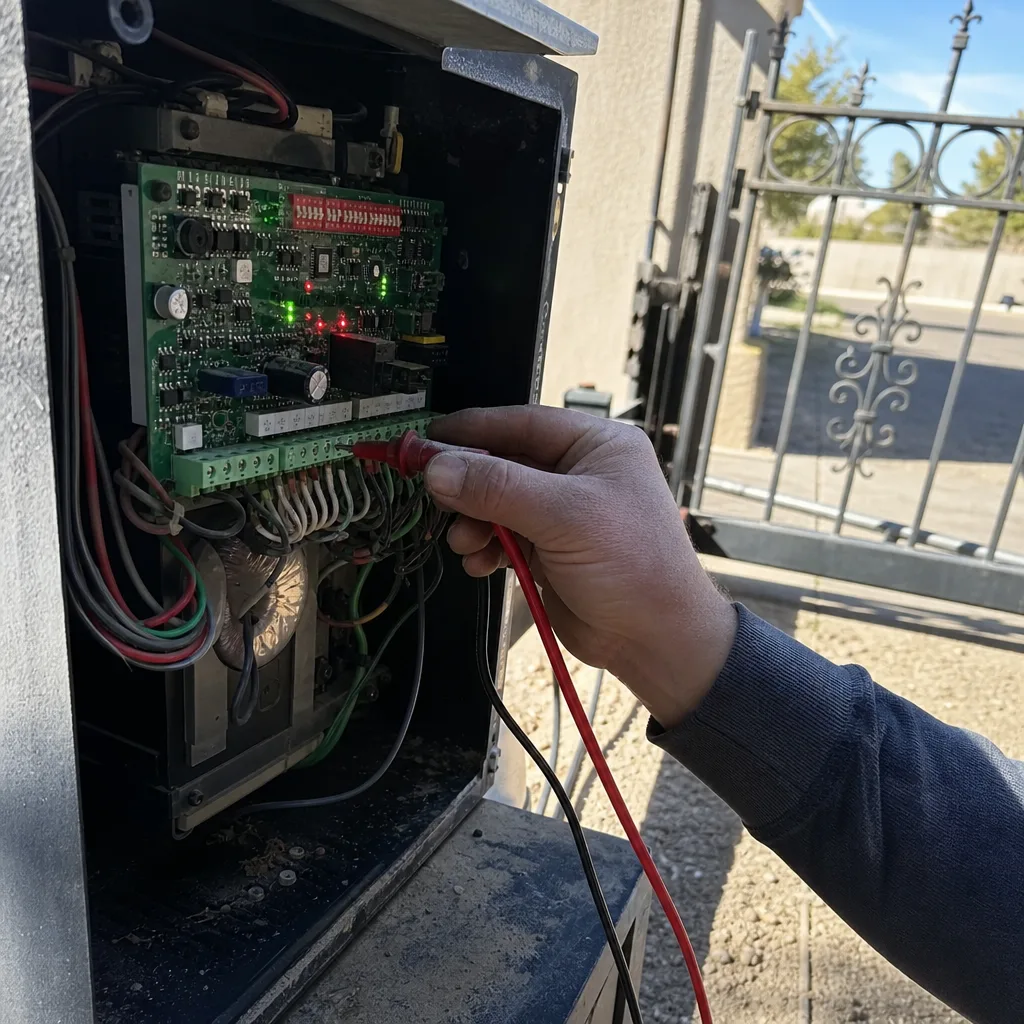
The manual that came with your gate motor was probably printed in a factory in Guangdong, or written generically for a national distributor. It has never seen a Las Vegas July. It has never watched a spring windstorm sandblast a swing arm actuator with grit, or felt the metal expand at 2 p.m. and contract again at 5 a.m. That’s why we put together a schedule that actually matches what this climate does to mechanical equipment. In this guide you’ll get a month-by-month maintenance calendar built for Paradise, the lubrication intervals the manual gets wrong, a battery-backup test most folks never run, and a ten-minute self-inspection you can photograph and date.
Quick Answer
A gate motor in Paradise needs maintenance on a desert schedule: a pre-summer check in March, a post-summer check in October, and a hardware and lubrication pass after every significant wind event. Lubricate the chain or actuator arm monthly through the hot months, not yearly. Test your battery backup every three months – most batteries fail silently and only show up the first time the power goes out. And keep a dated photo record of each inspection so you have something to point to if a warranty question ever comes up.
Styles & brands we work with
- Wrought iron
- Wood & steel frame
- Farm & ranch
- Sliding driveway gates
- LiftMaster operators
Table of Contents
- Why a Desert Schedule Beats the Manual’s 12-Month Schedule
- March: The Pre-Summer Heat Check
- Lubrication: The Right Type and the Real Interval
- Battery Backup Testing: The Task Most Folks Skip
- The Hardware Torque Check: Which Bolts Loosen and Why It Matters
- October: The Post-Summer Recovery Pass
- After a Wind Event: What to Do and When
- The Ten-Minute Self-Inspection Checklist
Why a Desert Schedule Beats the Manual’s 12-Month Schedule
Most operator manuals assume a temperate climate. They tell you to lubricate once a year, check bolts annually, and replace the battery every three to five years. That advice works fine in Ohio. In Paradise, it doesn’t hold. Our summer runs from May through September with sustained highs over 100 degrees, and the low desert air carries fine dust that works its way into every moving joint.
Heat does three things to a gate motor. It thins lubricant so it migrates off the parts it’s meant to protect. It expands metal, so clearances that were snug in January are loose by August. And it stresses the battery and control board, which is often the first thing to fail when a component gets pushed. Dust does the rest: it mixes with the thinned lubricant and forms a grinding paste inside the chain and around the actuator pivots.
The practical result is that a Paradise gate operator sees roughly the wear of two or three years of temperate use packed into a single hot season. What the manual calls an annual service is, here, a twice-a-year minimum with a lighter monthly touch in between. That’s the whole idea behind the calendar. We’ve seen plenty of gates on the west side of the valley that never got this attention and started grinding and stalling by year three. If your gate is already showing those symptoms, our Gate Motor & Opener service in Paradise covers both repair and the reset.
March: The Pre-Summer Heat Check
March is the most important month on the Paradise maintenance calendar, because it’s the last chance to fix small problems before the heat locks everything in place. Do this before the first 90-degree day. What you’re looking for is anything that’s already loose, dry, or worn, so you can address it while the weather is still kind and a repair is quick.
Work through these in order:
- Walk the gate by hand. Disengage the operator and push the gate open and closed manually. It should move with light effort and no binding. If it drags or catches, the problem is in the gate hardware, not the motor, and fixing the motor first would be backwards.
- Wipe and inspect the chain or actuator arm. Look for rust spots, kinks, or stretched links. A stretched chain is a summer failure waiting to happen.
- Check the hinges and the hinge post. A gate sags in the hinge post, not in the middle, and that is where we start. If a hinge is loose, the motor fights the sag all summer.
- Run the safety reverse test. With the gate closing, block the path with an object and confirm it reverses. Check the photo-eye alignment too; dust and low sun angle can fool them.
- Test the battery backup. Details below, but do it now, before the outage season arrives.
- Clear the track and the travel path. Blow out dirt, leaves, and gravel. Debris under a sliding gate is the simplest failure there is.
If anything on that list feels off – a gate that won’t reverse, an operator that runs hot, a control board that’s acting strange – get a free second opinion on any written estimate. We’d rather tell you it’s a five-minute fix than let you buy a motor you don’t need. If you’re noticing damage beyond maintenance, our Gate Repair in Paradise page walks through the common failure patterns.
Lubrication: The Right Type and the Real Interval
Standard chain lubricant breaks down faster in sustained heat, and that’s the whole problem. The manual says once a year. Here, in our experience, an exposed drive chain on a Paradise gate needs attention roughly monthly through the hot months, and at minimum every three months the rest of the year. The lubricant doesn’t disappear on a schedule – it migrates, thins, and cooks off as the metal cycles hot and cold day after day.
On the type: avoid thick grease that traps dust, and avoid anything with a heavy wax carrier that hardens in the sun. A light chain-specific lubricant that penetrates the pins is what you want. For actuator arms and pivots, use a lubricant rated for high-temperature service. Dust-friendly means it stays put without becoming a magnet for grit.
How to apply it, briefly:
- Wipe the chain clean with a rag before you lubricate. Lubricant over old grit doesn’t help anything.
- Apply a light coat along the full length while running the gate slowly. Penetrating lubricant reaches the pins better moving than sitting.
- Wipe off the excess. Excess lubricant is a dust trap.
- On an actuator arm, lubricate the pivot points at both ends, not just the arm itself. Those small pivots are where binding starts.
Gates outfitted with Linear or Viking operators have their own factory recommendations for the drive mechanism, and we follow those when we service a gate. Your operator’s brand doesn’t change the desert physics – only the exact points to hit. If you don’t know your brand, that’s reason enough to have us look. The nameplate tells the story.
Battery Backup Testing: The Task Most Folks Skip
Most gate motor batteries fail silently. There’s no warning light, no beep, no scroll message – the battery just ages quietly until the day the power goes out, the gate stops halfway, and you discover the backup you thought you had was dead. That’s the failure mode we see most often around Paradise, and it’s completely avoidable.
Test it every three months, or at the start of every hot season and every holiday season. Here’s the process:
- Put the gate in its normal operating position and confirm it’s working on AC power.
- Kill the power at the breaker that feeds the operator. Ideally do this during daylight so you’re not working in the dark.
- Command the gate to open and close one full cycle on battery power. It should move at roughly normal speed. Slow or labored movement means the battery is on its way out.
- Restore power. The operator should recharge the battery automatically.
- Write down the date and the result. Same sheet as your inspection record.
In Paradise, heat is the battery’s enemy. A battery that would last four or five years in a cool climate often gets two or three here, sometimes less if the motor is in direct afternoon sun. If your test shows a slow or short cycle, replace it rather than wait. That’s not an upsell; it’s the cheap fix that prevents a gate stuck open on a Monday morning. Many of the FAAC operators we service will run diagnostics that point to a weak battery long before it fails outright, which is one reason we like that brand.
The Hardware Torque Check: Which Bolts Loosen and Why It Matters
Every gate operator vibrates while it runs, and vibration loosens bolts season after season. Over a hot summer, the fasteners that hold your motor mount to the post, the bolts at the actuator arm pivot, and the clamps on a sliding gate’s drive rack all work themselves slightly loose. Left uncaught, a loose motor mount shifts alignment, and once alignment goes, the operator starts straining and replacing parts won’t fix it.
Here’s what to check and what happens when you don’t:
- Motor mount bolts. This is the bracket holding the operator to the post or pad. Loose mount means the whole motor shifts. Catch it early and it’s ten minutes with a wrench.
- Actuator arm pivot bolts. On a swing gate, the arm’s pivot points wear and loosen. When they do, the gate moves out of square and the motor works harder. Eventually the arm binds.
- Drive rack clamps and drive gear fasteners. On a sliding gate, these hold the rack teeth to the gate. Loose clamps cause the rack to hop and chew itself against the drive gear.
- Hinge and post fasteners. Not the operator, but the operator pays the price for these losing torque. A loosening hinge post hurts everything downstream.
Check torque at each of these points in March and again in October, and after any big wind event. Use the manufacturer’s spec for torque if you have it, and after any torque check, run the gate through a full cycle and listen. A gate that’s suddenly smoother is a good sign the check paid off. A gate that’s suddenly noisier usually means something shifted – stop and get it looked at rather than keep running it.
October: The Post-Summer Recovery Pass
October is the other big check, and its job is the opposite of March’s. Summer has been the stress test, and now you’re auditing what survived. This is when the desert climate’s fingerprints show. Do the full March list, plus these extra items:
- Inspect the drive chain for stretch and wear. After a hot season, a chain can have gone past spec. Measure it against the manufacturer’s stretch limit; if it’s out, replace it.
- Look at seals and gaskets. Heat degrades rubber. Check the operator housing gaskets and control-box seals.
- Re-test the battery backup. Same procedure as above. If the March test was marginal, this is where you’ll catch the drop.
- Check for rust on exposed parts. Not just the chain. Hinges, mounts, and any painted surface that got nicked.
- Run the safety reverse test again. Any repositioned gate or shifted sensor gets re-checked.
This is also the month to schedule any needed repair before the weather turns cold. The November and December wind events will expose whatever October missed. Hal’s rule: a gate that’s going to fail in November is usually already telling you in October.
After a Wind Event: What to Do and When
Wind events in and around Paradise can be fierce. When one rolls through, do these checks within a day or two, before the next regular service:
- Walk the gate manually first. Confirm the gate moves freely and isn’t binding.
- Inspect the post and hinges. Wind is the fastest way to loosen a hinge post. Shake the gate gently – it shouldn’t wobble.
- Check the operator mount and arm. Wind-driven vibration loosens motor mounts faster than running the motor ever will.
- Confirm the gate fully latches and reverses. A shifted gate can close on a jammed latch and burn the motor climbing past it.
- Clear the travel path. Wind-blown debris is a routine failure. Sweep it away before running the gate.
If a gate isn’t closing cleanly after a wind event, don’t power through it. A gate that closes on a jam is the quickest way to a stalled motor and a bigger bill. And if the wind takes out a control box or shifts the operator out of alignment, get eyes on it. If your setup is one we installed, our Gate Installation in Paradise page covers what a proper wind-rated install should look like in the first place.
The Ten-Minute Self-Inspection Checklist
Once a month, do a quick pass and record what you see. Photograph each item with the date visible, or write down the date and a quick note. This ten-minute habit is what protects you years later when a warranty question comes up and you need to show the gate was maintained.
What to do, in order:
- Gate movement. Open and close by hand. Any drag, hitch, or scraping noise gets noted.
- Chain or actuator arm. Look for dry spots, rust, or unusual looseness.
- Bolts and fasteners. Check the motor mount, actuator pivots, and hinge hardware with a quick wiggle.
- Safety reverse and photo-eyes. Confirm the reverse test passes and the photo-eye lenses are clear.
- Battery test (every three months). Kill the breaker, run one cycle, restore.
- Photograph each point. Date each photo. One folder on your phone is enough.
- Note any change from last month. A small change is the signal you need.
Write notes in a single notebook or a single photo folder. The point isn’t paperwork for its own sake – it’s that when something acts up in three years, you have a record that says when you checked, what you found, and what you did. Any gate with a real warranty behind it deserves that kind of record. Our Gatewood Fence & Gate Paradise home page has more on how service records work with us.
Common Mistakes to Avoid
- Following the manual’s yearly lubrication schedule. The manual was written for a temperate climate and will leave your chain dry by July in Paradise. Lubricate monthly through the hot months.
- Skipping the battery test until an outage. A dead battery backup is discovered by the gate stopping mid-cycle, usually at the worst possible time. Test quarterly, not yearly.
- Running the gate after a wind event without inspecting it. A dozen of the repair calls we see around the valley are gates forced through a jam that the owner never checked for. Look before you run.
- Replacing a motor before checking the hinges and post. Half the “failing motor” calls really come down to gate hardware. If the gate sags, the motor’s fine – the hardware isn’t.
- Over-greasing the chain or drive rack. Excess lubricant captures desert dust and turns into a grinding paste. A light, wiped-in coat beats a heavy one.
- Ignoring a slow or labored gate. A gate that’s slower this month than last month is already telling you something. Quiet problems get expensive.
- Not keeping a record of inspection dates and photos. When a warranty claim or a second opinion comes up, dates and photos are the difference between a quick resolution and a long argument.
See the difference
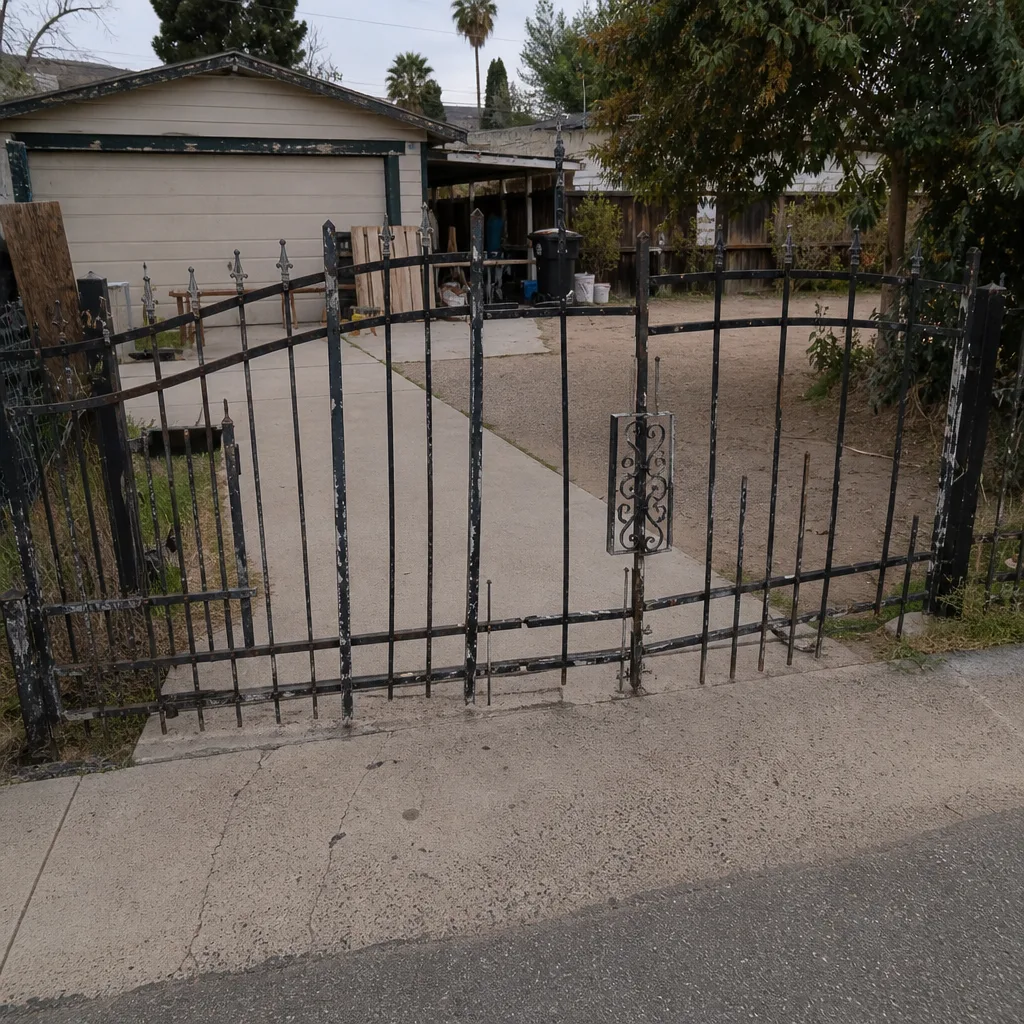 Before
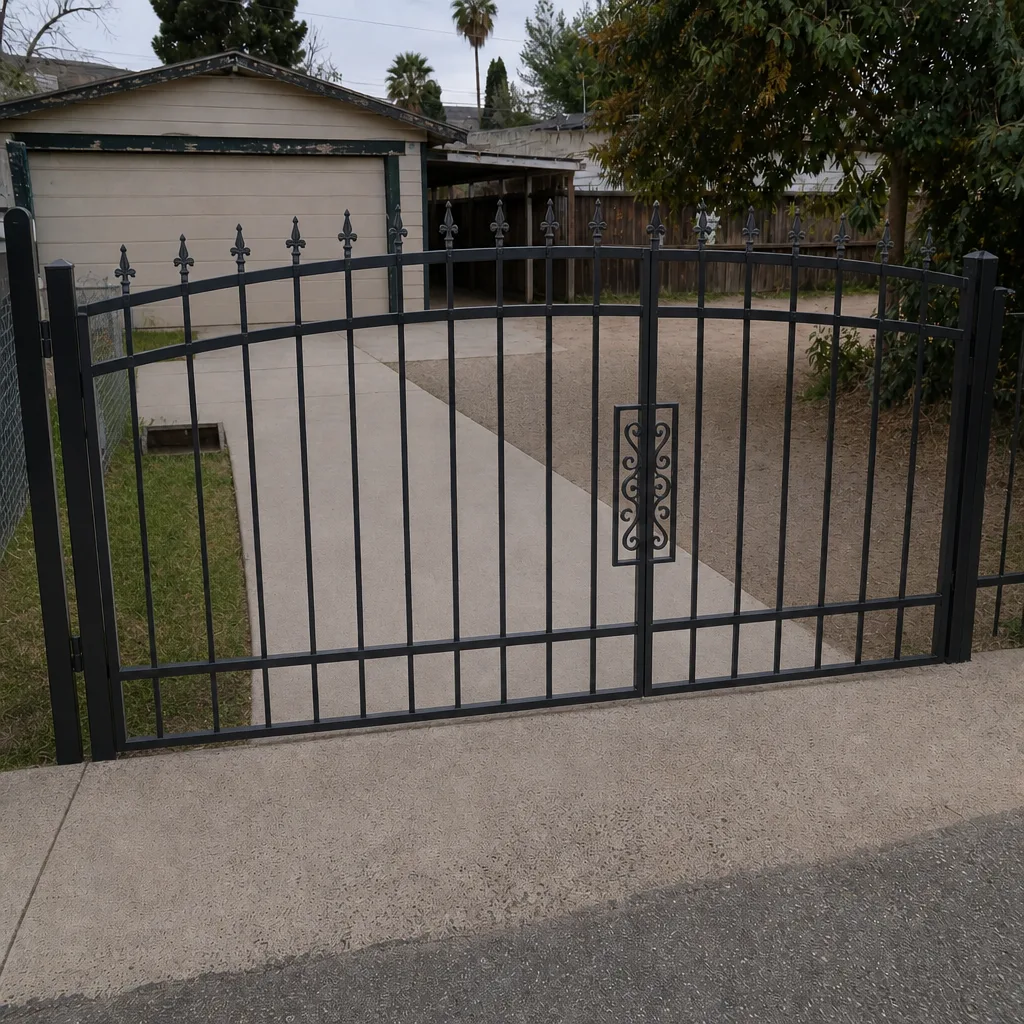 After
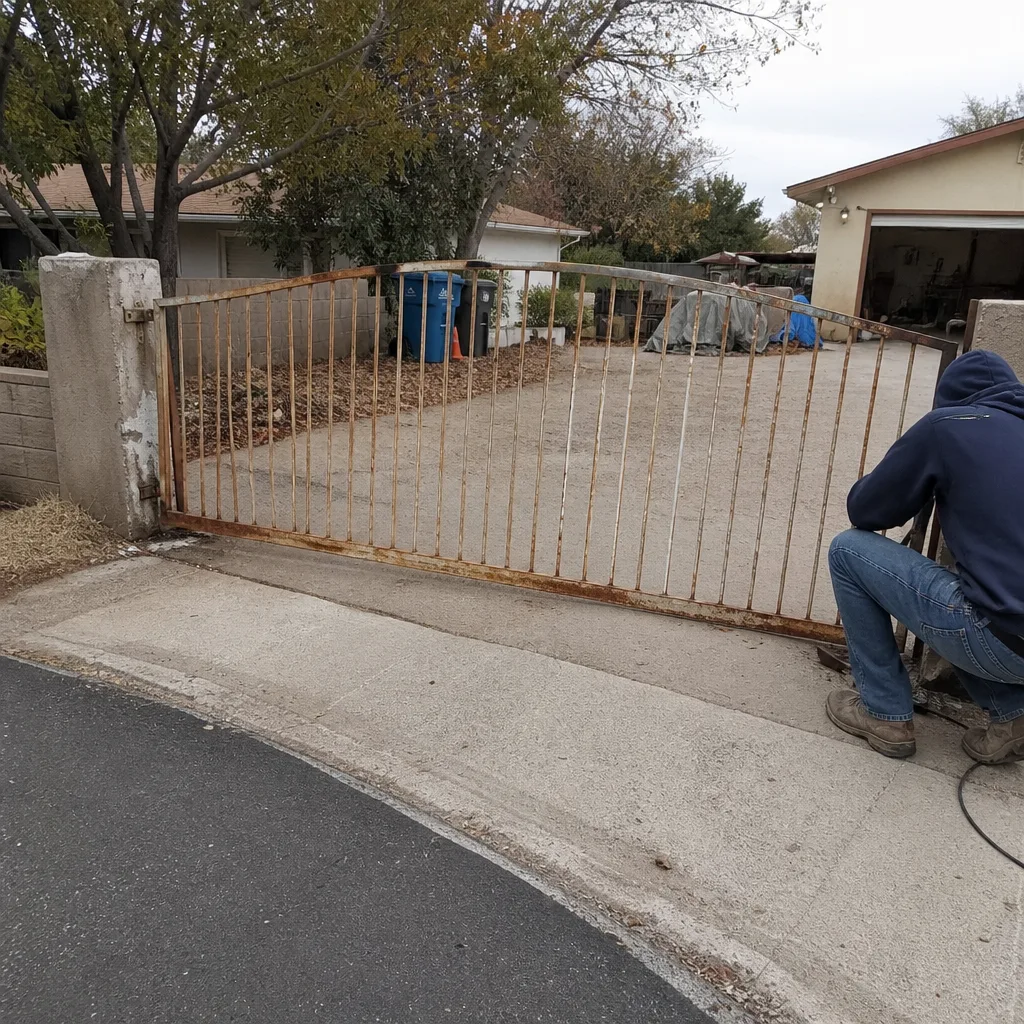 Before
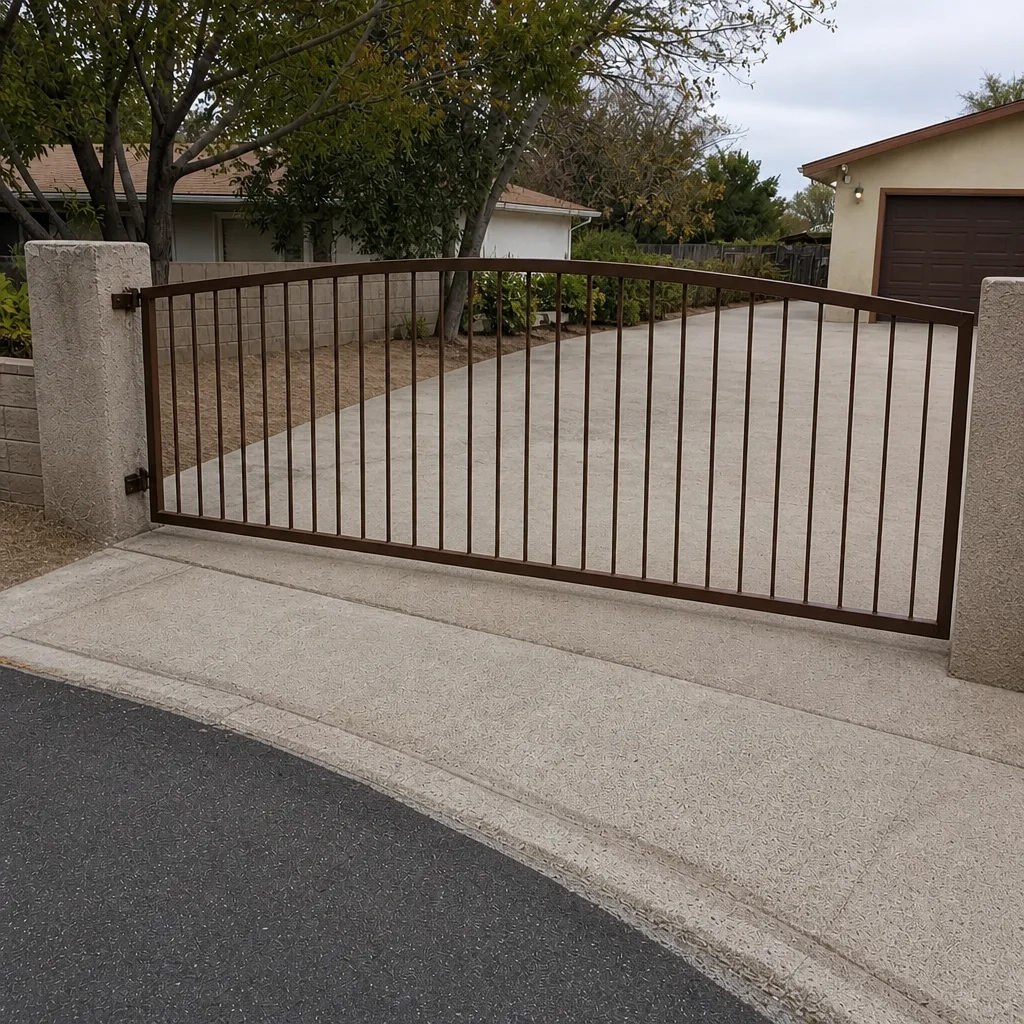 After
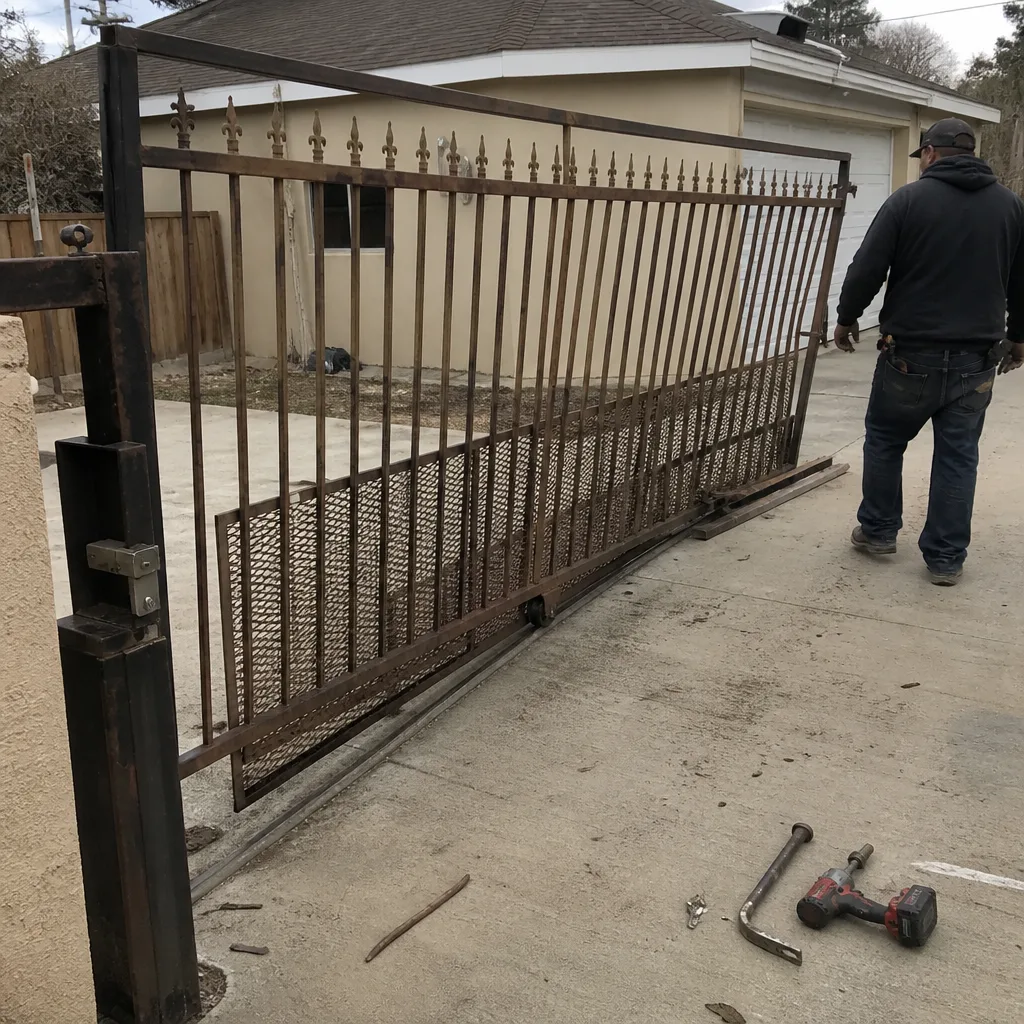 Before
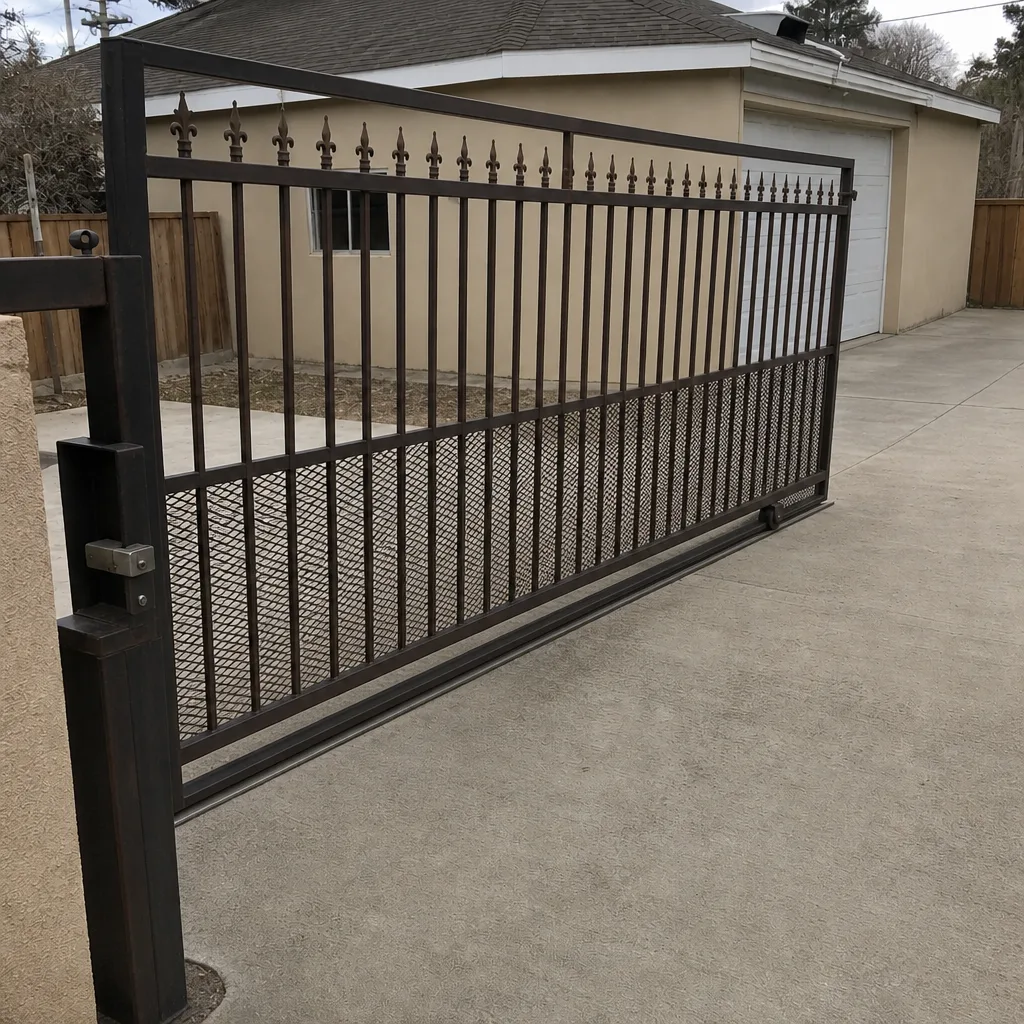 After
When to Call a Professional
Most of this schedule is homeowner work, but certain things should always be handled by a pro. Call us when the gate binds or stalls despite maintenance; when the safety reverse fails; when a control board, photo-eye, or safety edge is acting up or was knocked out of alignment; when the motor mount, actuator, or hinge hardware has shifted out of alignment or the gate stops closing reliably. Electrical work at a gate or opener – the power run, board replacement, and safety edges – is not a homeowner task, and a gate that acts up after a wind event needs eyes on it before you run it again.
Gatewood Fence & Gate Paradise offers free estimates in Paradise. The call goes to a live person, not a voicemail or a dispatch queue three states away. Every estimate is upfront before a single wrench moves, and every job carries our 90-Day Done Right Promise – if it’s not done right, we make it right. We’re certified to service nine major gate brands, including FAAC, BFT, Linear, Viking, DoorKing, Elite, Mighty Mule, Ghost Controls, and LiftMaster. Call (888) 292-7536 to set it up.
Frequently Asked Questions
Monthly through the hot months, and at least every three months the rest of the year. Standard chain lubricant breaks down faster in sustained desert heat, so the manual’s once-a-year advice leaves you exposed. A light, chain-specific lubricant wiped in while the gate moves slowly is best, and always wipe off the excess so dust doesn’t stick. If you’re unsure what lubricant your operator wants, we can check the brand and spec it for you – call (888) 292-7536.
You test it by killing the breaker and running one full open-close cycle on battery power. If the gate moves slowly, labored, or not at all, the battery is weak or dead. Most fail silently – there’s no warning light – so testing quarterly is the only reliable way to catch it. Heat ages these batteries faster in Paradise, so plan on replacing sooner than a temperate climate would suggest. Call us for a battery check and a free second opinion on any written quote.
Walk the gate by hand first, then check the post, hinges, motor mount, and actuator arm for looseness, then confirm the gate latches and reverses normally. Wind-driven vibration loosens fasteners faster than normal use, and a gate that shifts out of alignment can stall the motor on the next cycle. If anything feels off, stop and get it looked at rather than run it. We answer calls 24/7 – (888) 292-7536.
You can handle most of the monthly walk-and-check, lubrication, and battery test yourself with the checklist above. Anything involving the electrical side – the power run, control board, photo-eyes, or safety edges – should be done by a professional. Never open the control-box wiring yourself; it’s live, and a wrong tap can damage the operator or hurt you. For the electrical and alignment work, call us for a free estimate.
A routine maintenance visit is quoted upfront before any work starts, and the number depends on your operator and what needs attention. We don’t quote over the phone and then surprise you at the door – every price is agreed before we start. Our standing offers include $40 off any repair over $200, no trip charge inside the county, and a permanent 10% discount for seniors and veterans. Call (888) 292-7536 for an exact quote; estimates are free.
A routine maintenance pass usually takes under an hour, but the exact timing depends on the operator. If your gate is down or stalling, call us – if it’s an emergency, a live person answers around the clock, and we’ll tell you honestly when we can get there. Same-day repair availability depends on the day, and we’ll say so on the phone rather than keep you guessing. Call (888) 292-7536 for a free estimate.
The Bottom Line
Your gate motor doesn’t fail in a vacuum – it fails because the maintenance schedule written for a temperate climate was never going to work in Paradise. Build the calendar around this climate: a pre-summer check in March, a post-summer pass in October, lubrication monthly through the hot months, a battery test every three months, a torque check on the mounts and pivots twice a year, and a quick wind-event inspection whenever the forecast turns rough. Photograph each inspection and date it. Ten minutes a month beats a motor every third year, and if something does go wrong, you’ll have a record that settles the question quickly.
Whether your gate is on the east side of Paradise or out in the surrounding county, we’d rather be the shop you call to ask a question than the one you call after something breaks. The name is on the shop, and the shop is down the road – that’s the oldest accountability there is. Call Gatewood Fence & Gate Paradise at (888) 292-7536 for a free estimate and let’s get your gate schedule on track.
Written by the team at Gatewood Fence & Gate Paradise.