
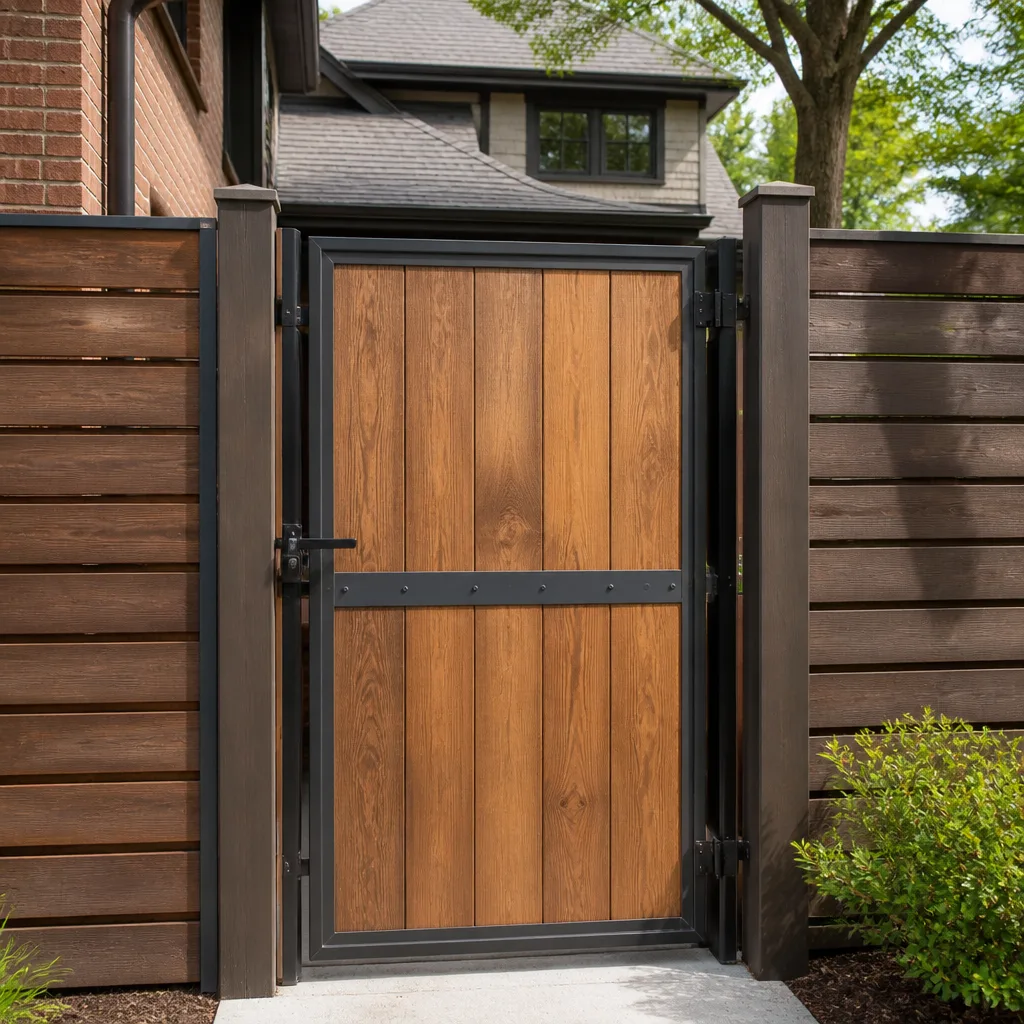
 Wood & steel frame
 Wrought iron
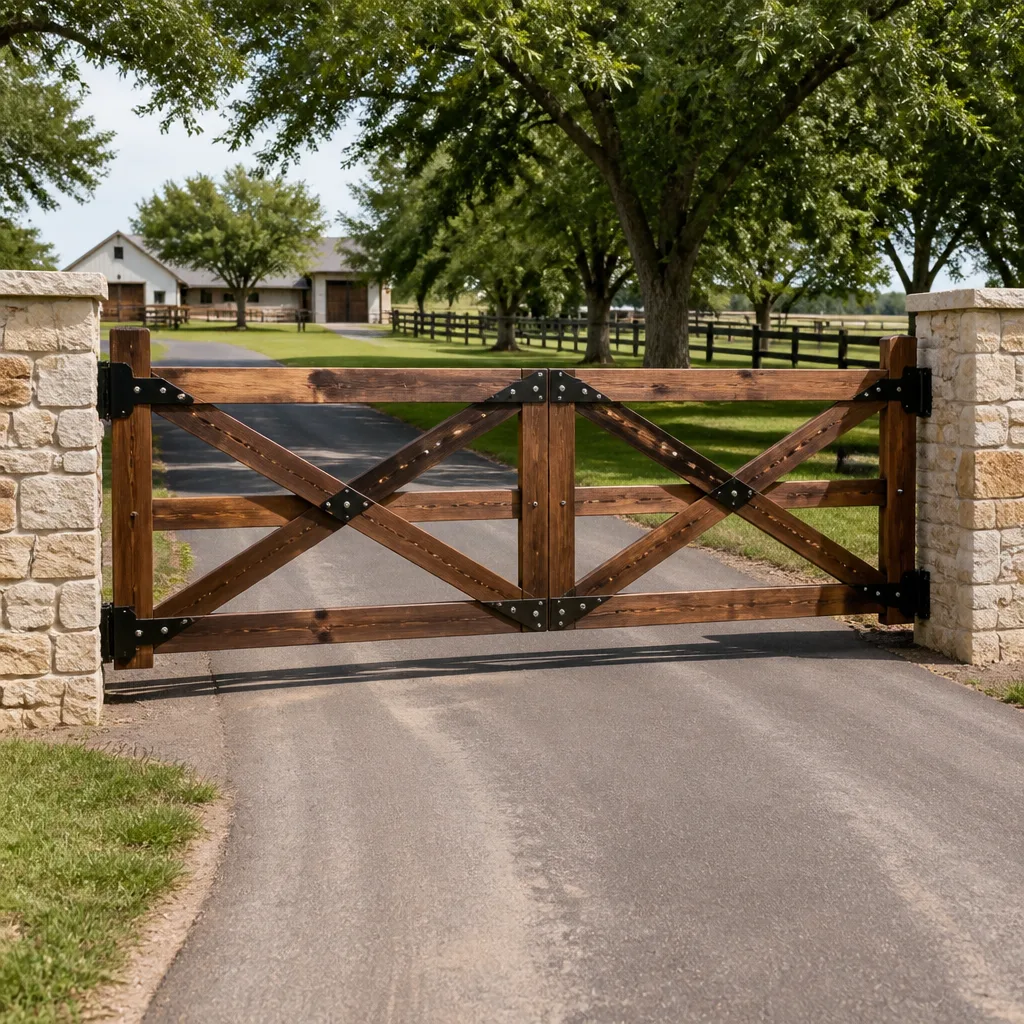 Farm & ranch
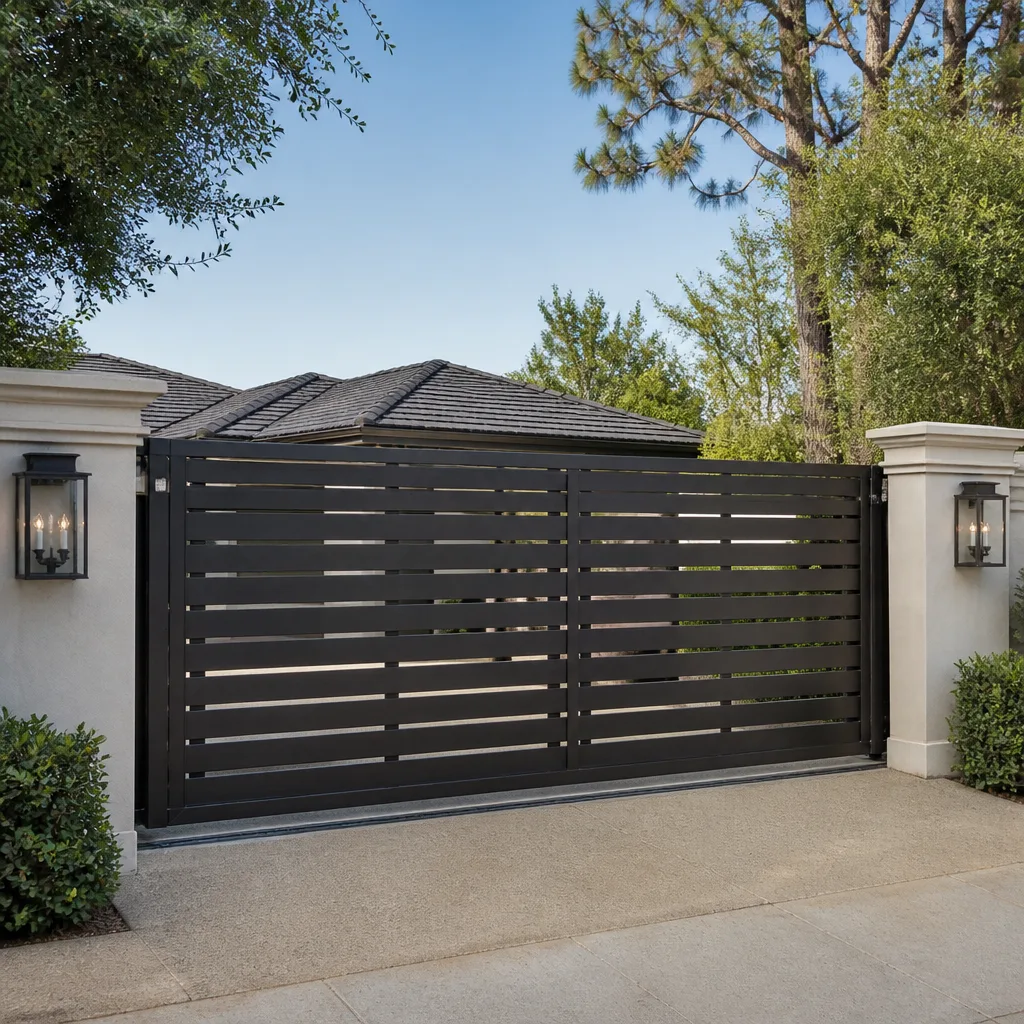 Sliding driveway gates
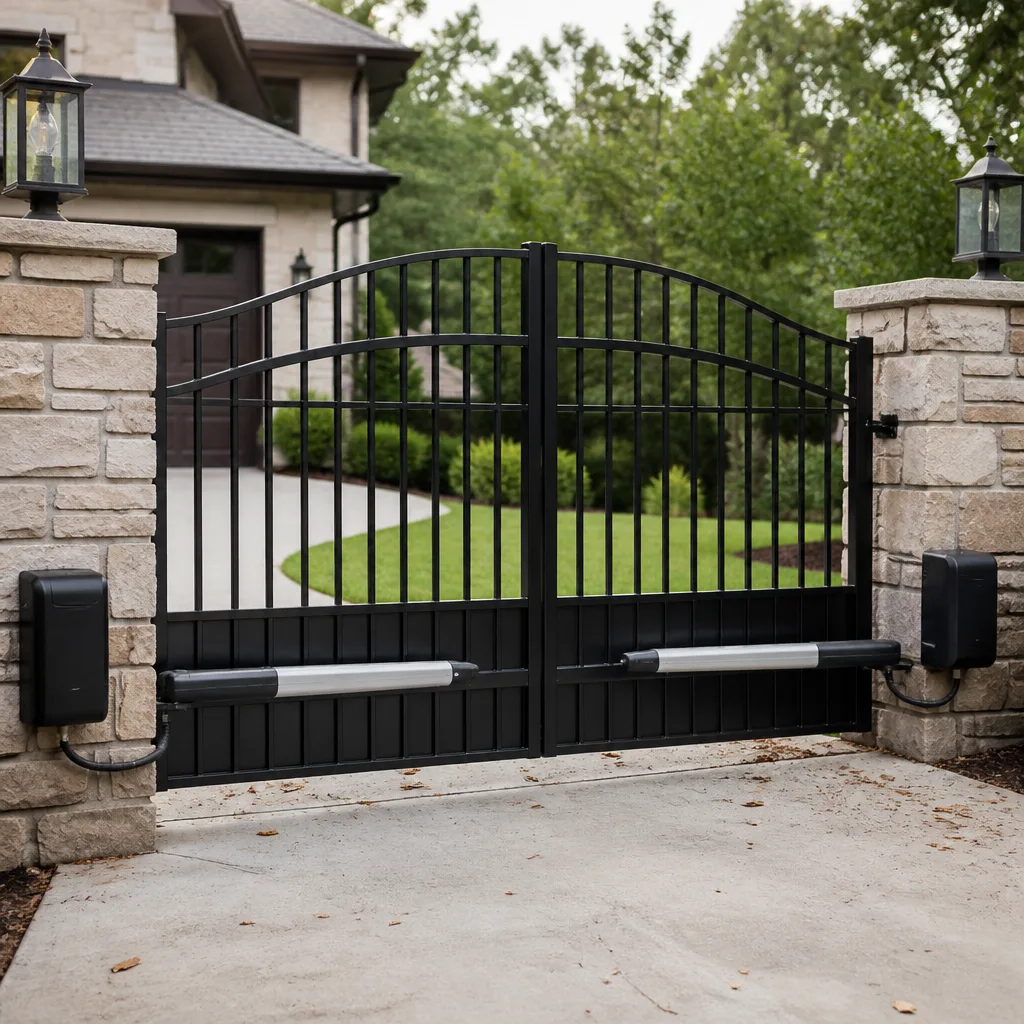 LiftMaster operators
Free on-site gate assessment - hinges, posts, and your LiftMaster or Nice gate operator checked before anything is quoted
The assessment is free and the quote is the invoice.
Get your free estimateStyles & brands we work with
- Wrought iron
- Wood & steel frame
- Farm & ranch
- Sliding driveway gates
- LiftMaster operators
See the difference
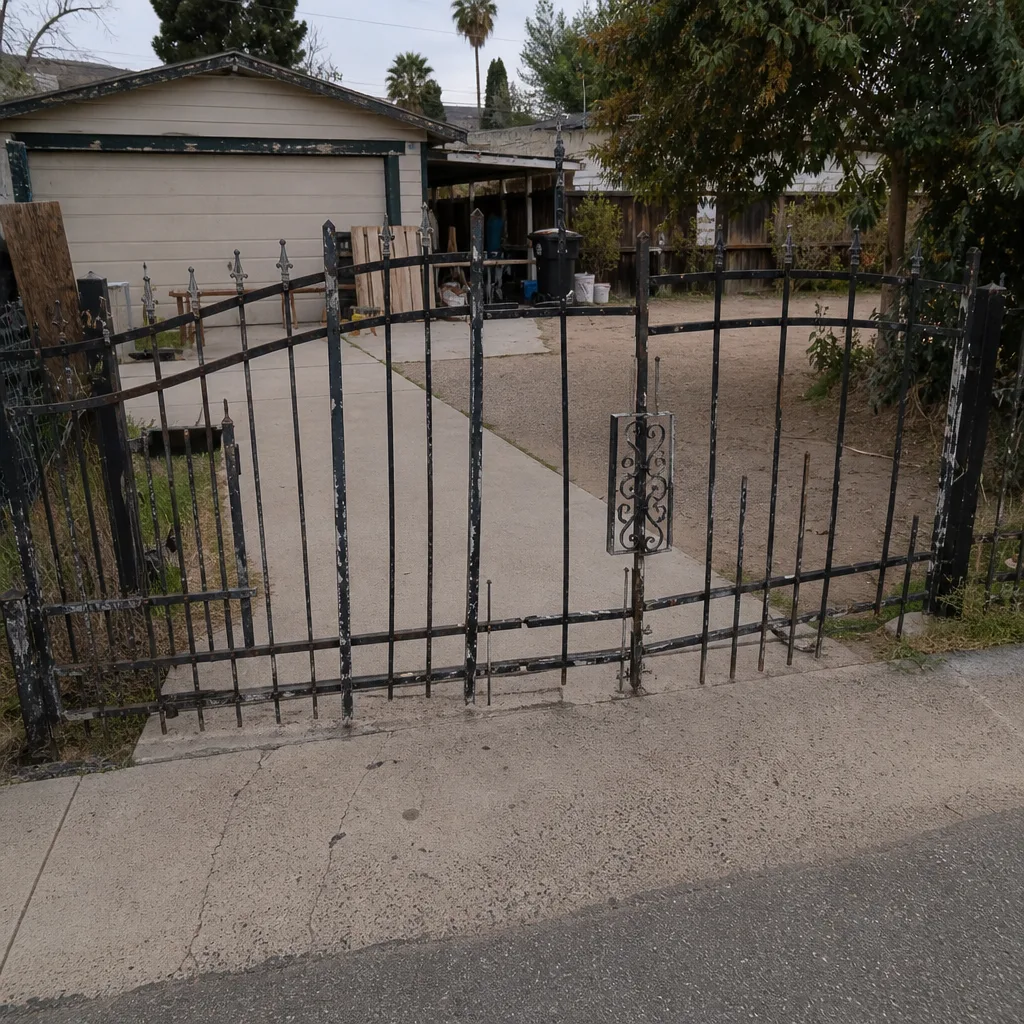 Before
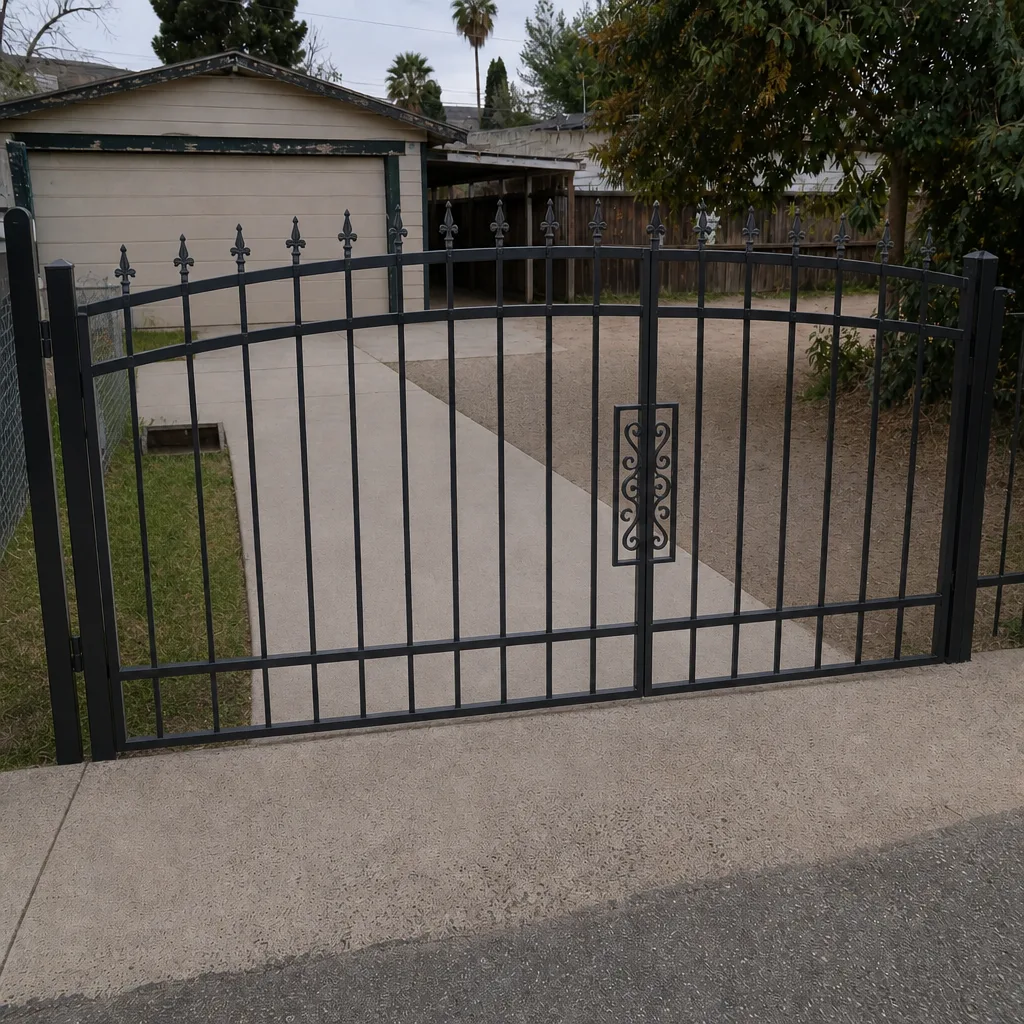 After
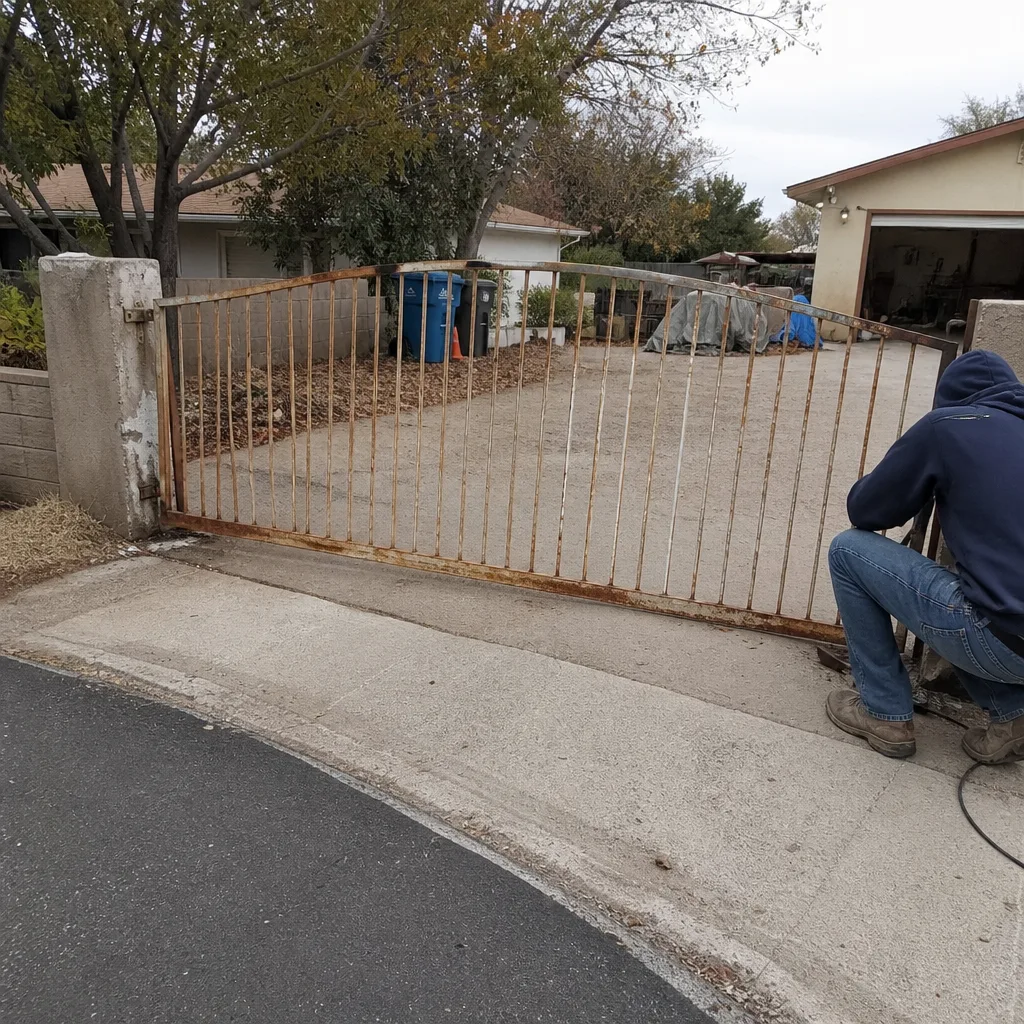 Before
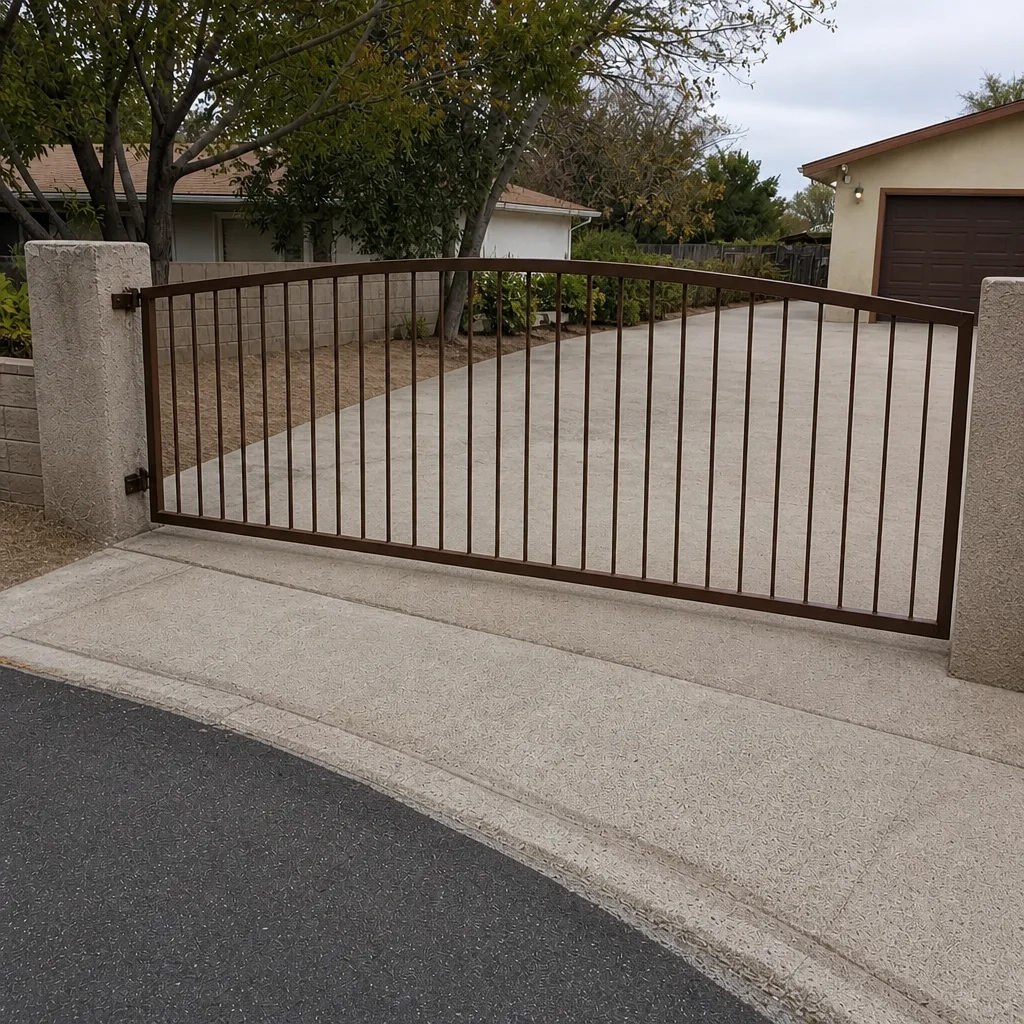 After
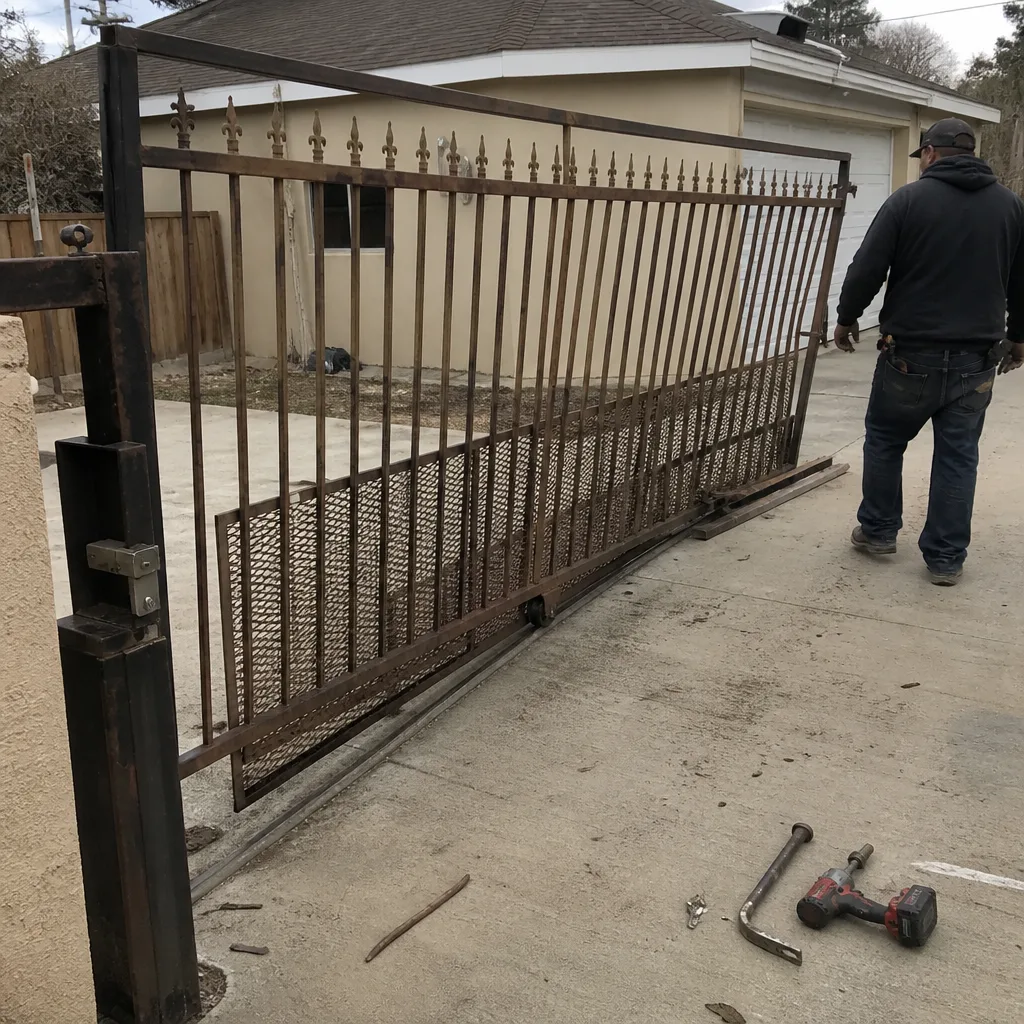 Before
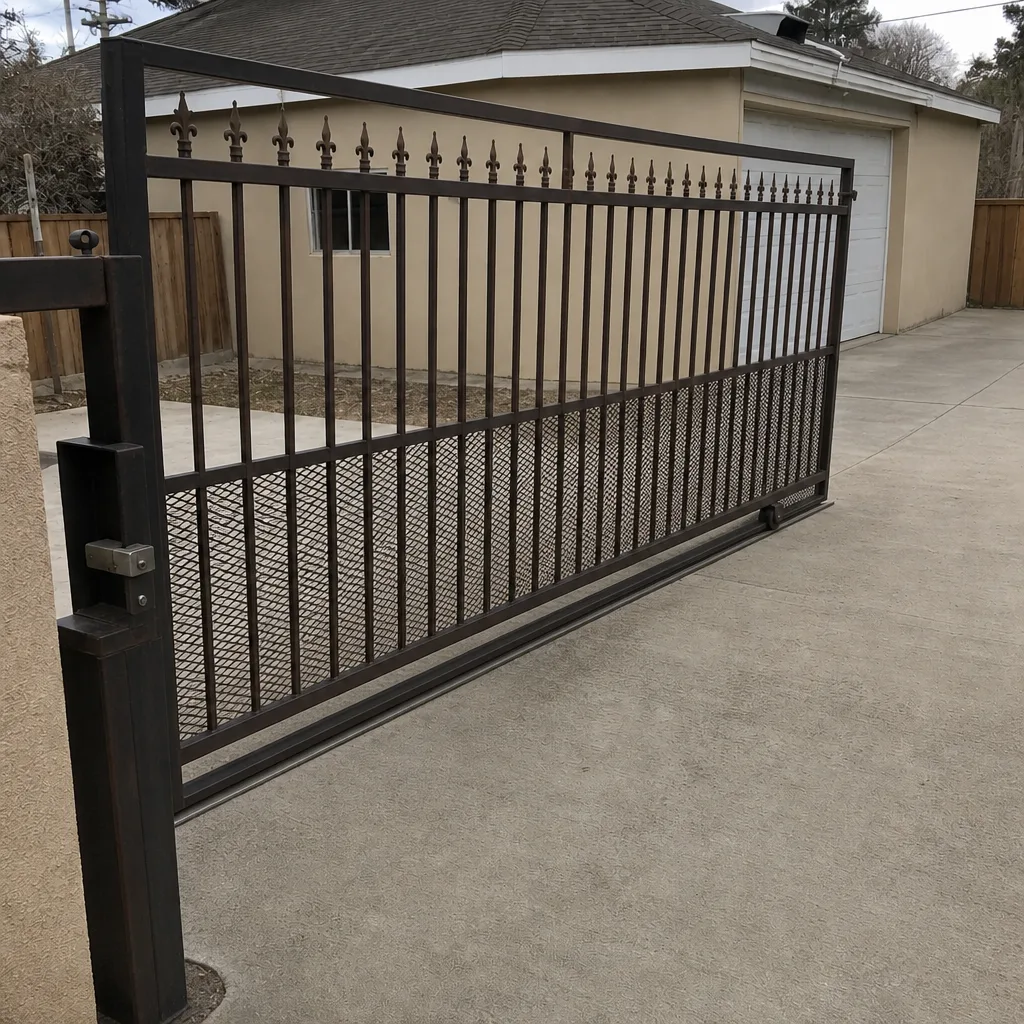 After
How an Automatic Gate Opener Works in Paradise, NV
An automatic gate opener is five parts working in sequence: a transformer that steps household voltage down to the control board, a logic board that decides when to run, a motor that drives the gate, limit switches that tell the board the gate has reached open or closed, and safety sensors that stop the gate from closing on something in its path. In Paradise’s heat, three of those five fail far more often than they do in a temperate climate, and knowing which part does what takes about four minutes to learn. That four minutes can save a couple hundred dollars the first time your gate starts acting up. If you’d rather skip the learning curve, call (888) 292-7536 and describe what your gate is doing.
The Five Components, in Plain English
Here’s the whole chain, one sentence each.
- Power supply and transformer. Takes 120-volt house current and steps it down to the low voltage the control board actually runs on.
- Logic (control) board. The brain. It receives the signal from your remote, keypad, or loop detector and decides whether to open, close, or hold.
- Motor. The muscle. It drives the arm or the chain that physically moves the gate.
- Limit switches. Two small switches that tell the board “we’re fully open” and “we’re fully closed” so the motor knows when to stop.
- Safety sensors. Photocells or a pressure edge that stop and reverse the gate if something breaks the beam or touches the edge.
Every operator we service works this same way, whether it’s a DoorKing on a commercial service entrance or a Mighty Mule on a residential driveway. Different parts, same logic. That’s why the diagnosis questions are the same no matter what’s bolted to your post.
Why Paradise Heat Attacks Three of the Five
This is where Paradise is different from Henderson or North Las Vegas. The desert doesn’t just wear things out evenly. It picks on specific components in predictable ways, and once you know the pattern, you can usually name the failing part before anyone touches the gate.
UV and heat crack transformer wiring
The transformer sits in the operator housing, baking all summer. UV dries out the insulation on the low-voltage wiring until it cracks, and once it cracks, the board gets intermittent power. The gate might open fine in the morning and stall at 4 p.m. when the housing is hottest. If your gate fails only in the afternoon, that’s the first place to look.
Thermal cycling micro-cracks solder joints
A control board goes from 60 degrees at dawn to 140-plus inside a metal housing by mid-afternoon, then back down every single night. That daily expansion and contraction eventually micro-cracks the solder joints on the board. The board isn’t dead, it’s flaky. It might work for three cycles and then do nothing. People replace whole operators over a cracked solder joint, and that’s a repair we do on the bench for a fraction of the cost.
Monsoon grit packs limit switches
Dust storms and monsoon winds push fine grit into every crevice, and the limit switches are the smallest crevice on the machine. Once grit packs in, the switch stops actuating cleanly and the board never gets the “we’re closed” signal. Your gate over-travels, hits its physical stop, or refuses to move because the board thinks it’s already somewhere it isn’t. A limit switch costs very little and is one of the most common repairs on Paradise gates.
Dust coats photocell lenses
Photocells rely on a beam passing between two lenses. A thin coat of desert dust is enough to scatter the beam and trip the safety circuit, so the gate opens but won’t close. Nine times out of ten, a homeowner calls convinced the motor is dying when a wiped-down lens would have fixed it in ten seconds.
The motor is usually the last to go
Motors are sealed and rugged. In our experience, the motor is the last thing to fail, not the first. When someone tells you the motor’s bad on a ten-year-old gate in Paradise, ask which of the other four components was ruled out first.
Swing vs. Slide: Two Different Machines on the Same Street
Paradise has an unusual mix. Along Las Vegas Blvd, Flamingo, and Tropicana, you get the full range on a single block: casino service gates, iron pedestrian gates on mid-century motels, driveway gates on 1960s-to-1980s homes, and heavier roll-up and sliding security gates at the newer resort properties.
That mix means both operator types show up constantly. A swing gate operator uses a linear actuator that pushes an arm to swing the gate on its hinges. A slide gate operator uses a chain drive or rack-and-pinion to pull the gate sideways along a track. Narrow residential driveways favor swing. Wide commercial frontage favors slide. On the same Paradise block, you’ll often see both.
| Type | How it moves the gate | Common local failure |
|---|---|---|
| Swing (linear actuator) | Arm pushes the gate open | Heat-fatigued hinge welds, transformer wiring |
| Slide (chain or rack-and-pinion) | Pulls the gate laterally on a track | Grit-packed track and limit switches |
Whichever you have, the fix usually starts with a proper diagnosis. Our Gate Motor & Opener service covers both types, and the local pro we connect you with is licensed and insured as Nevada requires.
Know Where Your Manual Release Is
Every automatic opener has a manual release, a lever, key, or handle that disengages the motor so you can swing or slide the gate by hand. In Paradise, summer heat events mean power outages, and outages mean your gate is stuck in whatever position it was in.
Find your release before you need it. On most residential operators, it’s a keyed handle on the operator housing or a lever under the arm. Turning it disengages the drive so the gate moves freely by hand. What you don’t want to do is force the gate while the motor is still engaged, because that strips gears and turns a free fix into a paid repair. If you can’t find yours or aren’t sure how it works, that’s a five-minute conversation and one we’re happy to have.
Pool Gates: The Extra Layer Paradise Owners Miss
A pool gate opener in Paradise has a requirement a driveway opener doesn’t. Nevada’s child-safety code requires pool gates to self-close and self-latch, and the opener has to be tuned so the gate fully engages the latch on every single close cycle. If the opener lets the gate swing shut but stop a quarter inch short of the latch, the gate is mechanically working and out of code at the same time.
On the older blocks just east of the Strip, we see this a lot. Original wrought-iron pool gates with sun-baked, brittle welds, re-hung after a hinge repair, and never re-tuned to the operator. Repair calls there often involve both re-welding heat-fatigued iron and re-setting the safety hinge so the latch catches every time. That’s a repair-first job, done on site, not a swap-the-gate job.
How We Diagnose a Gate Without Guessing
Here’s the sequence the crew runs when we show up in Paradise.
- Watch it cycle. Show us the gate closing on its own and we’ll show you where it’s failing. Where it stalls, where it binds, where it hesitates.
- Check power at the board. Confirms whether the transformer is delivering clean voltage or intermittent voltage.
- Test the limit switches. Manually trip each one to see if the board registers it. Grit-packed switches fail here.
- Wipe and test the safety sensors. Ruling out a dust-coated photocell before touching anything expensive.
- Inspect the mechanics. Hinges, arms, chain, track, and the hinge post. A gate sags in the hinge post, not in the middle, and that’s where we start.
Every diagnosis ends with upfront pricing before any work starts. If it’s a repair, we do it. If it’s something you can handle yourself, we tell you. That’s the whole point of the visit.
What It Costs to Diagnose and Fix
Most opener repairs in the Paradise market run $150 to $400 depending on the part. A transformer or limit switch replacement sits at the low end; a control board or motor is at the high end. Wiping a photocell costs nothing. Re-welding a heat-fatigued hinge post is a separate job and priced on site. If it turns out the operator genuinely needs replacing, we’ll show you why before you spend anything.
A few standing offers make the visit easier to say yes to: $40 off any repair over $200, no trip charge inside the county, free second opinion on any written estimate, and a permanent 10% discount for seniors and veterans. Every job carries the 90-Day Done Right Promise in writing. If it’s not done right, we make it right, and one call brings us back.
FAQs
Most phantom openings in Paradise trace to a grit-packed limit switch, a sun-cracked transformer wire, or a dust-coated photocell sending a false signal to the board. Heat makes the wiring and board flakier in the afternoon, so if the gate opens on its own mostly in the heat of the day, that’s where diagnosis starts. Call (888) 292-7536 and describe the timing; it narrows the part before anyone drives out.
A swing operator uses a linear actuator arm to push the gate open on its hinges; a slide operator uses a chain or rack-and-pinion to pull the gate sideways. Paradise has both in heavy use because the mix of narrow residential driveways and wide commercial frontage puts both types on the same block. If you’re not sure which you have, send a photo and we’ll tell you.
Use the manual release: a keyed handle or lever that disengages the motor so the gate swings or slides by hand. Do not force the gate while the motor is engaged; that strips gears and turns a free fix into a paid repair. Find yours before the next summer outage, and call (888) 292-7536 if you can’t locate it.
Yes. Nevada pool-safety code requires a self-closing, self-latching gate, and the opener has to be tuned so the gate fully engages the latch on every close. A gate that stops a quarter inch short is mechanically working but out of compliance. We re-tune the operator and re-set the hinge on site; call (888) 292-7536 for a free estimate.
When It’s Time to Call
Understanding the five components is worth real money because it lets you describe the problem accurately and push back on a repair you don’t need. But some things need hands, a meter, and a welding rig. If you’d rather have it looked at, Gatewood Fence & Gate Paradise offers a no-pressure assessment in Paradise, call (888) 292-7536 for a free estimate. The name is on the shop, the shop is down the road, and a live person answers the phone.
Written by the team at Gatewood Fence & Gate Paradise, serving Paradise, NV.