
Last updated November 18, 2026
 Wrought iron
 Wood & steel frame
 Farm & ranch
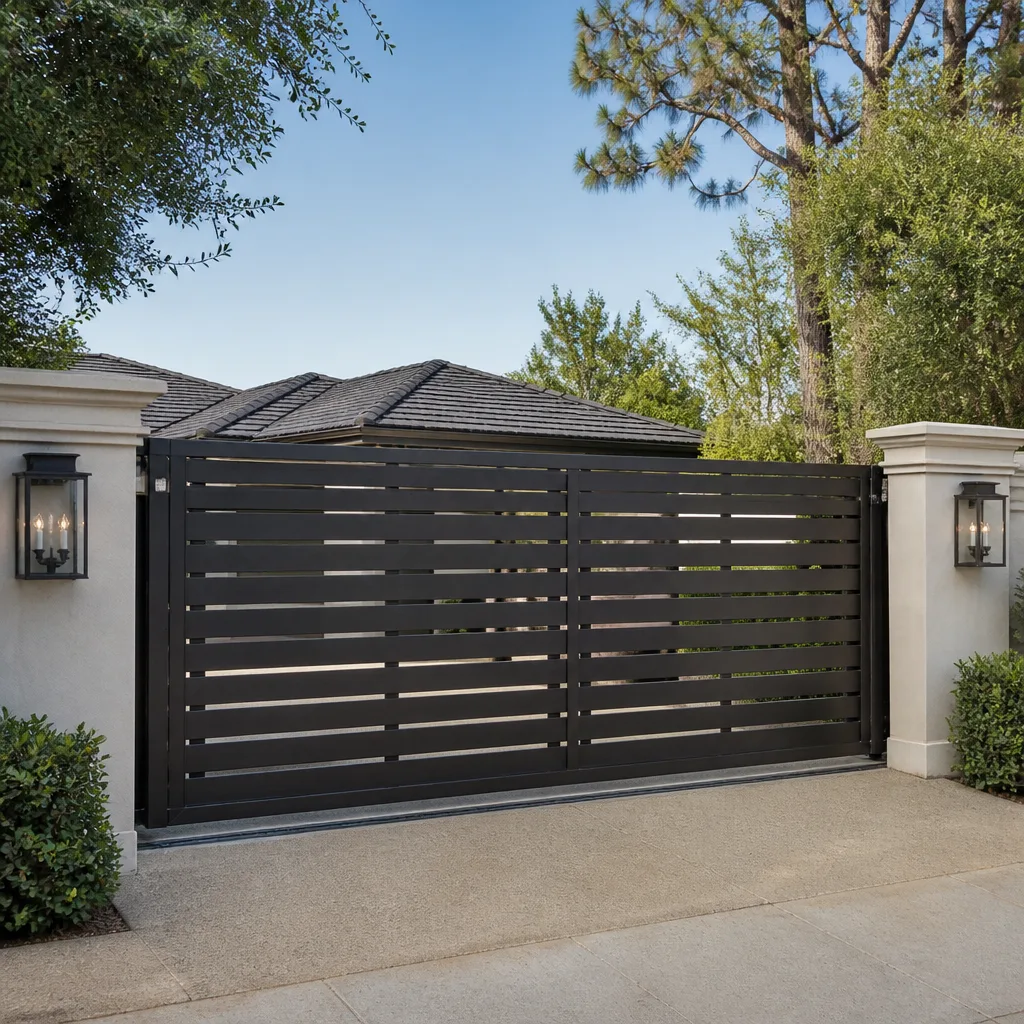 Sliding driveway gates
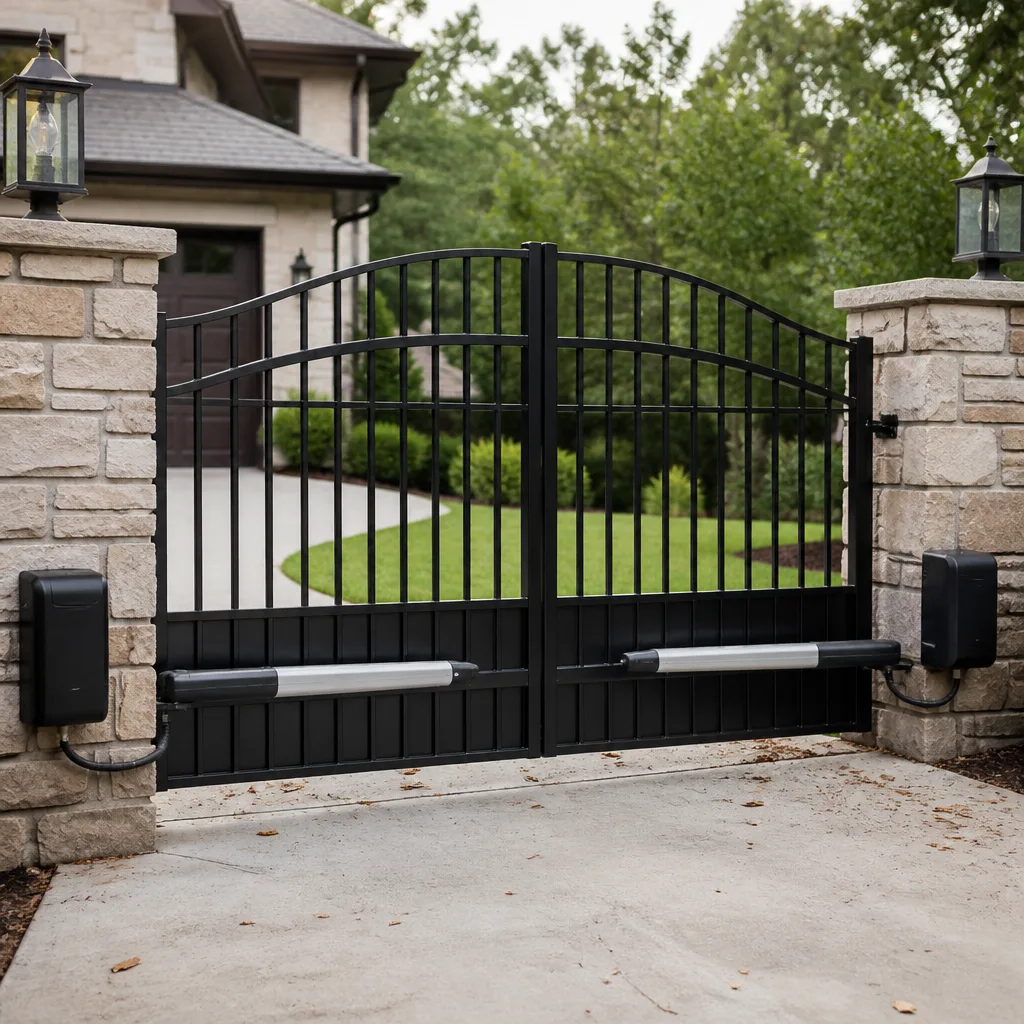 LiftMaster operators
Free on-site gate assessment - hinges, posts, and your LiftMaster or Nice gate operator checked before anything is quoted
The assessment is free and the quote is the invoice.
Get your free estimateThe Complete Gate Motor & Opener Guide for Paradise Homeowners
We’ve replaced four of the same imported DC motor in the same neighborhood in two summers. Not because the homeowners were rough on them – because those motors were spec’d for a climate that isn’t this one. Nobody told them that before they bought. Paradise sits in a bowl where summer afternoons push past 110°F, where wind carries fine desert dust into every moving joint, and where a west-facing gate panel can hit 140°F in direct sun. A motor that thrives in Seattle or Portland can fail here in eighteen months. This guide narrows the field to what actually survives in Paradise, from heat ratings and dust seals to sizing math you can check yourself.
Quick Answer
For a Paradise gate, choose a motor rated for at least 130°F ambient with a minimum IP55 dust-and-water seal, sized to your gate’s weight and width using the formula in this guide, and matched to your terrain – swing arm for flat driveways, underground for clean sightlines, linear actuator for narrow columns. If a motor is only rated to 105°F or carries no IP rating, it will fail early in this valley. The rest of this guide explains exactly why and how to check any installer’s recommendation on the spot.
Styles & brands we work with
- Wrought iron
- Wood & steel frame
- Farm & ranch
- Sliding driveway gates
- LiftMaster operators
Table of Contents
- Why Heat Rating Decides Everything in Paradise
- The Dust Problem: What IP55 Really Means
- The Three Motor Types and Where Each Belongs
- Power Reality: When You Need Solar and When You Don’t
- The Motor Sizing Formula You Can Check Yourself
- Brands That Hold Up in Valley Conditions
- Annual Maintenance That Doubles Motor Life
- Common Mistakes to Avoid
Why Heat Rating Decides Everything in Paradise
Motor manufacturers rate their units by ambient temperature – the temperature of the air around the motor housing. A motor rated to 105°F ambient is designed to shed heat into 105°F air. That works fine in most of the country. In Paradise, the ambient air on a July afternoon can sit at 112°F, and that’s before the gate panel itself absorbs sunlight and radiates heat back onto the operator.
Here’s the part most homeowners never hear: a west-facing steel or wrought iron gate in Paradise reaches surface temperatures above 130°F by 2 p.m. The motor bolted to that gate doesn’t live in ambient air – it lives in a pocket of trapped heat between the panel and its own housing. We’ve put an infrared thermometer on dozens of these. The internal motor temperature runs 25 to 40 degrees hotter than the surrounding air. A 105°F-rated motor running in a 135°F pocket is being cooked from the inside out.
What that looks like in practice:
- Capacitors fail first. Heat degrades electrolytic capacitors faster than any other component. A typical failure is the gate working fine in morning, then not opening at 3 p.m.
- Thermal cutouts trip. Many motors have a built-in overheat shutoff. When the gate stops mid-cycle on a hot afternoon and works again after dark, that’s not a ghost – that’s the cutout doing its job.
- Gear lubricant breaks down. Grease thins at high heat, migrates away from the gears, and the metal grinds itself down over a single summer.
- Control boards warp. We’ve pulled boards from Paradise motors where solder joints had visibly cracked from repeated heat expansion.
So when you’re shopping, look for a motor rated to 140°F ambient or better. FAAC and BFT both publish enclosed-operator ratings that hold up in desert heat; Viking’s heavy-duty swing units are also built for this. If the spec sheet doesn’t list an ambient temperature rating at all, that’s your answer – walk away. For repair work on an existing operator, start with Gate Repair in Paradise before you assume replacement is the answer.
The Dust Problem: What IP55 Really Means
Paradise and North Las Vegas sit downwind of open desert, and the spring wind funnels through the washes and between housing tracts in a way that drives fine particulate into anything with a gap. You know this from your window tracks, your pool filters, and the top of your patio furniture. Your gate motor lives in the same dust, plus it’s mounted low where wind-driven grit accumulates.
The IP rating system (Ingress Protection) tells you how well a motor’s housing keeps dust and water out. For Paradise, IP55 is the bare minimum and IP65 is better. Here’s the plain breakdown:
- IP44 means protection from splashing water and objects larger than 1mm. Dust gets in freely. Not acceptable here.
- IP55 means protected against dust in quantities that would interfere with operation, and protected against low-pressure water jets. This is the practical floor for Paradise.
- IP65 means completely dust-tight and protected from water jets. Best choice for west-facing gates and open-driveway installations.
But the IP rating is only as good as the seals holding it. Gaskets dry out, crack, and shrink in low-humidity heat. We inspect three seals on every annual service:
- The main housing gasket – check for cracking along the top edge where sun hits it directly.
- The shaft seal where the output shaft exits the housing – dust gets in here on swing arms constantly.
- The manual release cover gasket – often forgotten, and a common dust entry point on Linear and Mighty Mule units.
If you’re seeing a fine dust film inside the housing on inspection, the seal has already failed and it’s time to replace it before the gears start grinding. A ten-dollar gasket saves a several-hundred-dollar motor replacement. When we service an operator, sealing it properly is the first thing we do after the fix – much of what we see comes down to the Gate Motor & Opener in Paradise service resolving the seal and heat issue in one visit.
The Three Motor Types and Where Each Belongs
Three motor families do almost all the residential work in Paradise. Which one fits your property is determined by your terrain, your gate’s weight, and how much room you have at the posts. Nobody’s recommending a type before they’ve measured your driveway, and anyone who does is guessing.
Swing arm operators
The workhorse for Paradise residential gates. A hinged arm mounts to your gate post and pushes the gate open like an elbow. They handle grades and slopes well, mount above ground where you can see and service them, and don’t care if your driveway isn’t perfectly flat. Best for gates up to about 800 pounds per leaf on flat to moderate slopes. The tradeoff: the arm is visible and moves through an arc, so if you have tight decorative columns or want an unbroken sightline, this isn’t it. FAAC swing arms are the most common unit we install in Paradise for that reason – heat tolerance and above-ground serviceability.
Underground operators
The motor goes in a concrete box buried beside the gate post and drives the gate through a pivot arm hidden below grade. Cleanest look, quietest operation, and they handle very heavy gates well. The tradeoff in Paradise is significant: underground means the housing fights the same soil heat, and the access cover has to stay clear of windblown sand and runoff. Underground units need genuinely good sealing and a dependable drainage box or they’ll fill with silt after a few spring wind seasons. When they’re right, they’re excellent. When they’re wrong for your soil and slope, they’re a headache.
Linear actuators
A ram-style arm that extends and retracts to push the gate. Simple, strong, and tolerant of dust because the moving parts are more enclosed than a swing arm. Best for narrow columns where a swing arm’s arc won’t fit, and for single-panel driveway gates. BFT linear units are what we reach for when the post spacing rules out a swing arm. They don’t handle steep grades as gracefully, so if your driveway rises toward the street, check this carefully.
Power Reality: When You Need Solar and When You Don’t
The single most common problem we hit on new installations in Paradise is the power run. Plenty of properties in the valley have gate posts fifty, eighty, even two hundred feet from the nearest 110V source. Running a circuit that far isn’t impossible, but it means trenching, conduit, a separate breaker, and often an electrician pulling the permit. Sometimes that’s the right answer. Sometimes it’s several thousand dollars that a solar setup could spare you.
Here’s how we decide:
- Measure the distance from the panel to the gate post. Under 50 feet of clean trenchable ground with an existing outside outlet nearby, and a hardwired 110V circuit is usually the better long-term answer – no batteries to think about.
- Check the terrain between panel and post. If the run crosses a concrete driveway, a block wall, or a finished landscape you don’t want torn up, the cost of a hardwired run climbs fast. That’s where solar earns its place.
- Count your daily cycles. A gate that opens and closes twenty times a day needs a bigger solar panel and battery bank than one that runs four times. Be honest about how often the gate actually operates.
- Check sun exposure at the panel location. A north-facing gate post under a mature tree is a poor solar site. A south or west wall with six hours of direct sun is a great one.
Solar is a real solution for Paradise about a third of the time in our experience – genuinely rural driveway entrances, long runs across finished landscaping, and detached gates far from the house. It is a marketing pitch when an installer recommends it simply because trenching is work they’d rather avoid. A good solar setup costs more up front than a short hardwire run and adds a battery and panel you’ll need to maintain. The brand matters less than the panel size and battery capacity compared honestly against your cycle count. Ask for both options priced side by side, and walk through the numbers with us if you want a second opinion on a written estimate.
The Motor Sizing Formula You Can Check Yourself
Undersized motors are the number-one cause of early failure we see in Paradise, and no manufacturer’s spec sheet explains it in simple terms. Here’s the plain-language math you can do with a tape measure and a bathroom scale.
Formula: Gate weight (pounds) × gate width (feet) = sizing score
Every motor has a stated maximum weight and maximum width. Multiply yours together, and compare. Here’s how the range plays out:
- Under 500: A light-duty opener handles this if your gate is under 4 feet wide. Think a walkway gate with a decorative frame.
- 500 to 1,500: Medium-duty residential operator. Most single driveway gates fall here.
- 1,500 to 3,000: Heavy-duty residential or light commercial. Many wrought iron driveway gates.
- Over 3,000: Commercial-class operator, and honestly it’s worth a real measurement conversation before you commit.
Why width matters as much as weight: the gate is a lever, and the motor at the hinge is fighting every foot of it. A 300-pound gate that’s 14 feet wide is harder on a motor than a 400-pound gate that’s 8 feet wide. Installers who only ask “how much does it weigh?” are guessing past that point.
To get your number:
- Measure the gate width from hinge post center to latch post center.
- Weigh the gate by propping one end on a bathroom scale and gently lowering it onto the scale until it takes the full load, then doubling. Or look up the per-foot weight of your material (a 14-gauge steel frame gate runs about 15 pounds per foot).
- Multiply the two numbers together.
- Compare against the motor’s rated capacity, and demand at least a 30% margin over your score.
A motor sized right at the edge of its capacity runs hot, wears fast, and quits early. The margin is what buys you years in Paradise heat. When you’re ready to price an installation, we’re glad to run these numbers with you – see Gate Installation in Paradise for the full scope, from the measure to the first cycle.
Brands That Hold Up in Valley Conditions
We’re certified to service nine major gate brands, and we’ll tell you straight: not all of them tolerate a Paradise summer equally. Here’s what we’ve seen from the ones that matter for residential work in this valley.
FAAC and BFT both build enclosed operators with honest heat ratings and solid seals. They cost more up front and they’re what we recommend for west-facing gates and open driveways without hesitation. Their parts network is reliable, which matters when something does wear out.
Linear and Viking are solid mid-range workhorses for gates that don’t see full afternoon sun or a daily cycle count over fifteen. Linear units are common on HOA and subdivision entries around Paradise, and parts are easy to find. Viking heavy-duty swing operators handle weight and grade well for the money.
Whatever brand you land on, the maintenance program matters more than the logo. A well-maintained mid-range unit outlasts a neglected premium one. For repair on a specific brand, call and we’ll confirm we service it – nine brands means we almost always can. You can also reach Gatewood Fence & Gate Paradise through our home page if you want to start there.
Annual Maintenance That Doubles Motor Life
A Paradise gate motor needs two service visits a year if it lives in full sun, one if it’s shaded. The spring visit is about clearing the dust season; the fall visit is about prepping for temperature swings. Here’s what a proper service looks like so you can judge whether you’re getting one.
- Open the housing and inspect for dust intrusion. Shake out the gasket line. If you see grit inside, replace the seals.
- Check the gear lubricant. Grease should be tacky and present on the gear teeth. Thin, dark, or migrating oil means it broke down over the summer.
- Test the manual release by hand. If the gate doesn’t open smoothly by hand with the operator disengaged, the hinges or the gate alignment are binding the motor – fix that first.
- Inspect the gate hinges and post. A sagging gate in Paradise is almost always a hinge-post problem, not a motor problem. If the gate sags, the motor is pushing uphill every cycle.
- Check the seals on the manual release cover and shaft. The three we listed in the dust section above.
- Test the safety reversing feature. The gate should stop and reverse when it meets an obstacle. This is a safety test, not a nicety.
- Tighten every mounting bolt. Heat expansion and cycle vibration loosen them; a loose motor housing is a failing motor housing.
One seasonal pattern specific to Paradise: in late October, when overnight temps drop below 50°F for the first time, we get a wave of calls from motors that were marginal all summer. The cold shrinks seals and stiffens grease. A motor that barely made it through August will often fail in the first cold snap. The fall service call is cheaper than the emergency replacement in November.
Common Mistakes to Avoid
- Buying on price alone. The cheapest motor at the big-box store is usually rated to 105°F with no IP rating. It’ll work for a year in Paradise and then start tripping its heat cutout.
- Skipping the ambient temperature spec. If the installer can’t show you a heat rating, don’t let them install. “It’s rated for residential use” isn’t a spec.
- Mounting a west-facing motor in full sun with no shade. A simple shade panel or planting a shade tree near the gate post can drop the motor’s local temperature 20 degrees and add years to its life.
- Undersizing because the gate “looks light.” Run the weight × width formula. A pretty aluminum gate can still be heavy enough to burn out a light-duty unit.
- Ignoring a sagging hinge post. Every millimeter of sag becomes a millimeter of extra stress on the motor every single cycle. Fix the post before you fix the motor, or the motor fix won’t last.
- Never opening the housing for inspection. A five-minute seal check once a year is the difference between a gasket replacement and a motor replacement.
- Trusting a phone quote. If you can’t get a written price with the model and the size spelled out before the work starts, walk away. That’s the oldest lesson in Paradise and it still holds.
See the difference
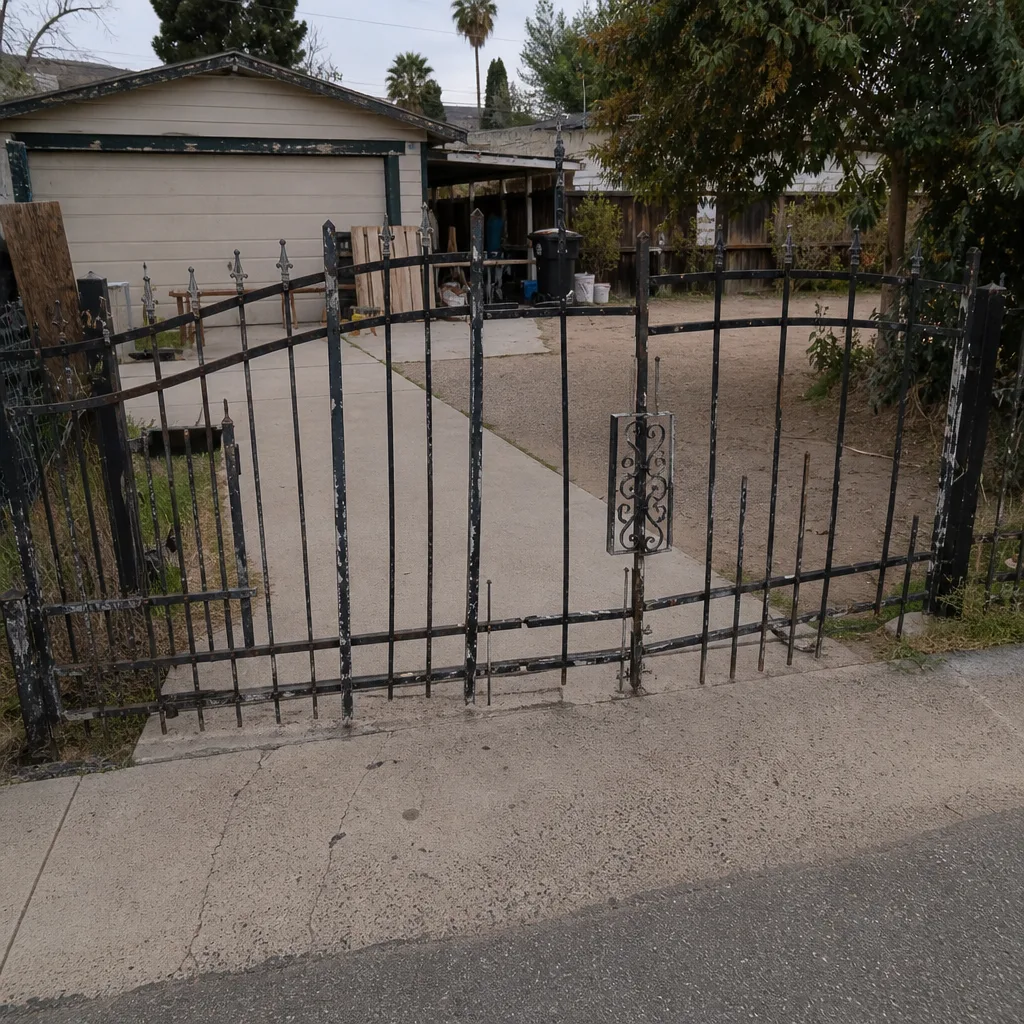 Before
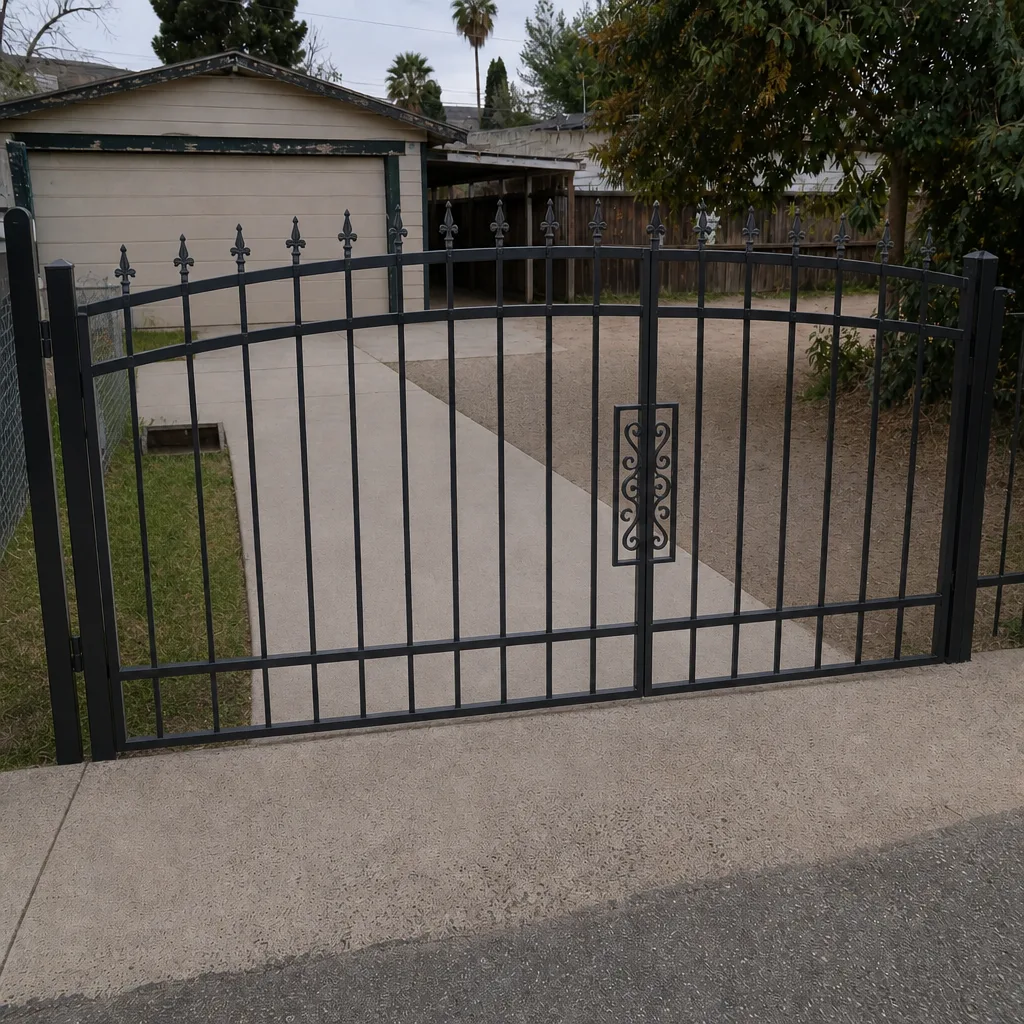 After
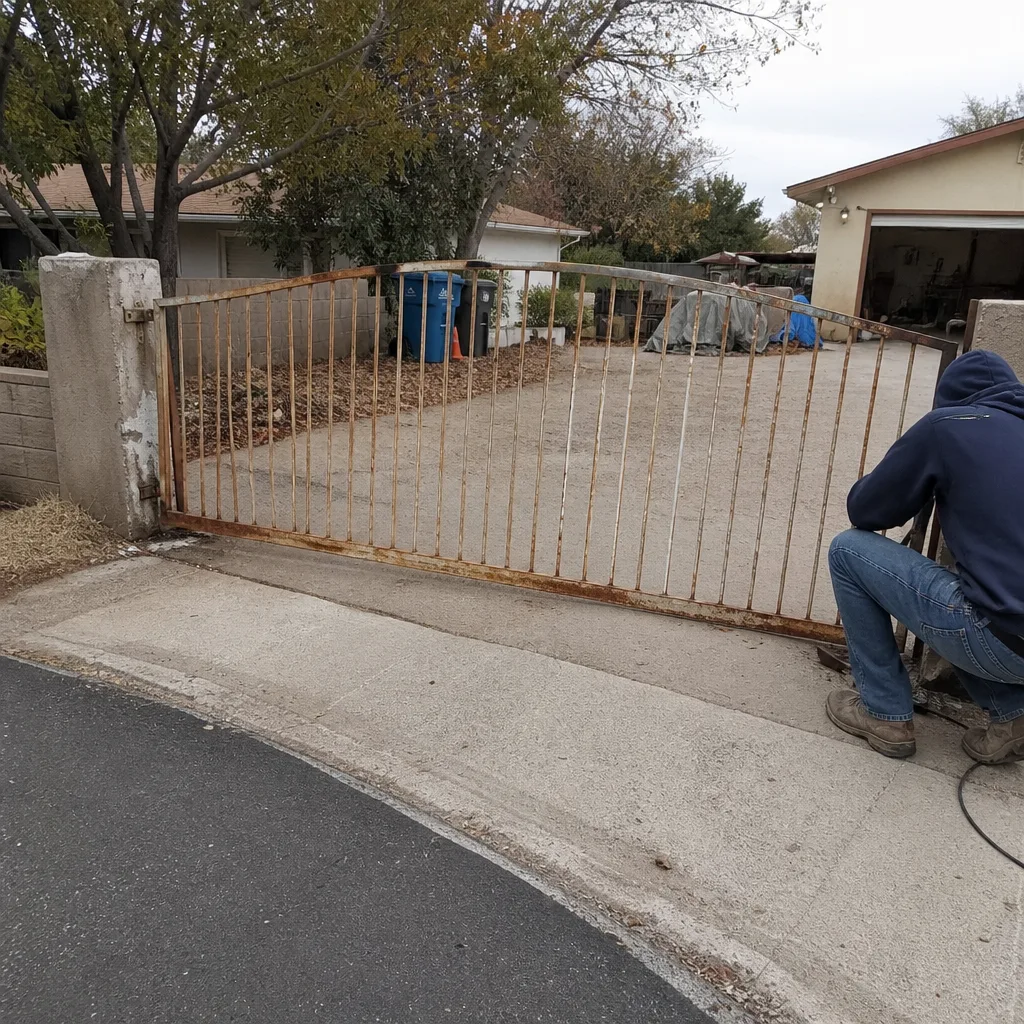 Before
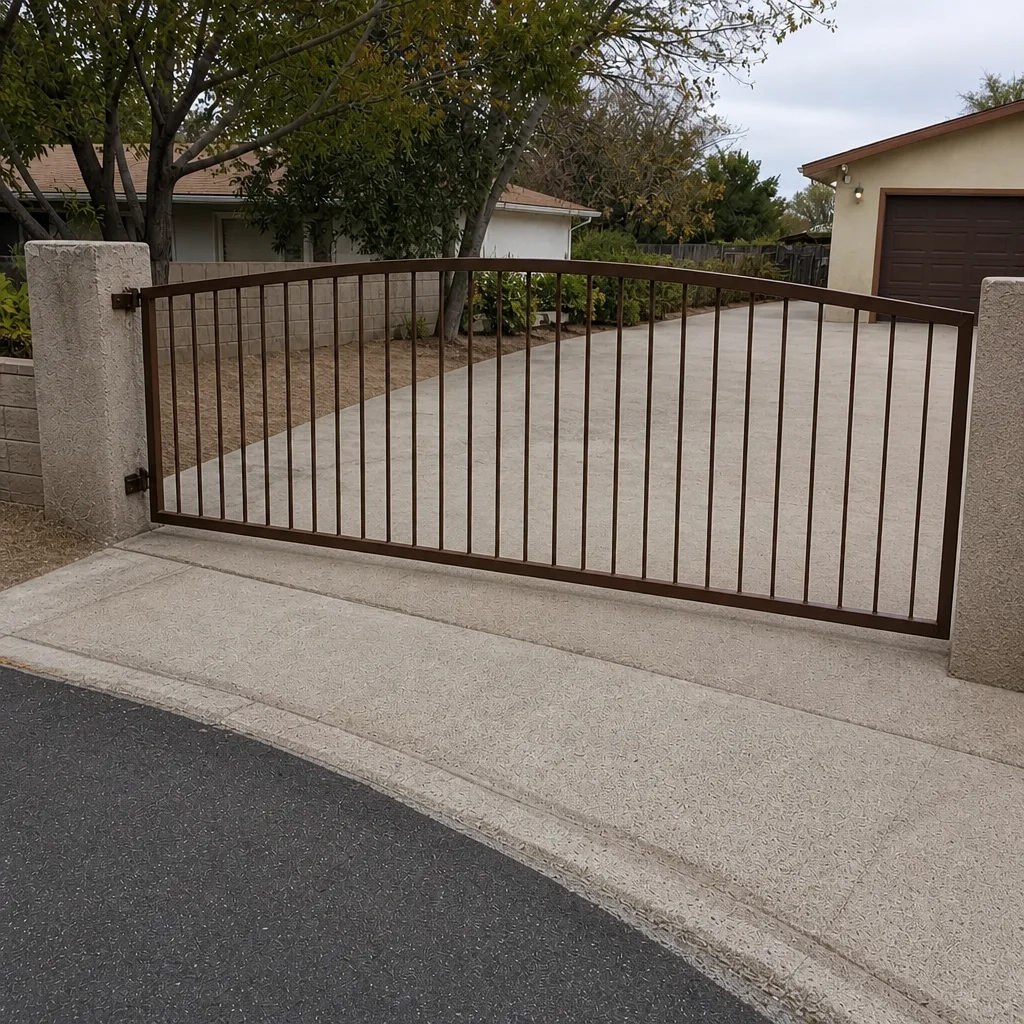 After
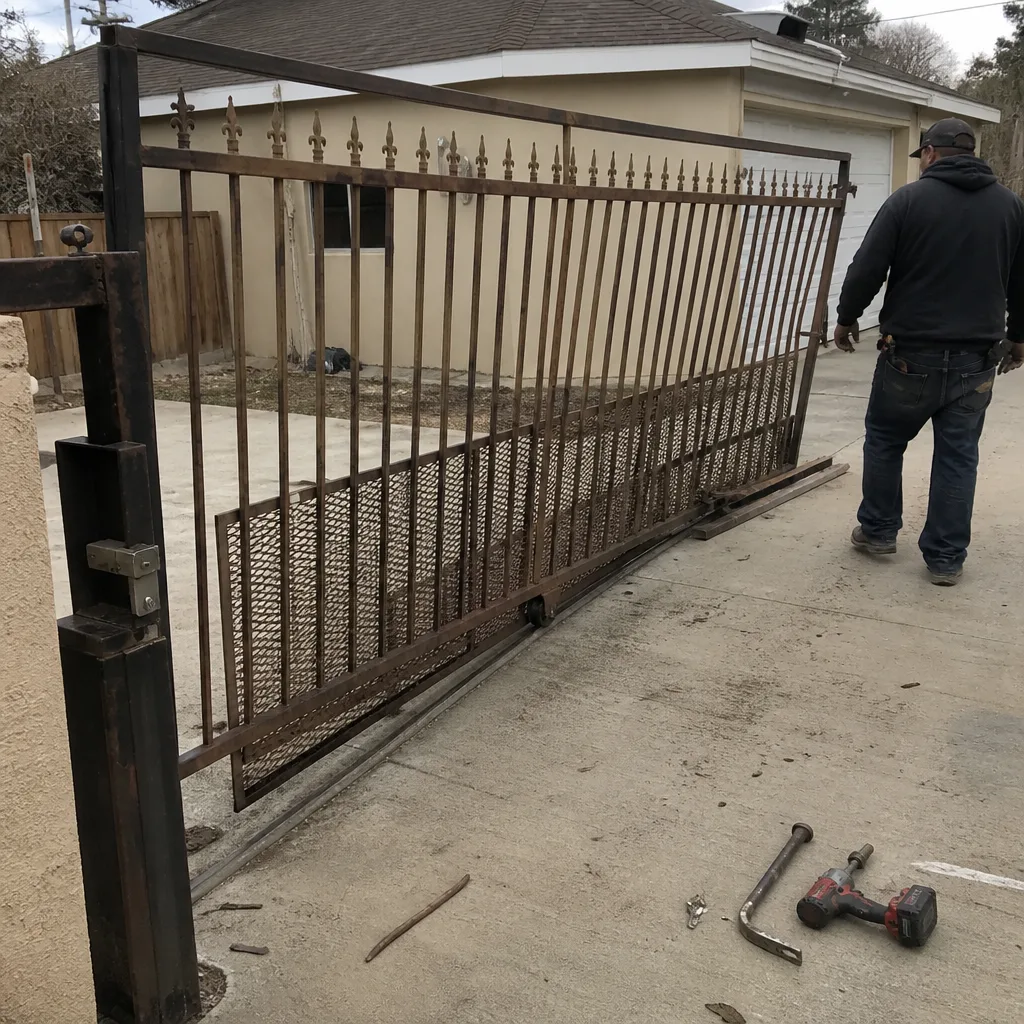 Before
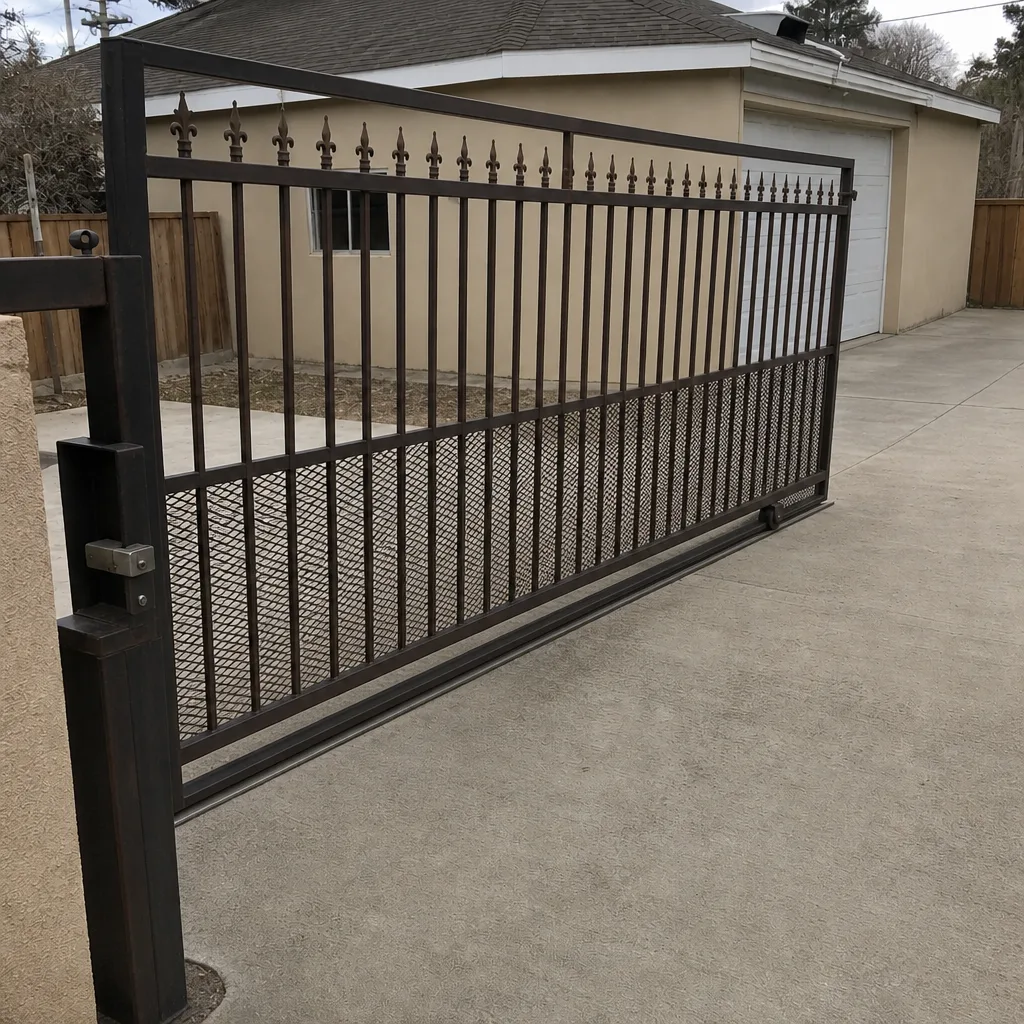 After
When to Call a Professional
Call a professional when the gate stops mid-cycle on a hot afternoon and works again after dark – that’s a thermal problem, and guessing at it wastes money. Call when the gate reverses unexpectedly, because that’s a safety issue that needs testing and, usually, adjustment. Call when the motor housing has visible dust inside, when the gearbox makes grinding noises on every cycle, when the manual release won’t engage, and whenever you’re considering solar so you get a real sizing recommendation instead of a marketing pitch. We handle all of it in Paradise, and the upfront price is agreed before we start work. Gatewood Fence & Gate Paradise offers free estimates in Paradise – call (888) 292-7536.
Frequently Asked Questions
Choose a motor rated to 140°F ambient or better, with a minimum IP55 dust seal. FAAC and BFT enclosed operators are the safest bets for west-facing, full-sun gates in Paradise. A 105°F-rated unit will work for a season or two in this valley and then start tripping its heat cutout. Call (888) 292-7536 for a free second opinion on any written estimate you’ve received.
Multiply your gate’s weight in pounds by its width in feet to get a sizing score, then compare that score to the motor’s stated capacity with at least a 30% margin. A 300-pound gate 14 feet wide scores 4,200 and needs a heavier motor than a 400-pound gate 8 feet wide (3,200). We’re glad to run the numbers with you – call (888) 292-7536 for an exact quote and the right model sized for your gate.
Solar is worth it when your gate post is far from a 110V source, when trenching would tear up finished landscaping, or when the property is rural. It’s not worth it when you have a clean 50-foot trenchable run to an existing outlet. Ask for the hardwired and solar options priced side by side – call (888) 292-7536 and we’ll walk the numbers with you.
Twice a year in full sun, once a year if the gate post is shaded. Spring service clears dust season; fall service preps for the temperature swing that fails marginal motors in October. Expect seal checks, gear lubricant inspection, safety reversing test, and hinge and post inspection at each visit – estimates for service and repair are free, so call (888) 292-7536 to schedule.
That’s almost always a heat-related failure – the thermal cutout tripping on a motor that’s being pushed past its ambient rating, or a capacitor failing under sustained heat. It won’t cure itself and it usually gets worse each summer. Get it diagnosed before it fails permanently – call (888) 292-7536 for a free estimate.
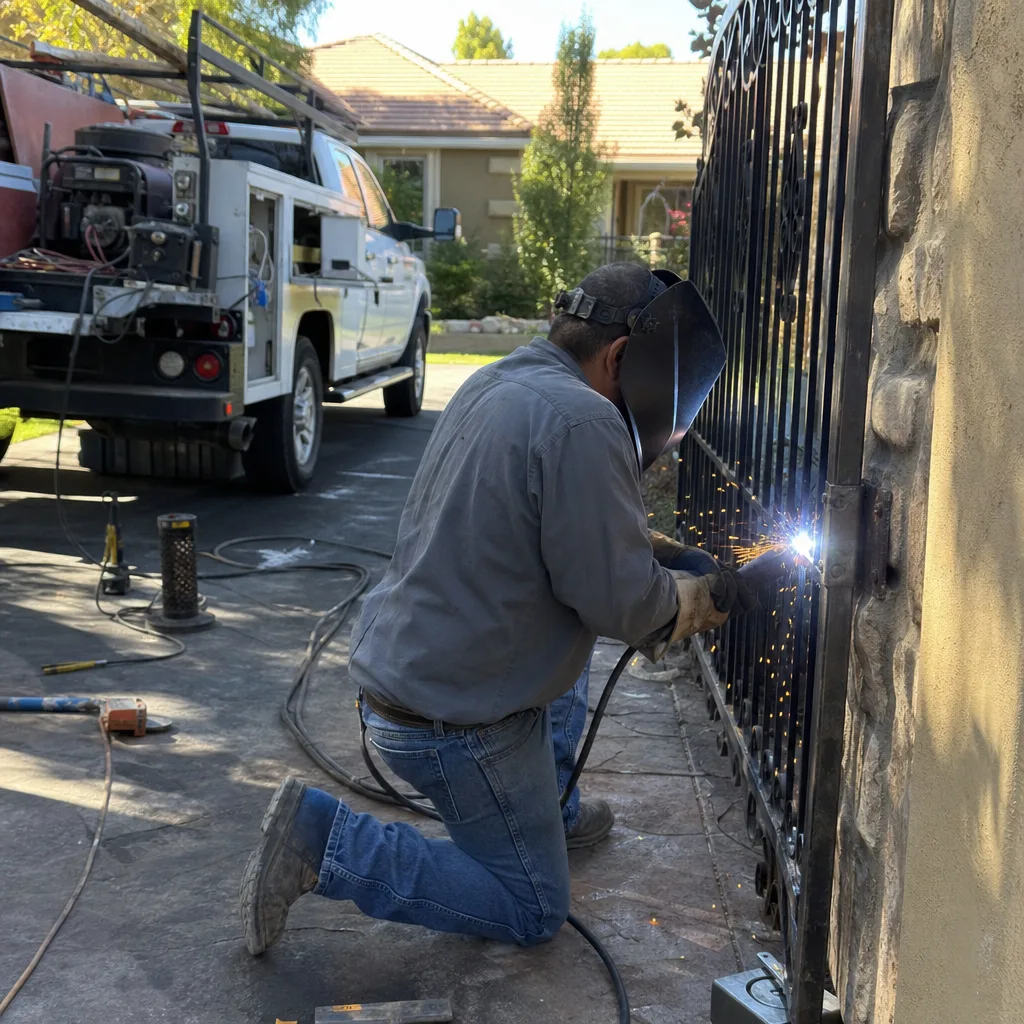
Usually, yes. We repair what other companies want to replace – seals, capacitors, boards, and gear sets are all serviceable, and we weld and repair on-site so the gate stays in your driveway. The front door – whether repair makes sense – starts with a diagnosis. Call (888) 292-7536 for a free estimate and an honest answer.
The Bottom Line
Choosing a gate motor in Paradise comes down to four things: an ambient rating of 140°F or better, IP55 dust sealing that you actually inspect every year, a motor type that fits your terrain and weight (swing arm for slopes, underground for sightlines, linear for tight posts), and honest sizing using the weight-times-width formula with a 30% margin. Add a power plan that treats solar as a real solution, not a shortcut. Do those four things and you’ll get years out of a motor that would fail in eighteen months if it were chosen for a milder climate. The 90-Day Done Right Promise is stamped in writing on every job we do, and the price is always agreed before we start.
Gatewood Fence & Gate is proud to have served Paradise and the surrounding communities for over 29 years, owner-operated the whole way – our technicians have up to 25 years of experience, and background-checked technicians show up on every job. Our standing offers are simple: $40 off any repair over $200, no trip charge inside the county, a free second opinion on any written estimate, and a permanent 10% discount for seniors and veterans. A live person answers our phone 24 hours a day, 7 days a week – no voicemail, no dispatching center three states away. Call (888) 292-7536 for a free estimate in Paradise, and we’ll come measure your gate, check your existing motor, and tell you straight what it needs.
Written by the team at Gatewood Fence & Gate Paradise.