

Last updated November 18, 2026
 Wrought iron
 Wood & steel frame
 Farm & ranch
 Sliding driveway gates
 LiftMaster operators
Free on-site gate assessment - hinges, posts, and your LiftMaster or Nice gate operator checked before anything is quoted
The assessment is free and the quote is the invoice.
Get your free estimateGate Installation Troubleshooting: Common Problems and How to Fix Them
We get more calls about gates that are less than a year old than about gates that are twenty. That surprises people. It shouldn’t. When we pull up to a new gate that won’t latch, drags on the ground, or reverses on its own, the gate itself is usually fine. The post is plumb-off by half an inch, the operator is bolted to a fence post that flexes, or the limit switches were set by someone guessing at them. New gate, bad installation, predictable result. This guide is about telling the difference between a product failure and an install failure, so you don’t pay to replace hardware that just needs to be hung right in the first place. We see this in Paradise constantly.
Quick Answer
Most problems with a newly installed gate trace back to the installation, not the gate: an out-of-plumb post, an operator mounted on a surface that moves, misadjusted limit switches, or clearances too tight for summer heat expansion. Fix the setup, and the hardware usually works fine. Replace the hardware first, and you’ll be back where you started.
Styles & brands we work with
- Wrought iron
- Wood & steel frame
- Farm & ranch
- Sliding driveway gates
- LiftMaster operators
Table of Contents
- How far off-plumb is too far on a gate post?
- Why the operator mounting surface matters more than the operator
- Limit switches and travel adjustment, explained without jargon
- Why your gate jams in summer but worked all winter
- How to diagnose a new gate problem yourself in ten minutes
- How to document installation defects if you need to hold someone accountable
- Brand differences worth knowing: Mighty Mule, LiftMaster, FAAC, BFT
- Common mistakes to avoid
- When to call a professional
- Frequently asked questions
How far off-plumb is too far on a gate post?
A gate post needs to be within about 1/8 inch of plumb over its full height for a swing gate to work smoothly for the life of the hardware. Past 1/4 inch, you start seeing symptoms: the gate drifts open or closed on its own, the latch drags, the hinges wear on one side. Past 1/2 inch, the gate is fighting the operator on every cycle, and something has to give.
Here’s what makes it sneaky. A post that’s off-plumb doesn’t fail on day one. It fails around month eight, when the hinge has worn unevenly and the gate has settled a little further. By then the installer is long gone and the homeowner assumes the gate is defective.
How to check it yourself with a $4 level
Buy a small magnetic torpedo level at any hardware store. It’s the cheapest diagnostic tool you’ll own as a gate owner.
- Hold the level against the hinge post on the side the gate swings toward, in the vertical position. Watch the bubble.
- Check the same face on the latch post. The bubbles should agree with each other.
- Check both posts on the perpendicular face too. A post can be plumb one way and leaning the other.
- If the bubble is more than a hair off-center on either post, that’s your problem. Take a photo with the level visible in the frame.
We’ve walked up to gates in Paradise where the post was nearly an inch out over six feet. The homeowner had already replaced the opener once. That’s the trap: a bad post kills operators, and a new operator on a bad post dies the same way.
Why the operator mounting surface matters more than the operator
A swing gate operator on a residential driveway cycles somewhere between 8 and 15 times a day. Over ten years, that’s 30,000 to 55,000 cycles. Every one of those cycles pushes against the mounting surface. If that surface flexes even a quarter inch, the operator’s gearbox absorbs the flex as force it wasn’t designed for. The gears wear, the control board starts getting false signals, and eventually it quits.
We see this most on gates where the operator was bolted to a wood fence post, a thin decorative column, or a masonry block that wasn’t cored and filled. On a LiftMaster or FAAC swing operator, the manufacturer’s spec calls for a rigid mounting surface anchored in concrete or structural steel. That spec gets skipped when a crew is trying to finish before lunch.
Signs your operator is mounted on a surface that flexes
- You can feel any movement in the post when you push the operator arm by hand
- The operator housing visibly rocks or shudders when the gate is moving
- The mounting bolts are loose every few months, no matter how often they’re tightened
- The gate “hunts” – it opens, pauses, and re-opens partway before settling
- The control board throws obstruction errors on a gate with a clean track
If any of these sound familiar, the operator itself may still be perfectly fine. The bolt pattern on a stuck-on-a-flexing-post installation is the tell. Looking for a gate repair in Paradise, we start by checking what the operator is bolted to before we open the housing.
Limit switches and travel adjustment, explained without jargon
Limit switches are the two sensors inside the operator that tell it “you’ve reached fully open” and “you’ve reached fully closed.” They’re set at installation. If they’re set by someone guessing at the exact spot, or set in the morning and never touched again, you get three very specific symptoms.
Symptom 1: The gate reverses before it’s actually closed
This means the closed limit is set a hair too early. The operator thinks it’s done before the gate has latched, so it stops and reverses. If the gate misses the latch by an inch, the operator will cycle repeatedly and eventually you’ll get an “open” state light when the gate is visually shut.
Symptom 2: The gate doesn’t close all the way
The reverse limit is set too tight. Instead of a smooth stop when it hits the closed position, the operator detects the load as an obstruction and reverses. This is common on FAAC and BFT operators where the sensitivity parameter is factory-set and never dialed in for the actual gate weight.
Symptom 3: False obstruction triggers on a clear track
This is the most frustrating one because it makes homeowners think the safety sensors are bad. Often they aren’t. If the limit switches are bumped out of position, the operator interprets the resulting current spike as a collision. It reverses. Nine times out of ten, adjusting the limits back to spec fixes it without touching the sensors.
How the adjustment actually works
On most residential swing operators there’s a cam or a magnetic switch inside the housing that trips when the gate reaches its travel point. The installer loosens a set screw, moves the cam until the operator just barely registers, and tightens it back down. On a liftmaster it’s often a slide adjustment on the arm; on a Mighty Mule it’s under a small access cover. The process takes about ten minutes once you know which part to touch. The trick is knowing, and that’s where a lot of new installs go wrong.
Why your gate jams in summer but worked all winter
This is the single most common call we get in Paradise from June through September. A gate that ran like a dream in January suddenly sticks in July. Homeowners assume something broke. Almost always it’s a clearance problem that was baked in at installation, and the heat finally found it.
Steel and aluminum expand when heated. A hundred-degree stretch on a twenty-foot gate can add close to a quarter inch of length. Concrete and wood posts move too, in different directions and at different rates. When the installer set tight clearances in cool weather, those clearances vanished in August. On a rural Paradise property where the gate runs across a wide driveway, a quarter inch matters.
Where to look first
- Under the bottom of the gate – is it dragging a scuff mark on the driveway yet?
- At the latch – is the gap between the latch post and the strike noticeably tighter than it was in winter?
- At the hinge side – is the gate visually pressed into the hinge post?
- At the operator arm – does the gate run freely by hand with the operator disengaged?
If freeing the gate by hand makes everything work, the operator is fine. You’ve got a clearance problem, and the fix is adjusting the gate position, not replacing the hardware. We’ve had Paradise homeowners ready to spend four figures on a new opener when the fix was shimming the hinge plates and re-hanging the gate properly.
How to diagnose a new gate problem yourself in ten minutes
Before you call anyone, run this sequence. It gives you real information to share, and it saves you a diagnostic fee in a lot of cases. Our gate installation in Paradise team walks people through this on the phone all the time.
- Disengage the operator. Every residential operator has a manual release. Find it, pull it, and swing the gate by hand. If it moves freely with two fingers, your problem is in the operator or its setup. If it drags or binds, the problem is in the gate, the hinges, or the posts.
- Check the post with a level. Both posts, both faces. Note anything more than a hair off.
- Weigh the gate. Loop a cheap luggage scale through the latch handle and pull to open. A residential swing gate in normal condition should move under 15-20 pounds of pull. If it takes 40, the hinges or alignment are adding load.
- Test the limit switches. Watch the operator’s indicator light while the gate cycles. If it flashes a fault code at the moment the gate reverses, the limits are the first suspect.
- Feel the operator housing. Push the operator body gently by hand. Any movement at all means the mounting surface is flexing, and the operator is wearing itself out on every cycle.
- Walk the sensor path. Clear any leaves, spider webs, or grass clippings from between the photo-eye sensors. Infrared stops at cobwebs, and we’ve seen a summer’s worth of spider activity in Paradise shut a perfectly good gate down.
Write down what you found. It’ll matter when you talk to whoever installed the gate.
How to document installation defects if you need to hold someone accountable
Fixing the gate is one problem. Getting the original installer to fix what they got wrong is another. If you’re going to make that call, document it properly the first time. A phone call without evidence usually gets a polite shrug.
What to photograph
- The level against the hinge post, with the bubble clearly visible
- The level against the latch post, same framing
- The operator mounting – full view including the surface it’s bolted to
- Any drag marks on the driveway, scuffs on hinges, or gaps that shouldn’t be there
- The manufacturer’s spec sticker on the operator, showing what surface it calls for
What to measure
- Post plumb, in inches over full height (e.g., “3/8 inch out over 72 inches”)
- Ground clearance under the gate when it’s fully closed
- Gap at the latch post in cool morning vs. hot afternoon
- The date, time, and outside temperature when each symptom happened
What to say
Use the manufacturer’s language, not yours. “The operator is mounted on a surface that flexes rather than the rigid mounting surface specified in the installation manual” lands harder than “the gate wobbles.” Attach your photos, attach your measurements, and ask for a specific fix by a specific date. If the installer was a national outfit, put it in writing and keep a copy.
Brand differences worth knowing: Mighty Mule, LiftMaster, FAAC, BFT
Not every operator fails in the same way, and knowing the brand helps you recognize the symptom faster. We service nine major brands, and four of them account for most of the calls we run in Paradise.
LiftMaster operators are built well and fail grace-fully. When one misbehaves, it’s usually the control board or a limit switch that got knocked. They respond to a factory reset better than most.
Mighty Mule is the most common DIY-installed brand in the country, and that’s exactly why we see so many installation problems on it. The unit is fine. The install almost always needs revisiting. The mounting plate and limit arm both need more attention than the box instructions give them.
FAAC hydraulic operators are rugged, but they’re sensitive to limit positioning. If the limits are off, you’ll get reversals that feel like hydraulic faults but aren’t.
BFT operators are usually solid on the mechanism and finicky on the electronics. False obstruction errors on a BFT almost always trace back to travel settings rather than the sensor path itself.
If you’re shopping for a new install and want the operator to match the gate and the driveway, our gate motor & opener in Paradise page covers the fit-and-match conversation. The point here is simpler: brand matters less than install quality. We’ve seen $2,000 operators fail in a year on a bad post and $400 operators run for twelve years on a good one. If you’re local to the area, our home base at Gatewood Fence & Gate Paradise is a good starting point for anything gate-related.
Common Mistakes to Avoid
- Replacing the operator before checking the post. A new operator on an out-of-plumb post dies the same way the old one did. Check the post first, always.
- Setting limits in the cool of the morning and never revisiting them. In Paradise’s heat, the gate moves throughout the year. Limits set in January at 55 degrees need to be re-checked once the summer hits 105.
- Assuming tight clearances are “cleaner.” An installer who shaves the gap to make the gate look tight has left you with a gate that jams every summer. A quarter inch of clearance is engineering, not sloppiness.
- Bolting the operator to a wood fence post. Wood moves, rots, and flexes. Every major manufacturer calls for a concrete or structural steel mounting. If your operator is on a fence post, it’s on borrowed time.
- Paying cash without a written description of the work. Even if you trust the guy, get the scope of work in writing, including the post material, the anchor spec, and the brand and model of the operator.
- Ignoring the sensor path in summer. Spider webs, grass clippings, and hornet nests in Paradise shut down more gates than bad electronics ever do. Walk the path monthly from June through September.
- Letting the installer leave without showing you the manual release and the test cycle. A five-minute walkthrough avoids most of the calls we get.
When to Call a Professional
Some things you can troubleshoot yourself with a torpedo level and ten minutes. Others need a trained set of hands. Call a professional if any of these are true: the post is more than 1/4 inch off-plumb and needs to be reset in concrete; the operator needs to be remounted on a different surface; the limit switches are inside a sealed housing you don’t feel comfortable opening; the gate has a high-tension counterbalance spring anywhere in its mechanism; or the installer was a national outfit and you’re trying to document the failure before the warranty expires. Swing and slide gate operators carry real electrical current, and any installation issue that involves the power run, battery backup, or access control wiring is not a homeowner job. Our gate repair in Paradise team sees these every week, and we’d rather fix the setup than sell you a new gate you don’t need.
Frequently Asked Questions
No. A properly installed residential gate should run for years between adjustments. Failure at eight to twelve months almost always points to an installation defect that took that long to show up: post settling, hinge wear from an off-plumb setup, or limit switches that were set too tight and slowly drifted. Call us at (888) 292-7536 and we’ll come look at what the installation got wrong before you approve any hardware replacement.
Most installation-related repairs in Paradise run between $180 and $450, depending on whether we’re re-plumbing a post, remounting an operator, or just adjusting limits and clearances. A full post reset in concrete runs higher. We quote and agree on the price before any work starts, every time. Call (888) 292-7536 for a free estimate.
Usually yes. We run emergency calls seven days a week with live-person phone coverage, and same-day service is common for gates that are stuck open, stuck closed, or unsafe. Call (888) 292-7536 and we’ll give you a real arrival window, not a four-hour block.
Document everything before you touch the gate: photos with a level against both posts, measurements of plumb, ground clearance, and latch gaps, plus the operator model and manual. Then call us for a free second opinion on their written estimate – even if you don’t hire us, having an independent assessment gives you leverage. If you do want us to fix it, our 90-Day Done Right Promise is on paper for every job.
Heat expansion. Metal gates grow by up to a quarter inch in Paradise’s summer heat, and posts move at a different rate than the gate itself. If the installer set the clearances tight in cool weather, summer eats what was left. It’s an installation problem, not a mechanical one, and it’s fixable with a clearance adjustment or a re-hang.
We’re certified to service nine major gate brands: LiftMaster, FAAC, BFT, Linear, Viking, Ghost Controls, DoorKing, Elite, and Mighty Mule. Mighty Mule and LiftMaster were both on this list for a reason – they’re the two brands we see most in Paradise residential installs.
The Bottom Line
When a gate fails within its first year or two, the gate itself is almost never the problem. The post is off-plumb, the operator is on a surface that flexes, the limit switches weren’t dialed in, or the clearances were set for a cool day and never touched again. Before you spend money on new hardware, spend ten minutes on a torpedo level and a walk-around. If the setup is right, the hardware works. If the setup is wrong, no amount of new hardware fixes it. That’s what we look at first on every gate installation in Paradise call we run.
If you’re in Paradise and your new gate is misbehaving, call (888) 292-7536 for a free estimate. Someone answers that line around the clock, which means you’re talking to a person, not a recording. We’ll come look, tell you straight what we see, and put the price in writing before any wrench turns. If the gate needs repair, we repair it – and if it needs a repair you can check on in three months, the 90-Day Done Right Promise is stamped on the invoice in plain writing.
Written by the team at Gatewood Fence & Gate Paradise.
See the difference
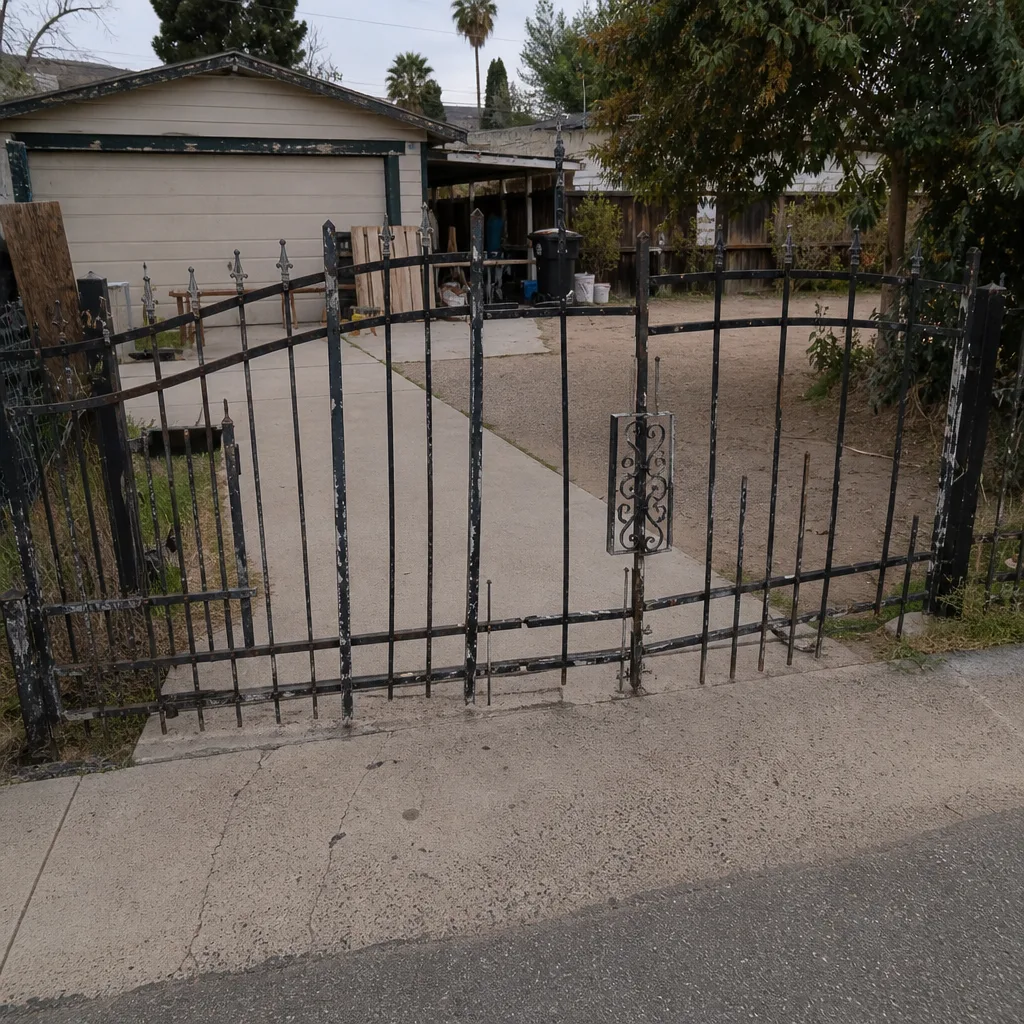 Before
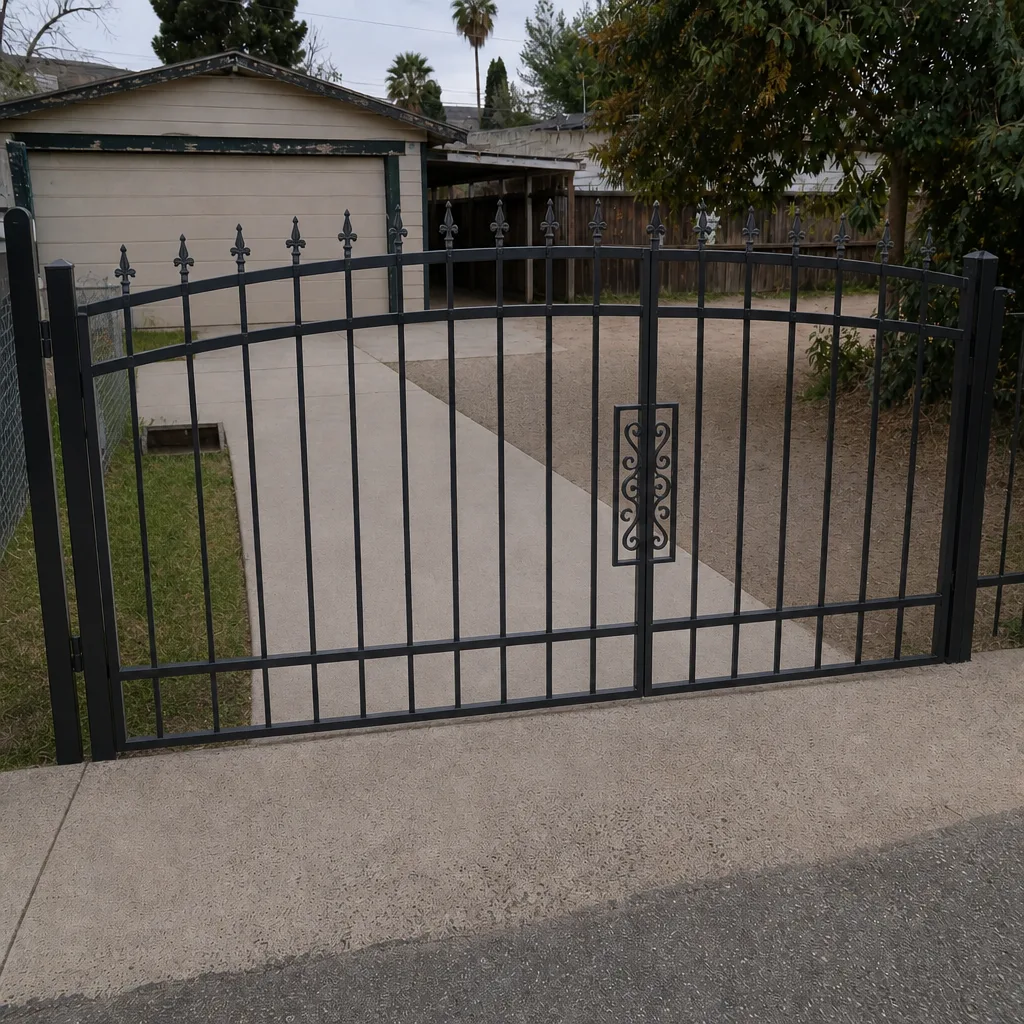 After
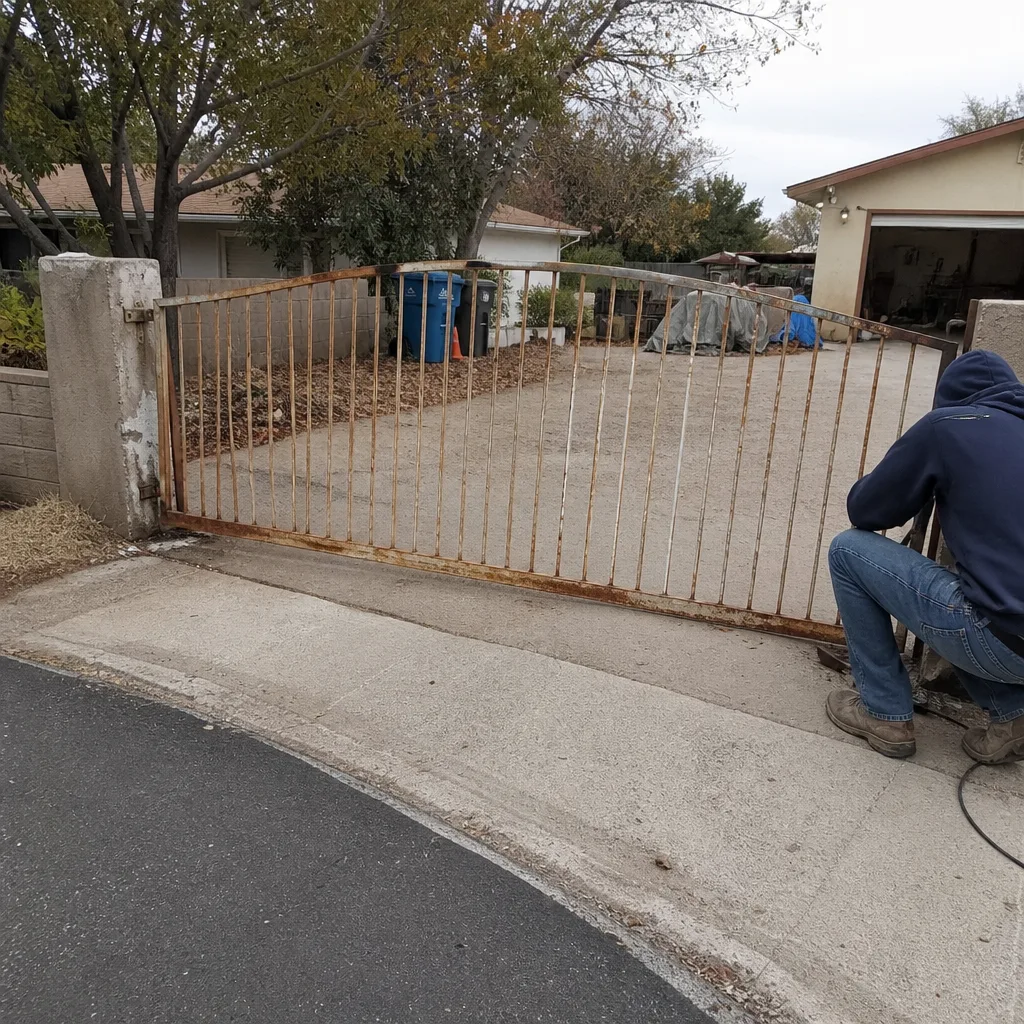 Before
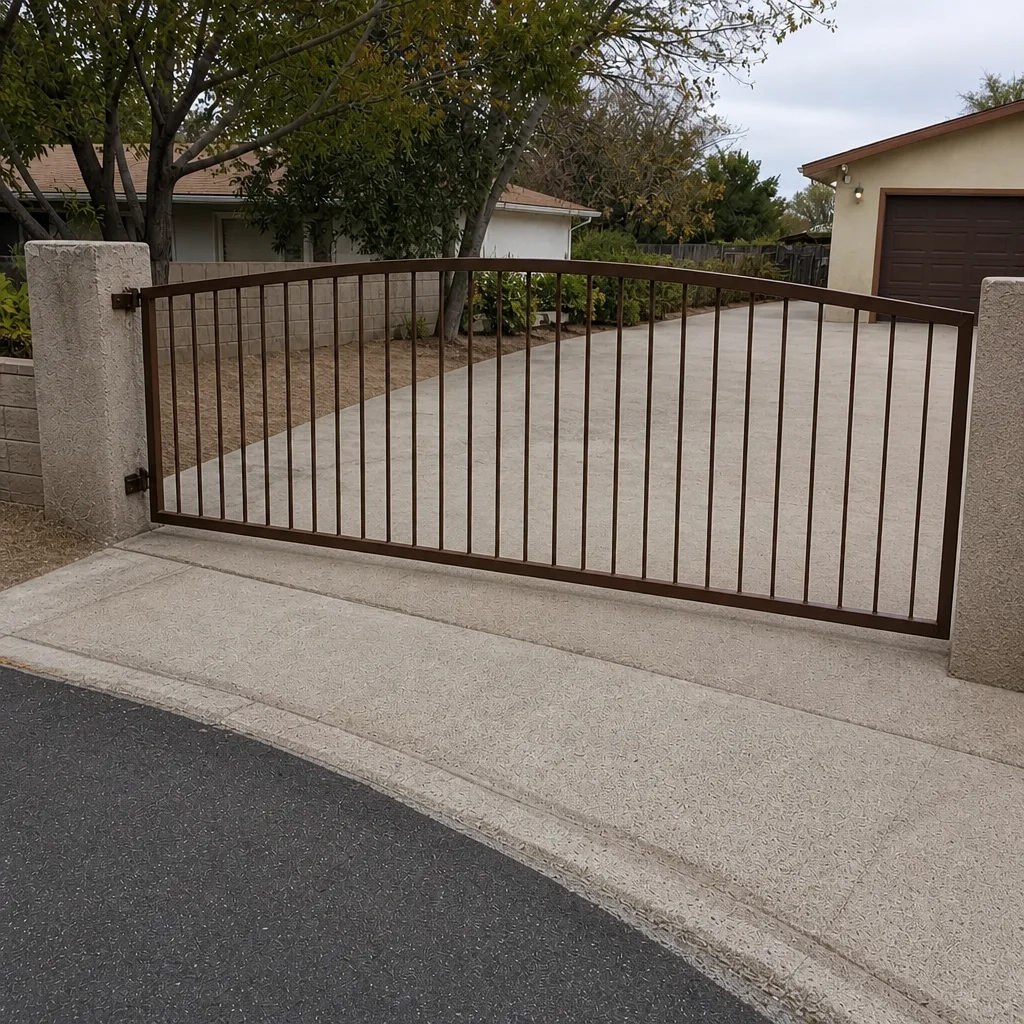 After
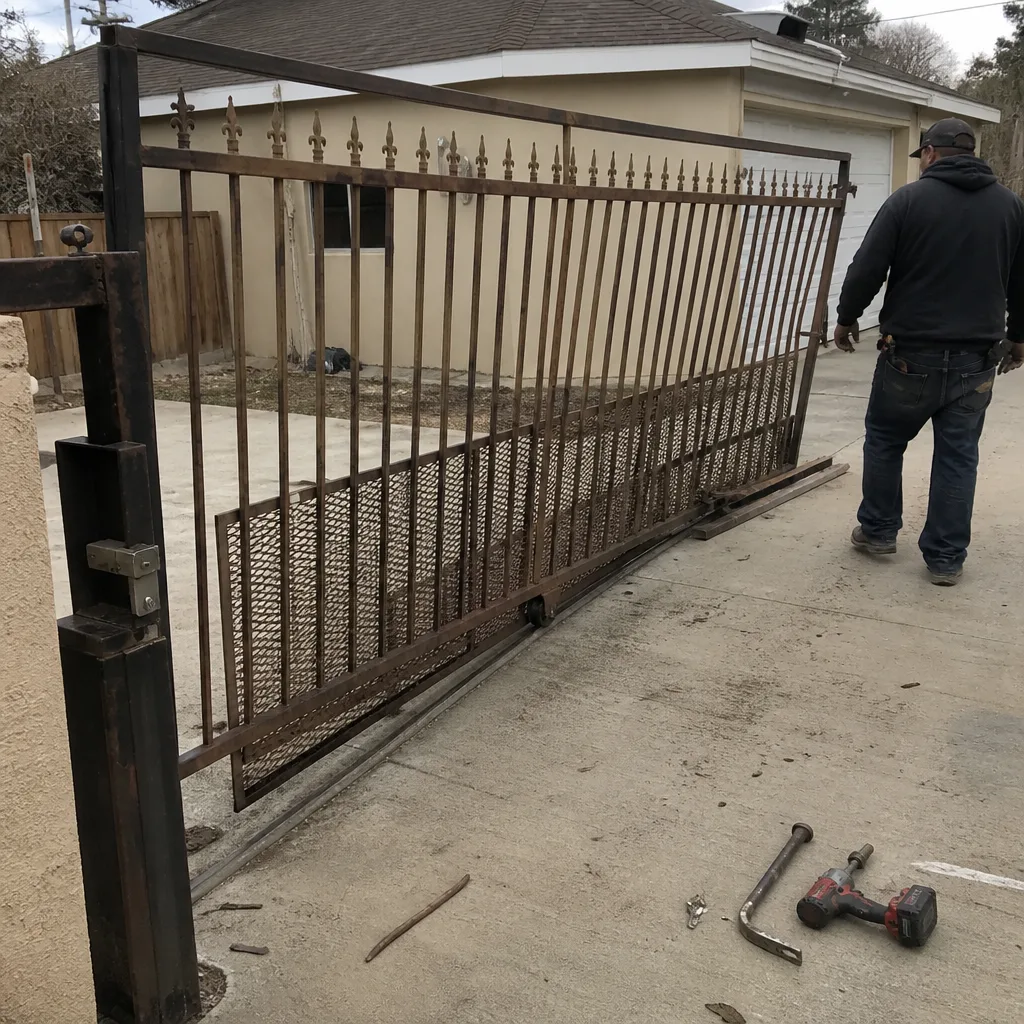 Before
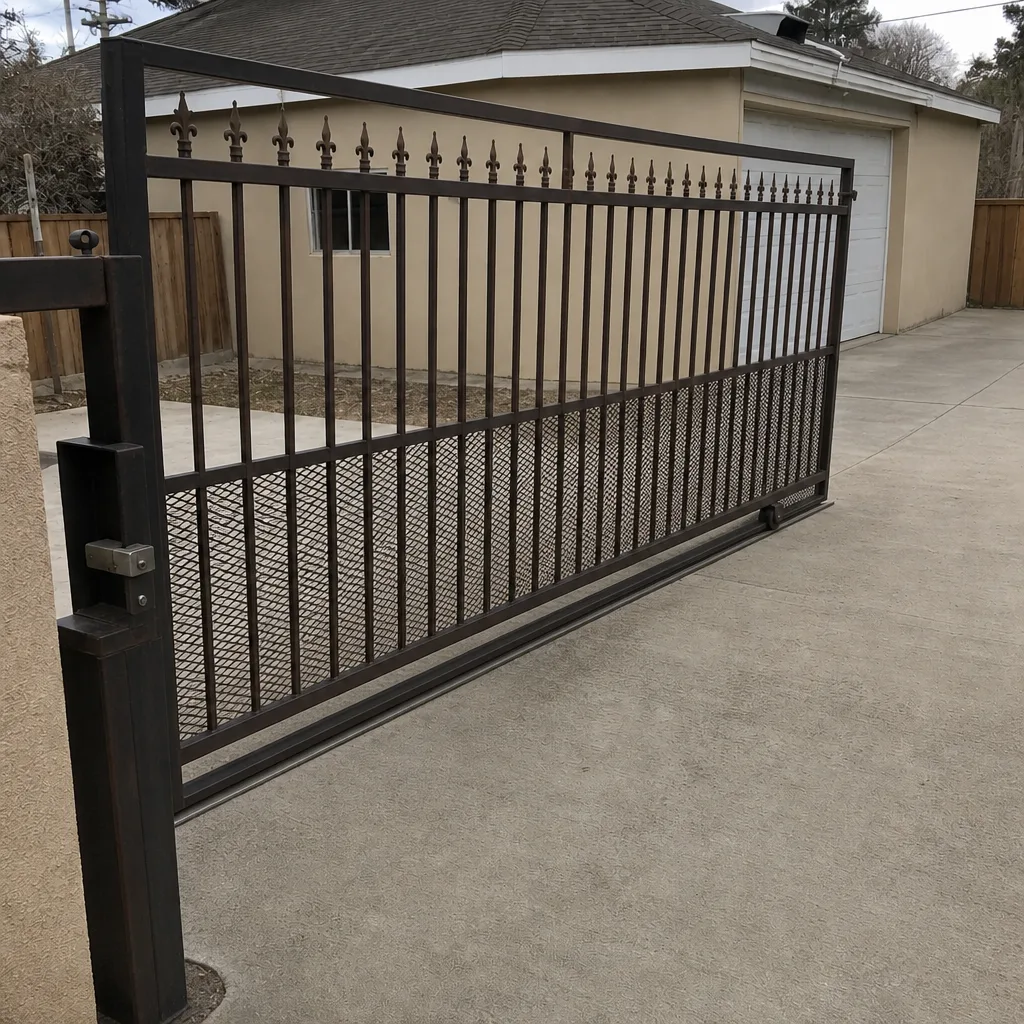 After