
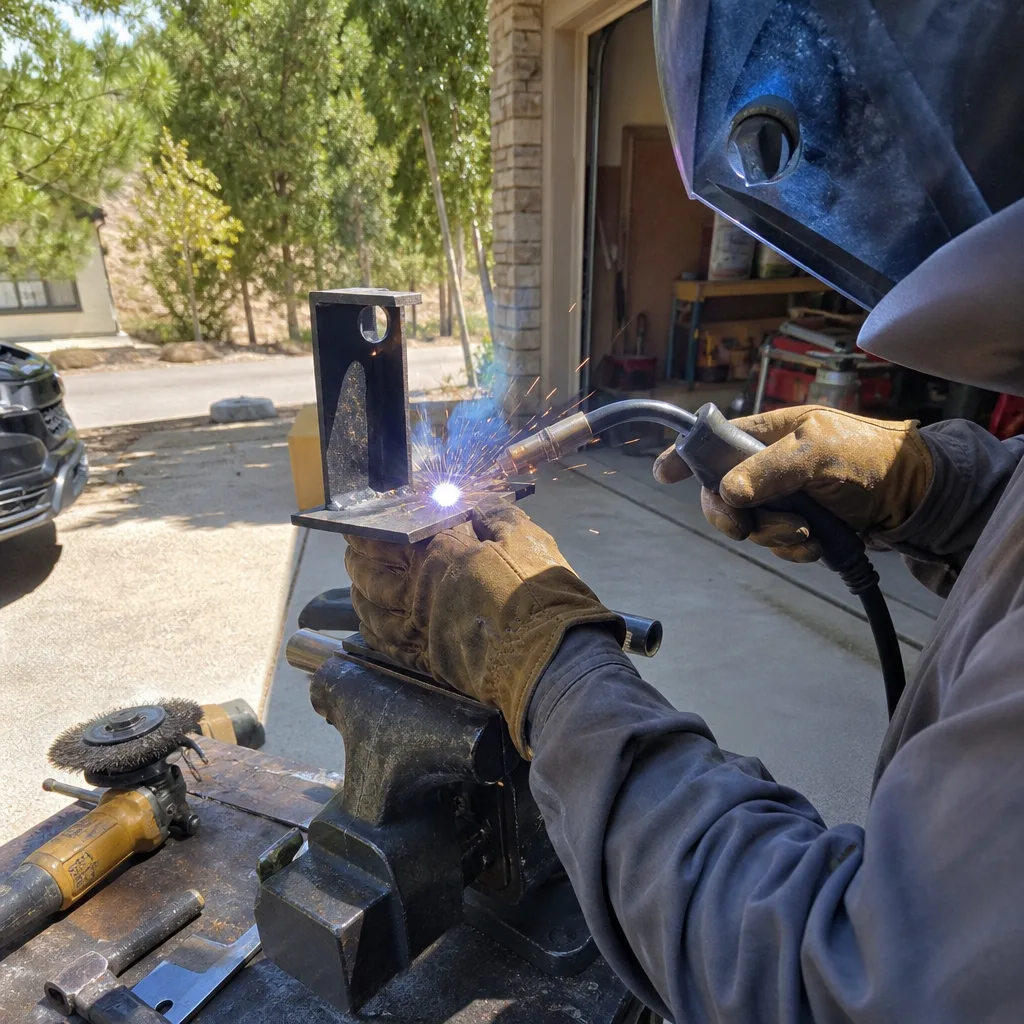
Last updated November 18, 2026
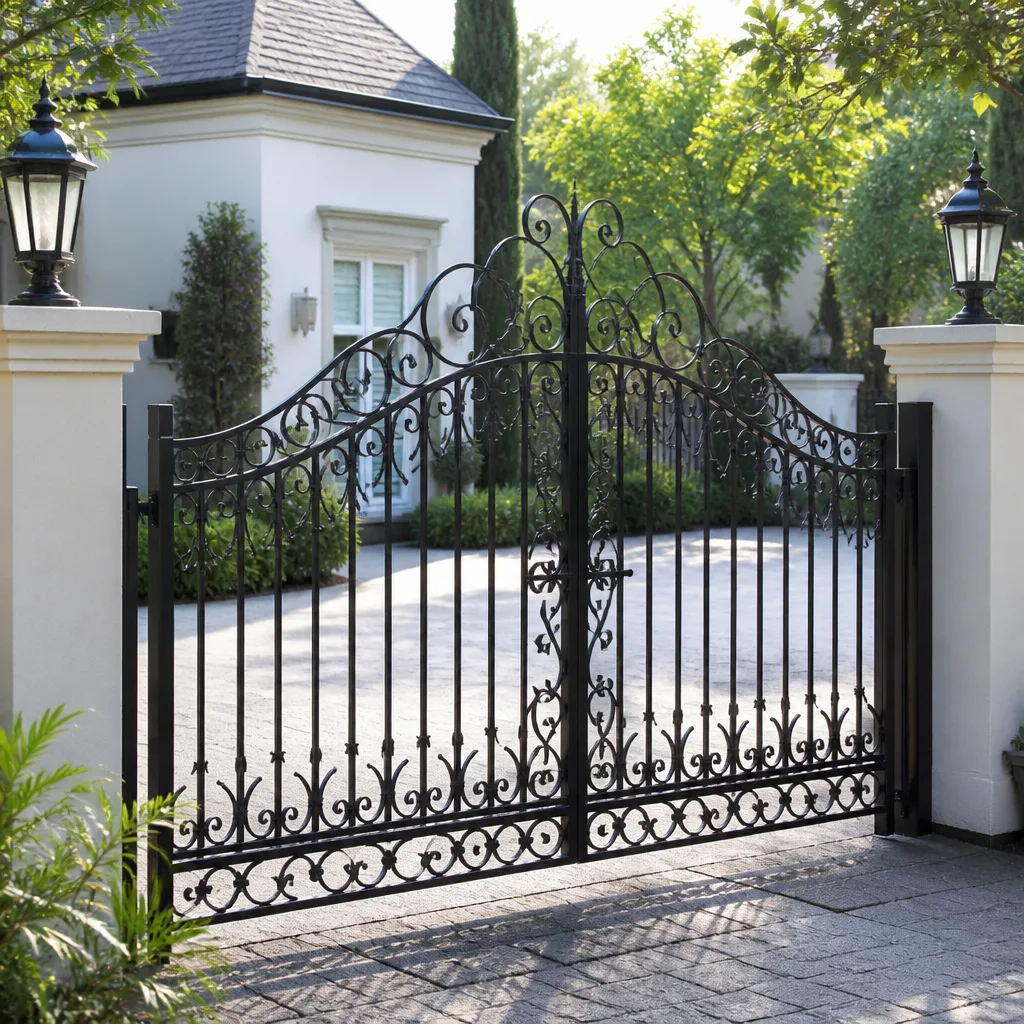 Wrought iron
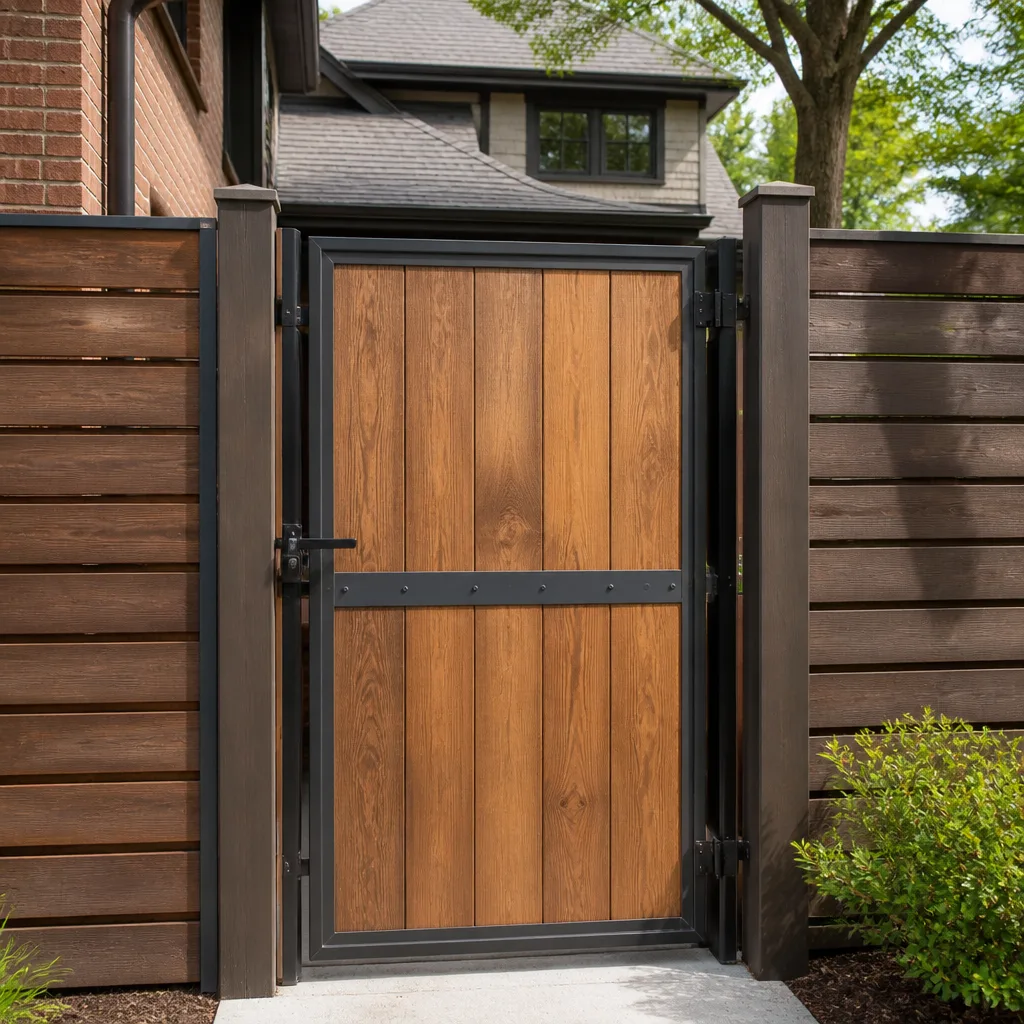 Wood & steel frame
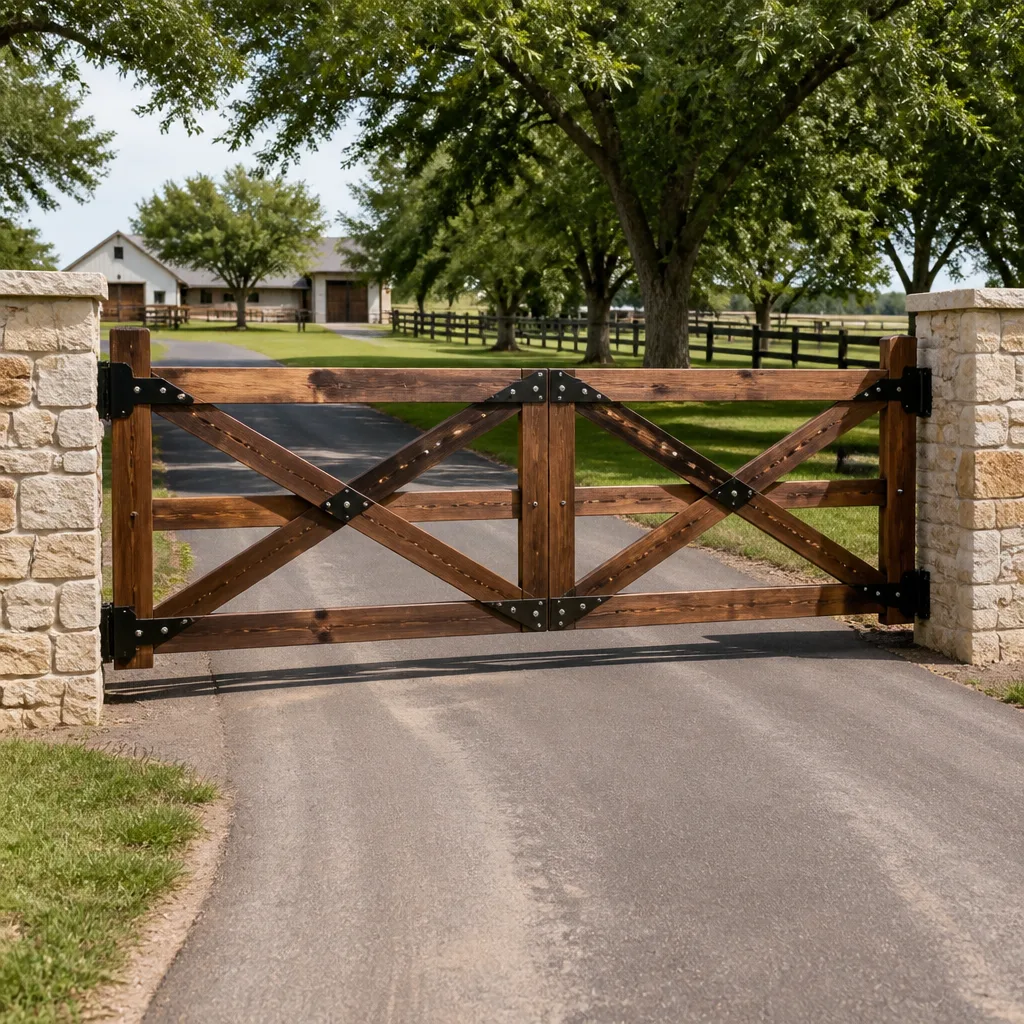 Farm & ranch
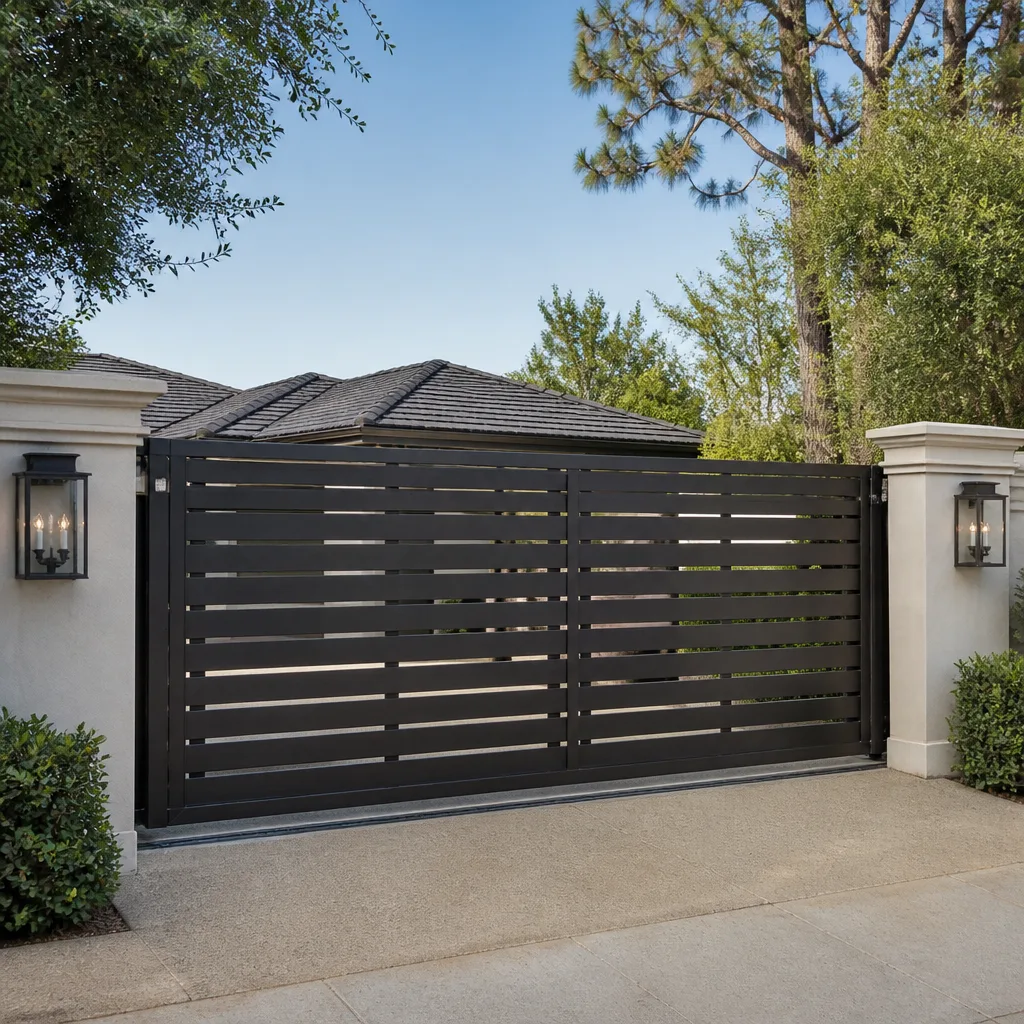 Sliding driveway gates
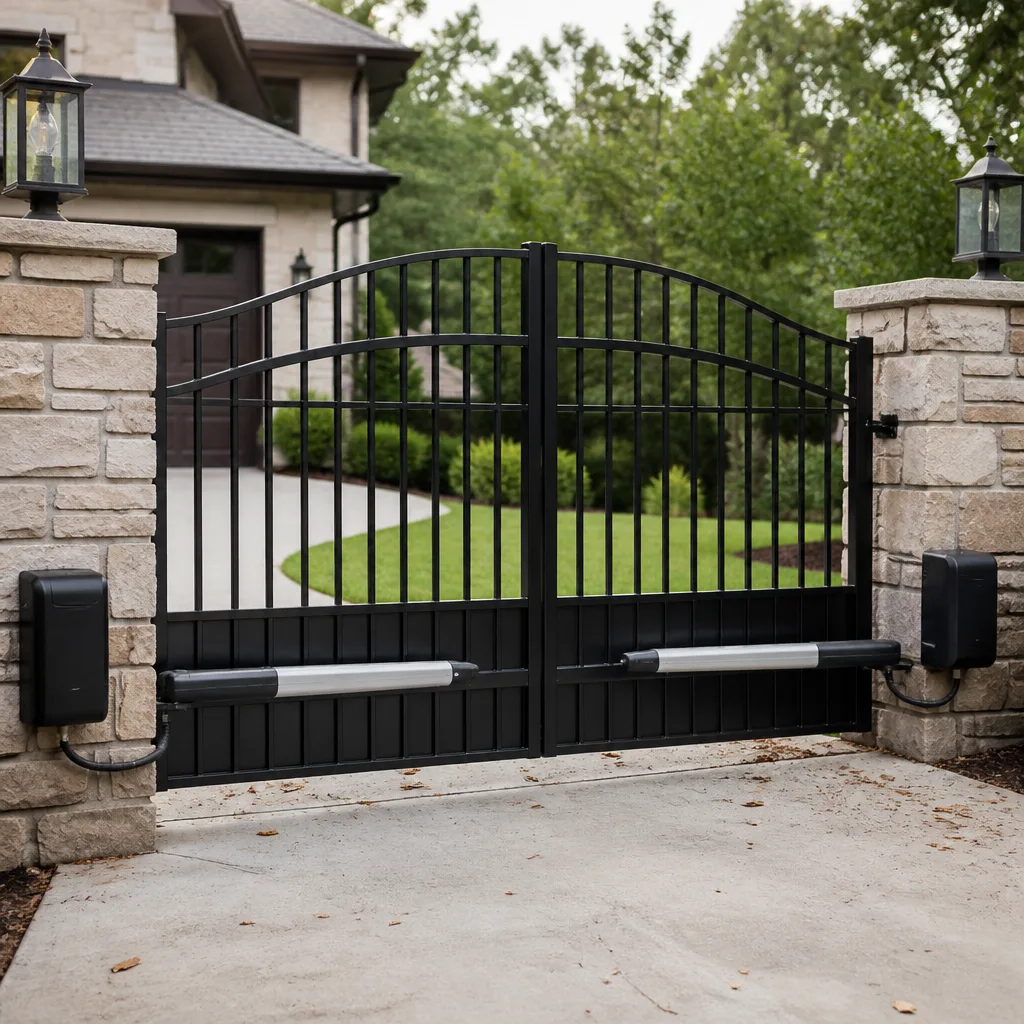 LiftMaster operators
Free on-site gate assessment - hinges, posts, and your LiftMaster or Nice gate operator checked before anything is quoted
The assessment is free and the quote is the invoice.
Get your free estimateThe Complete Gate Installation Guide for Paradise Homeowners
A gate installed correctly for Minnesota will start having problems in Paradise within two summers. The post depth, the footer material, the hardware grade, the operator specs – almost every variable shifts when your gate will spend months sitting in temperatures above 100°F on soil that swells and settles with the seasons. Most installation guides are written for somewhere else, so they miss the things that actually break gates around here. This guide covers the variables that matter in Paradise: Clark County permitting, footer specs for caliche and decomposed granite, operator sizing for high-cycle HOA communities, HOA submission paperwork, and why the cheapest quote in a desert climate usually costs more by year two.
Quick Answer
Gate installation in Paradise starts with the ground, not the gate. Post footings here need to go below the active soil layer and use enough concrete volume to resist thermal cycling and expansive clay, and any gate over a certain height, any automated gate, and most driveway gates need a Clark County permit and inspection before the operator is energized. Choosing an operator with a duty cycle rated for your actual daily cycles – not the cheapest unit on the shelf – and gathering HOA documentation before you buy are the two decisions that save the most money and headaches.
Styles & brands we work with
- Wrought iron
- Wood & steel frame
- Farm & ranch
- Sliding driveway gates
- LiftMaster operators
Table of Contents
- Clark County and Paradise permitting: what needs a permit and what happens if you skip it
- Post footings for Paradise soil: caliche, decomposed granite, and thermal cycling
- Choosing an operator for desert heat and high-cycle HOA communities
- HOA submission requirements for Paradise communities
- Why the cheapest installation quote usually isn’t
- The installation process, step by step
- Gate brands we service and why the brand matters
- Common mistakes to avoid
Clark County and Paradise Permitting: What Needs a Permit and What Happens If You Skip It
This is where a lot of first-time installers get surprised, and where a lot of homeowners get stuck holding a gate they can’t legally power up.
In unincorporated Clark County, which covers most of Paradise, a fence or gate that is six feet tall or shorter generally does not require a building permit. Go over six feet, or add an automatic operator to any gate on a residential property, and the picture changes. Automatic gates, gates that serve as a pool barrier, and gates on corner lots or near sight triangles at driveways often trigger review. Pool barrier gates have their own set of requirements under the pool safety code, and those rules are strict because they’re about drowning prevention.
What the inspection process looks like in practice:
- Plan review. You or your installer submits drawings showing post spacing, footing depth, gate height, and operator make and model. Turnaround varies with the county’s workload.
- Footing inspection. An inspector looks at the excavated footing and rebar before concrete is poured. This is the step people skip when they “just dig a hole and pour.”
- Final inspection. After the gate is hung and the operator is installed, the inspector confirms the gate operates correctly, the safety devices are in place, and the installation matches the approved plans.
When you skip the permit, the consequences aren’t theoretical. A future home sale can stall when a buyer’s inspector flags an unpermitted automatic gate. An HOA can require removal. And if the gate later fails and causes damage or injury, the lack of a permit becomes a liability question nobody wants to answer. Call the county before you dig. It’s a phone call, and it’s free.
Post Footings for Paradise Soil: Caliche, Decomposed Granite, and Thermal Cycling
A gate sags in the hinge post, not in the middle. That’s where we start looking whenever someone calls about a gate that won’t latch, drags on the ground, or has started to lean. And almost every time, the hinge post footing was undersized for the soil it went into.
Paradise soil is a mixed bag. You’ll hit caliche in some areas – a cemented layer that’s almost like soft rock and drains poorly. In other parts of town you’re in decomposed granite that shifts and settles. And in a lot of neighborhoods you’ll find expansive clay that swells hard during monsoon season and shrinks back in the dry months. That wet-dry cycling is what pushes an undersized footing out of plumb within a few years.
What actually holds up here:
- Depth below the active layer. Shallow footings that work in stable Midwestern soil will heave here. In our experience, footings need to reach below the zone that moves with seasonal moisture – typically around 30 to 36 inches for a residential gate post in this area, and deeper on heavier clay.
- Concrete volume, not just diameter. A 10-inch diameter hole at 36 inches deep gives you roughly two-thirds of a cubic yard of concrete per post. A driveway gate hinge post carrying serious weight often needs more.
- Rebar and a proper bell or flare at the bottom. Straight-sided footings pull up more readily than footings with a wider base. The rebar cage ties the post to the footing so the whole unit moves together.
- Drainage away from the post. Caliche holds water. If the grade slopes toward the gate, water sits against the concrete and accelerates the problem.
Cutting corners on the footing is the single most common reason a new gate starts sagging within two or three years. We’ve rebuilt plenty of gates that were fine – the posts just weren’t. If you’re ever comparing Gate Installation in Paradise quotes, ask each one what footing depth and concrete volume they plan to use. The answer tells you almost everything.
Choosing an Operator for Desert Heat and High-Cycle HOA Communities
If your gate opens twenty times a day, a light-duty operator will fail. If it opens eighty times a day – which happens in HOA communities where every resident uses the same entrance – a light-duty operator will fail fast. Sizing the operator wrong is the most expensive mistake in gate installation in Paradise, and it’s a mistake you don’t discover until July.
Duty cycle ratings describe how many cycles per hour an operator is built to handle, and how long it needs to rest between them. Ratings vary by brand and model. FAAC and BFT swing and slide operators, for example, are commonly spec’d for different duty classes than a Viking or Linear residential swing unit. In high-cycle applications – apartment complexes, gated HOA entries, actively used driveway gates – you’re often better off with a higher-duty operator and a smaller margin for error, or a slide gate with a heavier operator instead of a swing.
Heat matters too. Ambient temperatures above 100°F push a motor closer to its thermal limit on every cycle. A unit that’s rated at the edge of its duty cycle for a cooler climate will trip thermal shutoffs during a Paradise July. That’s not a broken operator – that’s an operator doing exactly what it was designed to do to protect itself. The fix is to size above your actual loads, not at them.
Three operator considerations that matter more here than in milder climates:
- Solar versus AC power. Solar operators from Ghost Controls and Mighty Mule are excellent in rural or remote locations, but battery performance drops in extreme heat. In town, AC power is usually the better bet.
- Enclosure and mounting. The operator housing and the control box both need shade or a properly rated enclosure. Direct sun on a control board accelerates failure.
- Safety edges and loops. Required for automatic gates and doubly so in high-traffic areas. Entrapment protection is not optional, and it must be tested at every service visit.
If you’re already wrestling with an operator that keeps quitting on you, our Gate Motor & Opener in Paradise guide walks through what’s happening and what your options are.
HOA Submission Requirements for Paradise Communities
Most Paradise neighborhoods are governed by an HOA, and most HOAs have an architectural review process for any exterior change – including a new gate. The good news: if you gather the paperwork before you buy the gate, the approval is usually straightforward. The bad news: if you buy first and ask later, you may end up returning a custom gate and eating the restocking fee.
What most Paradise HOAs want to see in a submission packet:
- Drawings or photos. A plan view showing the gate’s location on the lot, elevation drawings showing height and design, and photos of the existing gate if you’re replacing one.
- Material and color samples. Paint chips or finish swatches that match the community’s approved palette. Wrought iron finishes and powder-coat colors are the most common sticking points.
- Dimensions. Gate height, span, and post spacing. Some HOAs have maximum heights below county code.
- Operator specifications. Make, model, and noise rating if the gate is adjacent to a neighbor. Some HOAs require quiet-rated operators for shared driveways.
- Contractor info. The HOA wants to know who’s doing the work, and most require current license and insurance on file before the crew shows up.
Ask your HOA for the submittal form before you call an installer. That single step saves a lot of back-and-forth, and it means the installer can spec a gate that fits the rules the first time. The name on the shop, and the shop down the road – that’s the oldest accountability there is, and it matters when the HOA asks who did the work.
Why the Cheapest Installation Quote Usually Isn’t
The lowest bid on a gate installation almost always comes back as a repair call within 18 months. That’s not a sales pitch – it’s a pattern. Here’s where the cost difference hides.
Material grade. The difference between a hot-dip galvanized post and a powder-coated one is decades of corrosion resistance in a climate that alternates between dry heat and monsoon moisture. On the quote they look identical. In year five, they look very different.
Hardware spec. Hinges, latches, and rollers rated for inland dry climates fail much faster under desert cycling. Cheap hardware also tends to arrive with less adjustability, which means the first time the gate sags by a quarter-inch, the installer can’t fix it without cutting and re-welding.
Footing spec. A cheap install often uses a shallower, narrower post hole than the job requires. It works for a year, then the gate sags, and now you’re paying to redo the work you already paid for once.
Operator grade. The cheapest operator on the shelf will open your gate – and it will do it for 18 months in a Paradise summer before the thermal shutoff becomes a permanent condition. Right-sizing the operator on the front end is a matter of arithmetic; right-sizing it after the cheap one fails is a matter of doubling your budget.
The real math: a cheap install that fails at 18 months and needs a partial rebuild costs more than a proper install done once. This is what the 90-Day Done Right Promise is meant to prevent – if it’s not done right, we make it right. We’d rather fix a gate in your driveway than haul it off and swap parts that don’t need swapping. The fix-first, repair-first philosophy is good for your wallet and better for the gate.
The Installation Process, Step by Step
Here’s what a proper installation looks like from start to finish. This is roughly what you should expect from any reputable installer in Paradise, and it’s the sequence to ask about when you’re comparing quotes.
- Site visit and measure. Not a phone call – a real visit. The installer looks at the grade, the soil type, the gate location relative to the driveway and property line, and whether the site is in an HOA that requires review.
- Permit check. Confirm with Clark County what’s required for this specific gate. Automatic gates and gates over six feet almost always need a permit.
- HOA submittal. Get the paperwork in front of the HOA early. Most of the timeline is waiting on the review committee.
- Footing excavation and inspection. Dig, set rebar, get the inspection if required, then pour. Don’t skip the inspection – it’s the whole point.
- Post setting and cure. Concrete needs to cure before the gate goes on. A rush here means posts move under load.
- Gate hang and alignment. Hinges set, gate hung, latching tested through the full swing arc.
- Operator installation. Motor mounted, wiring run, controls and safety devices in place.
- Safety testing. Safety edges, photo eyes, and obstruction reversal all tested before the gate is left in service.
- Final inspection. County inspector confirms the install matches the approved plans.
- Walkthrough. The installer shows you how everything works, how to open the gate manually, and what to check seasonally.
If you’re installing in a neighborhood where gates are frequently serviced – some parts of Paradise see a lot of driveway gates – the installer should be able to tell you about common local failure modes he’s seen on your own street. In our experience, that’s the mark of someone who actually works here. For related reading on the repair side, our Gate Repair in Paradise guide covers what we see most often.
Gate Brands We Service and Why the Brand Matters
Nine major brands, and each one brings a slightly different set of tradeoffs:
- FAAC and BFT make swing and slide operators that hold up well under high-duty cycles, which is why they show up in HOA and multi-family installations.
- Linear is common on residential driveway gates and has a well-understood parts network, which matters when something fails five years from now.
- Viking swing operators are favored in some desert installations for their straightforward mechanics.
- LiftMaster is strong on the residential operator side and integrates with broader access-control systems.
- DoorKing is the go-to for access control – call boxes, telephone entry, and multi-unit systems.
- Ghost Controls and Mighty Mule are solid for solar and rural applications where running AC power is impractical.
- Elite covers a range of residential and light-commercial operators.
Why the brand matters at install time: if your installer only handles one brand, you’ll get that brand whether or not it’s the right fit for your gate. A specialist who services all nine can match the operator to the gate, the duty cycle, and the site – and when something fails a few years down the road, they know where to source the part.
When you’re ready to talk through options, our Gatewood Fence & Gate Paradise home page is the starting point, and our team is set up to handle both the install and the ongoing service.
Common Mistakes to Avoid
- Pouring footings too shallow for the soil. A footing that works in stable soil will heave or settle under thermal cycling and monsoon swell. Ask for the depth and diameter in writing before concrete goes in, and remember: fix a sagging post by rebuilding the footing, not the panel, or you’ll fix it twice.
- Skipping the county permit for an automatic gate. An unpermitted operator creates a real problem at resale, and it creates a liability question if something goes wrong. Call the county before you dig.
- Buying the gate before the HOA approves it. Custom gates often can’t be returned. Get the architectural review committee’s sign-off in writing before you place the order.
- Undersizing the operator for the daily cycle count. A light-duty operator on an HOA entrance fails within a year. Size for the actual usage, not the cheapest unit on the shelf.
- Using mixed-metal hardware on welded gates. Direct contact between dissimilar metals plus monsoon moisture equals accelerated corrosion at the joint. Proper isolation and finish grade matter.
- Ignoring drainage. Water pooling against the post accelerates everything. Grade the ground so runoff moves away from the footing.
- Taking the lowest quote without reading the spec. The lowest price is often just a shorter list of work. Compare footing depth, hardware grade, operator model, and safety devices line by line.
See the difference
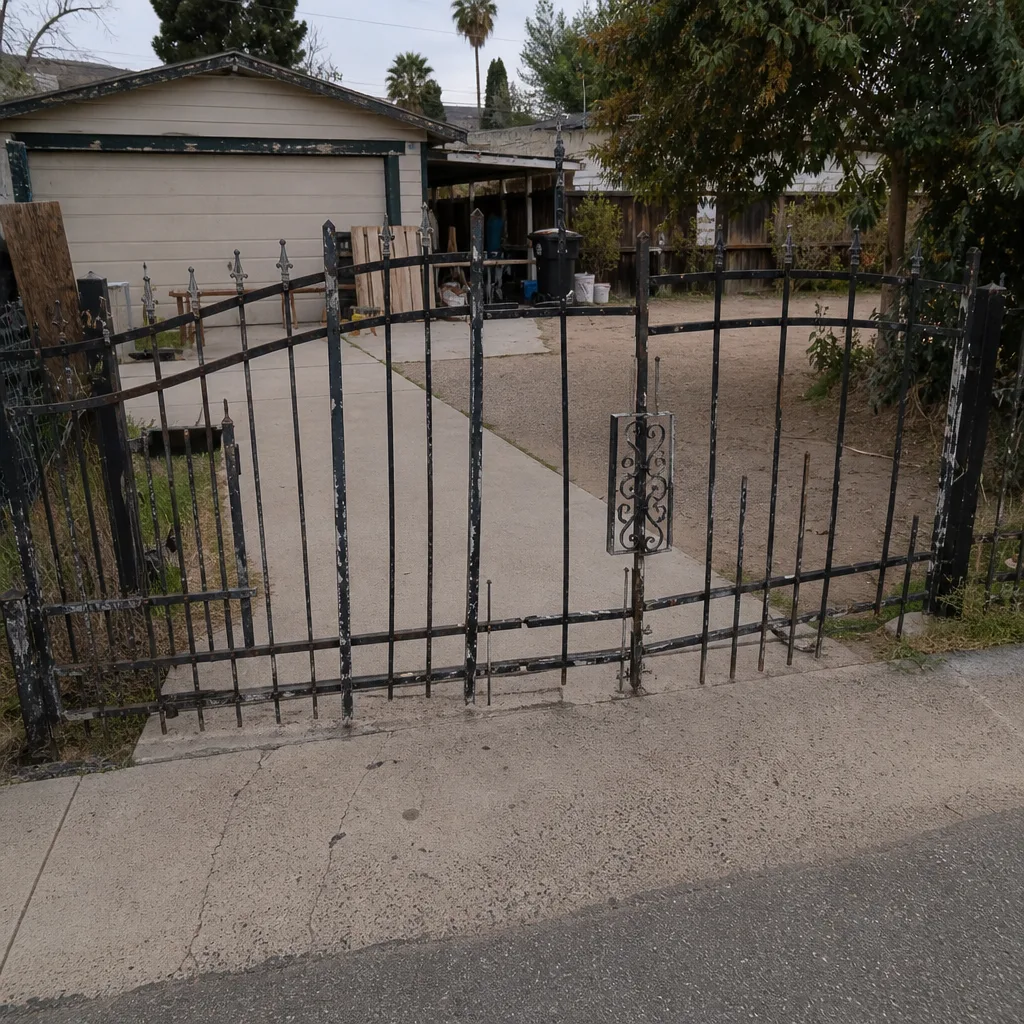 Before
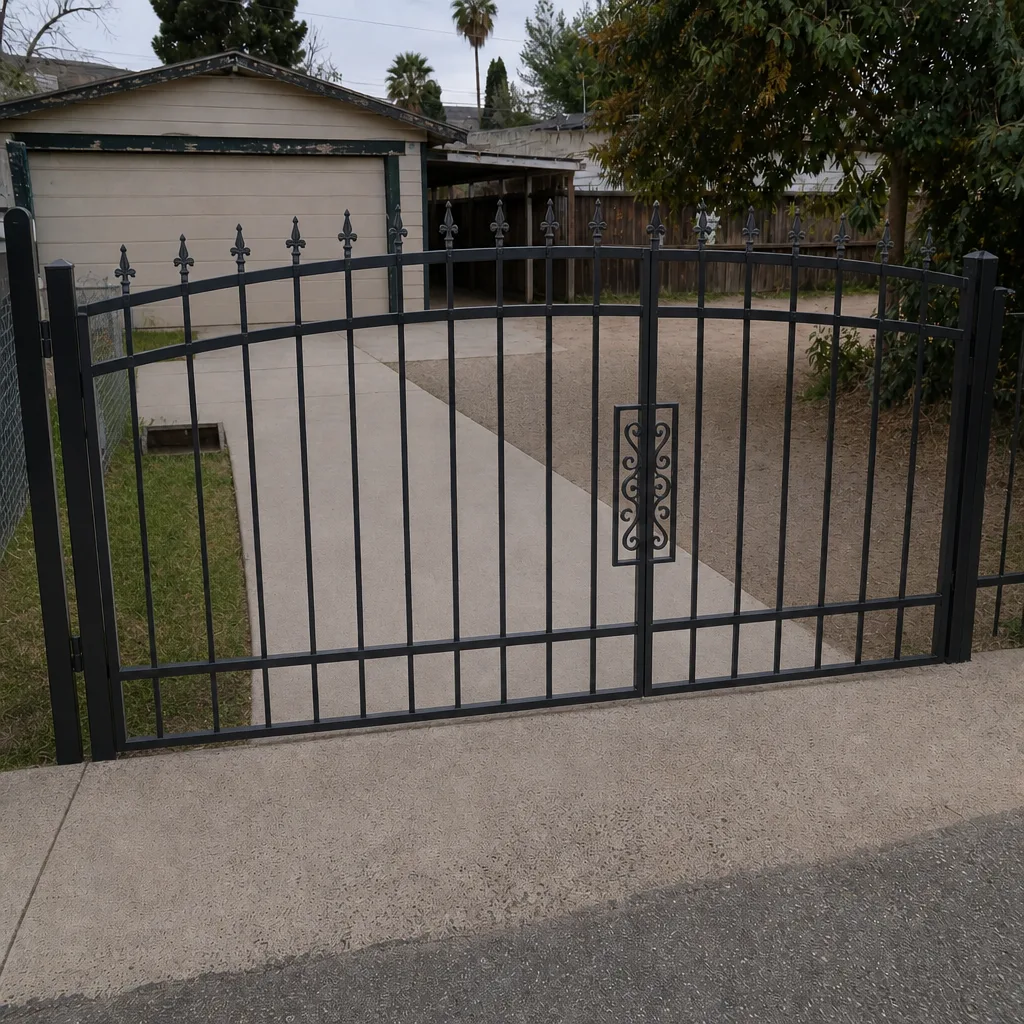 After
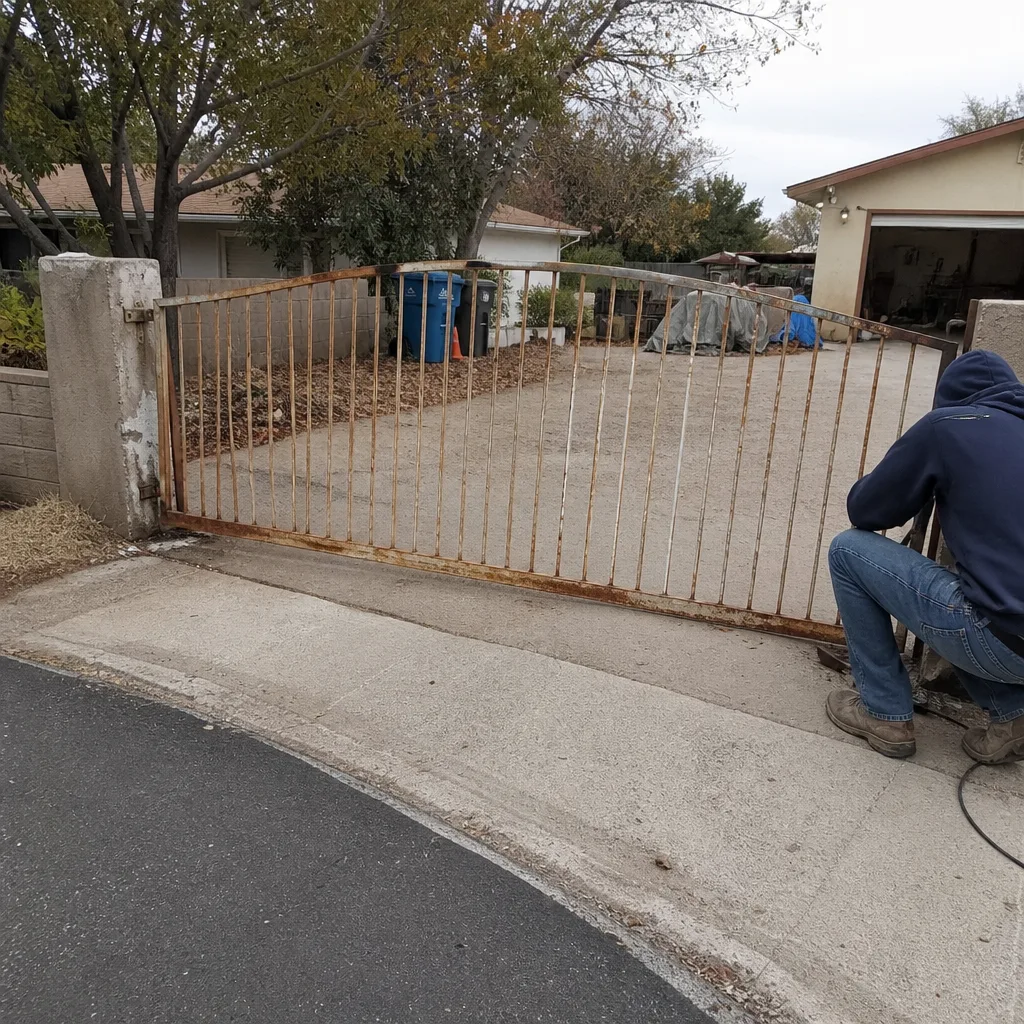 Before
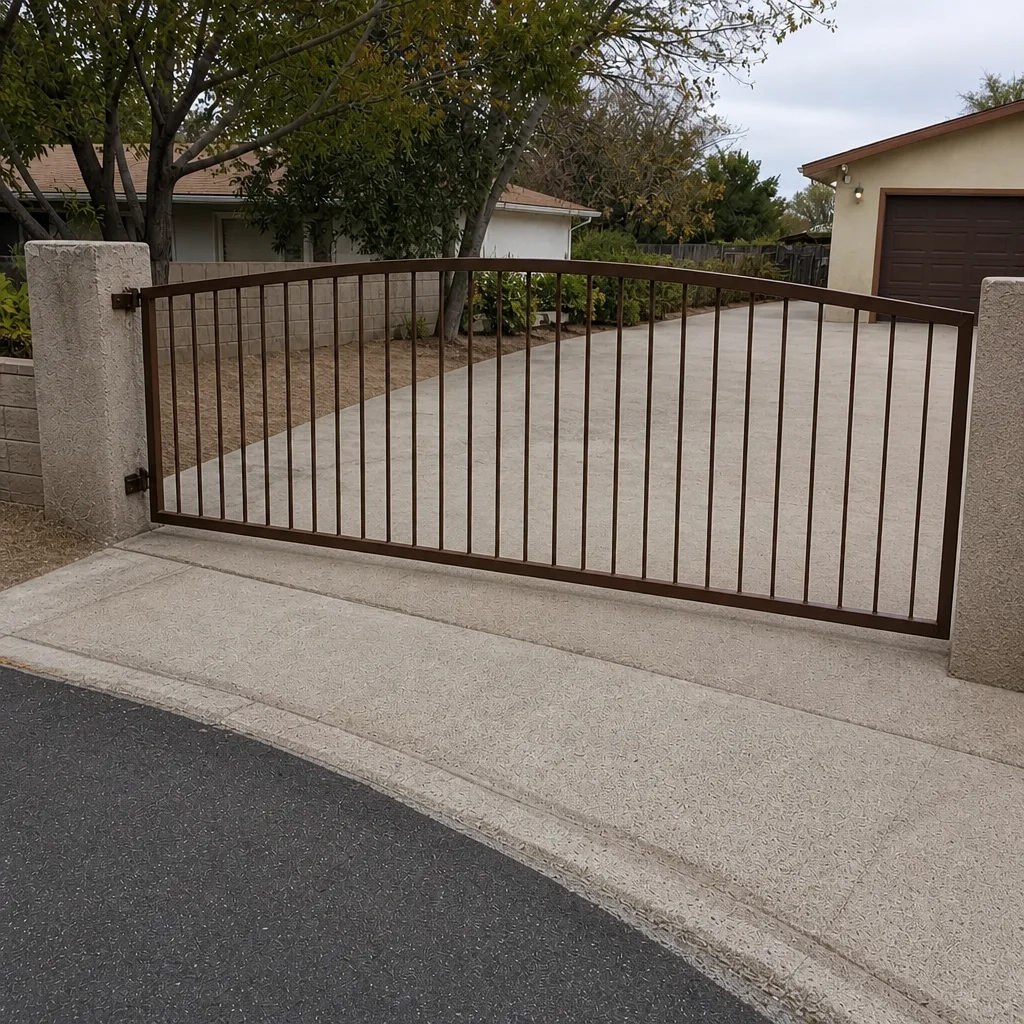 After
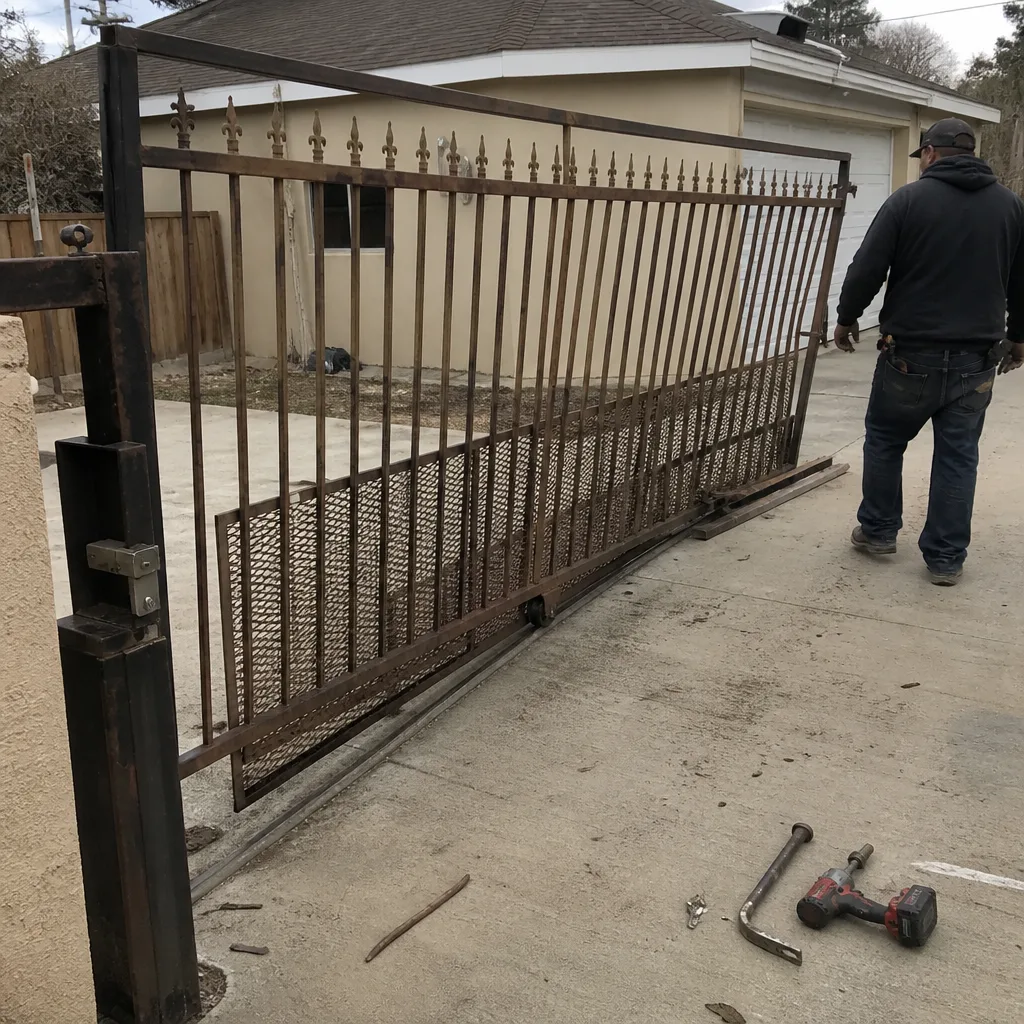 Before
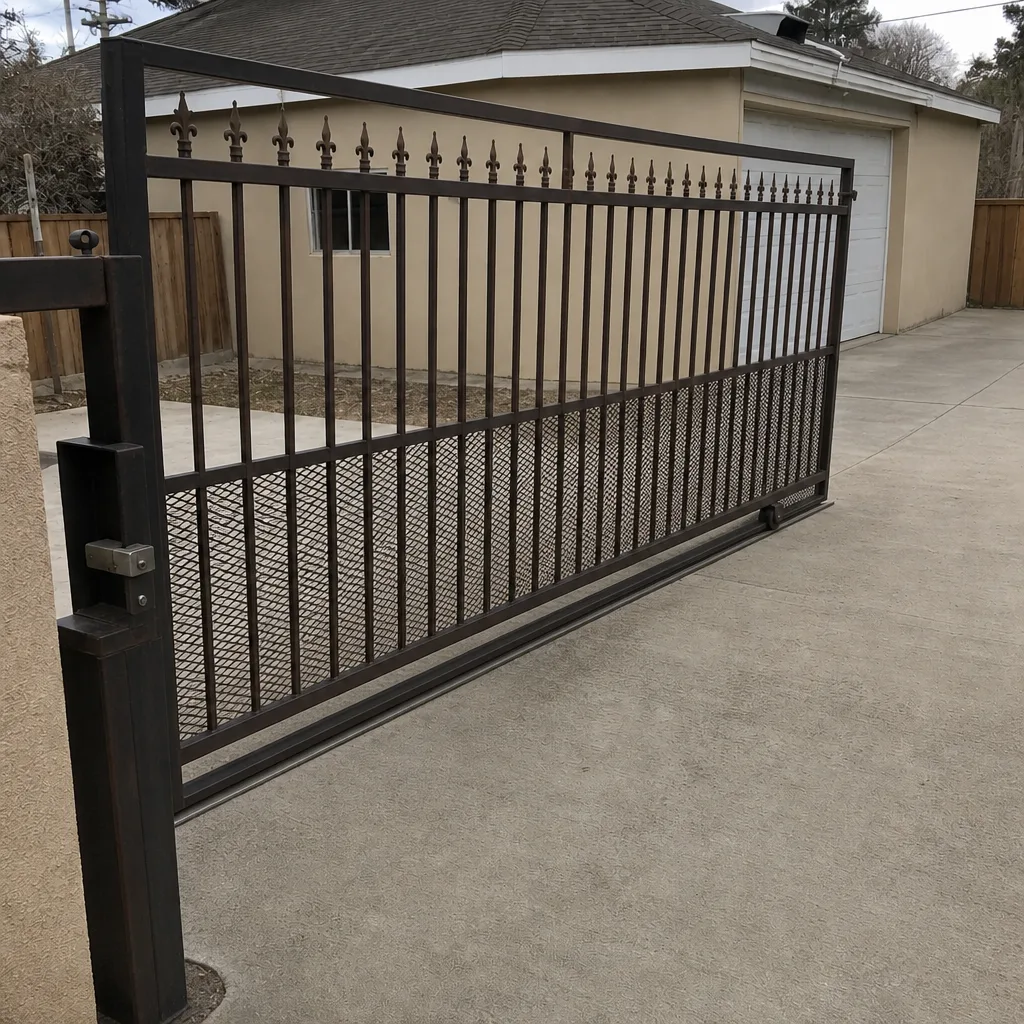 After
When to Call a Professional
A few situations where a professional call is the right call. Any automatic gate that isn’t operating correctly – especially one that reverses on its own, fails to reverse on obstruction, or has damaged safety edges – should come out of service until it’s fixed. High-tension springs, counterbalance weights, and welded hinge posts are not safe to work on without the right tools and training; a loaded spring can cause serious injury if it releases unexpectedly. Electrical work on the operator circuit is best left to a licensed electrician unless your installer is equipped for it. And any gate installation that involves an HOA, a permit, or a driveway gate with a heavy operator should be scoped by someone who does this regularly. Gatewood Fence & Gate Paradise offers free estimates in Paradise – call (888) 292-7536.
Frequently Asked Questions
For a residential gate installed with new posts and footings, most Paradise homeowners are looking at a few thousand dollars on the low end for a simple manual swing gate, and more for a driveway gate with an automatic operator, access control, safety devices, and permit. The variables that move the price most are footing depth and volume for the soil, operator grade for the duty cycle, and whether the HOA review adds a custom design requirement. Call (888) 292-7536 for an exact quote – estimates are free, and the price is quoted and agreed before any work starts.
For an automatic gate, and for gates over six feet tall, yes – in unincorporated Clark County, which covers most of Paradise. Pool barrier gates have additional requirements under pool safety code. Manual gates six feet and under typically don’t require a permit, but it’s worth a phone call to the county before you dig to confirm the rule for your specific site. The name is on the shop, and the shop is down the road, so when we tell you a permit is required, you can call the county and verify it yourself.
Typically around 30 to 36 inches below grade for a residential gate post, and deeper on heavier clay or where the footing will carry a driveway gate. Diameter matters as much as depth. Straight-sided footings pull up more readily than bell-shaped footings, and rebar ties the post to the footing so the whole unit moves together. A proper footing for a heavy driveway gate can mean two-thirds of a cubic yard of concrete – sometimes more. Fix the post without the footing and you’ll fix it twice.
Most likely a thermal shutoff. Operators rated at the edge of their duty cycle will trip the thermal protection when ambient temperatures run above 100°F, and that cycle repeats every day the gate runs heavily. That’s not a broken motor – it’s the motor protecting itself. The fix is either a higher-duty operator or reducing the number of cycles on the unit. Call (888) 292-7536 and we’ll walk through the duty cycle math with you before you buy anything.
Yes. New gate installations include the operator wiring, control box placement, and all required safety devices – safety edges, photo eyes, and obstruction reversal testing before the gate is put into service. For safety edges, testing at every service visit is part of the routine, not an optional add-on. Call us for a free second opinion on any written estimate you’ve already received.
A full installation includes site measure, permit check, HOA submittal support, footing excavation and pour, post cure, gate hang, operator installation, safety device installation and testing, final inspection coordination, and a walkthrough. Every job carries the 90-Day Done Right Promise in writing – if it’s not done right, we make it right. The price is quoted and agreed in writing before any work starts, so there are no surprises on the invoice.
The Bottom Line
Gate installation in Paradise comes down to four things most guides skip: footings that account for our soil, an operator sized for the actual cycle count and heat, a permit if the gate is automatic or over six feet, and an HOA approval in writing before you buy. Get those four right, and the gate will hold up for years. Get them wrong, and the cheapest quote on the front end becomes the most expensive repair call on the back end. We see it every week. A proper install done once is cheaper than two cheap installs. If you want to talk through your specific site, we’ll come measure it, quote it, and tell you what we’d do if it were our own gate.
Contact
Free estimates, no trip charge inside the county, and a free second opinion on any written estimate you’ve already received. Call Gatewood Fence & Gate Paradise at (888) 292-7536 for a free estimate, and a live person will pick up.
Written by the team at Gatewood Fence & Gate Paradise.